Introduction
Steel is everywhere. It is in bridges, buildings, cars, and tools. For centuries, making steel parts meant casting, forging, or machining. These methods work. But they have limits. Complex shapes are expensive. Custom parts require tooling. Material waste is high.
3D printing steel parts changes this. Additive manufacturing builds steel components layer by layer from digital files. It enables geometries that traditional methods cannot. It eliminates tooling costs. It reduces material waste to under 5 percent.
The technology is not experimental. Aerospace companies print steel fuel nozzles. Automotive manufacturers print steel brake calipers. Medical device companies print custom steel implants.
In this guide, we will explore how 3D printing steel works, why it matters, and where it is headed.
What Is 3D Printing of Steel Parts?
Definition and Basic Principle
3D printing steel parts is an additive manufacturing process. It builds objects layer by layer from a digital model. The process has three main stages:
| Stage | Description |
|---|---|
| Model Creation | CAD software creates a 3D model of the part |
| Slicing | Software cuts the model into thin layers (20–100 microns) |
| Material Deposition | Metal powder is fused layer by layer using heat |
Key fact: 3D printed steel parts achieve densities of 99.5–99.9 percent, comparable to wrought or cast steel.
Key Technologies
Three main technologies dominate steel 3D printing.
| Technology | Process | Best For |
|---|---|---|
| Selective Laser Melting (SLM) | Laser fully melts powder | High-density, high-strength parts |
| Direct Metal Laser Sintering (DMLS) | Laser sinters powder (partial melting) | Complex geometries, fine features |
| Binder Jetting | Binder bonds powder, then sintering | Large-scale production, cost-sensitive |
Key fact: SLM produces the highest density and best mechanical properties. Binder jetting is faster and more cost-effective for larger volumes.
How Does 3D Printing Steel Compare to Traditional Manufacturing?
Cost Comparison
| Aspect | 3D Printing Steel | Traditional Manufacturing |
|---|---|---|
| Small batch (1–50 units) | Cost-effective—no tooling | Expensive—tooling costs dominate |
| Large batch (1,000+ units) | Higher per-unit cost | Lower per-unit cost after tooling |
| Tooling cost | None | $5,000–$100,000+ for molds |
| Material waste | 5–15% | 30–70% |
Real-world example: A custom steel bracket for a racing car. 3D printing cost $500 for 10 units. Traditional casting would require a $10,000 mold before producing the first part.
Production Efficiency
| Aspect | 3D Printing Steel | Traditional Manufacturing |
|---|---|---|
| Complex geometries | Fast—print as designed | Slow—multiple operations, assembly |
| Simple geometries | Slow—layer by layer | Fast—machining, casting |
| Lead time for prototypes | Days | Weeks to months |
Key fact: 3D printing can reduce lead time for complex prototypes from 12 weeks to 5 days.
Design Freedom
| Feature | 3D Printing Steel | Traditional Manufacturing |
|---|---|---|
| Internal channels | Easy | Difficult or impossible |
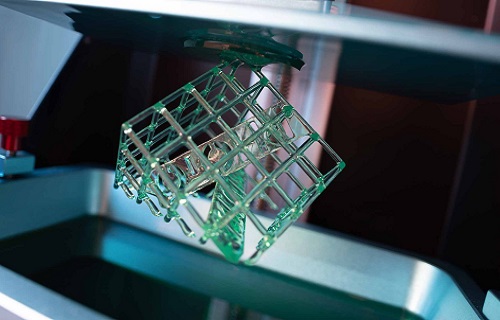
| Lattice structures | Routine | Cannot produce |
| Organic shapes | Design-driven | Limited by tool access |
| Part consolidation | Multiple parts → one | Multiple parts, assembly required |
Real-world example: A hydraulic manifold traditionally required 12 parts machined and assembled. The 3D printed version is one piece, with no seals, no fasteners, and no leak paths.
Material Waste
Traditional subtractive manufacturing wastes material. Machining a steel part from a solid block can waste 60–70 percent of the raw material.
3D printing uses only the material that becomes the part. Unused powder is collected and reused. Material utilization rates reach 95 percent.
What Materials Are Available for Steel 3D Printing?
| Material | Key Properties | Applications |
|---|---|---|
| 316L Stainless Steel | Corrosion resistant, strong | Medical devices, marine components |
| 17-4 PH Stainless Steel | High strength, heat treatable | Aerospace, automotive, industrial |
| Maraging Steel (MS1) | Very high strength, hardness | Tooling, molds, high-stress parts |
| Tool Steel (H13) | Wear resistant, heat resistant | Injection molds, dies |
| 304L Stainless Steel | Good corrosion resistance | Food processing, chemical equipment |
Key fact: 17-4 PH stainless steel achieves tensile strength over 1,300 MPa after heat treatment—comparable to high-strength tool steels.
What Are the Key Applications?
Aerospace Industry
Aerospace demands lightweight, high-strength parts. 3D printed steel delivers.
Case Study: Fuel Nozzles
Jet engine fuel nozzles are now 3D printed in steel. The complex internal channels improve fuel atomization, increasing combustion efficiency. One manufacturer reduced the number of parts from 20 to 1 and cut weight by 25 percent.
Case Study: Structural Brackets
Steel brackets in aircraft fuselages can be redesigned with lattice structures. The same strength with less material. Weight reduction improves fuel efficiency.
Automotive Manufacturing
High-performance cars use 3D printed steel parts.
Case Study: Brake Calipers
Steel brake calipers printed with optimized shapes are lighter and stronger than cast iron equivalents. Reduced unsprung weight improves handling and acceleration.
Case Study: Prototype Components
Car manufacturers use 3D printed steel for engine mounts, suspension components, and brackets during development. Design iterations happen in days, not months.
Medical Field
Custom steel implants improve patient outcomes.
Case Study: Hip Implants
A 3D printed steel hip implant matches the patient’s exact anatomy from CT scan data. The custom fit improves stability and reduces rejection risk. Porous surfaces promote bone ingrowth.
Key fact: A study found that 95 percent of patients with 3D printed hip implants reported better comfort and faster recovery compared to standard implants.
Industrial Tooling
Steel molds with conformal cooling channels reduce cycle times.
Case Study: Injection Molds
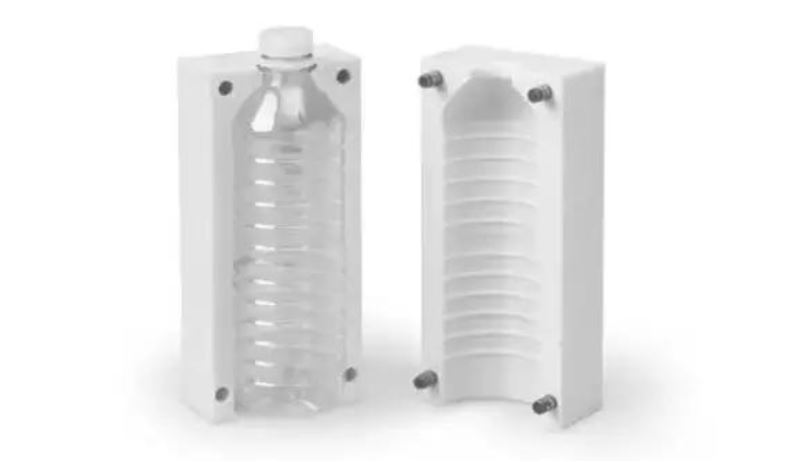
Traditional molds have straight cooling channels. 3D printed molds have channels that follow the part contour. Cooling is faster and more uniform. Cycle times drop by 20–40 percent.
What Are the Challenges?
Cost of Equipment and Materials
| Cost Factor | 3D Printing Steel | Traditional |
|---|---|---|
| Equipment | $500,000–$1.5 million | $50,000–$500,000 |
| Materials | $50–$200 per kg | $2–$10 per kg |
Solution: Use service providers like Yigu Technology to access capabilities without capital investment.
Quality Assurance
Steel 3D printing requires tight process control.
| Challenge | Cause | Solution |
|---|---|---|
| Porosity | Incorrect laser power, scan speed | Optimize parameters, use HIP post-processing |
| Residual stress | Rapid heating and cooling | Heat treatment after printing |
| Dimensional accuracy | Thermal expansion | Post-machining critical surfaces |
Key fact: Hot isostatic pressing (HIP) can eliminate internal porosity, achieving 100 percent density.
Speed for High Volume
3D printing is slow for large volumes. A part that prints in 10 hours takes 1,000 hours to print 100 copies.
Solution: Use 3D printing for complex, low-volume parts. Use traditional methods for simple, high-volume parts.
What Does the Future Hold?
Lower Costs
Equipment and material costs are declining. Metal 3D printers that cost $1 million five years ago now cost $500,000. Powder costs are also dropping as supply chains mature.
Faster Print Speeds
Multi-laser systems are becoming standard. A 4-laser system is 3–4 times faster than a single-laser system. Future systems will use even more lasers.
Larger Build Volumes
Build volumes are expanding. Current industrial systems reach 500 x 500 x 500 mm. Future systems will exceed 1 meter, enabling larger components.
New Materials
New steel alloys are being developed specifically for additive manufacturing. These materials are designed to print well and achieve optimal properties.
Hybrid Manufacturing
Combining 3D printing with CNC machining in one machine. Print near-net shape, then machine to final tolerances without moving the part.
Yigu Technology’s View
At Yigu Technology, we use steel 3D printing for custom parts across industries.
Case Study: Industrial Tooling
A client needed an injection mold with complex cooling channels. Traditional machining could not create the channels. We printed the mold in tool steel using SLM. Conformal cooling reduced cycle time by 30 percent. The mold has produced over 100,000 parts with no wear.
Case Study: Aerospace Bracket
A client needed a steel bracket with internal lattice structures. Weight reduction was critical. We printed the bracket in 17-4 PH stainless steel. The final part was 45 percent lighter than the machined original while meeting all strength requirements.
Our Approach
We use steel 3D printing when:
- Complex geometry – Internal channels, lattices
- Low to medium volume – 1–500 units
- Customization – Each part unique
- Material properties – Strength, wear resistance, corrosion resistance
For other applications, we use alternative technologies. The right tool for the right job.
Conclusion
Is 3D printing steel parts the future of manufacturing? Yes—for certain applications. It will not replace casting for millions of simple parts. But for complex geometries, custom components, and low-volume production, it is already the best choice.
Steel 3D printing offers:
- Design freedom – Shapes impossible with traditional methods
- Material efficiency – 95 percent utilization versus 30–70 percent waste
- Lead time reduction – Weeks to days for complex parts
- Customization – Each part can be unique
Challenges remain. Cost is higher. Speed is slower. Quality requires control. But the trajectory is clear. Steel 3D printing is moving from prototyping to production. It is becoming an essential tool in the manufacturing toolkit.
FAQ
What are the most common 3D printing technologies for steel parts?
The most common are Selective Laser Melting (SLM) , Direct Metal Laser Sintering (DMLS) , and Binder Jetting. SLM fully melts the powder, producing the highest density. DMLS sinters the powder, creating parts with slightly lower density but excellent detail. Binder jetting uses a binder followed by sintering—it is faster and more cost-effective for larger volumes.
How does the cost of 3D printing steel parts compare to traditional manufacturing?
For small batches (1–50 units) , 3D printing is often cheaper because it eliminates tooling costs. A mold for casting can cost $5,000–$50,000. For large volumes (1,000+ units) , traditional manufacturing is usually cheaper per part. The break-even point varies by part complexity, typically between 100 and 1,000 units.
What are the main challenges in ensuring the quality of 3D printed steel parts?
The main challenges are porosity (voids from incomplete melting), residual stress (from rapid heating and cooling), and dimensional accuracy (thermal expansion during printing). Solutions include optimizing process parameters, using hot isostatic pressing (HIP) to eliminate porosity, and heat treatment to relieve stress. Post-machining achieves final tolerances.
Contact Yigu Technology for Custom Manufacturing
Need 3D printed steel parts for your project? Yigu Technology offers professional SLM and binder jetting services for stainless steel, tool steel, and maraging steel.
Contact us today to discuss your project. From prototypes to production, we deliver high-quality steel parts.