Introduction
You walk through a factory. Conveyors move products. Packaging machines cycle. Robotic arms pivot. Behind these large-scale operations, big plastic gears are at work—transferring power, controlling motion, and handling significant loads.
Unlike small gears in watches or printers, big plastic gears face greater forces, higher stresses, and more demanding environments. They must be strong enough to transmit torque, durable enough to run continuously, and stable enough to maintain precision over time.
The material you choose determines everything. The wrong material leads to premature wear, cracking, or failure. The right material delivers years of reliable service.
This article explores the key factors that affect big plastic gear performance and the materials that best meet different application demands. You will learn how to match material properties to your specific requirements.
What Are Big Plastic Gears?
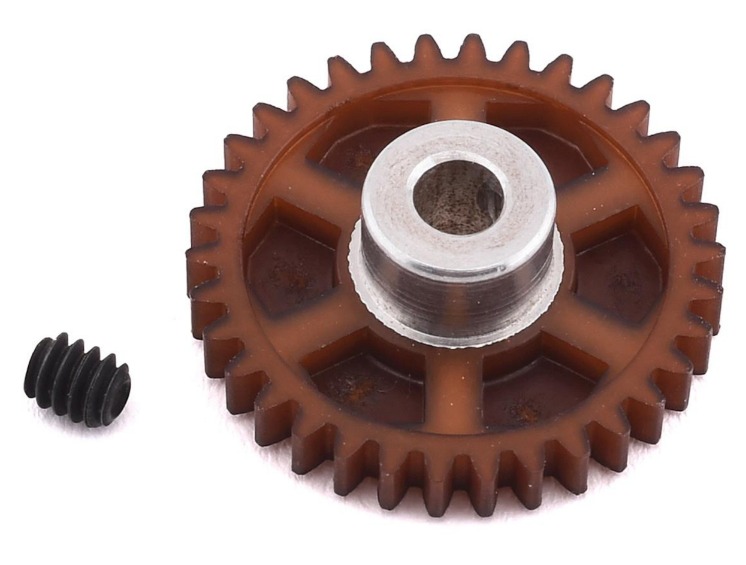
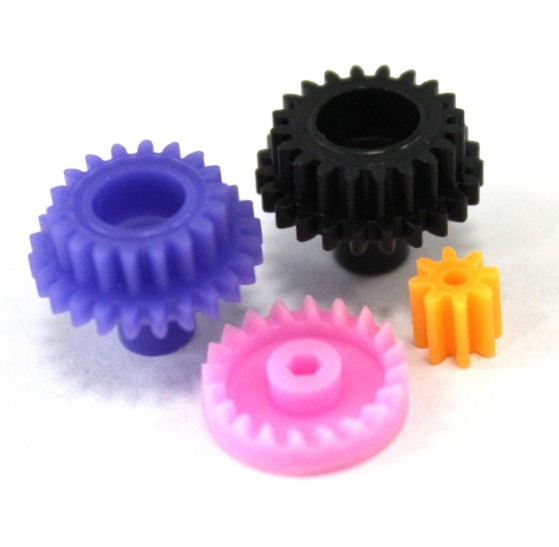
Big plastic gears are large-diameter gears made from engineered polymers. They appear in applications where weight reduction, noise reduction, corrosion resistance, or cost savings justify plastic over metal.
Common applications include:
- Conveyor systems: Driving belts and moving products
- Automotive: Window regulators, seat adjusters, wiper mechanisms
- Industrial machinery: Packaging equipment, mixers, printing presses
- Medical equipment: Large imaging systems, patient handling devices
Their size—often 200 mm or more in diameter—means they experience higher loads and stresses than smaller gears.
What Factors Affect Big Plastic Gear Performance?
How Do Load and Stress Matter?
Big plastic gears face multiple stresses during operation:
- Bending stress: Acts on tooth roots as teeth are loaded
- Contact stress: Occurs where teeth of meshing gears meet
- Shear stress: Develops when teeth are pushed in opposite directions
- Compressive stress: From torque transmission through the gear body
Different materials handle these stresses differently. Polyoxymethylene (POM) offers high mechanical strength and rigidity. In testing, POM gears handled maximum loads of 500 N before failure. General-purpose polyethylene (PE) began deforming at just 100 N under the same conditions.
For high-load applications, choose materials with high tensile and flexural strength.
How Do Wear and Friction Impact Lifespan?
Wear is the gradual removal of material from gear teeth. Over time, wear changes tooth shape, leading to:
- Inaccurate meshing
- Increased noise
- Reduced efficiency
- Eventually, gear failure
Friction contributes to wear and causes energy losses. Higher friction means more heat and less efficiency.
Materials with low friction coefficients reduce both issues. PTFE (polytetrafluoroethylene) -filled plastics have extremely low friction. A comparison showed PTFE-filled nylon had a 30% lower wear rate after 1,000 hours of operation compared to standard nylon.
Self-lubricating materials further reduce friction and eliminate the need for external lubrication.
How Does Temperature Affect Performance?
Temperature changes impact plastic gears significantly.
High temperatures can cause:
- Softening
- Loss of mechanical properties
- Deformation
Low temperatures can cause:
- Brittleness
- Increased risk of cracking
- Reduced impact resistance
Different materials have different temperature tolerances. PEEK (polyetheretherketone) maintains properties up to 250°C. A PEEK gear operated smoothly for 1,000 hours at 200°C. Polypropylene (PP) deformed and failed within 100 hours at the same temperature.
For wide temperature swings or extreme conditions, select materials with appropriate heat deflection temperatures and low thermal expansion.
What Materials Are Used for Big Plastic Gears?
Engineering Plastics
Nylon (Polyamide)
Nylon is a popular choice for its balance of strength, wear resistance, and cost.
| Property | Typical Value | Benefit |
|---|---|---|
| Tensile Strength | 50–100 MPa | Handles moderate to high loads |
| Wear Resistance | High | Long service life |
| Self-Lubricating | Yes | Reduces maintenance |
| Max Continuous Temp | 150°C | Suitable for moderate heat |
In food processing conveyors, nylon gears run continuously, handling product weight while maintaining integrity. In dusty environments, nylon's self-lubricating properties reduce maintenance needs.
Glass-filled nylon offers even higher strength and heat resistance. Heat deflection temperature can exceed 250°C with reinforcement.
Polycarbonate (PC)
Polycarbonate excels in impact resistance and dimensional stability.
| Property | Typical Value | Benefit |
|---|---|---|
| Impact Strength | 50–80 kJ/m² | Withstands sudden shocks |
| Dimensional Stability | Excellent | Consistent meshing over temperature |
| Transparency | High | Allows visual monitoring |
In power tools, PC gears withstand startup impacts without cracking. In precision instruments, PC's low thermal expansion ensures accurate operation across temperature ranges.
Polyoxymethylene (POM)
POM (acetal) offers high strength, low friction, and excellent dimensional stability.
| Property | Typical Value | Benefit |
|---|---|---|
| Tensile Strength | 60–90 MPa | Handles high loads |
| Coefficient of Friction | 0.05–0.2 | Very low friction |
| Dimensional Stability | Excellent | Precision applications |
POM is often the first choice for precision gear applications where consistent dimensions and low friction are critical.
Thermoplastic Elastomers (TPEs)
Thermoplastic elastomers combine plastic processability with rubber-like elasticity. They can be injection molded like plastics but stretch and absorb vibrations like rubber.
Thermoplastic polyurethane (TPU) offers:
- High tensile strength
- Excellent abrasion resistance
- Flexibility
In conveyor systems, TPU gears handle continuous operation with good wear resistance.
Thermoplastic vulcanizate (TPV) offers:
- Good chemical resistance
- Flexibility
- Durability
In chemical processing plants, TPV gears resist corrosive substances while maintaining mechanical properties.
TPEs excel in applications requiring noise reduction and vibration absorption. Their elasticity dampens impact forces, reducing noise and wear.
Composites
Fiber-Reinforced Composites
Adding fibers to a polymer matrix dramatically increases strength and stiffness.
| Fiber Type | Properties Enhanced | Best Applications |
|---|---|---|
| Glass Fiber | Strength, stiffness, heat resistance | Heavy-duty industrial, automotive |
| Carbon Fiber | Strength-to-weight ratio, rigidity | Aerospace, high-performance |
| Aramid (Kevlar) | Impact resistance, energy absorption | Construction, shock-prone |
Glass-fiber-reinforced composites transmit higher torque than unreinforced plastics. In large-scale industrial gearboxes, they handle heavy-duty requirements.
Carbon-fiber-reinforced composites offer exceptional strength-to-weight ratios. In aerospace applications, they reduce weight while maintaining performance.
Aramid-fiber-reinforced composites absorb impact energy. In construction machinery, they protect equipment from sudden shocks.
Particle-Filled Composites
Adding particles to the polymer matrix improves specific properties at lower cost.
| Filler | Properties Enhanced | Benefit |
|---|---|---|
| Calcium Carbonate | Stiffness | Stable operation under load |
| Talc | Dimensional stability | Consistent gear meshing |
| Mica | Heat resistance | Maintains properties at high temperatures |
Particle-filled composites also reduce material cost by replacing expensive polymer with inexpensive fillers while maintaining acceptable properties.
How Do You Choose the Right Material?
What Load Requirements Matter?
| Load Level | Recommended Materials |
|---|---|
| Light | PE, PP |
| Medium | Nylon, POM |
| Heavy | Glass-filled nylon, PEEK, fiber-reinforced composites |
What Temperature Range Matters?
| Temperature Range | Recommended Materials |
|---|---|
| Below 100°C | Most engineering plastics |
| 100–150°C | Nylon, POM, PC |
| 150–200°C | Glass-filled nylon, PEEK |
| Above 200°C | PEEK, specialty high-temperature grades |
What Chemical Exposure Matters?
| Environment | Recommended Materials |
|---|---|
| Oils, greases | Nylon, POM |
| Dilute acids, alkalis | Nylon, POM, TPV |
| Strong acids | PEEK, specialized grades |
| Food contact | Food-grade nylon, POM, PC |
What Noise and Vibration Matter?
For quiet operation, choose materials with good damping properties:
- TPEs (TPU, TPV) offer the best vibration absorption
- Nylon provides moderate damping
- POM is stiffer but still quieter than metal
What Does Yigu Technology Offer?
Yigu Technology specializes in custom big plastic gears. We understand that material selection is not one-size-fits-all. Each application has unique demands: load magnitude, temperature range, chemical exposure, and required lifespan.
Our approach:
- Application analysis: We evaluate your specific operating conditions
- Material recommendation: We suggest the optimal material based on performance needs
- Custom manufacturing: We produce gears to your exact specifications
- Quality assurance: Strict testing ensures reliability
We work with nylon, POM, PC, PEEK, TPEs, and composites—both standard and reinforced.
Conclusion
Big plastic gears serve critical roles across industries. Their performance depends entirely on material selection.
Key factors to consider:
- Load and stress resistance: Choose high-strength materials for heavy loads
- Wear and friction: Low-friction, self-lubricating materials extend life
- Temperature resistance: Match material to operating temperature range
- Chemical resistance: Verify compatibility with your environment
Material options include:
- Engineering plastics (nylon, POM, PC) for balanced performance
- Thermoplastic elastomers for noise reduction and vibration damping
- Composites (fiber or particle-filled) for enhanced strength, stiffness, or heat resistance
No single material is best for every application. The right choice depends on your specific requirements. Take time to analyze your operating conditions. Consult with experts. Choose a material that delivers the durability, strength, and reliability your application demands.
FAQ
What is the best material for big plastic gears in high-temperature environments?
For high-temperature environments, nylon (especially high-crystallinity grades like nylon 46) withstands up to 150°C continuously. Glass-filled nylon reaches heat deflection temperatures over 250°C. PEEK is the highest-performance option, maintaining properties up to 260°C, suitable for aerospace or high-temperature industrial equipment.
How can I determine if a particular plastic gear material is suitable for my application?
Analyze your working conditions—load magnitude, temperature range, chemical exposure. Consider performance requirements—strength, wear resistance, noise reduction. Evaluate cost-effectiveness. Test samples when possible. Consult with material experts who can match material properties to your specific needs.
What are the advantages of fiber-reinforced composites for big plastic gears?
Fiber-reinforced composites offer higher strength and stiffness than unreinforced plastics. Glass fiber increases load capacity and heat resistance. Carbon fiber provides exceptional strength-to-weight ratio for weight-sensitive applications. Aramid fiber delivers high impact resistance for shock-prone environments. These materials enable plastic gears to handle heavier loads and more demanding conditions.
Contact Yigu Technology for Custom Manufacturing
Need custom big plastic gears for your application? Yigu Technology specializes in precision manufacturing with engineering plastics, TPEs, and composites. Our team helps you select the right material for your load, temperature, and environmental requirements. Contact us today to discuss your project.