Introduction
Nylon 30%GF —glass fiber reinforced polyamide—combines the inherent properties of nylon with the strength of glass fibers. The result is a high-performance material with tensile strength of 120–140 MPa, more than double that of unfilled nylon, and a flexural modulus of 5000–6000 MPa that makes it rigid enough for structural components. It finds applications in automotive engine brackets, aerospace structural parts, industrial gears, and electrical insulators where unfilled nylon would not provide sufficient strength or dimensional stability.
But machining Nylon 30%GF presents unique challenges that set it apart from machining unfilled nylons. The glass fibers significantly increase the material’s abrasiveness, leading to rapid tool wear if not addressed with proper tooling. The fibers can cause surface defects like fiber pull-out, where glass strands are torn from the surface rather than cut cleanly. And the material’s reduced impact resistance—10–15 kJ/m² compared to 30–40 kJ/m² for unfilled nylon—requires careful handling to avoid cracking during machining.
This guide addresses these pain points. We will explore Nylon 30%GF material characteristics, optimal machining processes, tool selection, cutting parameters, surface finish techniques, and real-world applications. Whether you are machining automotive brackets or industrial gears, you will find expert strategies for success.
What Makes Nylon 30%GF Unique for Machining?
Mechanical Properties
Nylon 30%GF is a glass fiber reinforced polyamide. The addition of 30% glass fibers transforms the material’s mechanical profile:
- Tensile strength: 120–140 MPa—more than double unfilled nylon’s 45–60 MPa
- Flexural modulus: 5000–6000 MPa—provides rigidity for structural components
- Impact resistance: 10–15 kJ/m²—lower than unfilled nylon, requiring careful handling
- Moisture absorption: 0.5–1%—significantly reduced compared to 2–3% for unfilled nylon, ensuring dimensional stability
- Continuous use temperature: 120–140°C—suitable for high-temperature environments
These properties make Nylon 30%GF ideal for applications where unfilled nylon would lack strength or dimensional stability. However, the glass fibers that provide these benefits also create machining challenges.
Thermal and Chemical Properties
Thermal properties are enhanced by glass fiber reinforcement. The melting point is 250–260°C , higher than unfilled nylon. This allows use in higher-temperature environments but also means machining generates more heat at the cutting zone.
Chemical resistance is similar to unfilled nylon—resistant to oils, greases, and alkalis but not strong acids. The glass fibers do not significantly alter chemical resistance.
Electrical insulation is good, though slightly reduced compared to unfilled nylon due to the conductive nature of glass fibers. For electrical applications, this reduction is usually acceptable.
| Property | Nylon 30%GF | Unfilled Nylon PA6 | Nylon MC901 |
|---|---|---|---|
| Tensile Strength | 120–140 MPa | 45–60 MPa | 70–80 MPa |
| Impact Resistance | 10–15 kJ/m² | 30–40 kJ/m² | 50–60 kJ/m² |
| Moisture Absorption | 0.5–1% | 2–3% | 2.5–3.5% |
| Flexural Modulus | 5000–6000 MPa | 2800–3200 MPa | 3000–3500 MPa |
Machining Challenges
The glass fibers that give Nylon 30%GF its strength create three primary machining challenges:
Abrasive wear occurs because glass fibers are harder than the nylon matrix. As the cutting tool passes through the material, fibers abrade the tool edge. Tool life is typically 50–70% shorter than when machining unfilled nylon.
Fiber pull-out happens when the cutting tool tears fibers from the surface rather than cutting them cleanly. This leaves a rough surface with exposed glass strands that can affect appearance, assembly, and performance.
Cracking risk exists because impact resistance is reduced. Improper clamping or excessive cutting forces can cause the material to crack, particularly in thin sections or near edges.
What Machining Processes Work Best for Nylon 30%GF?
Milling
CNC milling is used for creating complex shapes in Nylon 30%GF. Machines with spindles rated at 20–25 kW handle the material’s increased rigidity. 3-axis mills suffice for most parts; 5-axis mills are used for intricate geometries where precision is critical.
Climb milling—cutting with tool rotation—reduces tool wear by 20–30% compared to conventional milling. It minimizes rubbing against abrasive fibers, which generates less heat and extends tool life.
Turning
CNC turning produces cylindrical parts like rollers, bushings, and shafts. Lower spindle speeds than unfilled nylon help balance material removal with tool life. Reducing tool contact time minimizes wear on cutting edges.
Drilling
Drilling Nylon 30%GF benefits from sharp, carbide-tipped drills with polished flutes. The polished surface reduces friction against glass fibers, preventing tool clogging and fiber pull-out. Peck drilling—intermittent retraction to clear chips—prevents chip packing that can generate heat and damage the hole surface.
Cutting and Routing
CNC routers can cut Nylon 30%GF sheets, but slower feed rates than unfilled nylon are required to avoid excessive tool wear. Shearing with sharp blades produces clean edges but requires sufficient machine rigidity.
Machine Requirements
Machining centers with high-torque spindles and rigid structures are ideal. Vibration exacerbates tool wear and surface defects. CAM software (Mastercam, SolidWorks CAM) should prioritize a machining sequence that starts with roughing to remove bulk material, followed by semi-finishing and finishing passes to minimize tool wear during critical final cuts.
Workholding is critical. The material’s brittleness means uneven clamping pressure can cause cracking. Fixtures with multiple contact points distribute pressure evenly. Soft jaws machined to match workpiece contours prevent point loading.
What Tooling Delivers Optimal Results?
Tool Material
Carbide tools are essential. Grade K10 or K20 carbide offers the best wear resistance for machining glass-reinforced materials. High-speed steel (HSS) tools are not recommended for high-volume production—they wear rapidly against glass fibers. HSS may be acceptable for small, low-precision parts in low volumes.
End Mills
2-flute end mills provide better chip evacuation than 4-flute designs. The additional chip clearance is critical for removing abrasive glass fiber chips from the cutting zone. 4-flute end mills produce finer surface finishes but require careful chip management.
Helix angle of 40–45° improves cutting efficiency and reduces tool wear. Higher helix angles provide a shearing action that cuts fibers cleanly rather than tearing them.
Drills and Reamers
Drills with 135° split point angles and carbide tips reduce thrust force, minimizing fiber pull-out and heat generation. The split point geometry centers the drill and reduces walking.
Reamers with carbide tips and straight flute designs ensure tight tolerances (±0.005 mm) while withstanding abrasive fibers. Straight flutes provide strength and prevent chip packing.
Tool Geometry and Coatings
Sharp cutting edges—radius less than 0.01 mm —minimize fiber pull-out and reduce cutting forces. Dull tools tear fibers rather than cutting them, creating rough surfaces.
Tool coatings extend tool life significantly. TiAlN (titanium aluminum nitride) and diamond-like carbon (DLC) coatings reduce friction and abrasion, extending tool life by 30–50% compared to uncoated carbide.
Tool deflection is less common than with unfilled nylon due to the material’s rigidity. However, using short, thick tools—length-to-diameter ratio <3:1 —further reduces deflection risk.
What Machining Parameters Optimize Performance?
Cutting Speed
Cutting speeds for Nylon 30%GF are lower than for unfilled nylon to reduce tool wear:
- Milling: 100–150 m/min
- Turning: 80–120 m/min
Higher speeds increase friction against abrasive fibers, accelerating wear. Staying within these ranges balances material removal with tool life.
Feed Rate
Feed rates must be controlled to prevent fiber pull-out and excessive tool wear:
- Milling: 0.1–0.15 mm/tooth
- Turning: 0.08–0.12 mm/rev
Higher feeds can cause fiber pull-out. Lower feeds reduce efficiency without significant surface finish benefits.
Depth of Cut
Depth of cut should be shallower than for unfilled nylon:
- Roughing: 1–2 mm
- Finishing: 0.1–0.3 mm
Shallow depths minimize cutting forces and tool wear. Multiple passes are preferred over single deep cuts.
Spindle Speed
Spindle speeds adjust based on tool diameter:
- Milling: 1500–3000 RPM
- Turning: 1000–2000 RPM
These ranges balance material removal with tool life. Larger tools require lower speeds to maintain appropriate cutting speed.
Toolpath Strategies
Climb milling reduces tool wear by 20–30% compared to conventional milling. The cutting action shears fibers cleanly rather than rubbing against them.
Chip load should be maintained at 0.01–0.02 mm/tooth to ensure efficient chip evacuation. Proper chip load prevents chip buildup that can cause heat and tool damage.
Coolant
Water-soluble coolant at 8–10% concentration is critical. It dissipates heat and flushes away abrasive chips, extending tool life and improving surface finish.
Lubrication beyond coolant is not typically needed. The glass fibers act as a mild abrasive, reducing the need for additional lubricants.
| Parameter | Recommended Range | Notes |
|---|---|---|
| Cutting Speed (Milling) | 100–150 m/min | Lower than unfilled nylon |
| Cutting Speed (Turning) | 80–120 m/min | Reduces tool wear |
| Feed Rate (Milling) | 0.1–0.15 mm/tooth | Prevents fiber pull-out |
| Feed Rate (Turning) | 0.08–0.12 mm/rev | Balances efficiency and quality |
| Depth of Cut (Roughing) | 1–2 mm | Shallow passes minimize wear |
| Depth of Cut (Finishing) | 0.1–0.3 mm | Achieves tight tolerances |
| Coolant Concentration | 8–10% | Water-soluble, high-pressure |
How Do You Achieve Surface Finish and Post-Machining Quality?
Surface Finish
Standard machining parameters achieve surface roughness of Ra 1.0–1.6 μm —slightly rougher than unfilled nylon due to glass fibers. Achieving smoother finish—Ra 0.6–0.8 μm —requires:
- Sharp carbide tools with DLC coatings to minimize fiber pull-out
- Reduced feed rates (0.08–0.1 mm/tooth) during finishing passes
- Toolpath optimization with consistent cutting speeds
- Minimal tool retractions to avoid surface defects
Deburring
Deburring is essential to remove sharp edges and loose glass fibers that can affect safety and assembly. Abrasive brushes and ultrasonic cleaning effectively remove glass fiber debris without damaging surfaces.
Grinding
Grinding is rarely needed but can achieve ultra-smooth surfaces on flat or cylindrical parts. However, grinding may expose glass fibers, creating a different surface texture. If grinding is required, use fine-grit wheels with coolant to prevent fiber pull-out.
Annealing
Annealing at 100–120°C for 1–2 hours relieves internal stresses introduced during machining. This is particularly important for large parts that could warp over time. Stress relief reduces post-machining warping and improves dimensional stability.
Painting and Coating
Painting or coating requires surface preparation. Glass fibers can create a porous surface that affects adhesion. Light sanding followed by a primer improves coating adhesion. For critical applications, consult coating suppliers for recommended preparation procedures.
Dimensional Accuracy
Dimensional accuracy of ±0.008 mm is achievable with proper setup. Due to low moisture absorption (0.5–1%), post-machining dimensional changes are minimal. Inspection with micrometers or CMMs confirms dimensions before final assembly.
Where Is Nylon 30%GF Applied?
Automotive Parts
Engine brackets, intake manifolds, and suspension components leverage Nylon 30%GF’s high strength and heat resistance. The material replaces metal in many applications, reducing weight while maintaining structural integrity.
Aerospace Components
Structural brackets and interior parts benefit from the high strength-to-weight ratio. Low moisture absorption ensures dimensional stability across temperature and humidity variations encountered in flight.
Mechanical Components
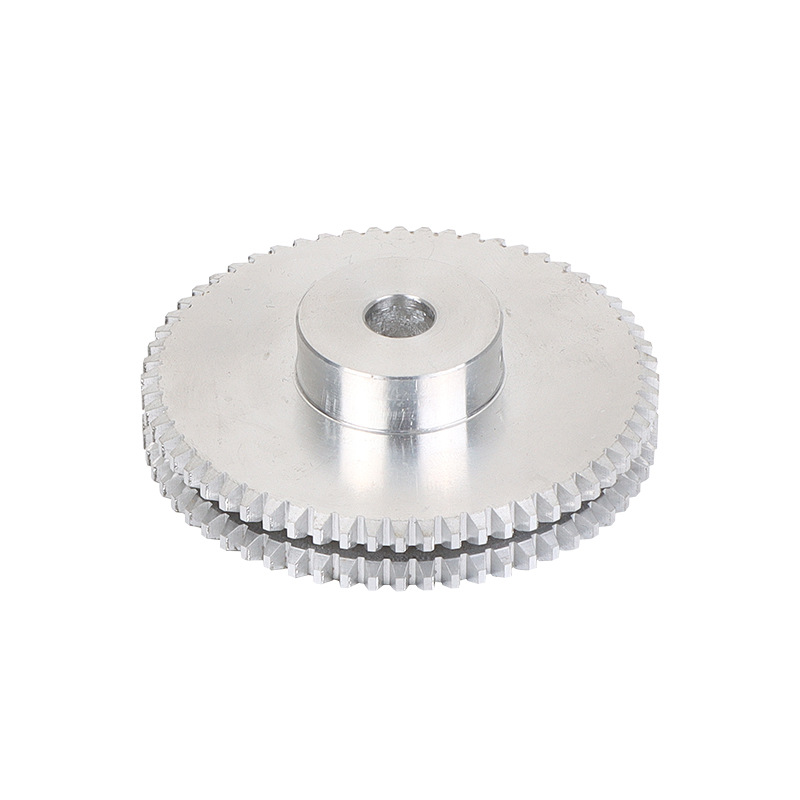
Gears, pulleys, and bearing housings withstand heavy loads and high temperatures. The material’s rigidity maintains precise geometries under load, while abrasion resistance ensures long service life.
Electrical Insulators
Terminal blocks and motor components use Nylon 30%GF’s electrical insulation properties. The material performs in high-temperature environments where unfilled nylon would soften.
Industrial Machinery
Conveyor components, pump parts, and valve bodies resist wear and maintain dimensions in harsh conditions. Chemical resistance to oils and greases suits industrial environments.
Robotics
Structural frames and linkage components leverage Nylon 30%GF’s rigidity and low moisture absorption for precise movement. The material provides dimensional stability essential for repeatable positioning.
Conclusion
CNC machining Nylon 30%GF requires a specialized approach that respects the material’s unique properties. Glass fiber reinforcement provides exceptional strength and dimensional stability but creates significant machining challenges. Tool wear is accelerated by abrasive fibers. Surface defects like fiber pull-out require sharp tools and optimized parameters. Reduced impact resistance demands careful workholding.
Success comes from integrating appropriate techniques across the entire process. Tool selection with carbide materials and TiAlN or DLC coatings withstands abrasion. Cutting parameters balanced for speed, feed, and depth minimize wear while achieving required tolerances. Coolant with high-pressure delivery manages heat and flushes abrasive chips. Workholding with multiple contact points prevents cracking. Post-processing—deburring, annealing—ensures finished parts meet specifications.
The applications span demanding industries. Automotive brackets, aerospace components, industrial gears, and electrical insulators all rely on Nylon 30%GF’s combination of strength, rigidity, and dimensional stability. For manufacturers willing to invest in appropriate tooling, parameters, and processes, Nylon 30%GF delivers exceptional value—providing metal-like performance in a lightweight, cost-effective material.
FAQ
How does machining Nylon 30%GF differ from unfilled nylon?
Nylon 30%GF requires harder, more wear-resistant tools—carbide with coatings—due to its glass fibers. It needs lower cutting speeds and feeds to reduce tool wear. Its lower impact resistance requires careful fixturing to avoid cracking. Tool life is typically 50–70% shorter than when machining unfilled nylon.
Why is tool life shorter when machining Nylon 30%GF?
The glass fibers in Nylon 30%GF are highly abrasive, causing rapid wear on cutting tools. As the tool passes through the material, fibers abrade the cutting edge. This abrasiveness, combined with increased material rigidity, leads to higher cutting forces and shorter tool life compared to unfilled nylon.
How can I prevent surface defects like fiber pull-out in Nylon 30%GF?
Fiber pull-out is prevented by using sharp carbide tools with DLC coatings that cut fibers cleanly. Optimize feed rates—0.1–0.15 mm/tooth—to ensure clean cuts rather than tearing. Maintain proper coolant flow to flush away chips and reduce heat that can loosen fibers. Use climb milling to shear fibers cleanly.
What coolant is best for machining Nylon 30%GF?
Water-soluble coolant at 8–10% concentration is recommended. High-pressure delivery (40–60 bar) helps flush abrasive glass fiber chips from the cutting zone. The coolant dissipates heat that would otherwise accelerate tool wear and can cause thermal damage to the workpiece.
What tolerances can be achieved when machining Nylon 30%GF?
Dimensional accuracy of ±0.008 mm is achievable with proper setup, sharp tools, and optimized parameters. Due to low moisture absorption (0.5–1%), post-machining dimensional changes are minimal—a significant advantage over unfilled nylon where moisture absorption causes swelling.
Contact Yigu Technology for Custom Manufacturing
Need precision Nylon 30%GF components for demanding applications? Yigu Technology specializes in CNC machining glass-reinforced engineering plastics for automotive, aerospace, and industrial sectors. Our engineers select the right tools, optimize cutting parameters, and implement quality controls to deliver reliable parts. Contact us today to discuss your project.