Introduction
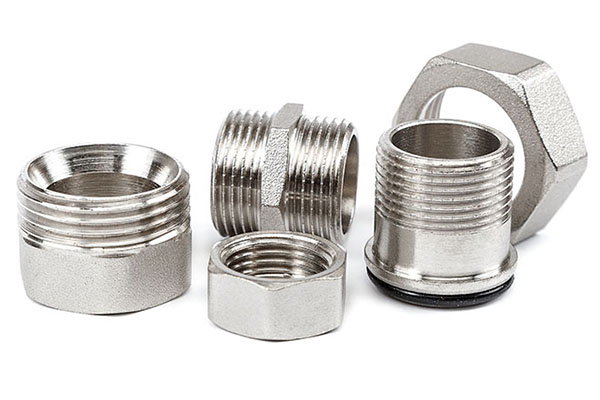
Metal Injection Molding (MIM) is an advanced manufacturing process that combines the design freedom of plastic injection molding with the strength and durability of metal. It produces complex, high-precision metal components that would be impossible or prohibitively expensive to make with traditional methods like machining, casting, or conventional powder metallurgy.
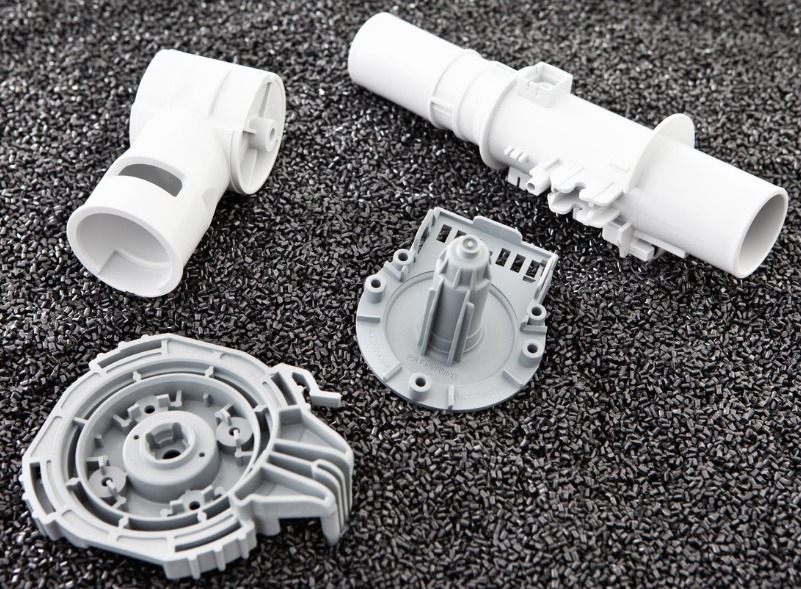
The secret lies in the feedstock—a mixture of fine metal powder and a polymer binder. This feedstock flows like plastic, allowing intricate shapes to be molded. Then, through a carefully controlled process of binder removal (debinding) and high-temperature sintering, the metal particles fuse into a dense, strong, and precise final part.
This guide explores the science behind MIM, the step-by-step process, key applications across industries, and how it compares to traditional manufacturing methods. Whether you are designing components for aerospace, medical devices, consumer electronics, or automotive, understanding MIM can unlock new possibilities for your products.
What Is Metal Injection Molding (MIM)?
Metal Injection Molding (MIM) is a near-net-shape manufacturing technology that produces complex, high-precision metal components. It combines the advantages of plastic injection molding (design freedom, high-volume production) with those of powder metallurgy (material properties, near-net-shape capability).
How It Works at a Glance
| Stage | Description |
|---|---|
| Feedstock preparation | Fine metal powder is mixed with a polymer binder to create a flowable feedstock |
| Injection molding | Feedstock is injected into a precision mold cavity, forming a “green part” |
| Debinding | The binder is removed (thermal; solvent; catalytic), leaving a porous “brown part” |
| Sintering | The part is heated to near the metal’s melting point; particles fuse; densification occurs |
Why MIM Matters
| Advantage | Explanation |
|---|---|
| Complex geometries | Internal channels; undercuts; fine threads—impossible with machining |
| High precision | Tolerances typically ±0.1–0.2 mm; can achieve ±0.05 mm with optimization |
| Material properties | Near-wrought density (95–99%); excellent mechanical properties |
| High-volume production | Cost-effective for 10,000–1,000,000+ parts |
| Material efficiency | Over 95% material utilization; minimal waste |
How Does the MIM Process Work Step by Step?
Step 1: Feedstock Preparation
The foundation of MIM is the feedstock—a homogeneous mixture of fine metal powder and a polymer binder.
| Component | Description | Typical Specifications |
|---|---|---|
| Metal powder | Fine particles (1–50 micrometers); spherical shape for flowability | Particle size: 5–15 µm for high-precision parts |
| Binder | Polymer-based (wax; polypropylene; polyethylene) | 30–60% by volume; provides flowability; holds shape |
Why particle size matters: Finer powders (5–15 µm) produce better surface finish and higher sintered density. Coarser powders may be used for larger parts or cost-sensitive applications.
Key requirement: The feedstock must be homogeneous—no agglomeration of metal powder. Inconsistent mixing leads to defects like porosity or uneven shrinkage.
Step 2: Injection Molding
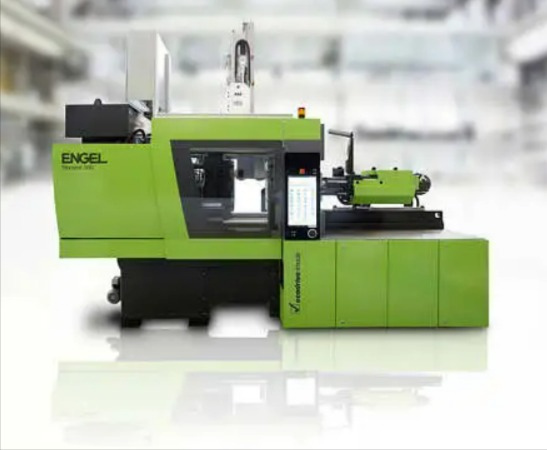
The feedstock is injected into a precision mold cavity using standard injection molding equipment (with modifications for metal powder).
| Parameter | Typical Range | Effect |
|---|---|---|
| Injection speed | 20–80 mm/s | Too slow = incomplete filling; too fast = air entrapment; powder-binder separation |
| Injection temperature | 150–250°C | Binder fluidity; prevents degradation |
| Injection pressure | 5–100 MPa | Higher for complex parts; complete filling |
Example: For a small metal gear with fine teeth, an injection speed of 40–60 mm/s ensures proper filling of intricate tooth profiles without defects. Research on Fe-4Ni alloy MIM parts found that 40 mm/s injection speed produced optimal mechanical properties and density.
After injection, the mold cools, and the green part is ejected. At this stage, the part is fragile—metal powder held together by the binder—with the basic shape of the final product.
Step 3: Debinding
Debinding removes the binder, leaving a porous metal skeleton called the brown part.
| Method | Process | Advantages | Considerations |
|---|---|---|---|
| Thermal debinding | Slow heating in controlled atmosphere; binder decomposes and evaporates | Simple; no chemicals | Slow; risk of cracking if heating too fast |
| Solvent debinding | Immerse in solvent (acetone; hydrocarbons) to dissolve binder | Faster; penetrates complex cavities | Requires secondary thermal debinding to remove residues |
| Catalytic debinding | Catalyst accelerates binder decomposition | Fast; efficient; minimal distortion | Specialized equipment |
Critical control: Heating rate during thermal debinding must be slow—rapid expansion can cause cracking. For wax-based binders, decomposition starts around 150–250°C; the process may take several hours.
Step 4: Sintering
Sintering is the final and most critical step. The brown part is heated to 80–95% of the metal’s melting point in a controlled atmosphere (reducing or inert gas to prevent oxidation).
| Change | Effect |
|---|---|
| Densification | Metal particles bond; porosity decreases; density increases to 95–99% of theoretical |
| Shrinkage | Part shrinks uniformly (typically 15–20% linear); mold design must compensate |
| Microstructure evolution | Grain size and structure affect mechanical properties |
Example: Stainless steel parts may have 60–70% density after debinding; sintering at 1200–1300°C increases density to >95%, achieving near-wrought mechanical properties.
Shrinkage control: Manufacturers use shrinkage factors determined through experimentation to design mold cavities so final sintered parts meet dimensional specifications.
What Metals Can Be Used in MIM?
MIM works with a wide range of metals, each chosen for specific properties.
| Metal/Material | Key Properties | Applications |
|---|---|---|
| Stainless steel (316L; 17-4PH) | Corrosion resistance; biocompatibility; strength | Medical devices; food processing; marine |
| Titanium alloys (Ti-6Al-4V) | High strength-to-weight; biocompatibility | Aerospace; medical implants; dental |
| Nickel-based alloys (Inconel) | High-temperature strength; corrosion resistance | Aircraft engines; gas turbines |
| Tungsten alloys | High density; radiation shielding | Counterweights; medical shielding |
| Low-alloy steel | Strength; cost-effectiveness | Automotive; structural components |
| Copper alloys | Electrical conductivity; thermal conductivity | Heat sinks; electrical connectors |
How Does MIM Compare to Other Manufacturing Processes?
| Aspect | Traditional Machining | Powder Metallurgy | Casting | Metal Injection Molding (MIM) |
|---|---|---|---|---|
| Complex shape capability | Limited by tool access | Limited internal features | Good; but limitations | Excellent |
| Precision (typical tolerance) | High (±0.01 mm) | Moderate (±0.1–0.3 mm) | Varies (sand: low; investment: moderate) | High (±0.1–0.2 mm) |
| Material utilization | Low (waste) | Moderate | Moderate | High (>95%) |
| Volume suitability | Low-medium | High | Medium-high | High (10,000–1,000,000+) |
| Part size | Any | Small-medium | Small-large | Typically <100 g (larger possible) |
| Cost structure | High per-part for complex | Moderate tooling | High initial tooling | Cost-effective at high volumes |
Key insight: MIM excels where complexity, precision, and volume intersect. For simple shapes or very large parts, other methods may be more economical.
What Are the Applications of MIM?
Aerospace
| Component | Benefit |
|---|---|
| Engine blades | Complex aerodynamic shapes; high precision; weight reduction up to 15% |
| Structural brackets | High strength-to-weight; reduced part count; integrated functions |
| Connectors | Precision; reliability; lightweight |
Example: MIM-produced turbine blades achieve optimized aerodynamic shapes, improving engine efficiency by up to 10% while reducing weight.
Medical Devices
| Component | Benefit |
|---|---|
| Surgical instruments | Precise shapes; smooth surfaces; ergonomic design |
| Orthopedic implants | Biocompatibility; wear resistance; complex internal structures |
| Dental implants | High-precision surface finish; promotes osseointegration (>95% success rate) |
| Surgical tools | Fine edges; proper ergonomics; corrosion resistance |
Consumer Electronics
| Component | Benefit |
|---|---|
| USB connectors | Small; precise (±0.1 mm); good electrical conductivity |
| SIM card trays | Tight tolerances; seamless integration |
| Camera rings | High precision; durable finishes |
| Buttons and hinges | Complex shapes; consistent quality |
Market growth: The MIM market in consumer electronics is projected to grow at over 10% CAGR over the next five years, driven by demand for smaller, more functional devices.
Automotive
| Component | Benefit |
|---|---|
| Turbocharger wheels | Complex aerodynamic shapes; high-temperature strength; 10% efficiency improvement |
| Connecting rods | Weight reduction up to 20%; optimized cross-sections |
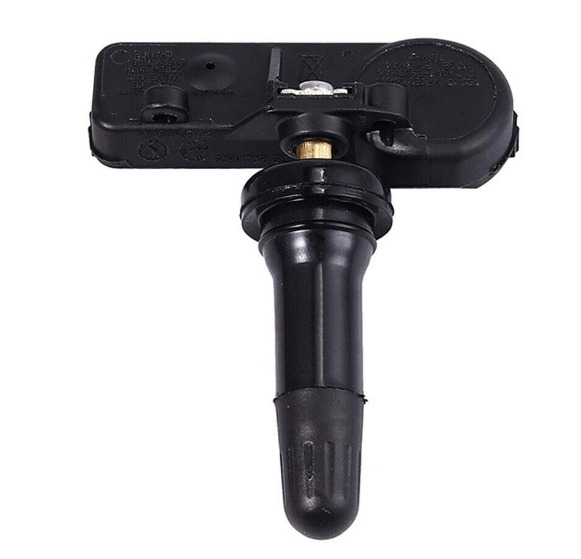
| Sensors and actuators | Precision; durability; high-volume production |
What Are Common Defects and How Do You Avoid Them?
| Defect | Cause | Prevention |
|---|---|---|
| Black lines | Binder degradation; impurities in feedstock | Control injection speed; avoid overheating; use high-quality feedstock |
| Pores | Air entrapment during injection; incomplete sintering | Optimize injection (proper venting); control sintering atmosphere; heating rate |
| Deformation | Uneven stress during debinding or sintering | Slow, uniform heating; proper part design; uniform wall thickness |
| Cracking | Too-rapid heating during debinding | Controlled heating rate; proper binder formulation |
| Incomplete filling | Low injection pressure; slow speed | Increase pressure/speed; optimize mold design |
How Does Yigu Technology View MIM?
As a non-standard plastic metal products custom supplier, Yigu Technology recognizes the transformative potential of Metal Injection Molding. MIM enables us to meet client demands for complex-shaped metal parts with high precision and near-net-shape accuracy.
Our Experience
- Complex components – For high-end consumer electronics, MIM achieves intricate internal structures and tight tolerances
- High-volume production – MIM’s scalability meets large-scale orders efficiently
- Material expertise – Stainless steel; titanium; nickel-based alloys; tungsten
Our Commitment
We are committed to further exploring and applying MIM technology to provide clients with innovative, high-quality non-standard plastic and metal products.
Conclusion
Metal Injection Molding (MIM) is a sophisticated manufacturing process that transforms fine metal powder into high-precision, complex components. Key insights:
- Process – Feedstock preparation → injection molding → debinding → sintering
- Materials – Stainless steel; titanium; nickel alloys; tungsten; low-alloy steel
- Advantages – Complex geometries; high precision (±0.1–0.2 mm); near-wrought density; high-volume cost-effectiveness
- Applications – Aerospace (engine blades; brackets); medical (implants; surgical tools); electronics (connectors; SIM trays); automotive (turbocharger wheels; connecting rods)
MIM’s secret lies in combining the design freedom of plastic injection molding with the material properties of metal. When optimized, it delivers components that are strong, precise, and complex—often at lower cost than traditional methods.
Frequently Asked Questions (FAQ)
What types of metals can be used in Metal Injection Molding?
A wide range of metals can be used, including stainless steels (316L; 17-4PH) for corrosion resistance, titanium alloys (Ti-6Al-4V) for high strength-to-weight and biocompatibility, nickel-based alloys (Inconel) for high-temperature applications, tungsten alloys for high density, and low-alloy steels for cost-effective strength. Material selection depends on application requirements—mechanical properties, corrosion resistance, biocompatibility, and cost.
How accurate are parts produced by Metal Injection Molding?
MIM parts achieve high accuracy with typical dimensional tolerances of ±0.1–0.2 mm (±0.1–0.5% of nominal dimension). With careful process optimization, tolerances as tight as ±0.05 mm can be achieved. This level of precision is critical for applications where components must fit precisely together—miniature mechanical assemblies, electronic connectors, and optical devices.
What are common defects in Metal Injection Molding and how do you avoid them?
Common defects include black lines (binder degradation or impurities—control injection speed; use high-quality feedstock), pores (air entrapment or incomplete sintering—optimize injection venting; control sintering atmosphere), deformation (uneven stress during debinding/sintering—slow, uniform heating; proper part design), and cracking (too-rapid heating during debinding—controlled heating rate). Proper process control and part design prevent most defects.
How does MIM compare to traditional machining?
MIM excels for complex shapes, internal features, and high-volume production. Traditional machining offers high precision for simple shapes but struggles with internal features and has low material utilization (waste). MIM is cost-effective at high volumes (10,000+ parts); machining is more economical for low volumes and simple geometries. Material utilization: MIM >95%; machining often <50%.
What is the typical shrinkage in MIM parts?
MIM parts undergo 15–20% linear shrinkage during sintering (approximately 15–20% linear; 30–40% volumetric). Mold design must compensate using shrinkage factors determined through experimentation. Uniform shrinkage allows predictable final dimensions; non-uniform shrinkage causes distortion. Proper part design (uniform wall thickness) and process control minimize anisotropic shrinkage.
Contact Yigu Technology for Custom Manufacturing
At Yigu Technology, we specialize in Metal Injection Molding (MIM) for complex, high-precision metal components. Our expertise spans material selection, feedstock formulation, mold design, and process optimization—delivering high-quality parts for aerospace, medical, electronics, and automotive industries.
Our MIM capabilities include:
- Material expertise – Stainless steel; titanium; nickel alloys; tungsten; low-alloy steel
- Precision molding – Complex geometries; tight tolerances
- Process optimization – Controlled debinding; sintering; shrinkage compensation
- Quality assurance – Dimensional inspection; density measurement; mechanical testing
- Volume flexibility – Prototypes to high-volume production
We help clients achieve complex shapes, high precision, and cost-effective production—unlocking new possibilities for metal components.
Contact us today to discuss your Metal Injection Molding project. Let our expertise help you transform powder into precision.