Introduction
Swiss machining is not new. It originated in Switzerland, built for the exacting demands of watchmaking. But today, it powers industries far beyond timepieces. Medical implants. Aerospace components. Automotive fuel systems. Electronics connectors.
What makes this technique so special? Why do manufacturers choose Swiss machining over traditional CNC methods?
This guide answers these questions. You will learn how Swiss machining works, what advantages it offers, and where it delivers the most value. By the end, you will understand why this specialized process is essential for producing the smallest, most complex, and most precise parts in modern manufacturing.
What Is Swiss Machining and How Does It Work?
Definition and Origins
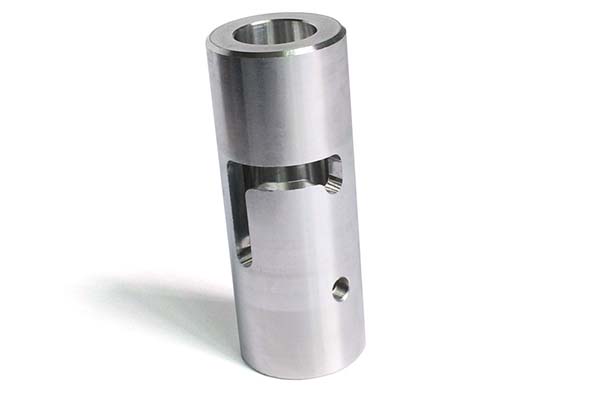
Swiss machining, also known as Swiss-type lathe turning or Swiss screw machining, is a technique for producing highly precise and complex parts. It uses a Swiss automatic lathe—a machine designed to hold long, thin workpieces while rotating them against stationary cutting tools.
The process originated in Switzerland in the late 19th century. Swiss watchmakers needed tiny, precise components for their timepieces. The machines they developed became the foundation of modern Swiss machining.
The Guide Bushing System
The defining feature of a Swiss lathe is the guide bushing. This component supports the workpiece close to the cutting point. It holds the material firmly, preventing deflection.
In traditional lathes, the workpiece extends from the chuck. Long, thin parts can bend or vibrate under cutting forces. The guide bushing solves this. It supports the material from both ends—the chuck holds one end, the bushing supports the work zone.
This system enables:
- Machining of long, slender parts without deflection
- Cutting forces applied close to the support point
- Consistent accuracy across the entire part length
Single Setup Machining
Swiss lathes perform multiple operations in a single setup. A single machine can:
- Turn diameters
- Mill flats and slots
- Drill holes (axial and cross)
- Thread (internal and external)
- Ream, bore, and knurl
The workpiece moves through the guide bushing while tools perform operations from multiple axes. The part is completed in one cycle. No secondary operations. No re-fixturing. No handling errors.
How Does Swiss Machining Compare to Traditional CNC?
| Feature | Swiss Machining | Traditional CNC Turning |
|---|---|---|
| Workpiece support | Guide bushing near cutting point | Chuck only, part extends unsupported |
| Part length capability | Long, slender parts with high L/D ratio | Limited by deflection |
| Operations per setup | Multiple (turning, milling, drilling, threading) | Primarily turning; milling requires secondary setup |
| Typical tolerance | ±0.001 mm or better | ±0.005–0.01 mm |
| Material waste | Minimal—machines near net shape | Higher waste from bar remnants |
| Secondary operations | Rare—most parts complete in one cycle | Often required for complex features |
What Are the Key Advantages of Swiss Machining?
Precision and Tight Tolerances
Swiss machining achieves extremely tight tolerances. Parts can be held to ±0.001 mm or better.
The guide bushing is the reason. It eliminates deflection. Cutting forces do not push the workpiece away. Vibration is minimized. The result is consistent accuracy across the entire part length.
For industries where small variations cause failure, this precision is essential. Aerospace components must perform reliably under extreme conditions. Medical implants must fit precisely within the human body. Swiss machining delivers the required accuracy.
Material Efficiency
Swiss machining is highly efficient with material. The process produces parts with minimal waste.
The guide bushing allows machining very close to the bar end. Remnants are shorter than with traditional lathes. Material that would become scrap is instead turned into finished parts.
For expensive materials like titanium, stainless steel, and PEEK, this efficiency matters. Material savings directly reduce part costs. It also supports sustainability goals by reducing waste.
Reduced Secondary Operations
Traditional machining often requires multiple setups. A part might be turned on a lathe, then moved to a mill for secondary features. Each setup adds time, cost, and opportunities for error.
Swiss machining performs turning, milling, drilling, and threading in one setup. Complex parts come off the machine complete.
The benefits are significant:
- Reduced lead times – One cycle instead of multiple operations
- Lower costs – Less handling, fewer machines, less labor
- Improved accuracy – No errors from repositioning between setups
Multi-Feature Production
Swiss machining excels at producing multi-feature parts in a single operation. A part requiring:
- Multiple diameters
- Cross holes
- Slots and flats
- Internal and external threads
- Complex contours
Can be completed in one pass. The machine integrates all operations into one coordinated cycle.
This capability is especially valuable for medical devices, where a single component may combine several functions. Orthopedic screws, for example, require precise threads, driver recesses, and tapered diameters—all machined in one setup.
Surface Finish Quality
The stability of Swiss machining produces exceptional surface finishes. Parts exhibit smoother surfaces with fewer imperfections.
Good surface finish matters for:
- Fluid dynamics – Smooth surfaces reduce friction and improve flow
- Mechanical wear – Smoother surfaces last longer
- Aesthetics – Visible components require cosmetic quality
High-quality finishes can eliminate the need for secondary polishing or grinding, saving time and cost.
Where Is Swiss Machining Used?
Watchmaking
Swiss machining and watchmaking are inseparable. The technique was born from the need for precise watch components.
Gears, springs, bezels, and tiny screws all require tight tolerances. A watch’s accuracy depends on every component meeting its specifications. Swiss machining delivers the precision required.
Medical Devices
The medical industry demands precision. Surgical instruments must perform reliably. Implants must fit exactly.
Swiss machining produces:
- Spinal implants – Complex geometries with critical dimensions
- Orthopedic screws – Precise threads for bone fixation
- Vascular stents – Tiny, intricate structures
- Surgical tools – Handles, drivers, and cutting instruments
Biocompatible materials like titanium and PEEK are common. Swiss machining handles them efficiently, minimizing waste from expensive materials.
Aerospace Industry
Aerospace components must withstand extreme conditions. They must be lightweight, strong, and highly precise.
Swiss machining produces:
- Turbine blades – Complex airfoil shapes
- Fasteners – High-strength threaded components
- Control system parts – Small, precise mechanisms
- Hydraulic fittings – Leak-proof connections
The tight tolerances and material efficiency of Swiss machining align with aerospace requirements.
Automotive and Electronics
The automotive industry uses Swiss machining for:
- Fuel injection components – Precise metering of fuel
- Sensor housings – Consistent dimensions for reliable operation
- Small engine parts – High-volume precision components
In electronics, Swiss machining produces:
- Connector pins – Consistent dimensions for reliable contact
- Small housings – Precise fits for miniature devices
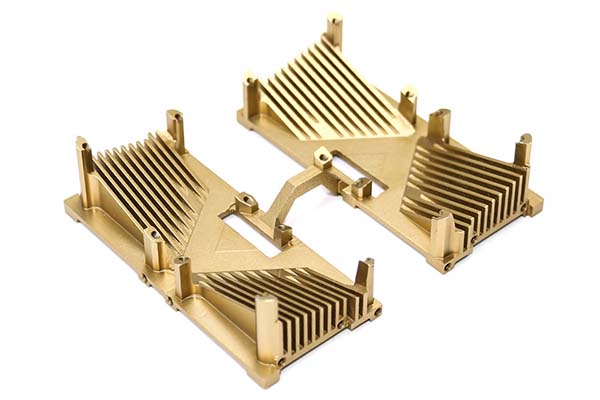
- Heat sinks – Complex cooling structures
What Does the Future Hold for Swiss Machining?
Technological Advancements
Swiss machining continues to evolve. CNC controls are faster and more sophisticated. Automation reduces manual intervention. Tooling technologies improve speed and tool life.
Hybrid manufacturing is emerging. Some Swiss lathes now integrate additive capabilities. Parts can be built up with 3D printing and finished with precision machining in the same machine.
Industry Adoption
Swiss machining is gaining popularity across industries. Automotive, electronics, and defense sectors are adopting it for its speed, accuracy, and material efficiency.
As products become smaller and more complex, the demand for Swiss machining grows. Miniaturization trends in medical devices and electronics favor this precise, efficient process.
Environmental Considerations
Swiss machining is already material-efficient. Efforts continue to improve sustainability:
- Energy efficiency – Reducing power consumption
- Optimized cutting fluids – Longer fluid life, less waste
- Recyclable materials – Using materials that can be reclaimed
- Reduced emissions – Better filtration and containment
Conclusion
Swiss machining delivers precision that traditional methods cannot match. The guide bushing system eliminates deflection, enabling tight tolerances and superior surface finishes. Single-setup machining reduces secondary operations, saving time and cost. Material efficiency minimizes waste, especially valuable with expensive alloys.
From watchmaking to medical implants, from aerospace to automotive, Swiss machining produces the small, complex parts that modern technology depends on. As industries demand ever-greater precision and efficiency, Swiss machining will remain essential.
FAQ
What are the primary benefits of Swiss machining over traditional CNC machining?
Swiss machining offers higher precision due to the guide bushing system, reduced secondary operations by performing multiple tasks in a single setup, and improved material efficiency with minimal waste. These benefits make it ideal for small, complex parts requiring tight tolerances and excellent surface finishes.
How does Swiss machining achieve such high levels of precision?
The guide bushing system stabilizes the workpiece close to the cutting point, reducing deflection and vibration. Advanced CNC controls allow extremely fine adjustments. Together, these enable tolerances of ±0.001 mm or better.
In which industries is Swiss machining most commonly used?
Swiss machining is widely used in watchmaking, medical devices, aerospace, automotive, and electronics. These industries demand high-precision, small, complex components with tight tolerances and superior surface finishes.
What materials can be machined on Swiss lathes?
Swiss lathes handle a wide range of materials, including stainless steel, titanium, aluminum, brass, and engineering plastics like PEEK and Delrin. The process is especially valuable for expensive materials due to its material efficiency.
Can Swiss machining produce parts with both turning and milling features?
Yes. Swiss lathes perform turning, milling, drilling, threading, and other operations in a single setup. Complex parts with multiple features are completed in one cycle, eliminating secondary operations.
Contact Yigu Technology for Custom Manufacturing
At Yigu Technology, we specialize in Swiss machining for demanding industries. Our Swiss-type lathes are equipped with guide bushing systems, multi-axis capabilities, and automated bar feeders for efficient, high-precision production.
We work with materials including stainless steel, titanium, aluminum, PEEK, and other engineering plastics. Our tolerances meet the strictest requirements—medical, aerospace, and automotive standards.
From prototyping to high-volume production, we deliver complex, multi-feature parts in a single setup. Our quality control includes CMM inspection, surface finish testing, and full traceability.
Contact us today to discuss your Swiss machining project. Let our expertise help you achieve the precision, efficiency, and quality your application demands.