Introduction
You have a worn gear from a piece of machinery. The equipment is decades old. The original manufacturer no longer exists. There are no drawings. No CAD files. No way to order a replacement. The machine is down. Production is stopped. What do you do?
Traditional manufacturing would say: you are out of luck. Without drawings, you cannot make the part.
Reverse CNC offers a different answer. It starts with the physical part—worn, damaged, but still existing. It scans that part, creates a digital model, and then machines a new one. No drawings required.
This technology is changing how we repair equipment, replicate parts, and even develop new products. At Yigu Technology, we use reverse CNC to solve problems that traditional manufacturing cannot address. This guide explains what reverse CNC is, how it works, and where it delivers the most value.
What Exactly Is Reverse CNC?
Breaking the Traditional Logic
Traditional CNC machining follows a simple flow: digital → physical. You start with a drawing or CAD model. You program the machine. You cut the part. The digital model comes first.
Reverse CNC reverses this flow: physical → digital → physical. You start with a physical part. You scan it to create a digital model. Then you machine a new part from that model.
Real-World Example:
A heavy machinery manufacturer had a core gear that was seriously worn. The original factory had stopped production. No drawings existed. Using reverse CNC, engineers:
- Scanned the worn gear with a 3D scanner
- Captured every feature: tooth shape, bore diameter, keyway
- Reconstructed the CAD model
- Generated machining paths
- Produced a new, exact replacement gear
The equipment was back in operation within days. Without reverse CNC, the machine would have been scrapped.
The Three Core Technologies
Reverse CNC relies on three interconnected technologies:
| Technology | Role | Analogy |
|---|---|---|
| 3D scanning | Captures surface data | The "eyes" of reverse engineering |
| Point cloud processing | Converts scan data into usable geometry | The "data translator" |
| CAD model reconstruction | Creates editable 3D models | The "bridge" between scan and machine |
Each is essential. Poor scanning creates bad data. Bad data creates bad models. Bad models create bad parts.
How Reverse CNC Differs from Traditional CNC and Additive Manufacturing
| Technology | Core Logic | Best For | Strengths | Limitations |
|---|---|---|---|---|
| Reverse CNC | Physical → Digital → Physical | Part reproduction, wear repair, no-drawing work | No drawings needed; works with old equipment | Depends on scan accuracy; complex surfaces challenging |
| Traditional CNC | Digital → Physical | Mass production, standardized parts | High precision; high efficiency | Requires complete design drawings |
| Additive + Reverse | Physical → Digital → 3D print | Complex repairs, small-batch custom | Flexible; complex geometries | Material strength limits; not for high-load parts |
What Problems Can Reverse CNC Solve?
Industrial Manufacturing: Saving Old Equipment
In manufacturing, machines age. Parts wear. Drawings get lost. Reverse CNC keeps equipment running.
Real-World Example: Mold Cavity Repair
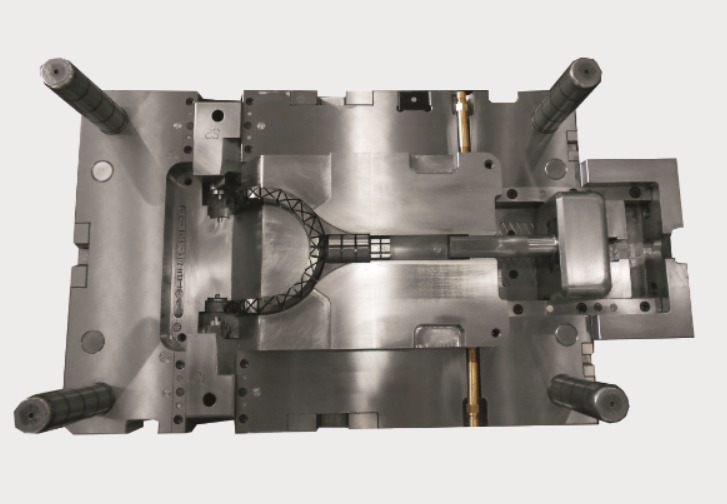
A mold factory had a set of injection molds that had been in production for 10 years. The cavities were worn, causing product size deviations. The original design drawings were lost—a computer failure had wiped them out.
Using reverse CNC:
- A structured light scanner (0.02 mm accuracy) captured the cavity surface
- Geomagic Design X processed the point clouds and fixed scan blind spots
- The CAD model was reconstructed, with wear areas optimized
- Machining paths were generated; a CNC mill repaired the cavity
Results:
- Total time: 3 days
- Cost and time savings: 80% compared to redesigning the mold from scratch
Other industrial applications:
- Mold duplication: Replicating molds without original drawings
- Mold modification: Changing single-cavity molds to multi-cavity; optimizing runners without starting from scratch
- Legacy equipment: Keeping old machinery running when replacement parts no longer exist
Aerospace: High-Precision Part Repair
Aerospace components are expensive. A single turbine blade can cost hundreds of thousands of dollars. Replacing it is costly. Repairing it is often better—if you can do it accurately.
Real-World Example: Engine Blade Repair
An airline had a worn turbine blade. Replacement cost was prohibitive. Using reverse CNC:
- An industrial-grade laser scanner captured the blade's complex surface and internal cooling channels
- The scan was compared to original design parameters to locate wear areas
- Machining paths were generated; a 5-axis CNC machine repaired the blade precisely
Results:
- Repaired blade performed like new
- Cost: 1/5 of replacement cost
Digital archiving: Reverse CNC also enables digital archiving of critical aerospace components. Key structural parts are scanned and modeled, creating digital records for future maintenance and repair. This is especially valuable for aircraft with long service lives.
Automotive: Classic Reproduction and Rapid Development
Reverse CNC serves both ends of the automotive spectrum: preserving classics and accelerating new development.
Classic Car Restoration:
A restoration shop needed pistons for a 1960s classic car. No replacements existed. Using reverse CNC:
- A portable 3D scanner captured the only remaining piston
- The CAD model was reconstructed, restoring the skirt shape, pin hole position, and combustion chamber
- A CNC lathe machined four new pistons
Result: The classic car returned to the road with perfect-fitting reproduction parts.
New Car Development:
Automakers use reverse CNC in prototype development. A clay model is sculpted, then scanned to create a digital model. Designers can rapidly iterate—modifying the digital model, then machining new prototypes.
Result: Development cycles shorten by 30% compared to traditional forward engineering.
Cultural Heritage and Art: Preservation and Commercialization
Reverse CNC bridges the gap between physical artifacts and digital preservation.
Heritage Restoration:
A museum needed to restore a Han Dynasty bronze tripod. The cauldron body had多处 damage. Using reverse CNC:
- A non-contact 3D scanner captured the complete shape without touching the artifact
- Based on symmetry principles, the damaged sections were reconstructed
- The restoration was 3D printed in resin and bronze-plated
Result: The repaired tripod showed almost no signs of damage, and the original artifact was preserved untouched.
Art Reproduction:
Sculptors can scan clay models, then use CNC engraving machines to produce stone or wood replicas in quantity. This enables:
- Multiple copies of original sculptures
- Scaled versions for different applications
- Commercial products derived from original art
What Is the Practical Process?
Step 1: Data Collection—Choose the Right Equipment
Data collection is the foundation. Garbage in, garbage out. The choice of scanning equipment determines achievable accuracy.
| Scanner Type | Accuracy | Best For | Operational Tips |
|---|---|---|---|
| Portable 3D scanner | 0.01–0.1 mm | Large parts; on-site scanning | Keep steady distance; avoid occlusion |
| Industrial fixed scanner | 0.005–0.02 mm | High-precision parts; small parts | Fix part; adjust angles to cover all surfaces |
| Structured light scanner | 0.02–0.05 mm | Molds; automotive parts | Good for complex surfaces with detail |
Practical tips before scanning:
- Clean the part surface—remove oil, dust, debris
- For reflective surfaces (metal), apply a matte spray to avoid blind spots
- Plan your scan path to cover all critical areas
- For large parts, use reference markers to align multiple scans
Step 2: Data Processing—From Point Cloud to Model
The scanned data is a point cloud—millions of discrete points. Processing turns this into usable geometry.
Three processing steps:
| Step | What It Does | Key Consideration |
|---|---|---|
| Alignment and optimization | Stitches multiple scans; removes noise and duplicates | Ensure all critical areas are captured |
| Surface reconstruction | Converts points to polygonal mesh, then to NURBS surfaces | Maintain smooth, continuous surfaces |
| Parametric modeling | Converts surfaces to editable CAD models | Add dimensional constraints; enable modifications |
Common software:
- Geomagic Design X: Point cloud processing + modeling integration
- CopyCAD: Specialized in surface reconstruction
- SolidWorks reverse module: For simpler parts
Practical tips:
- For complex surfaces, reconstruct in regions and then stitch together
- For symmetrical parts, scan half and mirror to create the full model
- Verify dimensions against known reference points
Step 3: Machining Preparation—From Model to Machine
The final step translates the digital model into machining instructions.
Three key tasks:
| Task | What It Does | Tools |
|---|---|---|
| Toolpath generation | Creates CNC paths from CAD model | CAM software (Mastercam, UG) |
| Post-processing | Converts paths to machine-specific G-code | Post-processors for FANUC, Siemens, etc. |
| Fixture design | Creates holding fixtures for irregular parts | Reverse design based on part shape |
Real-World Example:
A hardware factory needed to machine an irregularly shaped aluminum alloy part. By reverse-designing a fixture based on the part's shape, they achieved accurate positioning and machining accuracy of ±0.03 mm—meeting customer requirements.
What Equipment and Software Do You Need?
Scanning Equipment: Choose Based on Need
| Budget/Need | Recommended | Price Range | Accuracy |
|---|---|---|---|
| Small to medium parts, limited budget | Portable 3D scanner (e.g., EinScan Pro 2X Plus) | ¥10,000–30,000 | 0.02 mm |
| High-precision, industrial | Industrial fixed scanner (e.g., Hexagon Absolute Arm) | ¥50,000–200,000 | 0.008 mm |
| Non-contact, delicate parts | Structured light scanner (e.g., Artec Eva) | ¥20,000–80,000 | 0.02–0.05 mm |
Rule: Do not blindly pursue the highest accuracy. Match the equipment to your application. A 0.02 mm scanner is sufficient for most mechanical parts.
Software Tools: Mainstream Combinations
| Level | Software | Best For |
|---|---|---|
| Entry | Geomagic Wrap + SolidWorks | Beginners; simple parts |
| Professional | Geomagic Design X + Mastercam | Complex parts; production |
| High-end | CopyCAD + UG NX | Aerospace; high-precision curved surfaces |
Integrated Systems: One-Stop Solutions
For businesses seeking efficiency, integrated scanning-modeling-machining systems are available. An auto parts factory used a system combining scanner, Geomagic Design X, and 5-axis CNC to complete the entire process from scan to machined part in 24 hours—50% faster than traditional step-by-step operations.
Yigu Technology's Perspective
At Yigu Technology, we see reverse CNC as a fundamental shift in manufacturing capability. It breaks the dependency on original drawings—a dependency that has stranded countless machines, vehicles, and products.
The value is clear:
- For repair: Keep old equipment running when replacements no longer exist
- For reproduction: Replicate parts without tooling or drawings
- For development: Accelerate product development by working from physical prototypes
In the context of manufacturing transformation, reverse CNC reduces costs and shortens cycles. A mold that would take weeks to redesign can be reproduced in days. An engine blade that would cost hundreds of thousands to replace can be repaired for a fraction of that.
As scanning technology advances and AI algorithms improve, reverse CNC will become more intelligent and accessible. It will bridge the physical and digital worlds, creating value across industries. For manufacturers, deploying reverse CNC technology is not just an option—it is becoming a competitive necessity.
Conclusion
Reverse CNC turns the traditional manufacturing model on its head. Instead of starting with drawings, it starts with the physical part. It scans. It models. It machines. The result is a new part that matches the original—without drawings, without tooling, often without the original manufacturer.
This capability solves real problems:
- Keeping old equipment running
- Repairing high-value components
- Restoring classic vehicles
- Preserving cultural heritage
The technology is mature. The equipment is accessible. The process is proven. For any business that deals with legacy equipment, rare parts, or custom reproduction, reverse CNC is a tool worth mastering.
FAQ
How accurate can reverse CNC machining be?
Accuracy depends on scanning equipment and machining. In industrial-grade applications, reverse CNC achieves ±0.005–0.02 mm. This meets the requirements for most mechanical parts and molds. High-end systems with laser scanners and precision machining centers can achieve even tighter tolerances.
What materials can reverse CNC machine?
Reverse CNC is compatible with the same materials as traditional CNC machining:
- Metals: Steel, stainless steel, aluminum, brass, copper, titanium
- Plastics: ABS, polycarbonate, PEEK, acetal, nylon
- Wood: Hardwood, plywood, MDF
- Stone: Marble, granite (with specialized equipment)
The choice of machine and tooling determines material suitability.
Can I operate reverse CNC without specialized expertise?
Basic operation requires learning scanning and modeling software. For simple parts, training can take 1–2 weeks. For complex surfaces and high-precision work, deeper expertise is needed. Integrated intelligent systems with automated processing lower the learning curve. Professional training is recommended for industrial applications.
What is the difference between reverse CNC and 3D printing?
They are fundamentally different:
- Reverse CNC is subtractive manufacturing—removing material from a solid block. It is suitable for high-precision, high-strength parts.
- 3D printing is additive manufacturing—building up material layer by layer. It is suitable for complex geometries and low-volume production.
The two can be combined. For example, use reverse CNC to machine a mold, then use 3D printing to produce parts from that mold. Or scan an existing part, modify the digital model, and 3D print a revised version.
Contact Yigu Technology for Custom Manufacturing
At Yigu Technology, we offer reverse CNC services alongside traditional CNC machining. Our capabilities include:
- 3D scanning with industrial-grade equipment (accuracy to 0.008 mm)
- Point cloud processing and CAD reconstruction using Geomagic Design X and SolidWorks
- CNC machining of scanned and reconstructed parts
- Fixture design for irregular parts
We serve the industrial manufacturing, aerospace, automotive, and cultural heritage sectors. Whether you need to repair a worn mold, replicate a discontinued part, or digitize a physical artifact, we have the tools and expertise to deliver.
Contact us today to discuss your reverse CNC project. Let us turn your physical parts into digital models—and back into precision-machined components.