Introduction
3D printing—also called additive manufacturing—has moved far beyond its early days as a prototyping novelty. It's now a transformative force reshaping how products are designed, manufactured, and delivered.
Unlike traditional methods that cut away material, additive manufacturing builds objects layer by layer from digital files. This fundamental difference unlocks possibilities that were previously impossible:
- Complex geometries that machining can't create
- Customization without cost penalties
- Material efficiency that reduces waste by up to 90%
- Rapid iteration that compresses development cycles
At Yigu technology, we've witnessed this revolution firsthand. This guide explores how 3D printing is changing manufacturing—from core technologies to real-world impact.
What Is Additive Manufacturing?
The Basic Idea: Building Up, Not Cutting Down
Additive manufacturing constructs three-dimensional objects by layering materials based on a digital model. Think of building with Lego bricks—each layer adds to the previous until the complete structure forms.
This contrasts sharply with traditional subtractive manufacturing:
- Subtractive: Starts with a block and removes material (cutting, milling, drilling). Like a sculptor chiseling marble—much of the original material becomes waste.
- Additive: Starts with nothing and adds material only where needed. Like building with bricks—minimal waste, maximum efficiency.
Key Advantages of Additive Manufacturing
- Complex geometries: Create internal channels, lattice structures, and organic shapes impossible with traditional methods
- High material utilization: Only material that becomes the part gets used—waste drops dramatically
- Design freedom: No constraints from tool access or mold draft angles
- Rapid iteration: Changes made digitally, printed immediately
How Does 3D Printing Work?
The Basic Process
1. Design
Everything starts with a digital 3D model created in CAD software. Designers can create intricate details, taking full advantage of 3D printing's freedom.
2. Preparation
The model is sliced into thin layers—typically 0.1-0.4 mm thick. Slicing software generates a toolpath—instructions for where to deposit material in each layer.
3. Printing
The printer follows the toolpath, depositing material layer by layer. Different technologies use different methods:
- FDM: Melts and extrudes plastic filament
- SLA: Cures liquid resin with UV laser
- SLS: Fuses powder with laser
4. Post-Processing
After printing, parts may need:
- Support removal (for FDM and SLA)
- Sanding and polishing for smooth surfaces
- Heat treatment (for metals)
- Painting or coating
What Are the Key 3D Printing Technologies?
| Technology | Material Type | Precision | Surface Finish | Cost | Supports Needed? |
|---|---|---|---|---|---|
| FDM | Thermoplastic filaments (ABS, PLA) | Moderate (0.1-0.4mm) | Rough, visible layer lines | Low | Yes |
| SLA | Liquid resin | High (sub-mm) | Smooth | High | Yes |
| SLS | Powdered materials (plastic, metal) | High | Rough, may need post-processing | High | No |
FDM: Accessible and Affordable
Fused Deposition Modeling melts thermoplastic filament and extrudes it through a nozzle. It's the most common technology for desktop printers.
Best for: Prototypes, large parts, low-cost production
Materials: PLA, ABS, PETG, TPU, nylon
SLA: Exceptional Detail
Stereolithography uses a UV laser to cure liquid resin layer by layer. It produces parts with smooth surfaces and fine details.
Best for: Jewelry patterns, dental models, high-detail prototypes
Materials: Photopolymer resins (standard, tough, castable, biocompatible)
SLS: Strong, Complex Parts
Selective Laser Sintering uses a laser to fuse powdered material. Unfused powder supports the part—no supports needed.
Best for: Functional parts, complex geometries, small-batch production
Materials: Nylon, glass-filled nylon, composites, some metals
How Is 3D Printing Revolutionizing Manufacturing?
Cost-Effectiveness and Time Efficiency
3D printing transforms the economics of production, especially for small batches.
Traditional manufacturing requires high upfront investment:
- Injection molds: $5,000 to $100,000+
- Tooling and setup: Weeks to months
- Economies of scale: Only cost-effective at high volumes
3D printing eliminates most upfront costs:
- No molds: Print directly from digital files
- Minimal setup: Hours instead of weeks
- Small-batch economics: Cost-effective for runs of 1-100 parts
Data point: For small-batch production runs of up to 100 parts, 3D printing can be up to 50% more cost-effective than traditional methods (Wohlers Associates).
Time savings are equally dramatic:
- Traditional: Days to weeks for a prototype
- 3D printing: Hours to days—part complexity permitting
Customization and Personalization
3D printing makes customization free. Each part can be different at no extra cost.
Medical prosthetics: Traditional prosthetics are mass-produced in standard sizes, requiring extensive modification. 3D-printed prosthetics are scanned and printed to fit each patient exactly.
Result: A study in the Journal of Prosthetics and Orthotics showed 3D-printed prosthetics led to a 30% increase in patient satisfaction due to better fit and personalized design.
Aerospace components: Engine parts can be customized for specific aircraft models or missions. GE Aviation prints fuel nozzles for LEAP engines with complex internal structures that improve fuel atomization—boosting efficiency and reducing emissions.
Design Freedom and Complex Geometry
3D printing removes design constraints that have limited manufacturing for centuries.
Traditional limitations:
- Machining: Can't cut what tools can't reach
- Casting: Draft angles required for mold release
- Assembly: Complex shapes require multiple parts
3D printing freedom:
- Internal channels: Cooling passages that follow part contours
- Lattice structures: Lightweight, strong, optimized
- Organic shapes: Designed for function, not manufacturability
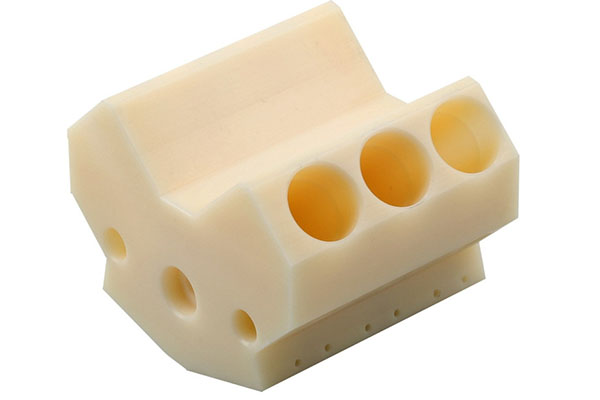
Automotive example: 3D-printed engine blocks with optimized cooling channels improve heat dissipation, enhancing performance and durability.
Architecture example: Free-form building models with intricate facades and organic shapes—impossible with traditional scale models.
Sustainability
3D printing is inherently more sustainable than traditional manufacturing:
- Material waste: Reduced by up to 90% in some applications (World Economic Forum)
- Energy efficiency: Less energy per part for complex geometries
- Local production: Reduce transportation emissions
- On-demand manufacturing: No inventory waste
What Does the Future Hold?
Expanded Material Options
New materials emerge constantly:
- High-performance polymers approaching metal strength
- Metal alloys with specialized properties
- Composites with tailored characteristics
- Bio-materials for medical applications
- Sustainable materials from renewable sources
Larger Build Volumes
Printers continue to grow:
- Construction-scale printers building houses
- Industrial systems capable of meters-long parts
- Continuous printing for production lines
Faster Printing
Multi-laser systems, continuous processes, and improved software increase speed. The gap between additive and traditional narrows.
Hybrid Manufacturing
Combining additive and subtractive in one machine:
- Print near-net shape
- Machine critical surfaces
- All in one setup
Distributed Manufacturing
Print parts where they're needed:
- Reduce shipping costs
- Eliminate inventory
- Respond faster to demand
Yigu Technology's Perspective
At Yigu technology, we've seen 3D printing evolve from prototyping tool to production powerhouse. Here's what we've learned:
The technology is transformative, not universal. Use it where it adds value—complexity, customization, speed, sustainability.
Material selection drives success. Choose based on application requirements, not just availability.
Design for the process. The freedom of 3D printing requires new design approaches. Lattice structures, internal channels, and part consolidation don't happen by accident.
The future is hybrid. Traditional and additive manufacturing will work together, each doing what it does best.
Applications we serve:
- Aerospace components with complex internal features
- Medical implants customized to patient anatomy
- Automotive parts for performance and prototyping
- Consumer goods with personalized designs
- Industrial tooling optimized for specific processes
Conclusion
3D printing is revolutionizing the future of additive manufacturing through:
- Cost-effectiveness: Up to 50% savings for small batches
- Customization: 30% increase in patient satisfaction for medical applications
- Design freedom: Geometries impossible with traditional methods
- Sustainability: Material waste reduced by up to 90%
Key technologies—FDM, SLA, SLS, metal printing—each serve different needs. Materials range from basic PLA to high-performance titanium.
Applications span:
- Aerospace: Lighter, more efficient components
- Medical: Custom implants, prosthetics
- Automotive: Rapid prototyping, production parts
- Consumer goods: Personalized products
- Construction: 3D-printed homes in 24 hours
The future brings larger printers, faster speeds, more materials, and hybrid manufacturing.
3D printing isn't just another manufacturing method. It's a fundamentally new capability that's transforming what's possible.
FAQ
What's the difference between 3D printing and additive manufacturing?
The terms are often used interchangeably. 3D printing originally referred to consumer/hobbyist applications. Additive manufacturing is the industrial term. Technically, they're the same process—building objects layer by layer from digital models.
Which 3D printing technology is best for beginners?
FDM is the most accessible—printers under $300, PLA filament about $20/kg, huge community support. It's perfect for learning the basics before moving to more advanced technologies.
How strong are 3D-printed parts?
Strength depends on material and process:
- PLA: Moderate, brittle
- ABS: Good, impact-resistant
- Nylon: Excellent, wear-resistant
- Metal: Matches or exceeds traditionally manufactured
- Carbon-fiber composites: Very high strength-to-weight
For functional parts, choose material based on requirements.
Is 3D printing environmentally friendly?
Yes, compared to traditional manufacturing:
- Material waste: Reduced by up to 90%
- Energy: Less for complex parts
- Transportation: Local production reduces shipping
- Inventory: On-demand eliminates waste from unsold goods
Can 3D printing replace traditional manufacturing?
No—and it shouldn't. Traditional manufacturing excels at high-volume, simple parts. 3D printing excels at complexity, customization, and low volumes. The future is hybrid—using both where they work best.
What industries benefit most from 3D printing?
- Aerospace: Lightweight, complex components
- Medical: Custom implants, prosthetics, surgical guides
- Automotive: Prototyping, custom parts, tooling
- Consumer goods: Personalized products
- Industrial: Tooling, fixtures, replacement parts
Any industry needing complex, customized, or low-volume parts benefits.
Contact Yigu Technology for Custom Manufacturing
Ready to leverage 3D printing for your manufacturing needs? Yigu technology specializes in custom manufacturing with all major 3D printing technologies.
We offer:
- Free quotes within 24 hours—just send your CAD file
- Technology selection—matching process to requirements
- Material expertise—choosing the right option
- Printing—on industrial equipment with strict quality control
- Post-processing—finishing to your specifications
- Production runs—from prototypes to thousands of parts
Contact us to discuss your project. Tell us what you're making and what it needs to do. We'll help bring your design to life.