Choosing the right sheet metal material can feel overwhelming. Steel, aluminum, copper, and specialty alloys each offer different properties. Pick the wrong one, and your project may face performance issues or higher costs. This guide helps you navigate the options and make an informed choice.
Introduction
Sheet metal comes in many types. Each has unique strengths, weaknesses, and applications. Understanding these differences is essential for selecting the right material for your project.
In this guide, you will learn about common sheet metal materials. You will understand their key properties. And you will discover how manufacturing processes and surface treatments affect the final product.
Material Types of Sheet Metal
Aluminum and Aluminum Alloys
Aluminum is known for its light weight. With a density of approximately 2.7 g/cm³, it is about one-third the weight of steel. This makes it ideal for aerospace and automotive applications where weight matters.
Aluminum also offers good corrosion resistance. When exposed to air, it forms a protective oxide layer.
Aluminum alloys combine aluminum with elements like copper, magnesium, or zinc. These enhance specific properties:
| Alloy Series | Key Elements | Properties | Common Uses |
|---|---|---|---|
| 1000 series | 99%+ aluminum | Soft, highly formable | Chemical equipment, heat exchangers |
| 3000 series | Manganese | Good formability, moderate strength | Beverage cans, roofing |
| 5000 series | Magnesium | Excellent corrosion resistance | Marine applications, tanks |
| 6000 series | Magnesium, silicon | Good strength, formability, corrosion resistance | Structural components, frames |
| 7000 series | Zinc | High strength | Aerospace, high-performance applications |
Real-world example: A boat manufacturer switched from steel to 5052 aluminum for hull components. Weight dropped by 60%. Fuel efficiency improved by 18%. The aluminum also resisted saltwater corrosion better than painted steel.
Steel and Stainless Steel
Steel is an alloy of iron and carbon. It offers high strength—tensile strengths range from 300 to 2000 MPa depending on the type. Steel is widely used in construction, industrial machinery, and automotive applications due to its durability and affordability.
Stainless steel contains at least 10.5% chromium. This forms a protective oxide layer that provides excellent corrosion resistance.
| Grade | Key Properties | Common Applications |
|---|---|---|
| 304 | Good corrosion resistance, formability | Kitchen equipment, medical devices, architectural trim |
| 316 | Added molybdenum; superior corrosion resistance in chloride environments | Marine applications, chemical processing, pharmaceutical equipment |
| 430 | Lower cost, good corrosion resistance for mild environments | Automotive trim, appliances |
| 17-4 PH | Precipitation-hardening; high strength | Aerospace, industrial components |
Copper, Brass, and Bronze
Copper is valued for its exceptional electrical and thermal conductivity. Its electrical conductivity is 5.96×10⁷ S/m at 20°C—second only to silver. It also offers good corrosion resistance.
Brass is an alloy of copper and zinc. It offers good machinability, corrosion resistance, and a bright appearance. Musical instruments, plumbing fixtures, and decorative items often use brass.
Bronze is an alloy of copper and tin. It offers strength, corrosion resistance, and wear resistance. Bearings, industrial machinery components, and artistic applications commonly use bronze.
Other Metals and Alloys
| Material | Key Properties | Applications | Considerations |
|---|---|---|---|
| Titanium | High strength-to-weight ratio, excellent corrosion resistance | Aerospace, medical devices, high-performance automotive | Expensive, difficult to process |
| Galvanized Steel | Steel with zinc coating for corrosion resistance | Roofing, fencing, outdoor structures | Lower cost than stainless steel |
| Magnesium Alloys | Lighter than aluminum | Aerospace, automotive weight-critical components | More prone to corrosion |
| Nickel Alloys | High-temperature and corrosion resistance | Chemical processing, aerospace | High cost, specialized applications |
| Zinc Alloys | Good castability | Electronics, decorative automotive parts | Lower strength than steel |
Material Properties to Consider
Mechanical Properties
Strength measures a material's ability to withstand forces. Tensile strength is the maximum stress before failure. Steel offers high strength. Aluminum provides moderate strength with lower weight.
Ductility is the ability to stretch or deform without breaking. Copper and aluminum are highly ductile. This makes them suitable for bending and deep drawing operations.
Hardness measures resistance to indentation or scratching. Stainless steel is harder than aluminum, making it more wear-resistant.
Impact resistance is the ability to withstand sudden shocks. Certain steel alloys excel here, making them suitable for automotive bumpers and protective structures.
Fatigue resistance is the ability to withstand repeated loading. This matters for components in industrial machinery that face cyclic stresses.
Physical and Chemical Properties
| Property | Why It Matters | Best Materials |
|---|---|---|
| Density | Affects component weight | Aluminum, magnesium for lightweight; steel for mass where needed |
| Thermal Conductivity | Heat dissipation | Copper, aluminum for heat sinks |
| Electrical Conductivity | Electrical performance | Copper for wiring; aluminum for bus bars |
| Corrosion Resistance | Longevity in harsh environments | Stainless steel, titanium, aluminum |
| Oxidation Resistance | High-temperature performance | Nickel alloys, titanium |
| Magnetic Properties | Avoiding magnetic interference | Aluminum, copper, stainless steel (non-magnetic grades) |
| Recyclability | Sustainability | Aluminum, steel, copper are highly recyclable |
Key data point: Recycling aluminum uses 95% less energy than producing new aluminum. Steel recycling saves about 60% of the energy required for virgin production.
Manufacturing Processes
Forming and Shaping
| Process | What It Does | Best For |
|---|---|---|
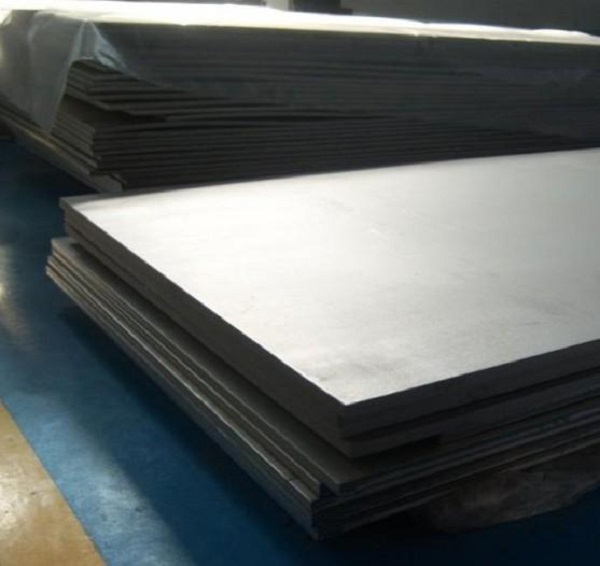
| Rolling | Reduces thickness; achieves uniform gauge | Producing sheet metal from ingots |
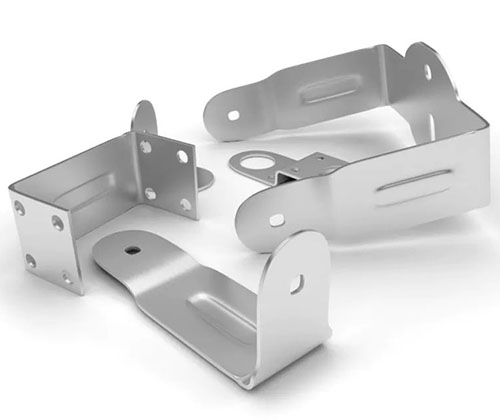
| Bending | Creates angles and curves | Brackets, enclosures, structural components |
| Deep Drawing | Forms cup-shaped or hollow components | Fuel tanks, pots and pans |
| Stamping | Cuts or forms shapes using dies | High-volume production, automotive parts |
| Punching | Creates holes | Electrical panels, brackets |
| Shearing | Cuts straight lines | Blanking, trimming |
Cutting Processes
Laser cutting uses a high-powered beam to cut with precision. It excels at complex shapes and thin materials. Tolerances can reach ±0.05mm.
CNC machining uses computer-controlled tools for high accuracy. It works well for complex parts with tight tolerances.
Grinding smooths surfaces or removes excess material. It is often used as a finishing process.
Joining and Heat Treatment
Welding joins pieces together. Methods include arc welding, MIG, TIG, and laser welding. Different materials require different techniques.
Annealing relieves internal stresses and improves ductility. It is often used after cold working processes like rolling and stamping.
Heat treatment can alter properties like strength and hardness. Steel responds well to heat treatment; aluminum generally does not.
Surface Treatments and Finishes
Anodizing and Plating
Anodizing is an electrochemical process for aluminum. It creates a protective oxide layer that improves corrosion resistance and allows coloring. Architectural components and consumer goods often use anodized finishes.
Plating deposits a thin layer of another metal. Chrome plating provides a shiny finish and corrosion resistance. Nickel plating improves wear resistance. Plating is common in automotive parts, jewelry, and electronics.
Coating and Painting
Powder coating applies a dry powder cured with heat. The result is a hard, durable finish with excellent corrosion resistance. Automotive parts, furniture, and construction components use powder coating.
Painting provides decorative finishes and corrosion protection. It is used across industries from home appliances to industrial machinery.
Corrosion-resistant coatings are specialized for harsh environments like marine and chemical processing applications.
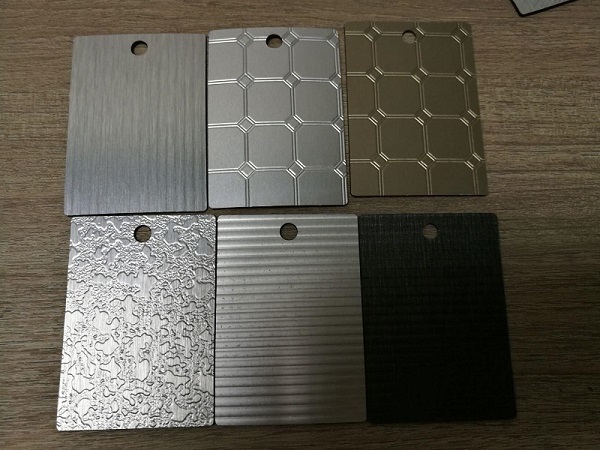
Special Finishes
| Finish | Description | Applications |
|---|---|---|
| Polishing | Creates smooth, shiny surface | Ornamental, automotive trim |
| Brushed Finish | Linear texture for modern appearance | Architectural, electronics |
| Chemical Conversion | Thin layer improves paint adhesion | Aerospace, industrial |
| Passivation | Removes free iron from stainless steel | Medical, food processing |
| Heat Coloring | Creates colors through controlled heating | Artistic, jewelry |
| Protective Films | Temporary protection during transport | Manufacturing, shipping |
Applications Across Industries
Automotive and Aerospace
| Industry | Applications | Preferred Materials |
|---|---|---|
| Automotive | Body panels, chassis, engine parts | Steel, aluminum alloys |
| Aerospace | Fuselage, wings, engine components | Titanium, aluminum alloys, nickel alloys |
Construction and Industrial Machinery
Construction uses sheet metal for roofing, cladding, structural frames, and architectural components. Steel and aluminum are popular for their durability and strength.
Industrial machinery relies on sheet metal for frames, housings, and components. Steel is often chosen for its strength and wear resistance.
Electronics and Home Appliances
Electronics uses sheet metal for enclosures, heat sinks, and electrical components. Aluminum and copper are preferred for their thermal and electrical conductivity.
Home appliances like refrigerators, washing machines, and ovens use sheet metal for casings and internal components. Steel and stainless steel are common for durability and ease of cleaning.
Other Applications
| Application | Materials | Why |
|---|---|---|
| Food Processing | Stainless steel | Corrosion resistance, easy sanitization |
| Medical Devices | Stainless steel, titanium | Biocompatibility, corrosion resistance |
| Marine | Stainless steel, titanium | Saltwater corrosion resistance |
| Furniture | Steel, aluminum | Strength, formability |
| Jewelry | Copper, brass, titanium | Aesthetics, unique properties |
| Telecommunications | Steel, aluminum | Durability, EMI shielding |
| Packaging | Steel, aluminum | Formability, recyclability |
Yigu Technology’s Perspective
At Yigu Technology, we work with sheet metal metals daily. Our experience spans automotive, aerospace, electronics, and medical device applications.
We have learned that material selection is rarely straightforward. One client needed enclosures for outdoor telecommunications equipment. Standard steel would rust. Aluminum lacked the required strength. 304 stainless steel provided the right balance of corrosion resistance and strength. The enclosures have performed reliably for eight years.
Another client needed lightweight brackets for a drone. Aluminum was the obvious choice. But standard 6061 was too heavy. We recommended 7075 aluminum for its higher strength-to-weight ratio. The final brackets met weight targets without compromising durability.
Our advice: Consider the full lifecycle. Material cost is only part of the equation. Processing, finishing, and expected lifespan all affect total cost. Choose materials that balance performance, durability, and budget.
Conclusion
Sheet metal materials offer diverse properties for different applications. Aluminum provides light weight and corrosion resistance. Steel delivers strength and affordability. Stainless steel offers corrosion resistance with good strength. Copper excels in conductivity. Specialty alloys fill specific needs where standard materials fall short.
Selecting the right material requires understanding your application requirements. Consider mechanical loads, environmental exposure, manufacturing processes, and budget. With the right choice, sheet metal delivers reliable performance across industries.
FAQ
Which sheet metal material is best for outdoor applications?
Stainless steel, especially grade 316, is excellent for outdoor applications due to superior corrosion resistance. Galvanized steel is a cost-effective alternative. The zinc coating provides protection against rust. Aluminum also works well, though it may require anodizing or coating for long-term durability in harsh environments.
What is the difference between hot rolling and cold rolling?
Hot rolling occurs above the metal’s recrystallization temperature. It produces a more ductile material with a rougher surface. Cold rolling occurs at room temperature. It produces higher strength, a smoother surface, and tighter tolerances. Cold-rolled sheet metal is preferred when surface finish and precision matter.
How does anodizing improve aluminum sheet metal?
Anodizing creates a thick, porous oxide layer on aluminum surfaces. This layer improves corrosion resistance significantly. The porous structure can accept dyes, allowing a wide range of colors. Anodizing also increases surface hardness, making aluminum more resistant to wear and scratching.
What sheet metal material is best for high-temperature applications?
Nickel alloys and titanium excel at high temperatures. They maintain strength and resist oxidation at elevated temperatures. Stainless steel, particularly 309 and 310 grades, also performs well in high-heat applications. Standard steel loses strength rapidly above 300°C.
Contact Yigu Technology for Custom Manufacturing
Need sheet metal components made from the right material for your application? Yigu Technology combines material expertise with precision manufacturing. From material selection to finishing, we deliver custom solutions that perform. [Contact us] to discuss your project requirements.