Introduction
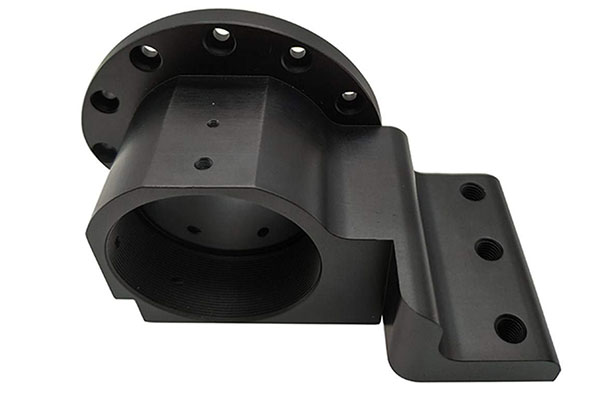
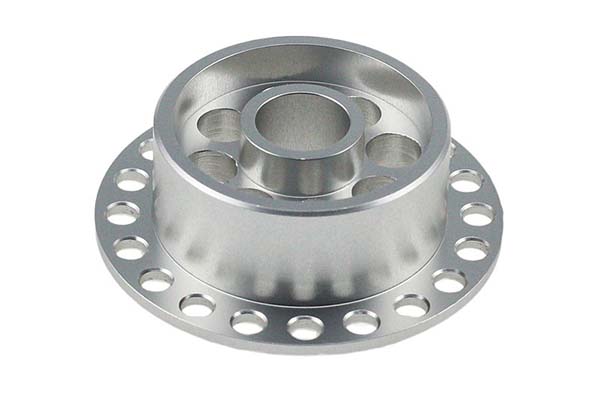
The 5-axis machining center represents a leap forward in manufacturing capability. Unlike traditional 3-axis machines that move only in X, Y, and Z directions, 5-axis systems add two rotational axes. This allows cutting tools to approach workpieces from any angle—machining complex freeform surfaces, intersecting features, and intricate geometries that are impossible with conventional methods. This technology bridges the gap between design intent and manufacturing reality. It has become indispensable for industries demanding extreme accuracy and geometric complexity. This guide explores how 5-axis machining centers work, their advantages over traditional methods, and their transformative impact across aerospace, automotive, and medical industries.
What Is a 5-Axis Machining Center and How Does It Work?
A 5-axis machining center is a sophisticated CNC machine that enables simultaneous movement along five axes: three linear (X, Y, Z) and two rotational (typically A, B, or C). These rotational axes—either tilting the spindle or rotating the workpiece—allow tools to reach complex angles in a single setup.
Core Technology: RTCP
The key enabling technology is RTCP (Rotational Tool Center Point) . RTCP maintains the tool’s contact point with the workpiece during rotation, ensuring precision even for highly angled cuts. Without RTCP, the machine would lose positional accuracy when axes rotate. With it, the control system automatically compensates for the rotational movement, keeping the tool tip exactly where it needs to be.
Key Components and Technological Breakthroughs
| Component | Advancement | Impact |
|---|---|---|
| Advanced CNC systems | High-speed processors coordinate five axes in real time | Positional accuracy as fine as ±0.001 mm |
| Dual-drive mechanisms | Double swing head or double turntable configurations | Optimized access to workpiece surfaces |
| Tool path optimization | CAM software (Hypermill, Mastercam) minimizes air cutting | Reduces machining time by 40% for complex parts |
Example: Fanuc’s 31i-MODEL A5 control system reduces interpolation errors by 30% compared to older models. Siemens’ Sinumerik 840D sl system, paired with a dual swing head, achieves 20% faster surface finishes on aerospace turbine blades.
How Does 5-Axis Machining Compare to Traditional Methods?
When comparing 5-axis machining with traditional 3-axis or 4-axis methods, several performance metrics stand out.
Performance Metrics Comparison
| Metric | Traditional 3-Axis | 5-Axis Machining |
|---|---|---|
| Geometric complexity | Limited to simple profiles | Unrestricted; supports helical, concave, and intersecting features |
| Machining time | 2–4 hours (multiple fixturing) | 30–60 minutes (single-setup processing) |
| Surface finish (Ra) | 1.6–3.2 μm | 0.4–1.2 μm (reduced post-processing) |
| Material removal rate | 100 cm³/min (linear cuts) | 150–200 cm³/min (angled, efficient cuts) |
| Positioning accuracy | ±0.02 mm | ±0.005 mm (RTCP-enabled precision) |
Unmatched Advantages
Single-Setup Versatility
In traditional 3-axis machining, a complex part like an automotive intake manifold requires 4–6 setups. Each setup introduces potential alignment errors. A 5-axis center completes the same part in 1–2 setups, reducing cumulative tolerance errors by 50% and cutting lead time from 48 hours to 20 hours—as demonstrated by BMW’s engine component production.
Tool Life and Cost Savings
Shorter, stiffer tools used in 5-axis machining reduce vibration by 30% , extending tool life by 25% compared to long-reach tools in 3-axis setups. For a mold manufacturer producing deep-cavity plastic injection molds, this translates to $15,000 annual savings in tool replacement costs.
How Is 5-Axis Machining Transforming Aerospace?
The aerospace industry demands extreme precision and complex geometries. 5-axis machining delivers both.
Turbine Blade Machining
Turbine blades are critical jet engine components. Their design directly impacts engine efficiency, thrust, and fuel consumption. Rolls-Royce uses 5-axis machining to revolutionize turbine blade production.
- Material: Titanium alloy with complex airfoil profiles.
- Traditional 3-axis: Required multiple setups; material waste of 40% .
- 5-axis machining: Single setup; material waste reduced to 15% .
- Surface finish: Achieves Ra 0.8 μm —smoother surfaces minimize aerodynamic drag, improving fuel efficiency.
Structural Component Consolidation
The Boeing 787 Dreamliner uses 5-axis machining for aluminum alloy wing ribs. These ribs feature integrated lightweight lattice structures—impossible to produce with traditional methods.
- Weight reduction: 25% lighter components.
- Assembly time: Reduced by 30% due to precise, integrated features.
- Result: Less fuel consumption; faster production; competitive advantage.
How Is 5-Axis Machining Accelerating Automotive Innovation?
The automotive industry, especially electric vehicles (EVs), relies on 5-axis machining for complex components.
EV Component Manufacturing
Tesla uses 5-axis machining in its Gigafactories for EV motor components.
| Component | 3-Axis Time | 5-Axis Time | Improvement |
|---|---|---|---|
| Model Y motor bracket | 6 hours | 2.5 hours | 58% reduction |
This speed increase allows faster iteration in battery pack designs—crucial for improving EV performance, efficiency, and cost-effectiveness.
Die and Mold Fabrication
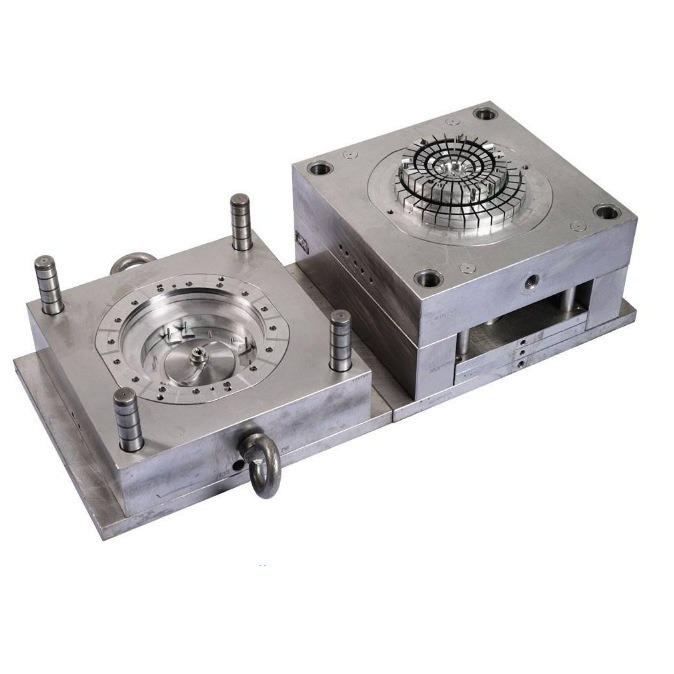
For automotive body panels, die-cast molds require extreme precision. Magna International conducted a case study on 5-axis-machined die-cast molds (H13 tool steel):
- Positional accuracy: ±0.01 mm.
- Post-machining adjustments: 40% reduction .
- Mold development time: 20% reduction .
Faster mold development means new vehicle models reach market sooner—a critical competitive advantage.
How Is 5-Axis Machining Advancing Medical Devices?
The medical industry is shifting toward patient-specific implants and minimally invasive instruments. 5-axis machining enables this personalization.
Patient-Specific Implants
Stryker uses 5-axis machining to create cobalt-chromium hip implants directly from CT scans.
| Feature | Benefit |
|---|---|
| Porous surfaces | Promotes osseointegration (fusion with natural bone) |
| Complex neck tapers | Tailored to individual patient anatomy |
| Surgical planning time | 25% reduction |
Patients receive implants sooner, potentially reducing recovery time.
Minimally Invasive Instruments
Endoscopic tools like laparoscopic forceps require sub-millimeter precision. Johnson & Johnson’s medical device division uses 5-axis machining for these instruments.
- Hinge joint tolerance: ±0.03 mm.
- Impact: Smooth operation reduces tissue damage risk—critical for minimizing post-surgical complications.
What Are the Challenges and Future Trends?
While 5-axis machining offers transformative benefits, challenges remain.
| Challenge | Current Solutions |
|---|---|
| Programming complexity | Advanced CAM software with simulation; post-processors tailored to specific machines |
| Higher upfront costs | Justified by reduced setups, less waste, and faster cycle times for complex parts |
| Collision risk | Collision detection software; real-time toolpath verification |
| Thermal stability | Thermal compensation systems maintain accuracy during extended runs |
Future trends:
- Industry 4.0 integration: Real-time monitoring, predictive maintenance.
- AI-driven optimization: Adaptive toolpaths that adjust to material variations.
- Hybrid manufacturing: Combining additive and subtractive processes in one machine.
Conclusion
The 5-axis machining center is more than a machine—it is a cornerstone of modern manufacturing. It enables engineers to transform ambitious designs into reality with unmatched speed and precision. By conquering geometric complexity, reducing setup times, and integrating seamlessly with advanced technologies, it has become indispensable for industries where innovation hinges on precision. From aerospace turbine blades to life-saving medical implants, 5-axis machining is revolutionizing how we build the future. As programming, cost, and standardization challenges are addressed, its impact will only grow—proving that in manufacturing, the only limit is imagination.
FAQs
What types of parts are best suited for 5-axis machining?
5-axis centers excel at parts with complex surfaces (turbine blades, intake manifolds), multi-sided features (medical implants), or intricate internal structures (injection molds). They are ideal for parts requiring single-setup machining to maintain precision, such as aerospace structural components and high-precision mechanical assemblies.
How does 5-axis machining compare in cost to traditional methods for low-volume production?
While 5-axis machines have higher upfront costs, they reduce labor and setup costs for low-volume runs (1–100 units). For a complex part, 5-axis machining can be 30–40% cheaper than traditional methods due to fewer setups, reduced tooling, and less material waste. For high-volume production (1,000+ units), it competes favorably when part complexity justifies the investment.
What measures ensure accuracy and prevent collisions in 5-axis machining?
Accuracy is ensured through RTCP technology, high-resolution encoders (0.1 μm precision), and collision detection software that maps tool and workpiece trajectories in real time. Pre-machining simulations in CAM software validate tool paths, while thermal stabilization systems compensate for machine heat expansion, maintaining tight tolerances even during extended runs.
Contact Yigu Technology for Custom Manufacturing
At Yigu Technology, we harness the power of 5-axis machining to deliver complex, high-precision components for aerospace, automotive, medical, and industrial applications. Our machines—equipped with advanced CNC systems and RTCP technology—achieve tolerances as tight as ±0.005 mm. We provide DFM feedback to optimize your designs for 5-axis machining, reducing setups and costs. Whether you need prototypes or production runs, we deliver parts that meet the most demanding specifications.
Ready to revolutionize your next project with 5-axis machining? Contact Yigu Technology today for a free consultation and quote. Let us help you turn complex designs into precision-machined reality.