You have seen 3D printers create small plastic parts on a desktop. But what about printing a car chassis? A wind turbine blade? A house? Large scale additive manufacturing (LSAM) makes this possible. It takes the same layer-by-layer principle as desktop 3D printing and scales it up—to parts measured in meters, not centimeters. The result is faster production, less waste, and the ability to create structures that traditional methods cannot match. This guide explains how LSAM works, what technologies drive it, and which industries are already transforming their operations.
What Makes Large Scale Additive Manufacturing Different?
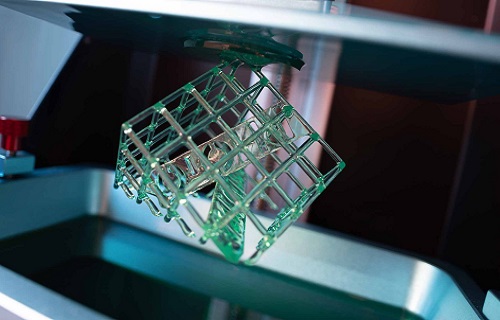
LSAM follows the same basic principle as small-scale 3D printing. A digital model is sliced into layers. A machine builds the object layer by layer. But everything else scales up.
Build Volume
Desktop printers have build volumes measured in centimeters. LSAM machines handle parts up to 10 meters or more in length. The build platform can be the size of a shipping container.
Material Throughput
Small printers extrude filament at 50–200 grams per hour. LSAM systems deposit 5–20 kilograms per hour—100 times faster.
Material Form
Instead of spools of filament, LSAM uses pellets (thermoplastics) or powders (metals, concrete). Pellets cost less and allow higher throughput.
Equipment Scale
LSAM machines are industrial systems. They require dedicated facilities, reinforced floors, and significant power.
Real example: Cincinnati Incorporated’s Big Area Additive Manufacturing (BAAM) system prints parts up to 3 x 1.5 x 1.5 meters. Ford used BAAM to print full-size automotive tooling—molds for truck bumpers. Traditional tooling took 6–8 weeks and cost $50,000–$100,000. LSAM cut production time to 3–5 days and reduced costs by 70%.
What Technologies Power LSAM?
Different LSAM technologies serve different materials and applications. Each has distinct strengths.
Fused Granular Fabrication (FGF) / FFF for LSAM
This is the most common LSAM technology for plastics. A screw-driven extruder melts thermoplastic pellets (not filament) and deposits them through a large nozzle (2–10 mm diameter). Pellets cost 50–70% less than filament.
Materials: ABS, polycarbonate, PETG, nylon, carbon fiber-reinforced composites
Best for: Large plastic parts, tooling, patterns, low-volume production
Example: Agricultural equipment manufacturers print 2-meter brackets and housings in days instead of weeks.
Binder Jetting
A print head deposits a liquid binder onto a bed of powder (metal, sand, ceramic). The binder “glues” powder particles together. The green part is then sintered in a furnace to achieve full density.
Materials: Stainless steel, tool steel, sand, ceramics
Best for: Metal parts, sand molds for casting, complex geometries
Example: GE Aviation uses binder jetting to print 1.5-meter turbine housings—parts that would take months to machine.
Directed Energy Deposition (DED)
A laser or electron beam melts metal wire or powder as it is deposited. DED is often used for repairing existing parts, adding material to worn surfaces.
Materials: Titanium, Inconel, stainless steel
Best for: Repairing large metal parts, adding features to castings
Example: Naval shipyards use DED to repair 3-meter propeller shafts, avoiding costly replacements.
Concrete Extrusion
A pump pushes concrete or mortar through a nozzle, building walls and structural elements layer by layer.
Materials: Concrete, mortar, geopolymers
Best for: Construction, affordable housing, architectural features
Example: The TECLA house in Italy was fully built using concrete extrusion LSAM in 2021—a 60-square-meter structure printed in under 200 hours.
| Technology | Materials | Deposition Rate | Best Application |
|---|---|---|---|
| FGF | Thermoplastics, composites | 5–20 kg/hr | Large plastic parts, tooling |
| Binder Jetting | Metals, sand, ceramics | Variable (batch) | Metal parts, sand molds |
| DED | Metal wire, powder | 0.5–2 kg/hr | Repairs, large metal parts |
| Concrete Extrusion | Concrete, mortar | 5–15 m³/hr | Construction, housing |
Which Industries Are Being Transformed?
LSAM is not experimental. It is in production across major industries.
Aerospace and Defense
Aerospace demands lightweight, high-strength parts. LSAM delivers seamless structures without assembly.
Example: Boeing prints 3-meter wing spars in carbon fiber-reinforced plastic. Traditional spars required multiple pieces assembled together. LSAM creates a single, seamless spar that is 20% lighter and 15% stronger—critical for fuel efficiency.
Data point: The Aerospace Industries Association reports LSAM reduces aerospace component production time by 40–60% and cuts material waste from 80% (traditional machining) to less than 5%.
Automotive
Car manufacturers use LSAM for tooling and end-use parts. The ability to print large molds and fixtures without traditional tooling changes the economics of low-volume production.
Example: Volkswagen implemented LSAM to print full-size chassis components. Traditional stamping required $2 million dies and 6-month lead times. LSAM prototypes new components in 2 weeks and produces low-volume parts without dies.
Construction
The construction industry faces labor shortages and slow build times. LSAM addresses both.
Example: ICON’s Vulcan II system printed a 1,700-square-foot home in 48 hours. The concrete mixture sets quickly. The printer runs 24/7. ICON reports LSAM-built homes cost 30% less than traditionally built homes with 50% less material waste.
Energy and Heavy Industry
Wind turbine blades, oil rig components, and large industrial parts benefit from LSAM’s ability to create large, durable structures.
Example: Siemens Gamesa prints 4-meter blades for wind turbines. Traditional hand-laid blades had defect rates up to 10%. LSAM reduces defects to less than 1% and extends blade lifespan by 5–10 years.
What Are the Key Benefits?
LSAM delivers advantages that go beyond simply making larger parts.
Tooling Elimination
Traditional manufacturing often requires expensive molds, dies, and fixtures. LSAM prints parts directly from digital files. A $100,000 mold becomes a $10,000 printed part—with zero tooling investment.
Design Freedom
Complex geometries, internal lattice structures, and organic shapes are as easy to print as simple blocks. Engineers design for performance, not manufacturability.
Material Efficiency
Subtractive manufacturing wastes 80–90% of raw material. LSAM uses only the material that becomes the part. Excess powder or pellets are recycled.
Faster Time to Market
A new product can go from CAD to full-size prototype in days instead of months. This accelerates development cycles and enables more design iterations.
Part Consolidation
Assemblies of multiple parts become single printed components. Fewer parts mean fewer suppliers, less assembly time, and fewer failure points.
What Are the Challenges?
LSAM is powerful, but it has limitations. Understanding them prevents costly mistakes.
High Upfront Costs
Industrial LSAM machines range from $200,000 to $1 million. High-end systems for aerospace or construction exceed $5 million. This barrier limits adoption to larger organizations or those with clear ROI.
Material Limitations
Not all materials print well at scale. Some high-performance alloys require precise temperature control that LSAM systems cannot yet provide. Material certification for regulated industries adds complexity.
Quality Control
Ensuring uniform properties across a 3-meter part is challenging. Internal defects can be hard to detect. Aerospace and medical applications require extensive testing—X-rays, stress tests, and non-destructive evaluation—adding time and cost.
Post-Processing
Most LSAM parts need finishing. Binder-jetted metal parts require sintering (furnace heat treatment). Concrete prints need windows, doors, and finishes. Post-processing can add 20–50% to total production time.
Certification Gaps
Universal standards for LSAM are still evolving. Certification processes vary by industry and country. For critical applications, this adds uncertainty and validation time.
How Do You Choose the Right LSAM Solution?
If you are considering LSAM, a structured approach reduces risk.
Step 1: Define Your Goals
- What are you producing? (Prototypes? End-use parts? Tooling?)
- What material do you need? (Plastic? Metal? Concrete?)
- What is your budget for equipment and ongoing costs?
Example: A small furniture manufacturer making 1-meter plastic chair frames might start with a mid-range FGF system ($200,000–$300,000). An aerospace company making 3-meter metal turbine parts needs DED or binder jetting ($1 million+).
Step 2: Evaluate Material Compatibility
Does the LSAM technology work with your material? Ask vendors for sample parts. Test them in your application.
Step 3: Assess Build Volume and Speed
Calculate your maximum part size. Consider production volume. A system that prints one part per day may be fine for tooling but insufficient for production runs.
Step 4: Consider Post-Processing Needs
Be realistic about finishing requirements. If you cannot operate a sintering furnace, avoid binder jetting for metal. FGF for plastics often requires less post-processing.
Step 5: Check Vendor Support
Choose a vendor offering training, maintenance, and certification assistance. For regulated industries, look for vendors with experience working with FAA, EASA, or ISO standards.
Yigu Technology’s Perspective
At Yigu Technology, we see large scale additive manufacturing as a transformative capability—particularly for businesses that need large parts without the lead time and cost of traditional tooling. LSAM enables:
- Low-volume production of large components
- Custom tooling and fixtures for manufacturing lines
- Complex geometries that machining cannot achieve
- Sustainable production with minimal material waste
We work with clients in automotive, aerospace, and industrial sectors to integrate LSAM solutions. Our approach starts with validating ROI through smaller projects or contract manufacturing partnerships before committing to equipment purchase.
In our experience, LSAM succeeds when clients match the technology to the application. For large plastic parts, FGF delivers. For metal components, binder jetting or DED are the paths. The future lies in hybrid approaches—combining LSAM with CNC machining to achieve both complex geometry and tight tolerances.
Conclusion
Large scale additive manufacturing is moving from research labs to production floors. It enables parts measured in meters, printed in days instead of months. It eliminates tooling, reduces waste, and unlocks designs that traditional methods cannot achieve.
Aerospace, automotive, construction, and energy industries are already using LSAM for production parts—not just prototypes. The technology is not for every application. High upfront costs, material limitations, and certification requirements remain challenges. But for large, complex, low-to-medium volume parts, LSAM offers capabilities that no other manufacturing process can match.
FAQ
How is large scale additive manufacturing different from regular 3D printing?
Regular 3D printing (desktop FFF) handles small parts (under 30 cm) using thin filaments. LSAM handles parts measured in meters, uses industrial materials (pellets, powders, concrete), and deposits material 100 times faster. LSAM machines are industrial systems requiring dedicated facilities.
Is large scale additive manufacturing cost-effective for small businesses?
It depends. For custom parts, low-volume production, or complex geometries, LSAM can be cost-effective—especially when replacing expensive tooling. However, machine costs ($200,000+) are a barrier. Many small businesses start by partnering with contract manufacturers to test projects before investing in equipment.
What is the maximum size of a part that can be made with LSAM?
Maximum size varies by technology. Concrete extrusion systems build up to 10 meters. Aerospace DED systems handle parts up to 5 meters in diameter. Industrial FGF systems print parts up to 3 x 1.5 x 1.5 meters. Larger systems exist for specialized applications.
Are LSAM parts as strong as traditionally made parts?
Yes—often stronger. LSAM parts have no seams, eliminating weak points found in assembled components. Metal parts made with binder jetting or DED can match or exceed the strength of machined metal after proper heat treatment and sintering. Industries like aerospace use LSAM parts only after rigorous testing.
What is the future of large scale additive manufacturing?
The future includes cheaper machines making LSAM accessible to small businesses, new materials (biodegradable plastics, high-performance ceramics), faster printing (multi-laser systems, higher deposition rates), and AI integration for real-time quality control and design optimization.
Contact Yigu Technology for Custom Manufacturing
Yigu Technology specializes in non-standard plastic and metal custom manufacturing, including large scale additive manufacturing for industrial applications. Whether you need large-format tooling, custom fixtures, or production parts, our engineering team helps you select the right technology. Contact us today to discuss your LSAM project.