
Why Use CNC Machining for Bronze Fabrication? Key Advantages Explained

Cnc Machining Bronze

Contents Introduction How Does CNC Machining Achieve High Precision? The Technology Behind Tight Tolerances CNC vs. Traditional Machining: A Clear Difference Why Precision Matters in Critical Industries What Makes CNC Machining More Efficient? Automated Operation Reduces Downtime Production Rate Comparison: Real Numbers Long-Term Cost Efficiency How Does CNC Machining Expand Design Possibilities? Creating Complex Geometries […]

Introduction

Bronze has been a trusted material for centuries. It offers excellent wear resistance, corrosion protection, and natural lubricity. But traditional methods of shaping bronze—like sand casting or manual machining—often struggle with precision, consistency, and complexity. CNC machining changes that. By combining bronze’s durable properties with computer-controlled accuracy, manufacturers can now produce parts that were once difficult or impossible to make. This guide walks you through the specific advantages of using CNC machining for bronze fabrication. You will learn how this process delivers tighter tolerances, faster production, greater design freedom, and less material waste.


How Does CNC Machining Achieve High Precision?

Precision matters when parts must fit together under load or in tight assemblies. Bronze components like bearings, bushings, and valve seats demand exact dimensions. CNC machining meets this need through a controlled, repeatable process.

The Technology Behind Tight Tolerances

The journey to precision starts with a CAD (Computer-Aided Design) model. Engineers create a digital blueprint of the part. That model then converts into G-code, a set of instructions that tells the machine exactly where to move, how fast to cut, and how deep to go.

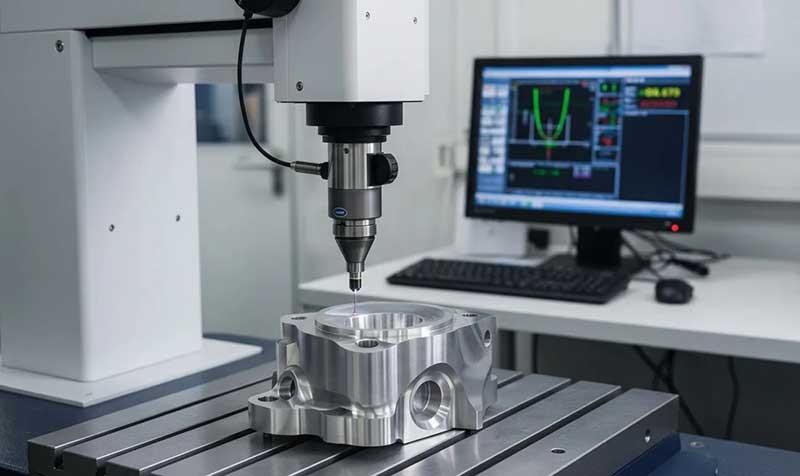
Inside the CNC machine, a servo system with feedback loops constantly checks the tool’s position. Linear encoders measure movement down to microns. If the tool drifts even slightly, the system corrects it in real time. This closed-loop control ensures that the final part matches the digital model with exceptional accuracy.

CNC vs. Traditional Machining: A Clear Difference

To understand the improvement, compare CNC machining to traditional manual methods:

Comparison ItemTraditional MachiningCNC Machining
Tolerance Range±0.1 – ±0.5 mm (varies by operator)±0.001 – ±0.01 mm (consistent)
RepeatabilityHard to maintain across multiple partsIdentical parts run after run
Human Error FactorHigh—fatigue and skill affect qualityLow—machine follows programmed path
Complex ShapesMultiple setups, high risk of errorSingle setup, complex geometries possible

In a manual milling operation, the operator turns handwheels to control the cutting tool. A small misjudgment in feed or depth can scrap the part. With CNC machining, the machine executes the program precisely every time. This consistency is especially valuable when producing hundreds or thousands of identical bronze parts.

Why Precision Matters in Critical Industries

Consider the aerospace industry. Jet engines use bronze bearings and bushings that operate under extreme heat, pressure, and rotational speed. A deviation of just 0.01 mm in a bearing’s inner diameter can increase friction, cause premature wear, and potentially lead to engine failure. CNC machining ensures these components meet the tight tolerances required for safe operation.

In medical equipment, bronze parts appear in surgical instruments and diagnostic devices. A hinge on a surgical tool must move smoothly without play. CNC machining delivers that fit with repeatable accuracy, reducing the risk of instrument failure during procedures.


What Makes CNC Machining More Efficient?

Efficiency drives cost savings. When you can produce more parts in less time with fewer errors, your bottom line improves. CNC machining achieves this through automation and optimized processes.

Automated Operation Reduces Downtime

Once the program loads into the CNC controller, the machine runs with minimal supervision. It controls:

  • Tool movement along multiple axes.
  • Spindle speed and feed rates.
  • Coolant flow.
  • Automatic tool changes.

This automation frees up skilled operators to focus on other tasks. It also eliminates the variability that comes with manual control.

Production Rate Comparison: Real Numbers

Let’s look at a practical example. A manufacturer needs to produce a bronze gear with a simple profile.

  • Manual machining: A skilled machinist using a manual mill produces about 10 parts per hour. Each part requires manual setup, tool changes, and constant attention.
  • CNC machining: The same gear runs on a CNC mill at 40 to 60 parts per hour, depending on complexity. The machine changes tools automatically and runs unattended for extended periods.

That is a 4x to 6x increase in output for the same labor input.

Long-Term Cost Efficiency

The initial investment in CNC equipment is higher than manual machines. However, the long-term cost picture favors CNC machining.

Consider a production run of 10,000 bronze bushings:

  • Manual machining: Requires more operators, longer production time, and higher labor costs. Scrap rates are also higher due to human error.
  • CNC machining: Fewer operators, faster cycle times, and lower scrap. The cost per unit drops significantly as volume increases.

For medium-volume runs (100 to 10,000 parts), CNC machining often delivers the lowest total cost compared to casting or manual methods.


How Does CNC Machining Expand Design Possibilities?

Bronze is valued for its mechanical properties, but those properties are wasted if you cannot shape it into the required form. CNC machining removes design constraints, allowing you to create parts that traditional methods cannot achieve.

Creating Complex Geometries with Ease

Advanced CAM (Computer-Aided Manufacturing) software translates complex 3D models into tool paths. A CNC machine can move a tool along five or more axes simultaneously. This capability allows for:

  • Undercuts that require angled tool approaches.
  • Internal channels for cooling or lubrication.
  • Thin walls that would warp under manual cutting.
  • Organic shapes like curved surfaces and freeform contours.

For example, a designer can create a bronze valve body with internal flow passages and angled ports. A CNC machine can machine these features in one setup, eliminating the need for multiple fixtures and realignments.

Real-World Customization Examples

A manufacturer of industrial machinery needed a non-standard bronze bushing for a legacy machine. The original part was no longer available. Using CNC machining, the company:

  1. Scanned the existing housing to capture dimensions.
  2. Created a CAD model of the custom bushing.
  3. Programmed the CNC machine to cut the part from C93200 bearing bronze.
  4. Delivered the finished bushing in three days.

Traditional methods would have required custom jigs, extended lead times, and higher costs.

Meeting Diverse Industry Needs

Different industries require different bronze alloys and geometries:

IndustryTypical Bronze PartsDesign Requirements
AutomotiveBushings, synchronizer rings, valve guidesHigh wear resistance, tight fits, complex internal profiles
MarinePropellers, pump housings, seawater valvesCorrosion resistance, smooth surfaces, large diameters
ElectronicsConnectors, contacts, shieldingFine details, consistent conductivity, small features
Art & ArchitectureSculptures, fixtures, decorative hardwareOrganic shapes, fine surface finish, custom designs

CNC machining handles all these requirements with the same core process—just different programs and tooling.


How Does CNC Machining Ensure Consistency?

Quality control is not just about measuring the first part. It is about ensuring that the 100th part matches the first. CNC machining builds consistency into the process.

Eliminating Human Error

Manual machining relies on operator skill. Fatigue, distraction, or simple misjudgment can introduce variation. One operator may cut a bronze bushing slightly differently than another. The same operator may produce different results on a Monday morning versus a Friday afternoon.

CNC machining removes these variables. The machine executes the same program the same way, every time. There is no “good day” or “bad day” for the machine. This repeatability is the foundation of consistent quality.

Built-In Quality Control Systems

Modern CNC machines include sensors and monitoring systems that catch problems before they create scrap:

  • Tool wear monitoring: Acoustic or force sensors detect when a cutting tool dulls. The machine can pause and alert the operator to change the tool.
  • In-process probing: The machine can measure features during the run and adjust offsets automatically to maintain tolerances.
  • Spindle load monitoring: Sudden changes in cutting force may indicate a material defect or tool issue.

These systems act as an extra layer of quality assurance, reducing the risk of producing out-of-spec parts.

Reliability in Mass Production

A manufacturer producing 10,000 bronze bushings on a CNC machine can expect each bushing to have:

  • The same inner and outer diameters within ±0.01 mm.
  • Consistent wall thickness.
  • Uniform surface finish.

This level of consistency is essential in industries like automotive, where assembly lines rely on parts that fit every time. Inconsistent parts slow down assembly, increase rework, and can lead to warranty claims.


How Does CNC Machining Reduce Material Waste?

Bronze is not cheap. High-quality alloys like C95400 aluminum bronze or C93200 bearing bronze carry significant material costs. Wasting that material cuts directly into profits. CNC machining minimizes waste through precision and optimized planning.

Optimized Tool Paths Save Material

In manual machining, tool paths are often based on operator judgment. This can lead to inefficient cutting and excess material removal. CNC software calculates the most efficient tool path to remove only the material needed to create the part.

For example, when machining a bronze flange from a round bar, the CAM software can:

  • Nest the part to minimize waste.
  • Choose tool paths that reduce air cutting.
  • Optimize roughing passes to remove material quickly without overshooting.

Precise Material Removal Down to Small Increments

CNC machines control depth of cut in tiny increments—often 0.001 mm or less. This precision means you can start with a bronze blank that is only slightly larger than the final part. Traditional machining often requires oversized blanks to allow for operator error.

Consider a bronze shaft with a final diameter of 15 mm:

  • Manual machining: The operator might start with a 20 mm rod to allow for centering errors and overshoot. That wastes 5 mm of diameter—about 44% of the starting material.
  • CNC machining: The machine can start with a 16 mm rod and remove only 0.5 mm per side, wasting far less material.

Environmental and Cost Benefits

Reducing material waste has two direct benefits:

  1. Lower material costs: Buying less bronze per part reduces your raw material spend.
  2. Environmental impact: Bronze production is energy-intensive. Using less material conserves resources and reduces the carbon footprint of each part.

A company that reduces bronze waste by 20% through CNC machining not only saves money but also reduces the energy and emissions associated with producing that 20% of material.


Conclusion

CNC machining for bronze fabrication offers clear advantages over traditional methods. You get higher precision with tolerances as tight as ±0.001 mm. You achieve greater efficiency with automated processes that increase output and lower labor costs. You gain design freedom to create complex geometries and custom parts that were previously difficult or impossible to make. You ensure consistent quality through repeatable processes and built-in monitoring. And you reduce material waste with optimized tool paths and precise material removal. For industries ranging from aerospace to art, CNC machining unlocks the full potential of bronze as a high-performance material.


FAQs

What bronze alloys are best suited for CNC machining?
Common choices include C93200 (bearing bronze) for wear applications, C95400 (aluminum bronze) for high strength and corrosion resistance, and C36000 (free-cutting brass) for intricate details. Each alloy machines differently, so selecting the right one depends on your application.

Can CNC machining handle both small and large bronze parts?
Yes. CNC machining works for parts ranging from tiny electronic connectors (a few millimeters) to large marine propellers (several meters). The machine size and tooling are selected based on part dimensions.

How does CNC machining compare to bronze casting?
Casting is better for very high volumes (thousands of parts) with simple shapes. CNC machining is preferred for low to medium volumes, complex geometries, tight tolerances, and when you need parts quickly without tooling costs. Many manufacturers use both: cast near-net shapes, then finish-machine with CNC for precision.


Contact Yigu Technology for Custom Manufacturing

At Yigu Technology, we specialize in precision CNC machining of bronze and other metals. Our team understands the unique properties of different bronze alloys—from wear-resistant bearing bronze to corrosion-resistant aluminum bronze. We use advanced 3-axis, 4-axis, and 5-axis CNC machines to produce parts that meet your exact specifications, whether you need a single prototype or a production run of thousands. We also provide DFM (Design for Manufacturing) feedback to help you optimize your design for cost and quality.

Ready to start your bronze fabrication project? Contact Yigu Technology today for a free consultation and quote. Let us help you turn your design into a precision-machined reality.

Scroll to Top