Introduction
Inconel 718 is a premier nickel alloy. It offers exceptional high-temperature performance, corrosion resistance, and high strength—properties that make it indispensable in aerospace, energy, and chemical processing. It retains 80% of its strength at 650°C , far exceeding stainless steels and titanium alloys. But these same attributes create significant machining challenges. Its high nickel content and tough grain structure make it 5–8 times harder to machine than carbon steel . It work hardens aggressively. It generates intense heat that shortens tool life. This guide explores the critical aspects of CNC machining Inconel 718, offering practical solutions to overcome its unique difficulties and ensure precision results.
What Makes Inconel 718 Unique?
Composition and Key Properties
Inconel 718 is a nickel-chromium alloy with a complex composition:
| Element | Percentage | Role |
|---|---|---|
| Nickel | 50–55% | Base metal; corrosion resistance |
| Chromium | 17–21% | Oxidation and corrosion resistance |
| Niobium (+ tantalum) | 5.0–6.5% | Precipitation hardening |
| Molybdenum | 2.8–3.3% | High-temperature strength |
| Titanium | 0.65–1.15% | Strengthening |
| Aluminum | 0.20–0.80% | Strengthening |
Mechanical properties:
- Tensile strength: 1300–1600 MPa at room temperature
- Yield strength: 1000–1200 MPa
- Hardness: 35–45 HRC (annealed); higher after aging
Corrosion resistance: Withstands seawater, acids, and high-temperature gases—ideal for gas turbine engines and chemical reactors.
How Properties Impact Machinability
High strength: Requires high cutting forces—3–4× higher than steel.
Low thermal conductivity: 11 W/m·K (compared to 50 W/m·K for steel). Heat concentrates at the tool-workpiece interface, reaching temperatures up to 1000°C —hot enough to soften carbide tools.
Work hardening: Extreme. A single pass over a previously cut surface can increase hardness by 30% , leading to uneven cutting forces and accelerated tool wear.
Result: Inconel 718 is one of the most difficult materials to machine.
What Machining Techniques Work for Inconel 718?
Tool Selection
| Tool Material | Best For | Notes |
|---|---|---|
| Ultra-fine carbide (0.5–1 μm grain) | General machining | High hardness, wear resistance |
| AlTiN-coated carbide | Heat resistance | Coating withstands high temperatures |
| DLC (diamond-like carbon)-coated | Reduced friction | Lower coefficient of friction (0.1 vs. 0.4); 40% longer tool life in testing |
| Ceramic (alumina-based) | High-speed roughing | Withstands high temperatures; requires rigid setups |
| CBN (cubic boron nitride) | Finishing, tight tolerances | Excellent wear resistance; high cost |
Machining Parameters
| Operation | Cutting Speed (m/min) | Feed Rate | Depth of Cut (mm) |
|---|---|---|---|
| Milling | 20–40 | 0.05–0.10 mm/tooth | 0.5–2.0 |
| Turning | 30–50 | 0.10–0.15 mm/rev | 0.5–2.0 |
| Drilling | 10–20 | 0.05–0.08 mm/rev | Peck; 0.5–1.0 mm/peck |
Key principles:
- Lower speeds than conventional materials—reduce heat buildup
- Moderate feeds —minimize work hardening
- Shallow depths —distribute load; prevent tool overload
Precision Machining Best Practices
Rigid setups:
- Heavy-duty machine tools with high-torque spindles (≥30 Nm)
- Modular toolholders with runout ≤ 0.002 mm
- Short tool overhang to reduce deflection
Adaptive control systems:
Adjust feed rates in real time based on torque feedback. A case study on aerospace components showed this reduced tool breakage by 50% .
Coolant Strategy
High-pressure coolant is essential—not optional.
| Parameter | Recommendation |
|---|---|
| Pressure | 100–150 bar |
| Type | Water-soluble oils (8–10% concentration) |
| Delivery | Directed at cutting zone; through-tool for drilling |
Impact: A study found high-pressure coolant reduced workpiece temperature by 150°C , slowing work hardening and extending tool life by 30–50% .
What Are the Key Challenges and Solutions?
Work Hardening
Challenge: Inconel 718 work hardens aggressively. A single cut can increase surface hardness by 30%, making subsequent passes more difficult.
Solutions:
- Maintain continuous cuts —avoid re-cutting hardened surfaces
- Use sharp tools —even 0.1 mm flank wear increases hardening by 20%
- High-pressure coolant —directed at cutting zone to reduce temperature and slow hardening
- Avoid dwell —any pause creates a hardened spot
Heat Generation
Challenge: Low thermal conductivity traps heat at the cutting edge, reaching temperatures that soften carbide tools.
Solutions:
- Interrupted cutting strategies (trochoidal milling) to allow tool cooling
- High-pressure coolant with high thermal capacity
- Toolpath optimization —minimize air cutting; reduce unnecessary heat generation
- Peck drilling —retract frequently to allow coolant to reach the cutting zone
Tool Wear
Challenge: Tool wear occurs rapidly—typically as flank wear or cratering. Inconel 718 is highly abrasive.
Solutions:
- Replace tools at 50% of maximum wear limit —typically 0.3 mm flank wear—to avoid sudden failure
- Variable helix end mills —reduce harmonic vibrations that accelerate wear
- Edge preparation —0.02 mm hone strengthens cutting edges against chipping
- Coatings —AlTiN, DLC, or TiSiN for high-temperature resistance
Surface Finish
Challenge: Achieving acceptable surface finish (Ra 1.6–3.2 μm for most applications) requires careful control.
Solutions:
- Finish passes with reduced feed rates —0.03–0.05 mm/tooth
- Sharp tools —dull tools cause tearing
- Avoid dwell times —localized heating damages surface
- Post-machining processes —grinding or polishing for critical Ra < 0.8 μm requirements
How Can You Optimize the Process?
High-Efficiency Roughing
Use high-feed milling strategies:
- Feed rates: 0.3–0.5 mm/rev
- Removes material 30% faster than conventional methods
- Distributes heat across more tool edge; reduces localized wear
Minimize Non-Cutting Time
- Group operations —reduce tool changes by 20–25%
- Tool presetting —ensure accurate offsets; eliminate trial cuts
- CAM optimization —reduce air cutting; optimize toolpaths
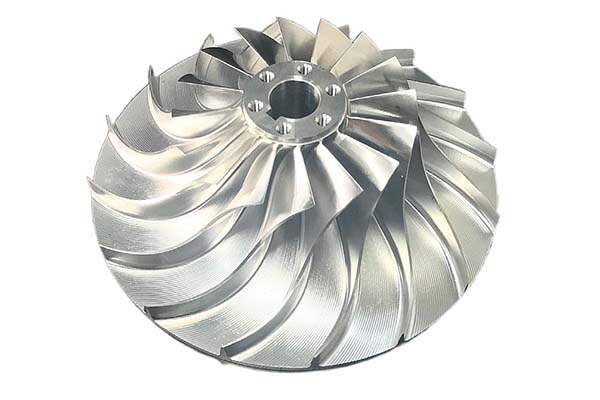
Case Study: Turbine Disc Machining
A manufacturer machining turbine discs from Inconel 718 implemented:
- High-feed milling for roughing
- AlTiN-coated carbide tools
- High-pressure coolant (150 bar)
- Adaptive control for feed adjustment
Results:
- Cycle time reduced by 40%
- Tool life increased by 25%
- Surface finish within spec (Ra 1.8 μm)
- Scrap rate dropped from 8% to 2%
What Are the Key Quality Control Measures?
In-Process Monitoring
- Cutting force monitoring: Detect increases indicating tool wear
- Temperature monitoring: Prevent thermal damage
- In-process probing: Verify critical dimensions during machining
Inspection Methods
| Feature | Tool | Typical Accuracy |
|---|---|---|
| Dimensions | CMM | ±0.001 mm |
| Surface finish | Profilometer | 0.001 μm Ra |
| Cracks | Dye penetrant, ultrasonic | N/A |
| Hardness | Hardness tester | ±1 HRC |
Material Certification
For aerospace and energy applications, require:
- Chemical composition verification
- Heat treatment records
- Mechanical property testing
- Traceability to original mill certification
A Real-World Inconel 718 Machining Success
An aerospace manufacturer producing turbine components faced:
- Tool life: 20 parts per carbide tool
- Surface finish: Ra 2.5–4.0 μm (above 1.6 μm requirement)
- Work hardening: Causing tool breakage on finishing passes
- Scrap rate: 12%
Process improvements:
- Switched to ultra-fine carbide with AlTiN coating
- Reduced milling speed from 35 m/min to 25 m/min
- Implemented high-pressure coolant (150 bar)
- Used trochoidal milling for roughing
- Added adaptive feed control for finishing passes
- Established tool replacement schedule at 0.25 mm flank wear
Results:
- Tool life increased to 80 parts per tool
- Surface finish improved to Ra 1.2 μm
- Work hardening eliminated
- Scrap rate dropped to 2%
- Annual tooling cost reduced by 55%
How Does Inconel 718 Compare to Other Materials?
| Material | Tensile Strength (MPa) | Hardness (HRC) | Thermal Conductivity (W/m·K) | Machinability |
|---|---|---|---|---|
| Inconel 718 | 1300–1600 | 35–45 | 11 | Very difficult |
| Stainless steel 304 | 500–600 | 18–22 | 15 | Moderate |
| Titanium Ti-6Al-4V | 900–1100 | 30–36 | 7 | Difficult |
| Carbon steel 1045 | 600–700 | 20–25 | 50 | Good |
Key takeaway: Inconel 718 is significantly stronger and harder than most common metals, with very low thermal conductivity—making it among the most challenging materials to machine.
Conclusion
CNC machining Inconel 718 requires understanding its unique properties and adapting every aspect of the process. Its high strength requires rigid setups and high-torque spindles. Its low thermal conductivity demands high-pressure coolant (100–150 bar) to manage heat at the cutting edge. Its aggressive work hardening requires sharp tools, continuous cuts, and careful parameter selection—cutting speeds of 20–40 m/min, feeds of 0.05–0.10 mm/tooth. Tool selection is critical: ultra-fine carbide with AlTiN or DLC coatings, replaced at 0.3 mm flank wear. Process optimization—high-feed milling, grouped operations, tool presetting—reduces cycle times by 30–40%. Quality control includes CMM inspection, surface profilometry, and non-destructive testing. When these practices are followed, Inconel 718 machines into components that perform where few other materials can—turbine discs, aerospace structures, and chemical processing equipment—delivering the high-temperature strength, corrosion resistance, and reliability that critical applications demand.
FAQs
Why is Inconel 718 so difficult to machine compared to other alloys?
Inconel 718’s extreme high strength (1300–1600 MPa), low thermal conductivity (11 W/m·K), and aggressive work hardening make it exceptionally difficult. It generates 3–4 times more heat than steel during cutting, and its tough microstructure resists chip formation. A single cut can increase surface hardness by 30%, accelerating tool wear and making subsequent passes more difficult.
What cutting tools are most effective for machining Inconel 718?
Ultra-fine carbide tools (0.5–1 μm grain) with AlTiN or DLC coatings are preferred for general machining. DLC-coated tools have a friction coefficient of 0.1 (vs. 0.4 for uncoated) and last 40% longer in testing. Ceramic tools (alumina-based) work for high-speed roughing but require rigid setups. CBN tools are used for finishing when tight tolerances are critical.
How can coolant usage improve Inconel 718 machining results?
High-pressure coolant (100–150 bar) is essential. It dissipates heat at the cutting zone, flushes chips to prevent re-cutting and work hardening, and reduces friction between tool and workpiece. A study found high-pressure coolant reduced workpiece temperature by 150°C , extending tool life by 30–50% and improving surface finish. Without high-pressure coolant, tool life drops dramatically.
What cutting parameters should I use for Inconel 718?
For milling: 20–40 m/min cutting speed, 0.05–0.10 mm/tooth feed. For turning: 30–50 m/min, 0.10–0.15 mm/rev feed. For drilling: 10–20 m/min, 0.05–0.08 mm/rev feed, with peck cycles. Lower speeds reduce heat; moderate feeds minimize work hardening; shallow depths (0.5–2 mm) distribute load. These parameters are 50–70% lower than those used for stainless steel.
How do I achieve good surface finish on Inconel 718?
Achieving Ra 1.6–3.2 μm (standard) or Ra <0.8 μm (precision) requires: (1) Sharp tools—dull tools cause tearing. (2) Reduced feed rates on finishing passes (0.03–0.05 mm/tooth). (3) High-pressure coolant to manage heat. (4) Avoid dwell times—any pause causes localized heating and surface damage. (5) For critical surfaces, post-machining grinding or polishing may be required.
Contact Yigu Technology for Custom Manufacturing
At Yigu Technology, we specialize in CNC machining Inconel 718 for aerospace, energy, and industrial applications. Our approach combines ultra-fine carbide tooling with AlTiN/TiSiN coatings, high-pressure coolant systems (150 bar), and adaptive machining software to minimize work hardening and heat generation. We achieve tolerances down to ±0.005 mm and surface finishes to Ra 0.8 μm. Whether you need turbine discs, aerospace components, or chemical processing equipment, we deliver Inconel 718 parts that perform under the most demanding conditions. Contact us to discuss your Inconel 718 machining project.