
Introduction
Casting resins are versatile polymer materials used across manufacturing—from prototyping to production. But machining them comes with unique challenges. Different resin types—epoxy, polyester, and polyurethane—behave differently under cutting tools. Shrinkage during curing affects dimensional stability. Achieving smooth surface finishes without chipping or melting requires careful process control. This guide addresses these pain points. You will learn the material characteristics of casting resins, effective CNC machining processes, tool selection strategies, and key applications. By the end, you will have the knowledge to machine casting resins with precision and confidence.
What Are Casting Resins and Their Key Properties?
Casting resins are polymer materials that start as liquids and cure into solid parts. Their properties vary significantly by type, making material selection critical.
Mechanical Properties
| Resin Type | Tensile Strength (MPa) | Flexural Strength (MPa) | Hardness | Key Characteristics |
|---|---|---|---|---|
| Epoxy | 50 – 90 | 80 – 150 | Shore D 80–90 | High strength, good impact resistance, ideal for structural parts |
| Polyester | 40 – 70 | 60 – 120 | Shore D 70–80 | Moderate strength, cost-effective, suitable for non-structural parts |
| Polyurethane | 20 – 60 | 30 – 80 | Shore A 50–90 to Shore D 70–80 | Flexible to rigid, high elongation (100–400%), excellent wear resistance |
Epoxies offer the highest strength and rigidity. Polyesters balance cost and performance. Polyurethanes provide flexibility—from soft gaskets to rigid enclosures.
Thermal and Chemical Properties
| Resin Type | Continuous Use Temperature (°C) | Thermal Conductivity (W/(m·K)) | Chemical Resistance |
|---|---|---|---|
| Epoxy | 80 – 150 (up to 200°C for high-temp grades) | 0.15 – 0.3 | Excellent: resists oils, solvents, mild acids |
| Polyester | 60 – 100 | 0.15 – 0.3 | Moderate: may degrade in strong alkalis |
| Polyurethane | 60 – 80 | 0.15 – 0.3 | Susceptible to hydrocarbons; good water and abrasion resistance |
All casting resins have low thermal conductivity, making them excellent electrical insulators. This property is critical for electronic components and insulators.
Curing Process and Dimensional Stability
Curing transforms liquid resin into a solid. Shrinkage during this process affects final dimensions:
| Resin Type | Shrinkage Rate | Best Practice |
|---|---|---|
| Epoxy | 0.1 – 1% | Minimal shrinkage; good dimensional stability |
| Polyester | 2 – 5% | Requires careful mold design |
| Polyurethane | 0.5 – 3% | Intermediate shrinkage |
Viscosity during casting affects how well the resin fills molds:
- Low-viscosity epoxies (500–1000 cP): Fill intricate molds easily.
- High-viscosity polyesters (2000–5000 cP): Suit thicker sections.
Proper curing—controlling temperature and time—minimizes internal stresses. Machining before full cure (typically 24–48 hours) risks deformation. Post-curing ensures dimensional stability.
How Do You CNC Machine Casting Resins?
Successful machining of casting resins requires the right tools, parameters, and strategies for each resin type.
Tool Selection and Machining Parameters
| Resin Type | Recommended Tool | Spindle Speed (rpm) | Feed Rate (mm/rev) | Depth of Cut (mm) |
|---|---|---|---|---|
| Epoxy | Carbide or diamond-coated | 8000 – 10000 | 0.1 – 0.2 | 0.5 – 2 |
| Polyester | Carbide (abrasive resistance) | 6000 – 8000 | 0.1 – 0.2 | 0.5 – 2 |
| Polyurethane | HSS or carbide with anti-stick coating | 3000 – 5000 | 0.1 – 0.3 | 0.5 – 2 |
Key considerations:
- Hard resins (epoxies, polyesters): Carbide tools reduce wear. Diamond-coated tools enhance surface finish for high-precision parts.
- Soft/flexible resins (polyurethanes): HSS tools work, but anti-stick coatings prevent gumming.
- Higher speeds for hard resins to avoid chipping.
- Lower speeds for flexible resins to prevent tearing.
Tool Path, Coolant, and Heat Management
Tool path optimization:
- Use climb milling to reduce chipping.
- Employ smooth, continuous paths—avoid abrupt changes that cause chatter.
- Apply a layered machining strategy: roughing to remove bulk material, then finishing with a 0.1–0.2 mm pass.
Achievable results:
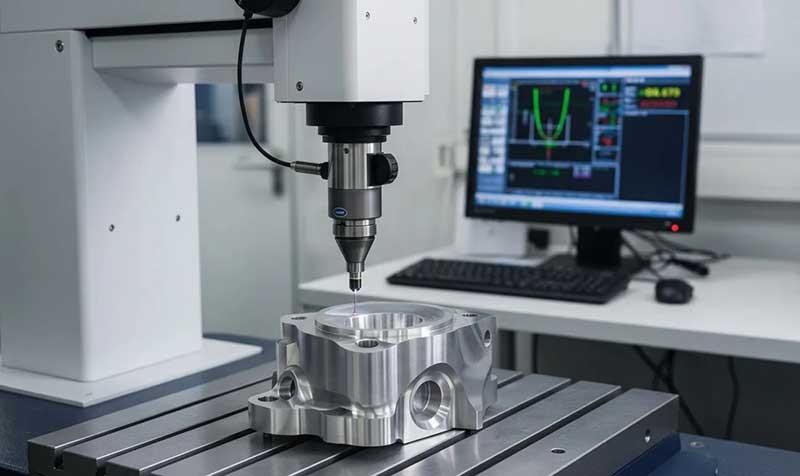
- Dimensional accuracy: ±0.02 – 0.05 mm
- Surface finish: Ra 0.8 – 3.2 μm
Coolant and heat management:
- Use compressed air or light mineral oil for most resins.
- Excessive heat softens resins, causing poor finish and dimensional shifts.
- For heat-sensitive polyurethanes, use lower spindle speeds and frequent cooling breaks.
Overcoming Machinability Challenges
| Challenge | Cause | Solution |
|---|---|---|
| Chipping (epoxies) | Dull tools, excessive feed | Use sharp carbide tools; reduce feed rates |
| Tool wear (polyesters) | Abrasive nature | Check tools regularly; replace at 0.1 mm flank wear |
| Gumming (polyurethanes) | Sticky chips | Use anti-stick tool coatings; proper lubrication |
| Dimensional variation | Shrinkage from curing | Machine post-curing (after 24–48 hours) |
| Delamination | Layered castings, excessive forces | Avoid heavy cutting forces; use light passes |
Where Are Casting Resins Used?
Casting resins serve industries ranging from industrial equipment to art. Their versatility makes them valuable for many applications.
Industrial and Automotive
| Industry | Applications | Why Casting Resins? |
|---|---|---|
| Industrial equipment | Molds, dies, valves, pump components, gear housings, bearings, gaskets | High strength (epoxies); wear resistance (polyurethanes); chemical resistance |
| Automotive | Prototyping, electrical components, interior trim, air vents, underhood components | Cost-effective (polyesters); durability under oils and heat (epoxies) |
Electronics and Medical
| Industry | Applications | Why Casting Resins? |
|---|---|---|
| Electronics | Enclosures, insulators, circuit board substrates, flexible cable insulation | Electrical insulation; flame retardancy (UL94 V-0 grades for epoxies) |
| Medical devices | Surgical tool handles, device housings, implants (with certification) | Biocompatibility; sterilizable; resistance to bodily fluids |
Art, Sculpture, and Prototyping
Casting resins are popular in art and sculpture because they capture fine details:
- Polyester resins: Cost-effective for large sculptures.
- Epoxy resins: Glossy finish for decorative pieces.
In prototyping, they enable fast, low-cost production of functional parts. 3D-printed resin prototypes are often post-machined to achieve precise dimensions—bridging the gap between design and mass production.
What Is Yigu Technology’s Perspective?
At Yigu Technology, we specialize in CNC machining all types of casting resins. Our expertise in tool selection ensures consistent quality. We use:
- Carbide tools for epoxies and polyesters.
- Diamond-coated tools for high-precision polyester parts.
- Anti-stick coatings for polyurethanes.
We address shrinkage challenges by machining post-curing—waiting 24–48 hours for full dimensional stability. Our process controls deliver parts with tight tolerances for industries from automotive to medical. Whether you need a rigid epoxy enclosure or a flexible polyurethane gasket, we have the experience to deliver.
Conclusion
CNC machining casting resins requires understanding each resin type’s unique properties. Epoxies offer high strength and dimensional stability with minimal shrinkage. Polyesters provide cost-effective performance but are abrasive and require careful tool management. Polyurethanes deliver flexibility but need anti-stick strategies to prevent gumming. Success depends on selecting the right tools—carbide for hard resins, anti-stick coatings for soft resins—and optimizing parameters. Post-cure machining ensures dimensional accuracy. With the right approach, casting resins deliver precision parts for industrial, automotive, electronics, medical, and artistic applications.
FAQs
Which casting resin is best for high-temperature applications?
Epoxy resins with heat-resistant formulations perform best. Standard epoxies handle 80–150°C, while high-temperature grades withstand up to 200°C. Polyesters and polyurethanes have lower continuous use temperatures (60–100°C).
How does curing time affect machining of casting resins?
Machining before full cure (within 24–48 hours) risks deformation and dimensional instability. Post-curing ensures the material has reached its final properties, providing better machinability and accuracy.
Can casting resins be painted or coated after machining?
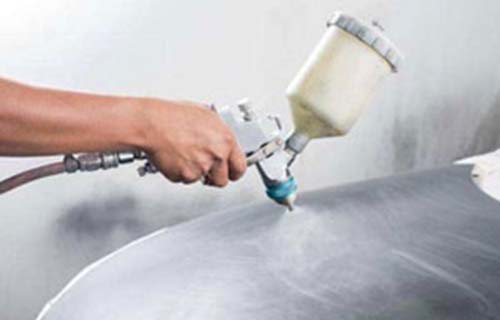
Yes. Most resins accept painting and coating. Sanding to Ra 1.6 μm first ensures good adhesion. Epoxies and polyesters bond well with paints and coatings; polyurethanes may require specialized primers for best results.
Contact Yigu Technology for Custom Manufacturing
At Yigu Technology, we combine CNC machining expertise with deep knowledge of casting resins. Our 3-axis, 4-axis, and 5-axis CNC machines handle epoxies, polyesters, and polyurethanes with precision. We provide DFM feedback to optimize your designs for manufacturability. From prototyping to production, we deliver parts that meet your specifications with consistent quality.
Ready to machine your next casting resin part? Contact Yigu Technology today for a free consultation and quote. Let us help you turn your design into a precision-machined reality.


