Introduction
Imagine a plastic that withstands continuous temperatures of 260°C . One that rivals metals in strength yet weighs a fraction of them. A material approved for permanent surgical implants because it doesn’t trigger immune responses.
That’s PEEK —polyetheretherketone. It sits at the pinnacle of engineering plastics. But here’s the challenge: molding PEEK pushes equipment to its limits. Processing temperatures exceed 380°C . Viscosity runs high. Even minor deviations cause voids, warpage, or degradation that scraps entire batches.
This guide addresses those challenges head-on. Drawing from real production experience, we’ll cover PEEK’s properties, the specialized equipment it demands, process parameters that must be precise, and troubleshooting strategies that keep quality consistent. Whether you’re molding aerospace components or medical implants, you’ll find actionable insights here.
What Makes PEEK an Unrivaled Engineering Material?
High-Temperature Resistance
PEEK stands alone among thermoplastics for heat resistance. It maintains properties at temperatures where nylon or polycarbonate would soften or melt.
| Property | PEEK | Nylon 6/6 | Polycarbonate |
|---|---|---|---|
| Continuous use temperature | 260°C | 80–120°C | 80–120°C |
| Short-term peak | 300°C | 150°C | 130°C |
| Glass transition temperature | 143°C | 50–60°C | 147°C |
This heat resistance enables applications near engines, in industrial ovens, and in oilfield equipment where other plastics fail.
Mechanical Strength
PEEK delivers tensile strength of 90–100 MPa —comparable to many aluminum alloys. Its flexural modulus of 3.6–4.1 GPa provides rigidity under load. Crucially, it retains most of this strength at elevated temperatures.
A real-world example: aerospace brackets machined from metal weighed 200 grams. PEEK injection-molded replacements weighed 40 grams—an 80% weight reduction —while maintaining required strength at operating temperatures.
Chemical and Wear Resistance
PEEK resists fuels, oils, acids, and alkalis that attack other plastics. It won’t swell or degrade in harsh chemical environments.
Its coefficient of friction —0.3 dry against steel —and exceptional wear resistance make it ideal for bearings, seals, and moving parts. In industrial pump applications, PEEK components outlast metal alternatives by 3–5 times .
Biocompatibility
For medical applications, PEEK offers a rare combination: FDA-approved for implants , it doesn’t trigger immune responses. Its elastic modulus closely matches bone, reducing stress shielding—a common issue with metal implants. Spinal cages, hip replacements, and dental implants increasingly use PEEK.
Other Key Properties
- Dimensional stability: Coefficient of thermal expansion of 45 ppm/°C —low for a plastic
- Flame retardancy: UL94 V-0 rating without additives
- Electrical properties: High dielectric strength suitable for high-temperature electronics
What Equipment Does PEEK Injection Molding Require?
Specialized Injection Molding Machines
PEEK’s processing temperature of 380–400°C exceeds the capability of standard machines. Equipment must have:
- Heated barrels and nozzles reaching at least 420°C
- High-pressure capability : 180 MPa or higher
- Precise temperature control : ±5°C or better
- Corrosion-resistant screws : PEEK’s high temperature can accelerate wear
Tooling Requirements
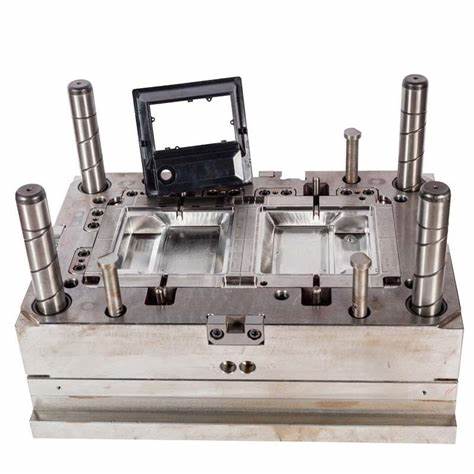
Molds must withstand repeated exposure to 400°C without losing integrity.
| Mold Component | Requirement |
|---|---|
| Steel type | H13 tool steel (retains hardness at high temperatures) |
| Optional coating | Nickel plating for improved release and durability |
| Cooling channels | Dense layout; 8–10 mm from cavity |
| Cooling water temperature | 80–100°C to prevent thermal shock |
Auxiliary Equipment
- High-temperature dryers: Desiccant dryers capable of 150–160°C
- Hot runner systems: Heated manifolds maintaining 380–400°C
- Temperature controllers: Precision units with ±1°C accuracy
How Do You Optimize the PEEK Injection Molding Process?
Drying: The First Critical Step
PEEK absorbs minimal moisture compared to other engineering plastics. But any moisture causes hydrolysis during molding—reducing molecular weight and mechanical properties.
Drying requirements: 150–160°C for 4–6 hours in a desiccant dryer. Target moisture content below 0.02% .
Melt Temperature: Stay in the Window
| Zone | Temperature Range | Notes |
|---|---|---|
| Rear zone | 350–370°C | Gradual heating |
| Middle zone | 370–390°C | Melt preparation |
| Front zone | 380–400°C | Final heating |
| Nozzle | 380–400°C | Critical control point |
Exceeding 410°C causes degradation—reducing strength and causing discoloration. Falling below 370°C risks incomplete melting and short shots.
Injection Parameters
Injection pressure: 120–180 MPa . PEEK’s high viscosity demands high pressure, especially for thin-walled sections.
Injection speed: 30–60 mm/s . Moderate speeds prevent shear heating that could degrade the material. Faster speeds may be needed for thin walls; slower for thick sections.
Packing pressure: 70–90% of injection pressure for 2–5 seconds . This compensates for shrinkage during cooling.
Cooling and Cycle Time
PEEK has low thermal conductivity , meaning it holds heat longer. Cooling dominates the cycle:
- Cooling time: 30–60 seconds depending on wall thickness
- Total cycle time: 60–120 seconds —significantly longer than standard plastics
A manufacturer producing PEEK electrical connectors learned this lesson when they tried to accelerate cycles. Parts came out with internal voids—insufficient cooling had trapped heat. Extending cooling time by 15 seconds eliminated the issue.
How Should You Design Molds for PEEK?
Flow Analysis Is Essential
PEEK’s high viscosity means mold flow analysis isn’t optional. It identifies potential issues:
- Air traps that cause voids
- Weld lines that weaken parts
- Pressure drop that causes short shots
Simulation software models filling patterns, allowing design adjustments before steel is cut.
Venting: Small Details, Big Impact
PEEK traps air easily. Inadequate venting causes burn marks, voids, and incomplete fills.
Vent depth: 0.02–0.03 mm along parting lines and flow endpoints. These tiny channels allow air to escape without allowing material to flash.
Draft and Ejection
PEEK’s rigidity means it doesn’t flex during ejection. Draft angles of 1–2° facilitate clean release.
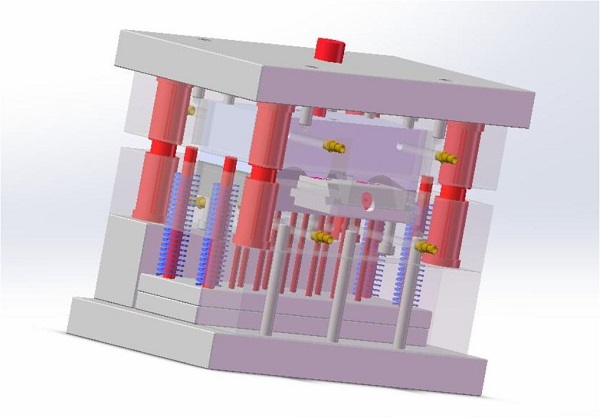
Ejector pin design must distribute force evenly. Use multiple large pins rather than a few small ones to avoid deforming the part. Stripper plates work well for large, flat components.
Surface Finish
Mold surface transfers to the part. For most applications, Ra < 0.8 μm is sufficient. For optical or medical applications requiring smoother finishes, polish to Ra < 0.4 μm .
What Defects Occur in PEEK Molding and How Do You Fix Them?
| Defect | Common Causes | Solutions |
|---|---|---|
| Voids | Trapped air; moisture | Add vents; extend drying time |
| Warpage | Uneven cooling; residual stress | Balance cooling channels; reduce packing pressure |
| Short shots | Insufficient pressure; low melt temp | Increase pressure; raise temperature to 390–400°C |
| Surface defects | Mold contamination; degradation | Clean mold; lower melt temperature |
| Sink marks | Inadequate packing | Increase packing time or pressure |
| Discoloration | Overheating; degradation | Reduce melt temperature; check thermocouples |
A Troubleshooting Case Study
A medical implant manufacturer experienced intermittent warpage in PEEK spinal cages. Parts passed dimensional inspection but failed assembly fit.
Investigation revealed uneven cooling. The mold’s cooling channels were not balanced—one side ran cooler than the other. The imbalance caused residual stress that warped parts slightly after ejection.
The solution: redesign cooling channel layout for uniform flow. Warpage dropped by 90% . Assembly fit issues disappeared.
What Quality Control Methods Ensure Consistency?
Statistical Process Control (SPC)
Monitor key variables continuously:
- Melt temperature: ±5°C
- Injection pressure: ±5 MPa
- Cooling time: ±2 seconds
When parameters drift, SPC systems flag the trend before defects occur.
Dimensional Inspection
PEEK parts often require tight tolerances:
- Medical implants: ±0.02 mm or better
- Aerospace components: ±0.05 mm
- General industrial: ±0.1 mm
Coordinate measuring machines (CMMs) verify critical dimensions.
Material Testing
Batch-to-batch consistency matters. Test each lot for:
- Tensile strength : Must meet 90–100 MPa specification
- Impact resistance : Verifies no degradation during processing
- Viscosity : Ensures consistent flow
Non-Destructive Testing
For critical applications, ultrasonic testing detects internal voids invisible to the naked eye. This is standard for aerospace and medical parts where internal defects could lead to failure.
Where Is PEEK Injection Molding Used?
Aerospace Components
Engine brackets, wire insulation, and structural parts benefit from PEEK’s high-temperature resistance and low weight. Aircraft manufacturers use it to replace metal components, reducing weight without sacrificing performance.
Medical Implants
Spinal cages, hip replacements, and dental implants leverage PEEK’s biocompatibility and bone-like stiffness. The material allows X-ray transparency—doctors can see through it to monitor healing—unlike metal implants.
High-Performance Mechanical Parts
Bearings, gears, and seals in industrial pumps, compressors, and oilfield equipment use PEEK for wear and chemical resistance. Components last significantly longer than metal alternatives in abrasive or corrosive environments.
Electronics Components
Connectors in high-temperature environments—under-the-hood automotive, down-hole drilling—rely on PEEK’s electrical insulation and thermal stability.
Automotive Parts
Turbocharger components, transmission seals, and fuel system parts withstand extreme heat and chemical exposure where standard plastics fail.
Design for Manufacturing Tips
- Wall thickness: 1–5 mm . Thinner sections need higher injection pressure
- Corners: Avoid sharp angles; use radii to reduce stress concentration
- Biomedical parts: Specify smooth finishes (Ra < 0.4 μm) to prevent bacterial growth
What Post-Processing Options Are Available?
Machining
PEEK machines well with carbide tools . Key considerations:
- Use slow speeds to prevent heat buildup
- Avoid exceeding 143°C (glass transition temperature) during machining
- Coolant helps maintain dimensional accuracy
Bonding and Welding
Adhesive bonding works with epoxy or cyanoacrylate. Surface treatment—plasma etching —improves bond strength significantly.
Ultrasonic welding is possible but requires high energy due to PEEK’s rigidity. Joint design must accommodate the material’s stiffness.
Heat Treatment
Annealing at 200°C for 2 hours relieves residual stress from molding. This improves dimensional stability—critical for precision assemblies.
Surface Treatments
- Polishing enhances wear resistance
- PTFE coating reduces friction for bearing surfaces
- Plasma treatment improves adhesive bonding
Conclusion
PEEK injection molding demands respect for the material’s requirements. Processing temperatures exceed 380°C . Viscosity runs high. Cooling takes time. But the results justify the effort: parts that withstand extreme heat, resist chemicals, replace metal, and even serve as permanent medical implants.
Success requires specialized equipment, precise process control, and rigorous quality systems. Molds must be H13 tool steel with dense cooling channels. Parameters must stay within narrow windows—melt temperature ±5°C, injection pressure ±5 MPa. Drying must remove moisture to below 0.02% .
When these conditions are met, PEEK delivers unmatched performance. When they’re not, defects multiply quickly. Understanding the material—and respecting its processing demands—separates manufacturers who succeed with PEEK from those who struggle.
FAQ
What makes PEEK more expensive than other plastics?
PEEK’s complex synthesis process and high-performance properties drive cost. Raw material prices are significantly higher than standard thermoplastics. However, its ability to replace metal, withstand extreme conditions, and last longer often justifies the investment in critical applications.
Can PEEK be recycled?
Yes, recycled PEEK (rPEEK) can be used for non-critical applications. However, mechanical properties—tensile strength and impact resistance—may decrease by 10–15% . Virgin PEEK is recommended for implants, aerospace components, and other high-performance applications.
What equipment is needed for PEEK injection molding?
Specialized machines with heated barrels capable of 420°C , high-pressure capability (≥180 MPa) , and precise temperature control (±5°C). Molds must use heat-resistant steel like H13 . Standard injection molding equipment cannot reach the required temperatures.
Is PEEK suitable for medical implants?
Yes. PEEK is FDA-approved for implants . It offers biocompatibility (no immune response), bone-like stiffness that reduces stress shielding, and X-ray transparency for post-operative monitoring. It is widely used for spinal cages, dental implants, and orthopedic devices.
How do you prevent warpage in PEEK parts?
Warpage typically results from uneven cooling or residual stress. Solutions include: balancing cooling channel layout for uniform heat extraction, reducing packing pressure to minimize molded-in stress, and annealing parts after molding to relieve residual stress. Cooling time must be sufficient—rushing the cycle invites warpage.
Contact Yigu Technology for Custom Manufacturing
At Yigu Technology , we specialize in PEEK injection molding for demanding applications. Our equipment handles the high temperatures and pressures this material requires. Our team understands the nuances—from drying protocols to mold design to process optimization. We’ve delivered PEEK components for aerospace, medical, automotive, and industrial clients who demand performance. Whether you need medical implants or high-temperature mechanical parts, contact us today to discuss your PEEK injection molding project.