Introduction
Imagine investing in a set of molds that promise durability, only to have them crack after a few thousand cycles. Or dealing with constant rework because your tools cannot maintain precision in high-volume production. These are the headaches that plague manufacturers using subpar materials.
DC53—a Japanese cold work steel—solves these problems. Designed to overcome the limitations of traditional steels like SKD11 and D2, DC53 offers a rare blend of hardness, toughness, and wear resistance. It is engineered for demanding applications where both precision and durability matter.
This guide explores what makes DC53 unique. You will learn about its properties, heat treatment, applications, and how it compares to other tool steels. By the end, you will understand why DC53 is becoming the go-to choice for precision tooling.
What Is DC53?
DC53 is a product of advanced Japanese metallurgy. It was developed as an upgrade to SKD11, addressing its key weakness: brittleness. DC53 adheres to strict Japanese Industrial Standards (JIS) , ensuring consistent quality and performance.
Classified as a cold work steel, DC53 is engineered for applications where metal is shaped at or near room temperature—stamping, extrusion, and cold forging.
Chemical Composition
DC53’s balanced composition delivers its exceptional properties:
| Element | Content | Function |
|---|---|---|
| Chromium | 12% | Forms hard carbides for wear resistance |
| Molybdenum | 0.9% | Enhances toughness and hardenability |
| Vanadium | 1.1% | Refines grain structure; improves wear resistance |
| Carbon | 1.0% | Provides hardness |
This mix avoids the brittleness of higher-carbon steels while maintaining strength.
What Properties Make DC53 Exceptional?
| Property | DC53 Performance | Comparison |
|---|---|---|
| Hardness | 58–62 HRC after heat treatment | Ideal for maintaining sharp edges in high-wear tasks |
| Wear Resistance | Outperforms D2 by 15–20% in continuous stamping | High chromium content forms hard carbides |
| Toughness | Absorbs 30% more impact energy than SKD11 before cracking | Reduces risk of sudden tool failure |
| Thermal Stability | Retains hardness up to 450°F (232°C) | Suitable for applications with moderate heat from friction |
| Dimensional Stability | Distortion less than 0.0002 inches per inch during heat treatment | Critical for high-precision molds |
| Edge Retention | Maintains cutting edge 25% longer than D2 in cold extrusion | Reduces downtime for sharpening |
High Hardness
After heat treatment, DC53 reaches 58–62 HRC. This hardness range is ideal for maintaining sharp edges in high-wear tasks like stamping and shearing.
Excellent Wear Resistance
The high chromium content forms hard carbides that resist abrasion. In testing, DC53 outperforms D2 by 15 to 20 percent in wear resistance during continuous stamping.
Good Toughness
Unlike brittle high-hardness steels, DC53 offers impressive toughness. It can absorb 30 percent more impact energy than SKD11 before cracking. This reduces the risk of sudden tool failure in demanding applications.
High Thermal Stability
DC53 retains its hardness at temperatures up to 450°F (232°C) . This makes it suitable for applications where friction generates moderate heat, such as high-speed stamping.
Dimensional Stability
During heat treatment, DC53 experiences minimal distortion—less than 0.0002 inches per inch. This is critical for high-precision molds where tight tolerances are non-negotiable.
Edge Retention
In cold extrusion applications, DC53 maintains its cutting edge 25 percent longer than D2. This reduces downtime for sharpening and extends productive tool life.
How Is DC53 Heat Treated and Processed?
Proper heat treatment unlocks DC53’s full potential. Precision at each step is essential.
| Process | Parameters | Purpose |
|---|---|---|
| Annealing | 1,500–1,550°F (815–845°C), hold 2–4 hours, cool slowly (≤50°F/hour) | Softens steel for machining; reduces internal stresses |
| Hardening | 1,800–1,850°F (980–1,010°C), hold 30–60 minutes | Ensures carbides dissolve evenly; promotes uniform hardness |
| Quenching | Oil quenching (standard); vacuum quenching for complex molds | Forms hard martensitic structure; vacuum quenching reduces oxidation and post-processing time by 20% |
| Tempering | 300–400°F (150–204°C), 2 hours, repeat once | Maximizes toughness; critical for impact-resistant tools |
Surface Treatments
Nitriding adds a hard surface layer. Surface hardness reaches 65–70 HRC, improving wear resistance by 40 percent.
PVD coatings like TiAlN reduce friction, making DC53 ideal for plastic injection molds where material flow is critical.
Machinability
Annealed DC53 machines easily with carbide tools. Recommended cutting speeds: 50–80 SFM. Use coolant to prevent overheating.
EDM Performance
DC53 handles electrical discharge machining well. The recast layer is thin (0.0001 inches), making it easy to remove and reducing the risk of cracking.
Where Is DC53 Used in Mold Making?
| Application | Why DC53 Excels |
|---|---|
| Cold work tooling | Toughness and wear resistance for high-volume blanking and forming |
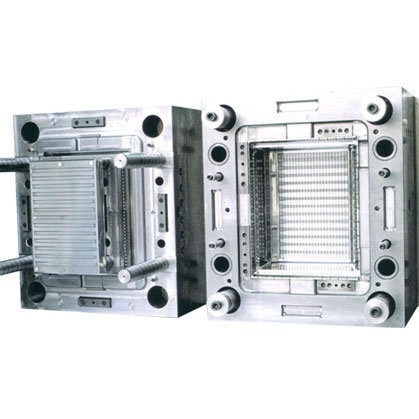
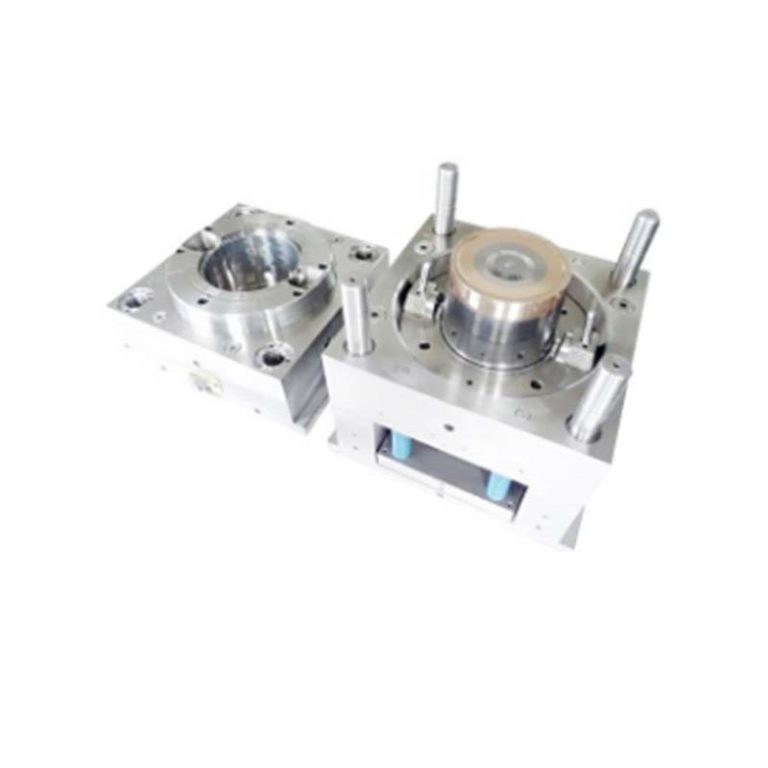
| Plastic injection molds | Wear resistance for glass-filled plastics; polishes to mirror finish for cosmetic parts |
| Stamping dies | Lasts 300,000–800,000 cycles—50% longer than SKD11 in identical conditions |
| Punches and shears | Stays sharp 40% longer than D2 in 16-gauge steel cutting |
| High-precision molds | Dimensional stability maintains tolerances as tight as ±0.0001 inches |
| Progressive dies | Handles multiple operations without cracking or uneven wear |
What Performance Advantages Does DC53 Deliver?
Longer Mold Life
In cold forging applications, DC53 molds last 40 to 60 percent longer than D2. This results from its superior combination of toughness and wear resistance.
Reduced Maintenance
With better edge retention, DC53 tools require sharpening 30 percent less frequently than SKD11. This cuts downtime and increases productive capacity.
Improved Dimensional Accuracy
DC53’s dimensional stability ensures parts stay within tolerance. In precision applications, this reduces scrap rates by up to 25 percent.
Cost-Effectiveness
While DC53 costs 10 to 15 percent more than SKD11 upfront, its longer life and lower maintenance make it 20 to 30 percent cheaper over the tool’s lifespan. The performance-to-cost ratio is excellent for mid-to-high volume production.
How Does DC53 Compare to Other Tool Steels?
| Steel Grade | Hardness (HRC) | Wear Resistance | Toughness | Relative Cost | Best For |
|---|---|---|---|---|---|
| DC53 | 58–62 | Very Good | Very Good | Medium-High | Balanced performance (stamping, precision molds) |
| D2 | 57–62 | Very Good | Good | Medium-High | High-wear, low-impact |
| SKD11 | 57–61 | Good | Good | Medium | General cold work |
| AISI D3 | 58–64 | Excellent | Low | Medium | Ultra-high wear, no impact |
| Cr12MoV | 57–62 | Good | Good | Medium | Budget-conscious applications |
DC53 vs. D2: DC53 offers similar wear resistance but 20 percent better toughness. This makes it better for applications with moderate impact.
DC53 vs. SKD11: DC53 is a direct upgrade, with 30 percent better toughness and 15 percent better wear resistance than SKD11, justifying its slightly higher cost.
Cost comparison: DC53 costs less than powder metallurgy steels like ASP-60 but more than SKD11. Its performance-to-cost ratio makes it ideal for most mid-to-high volume production.
How Do You Maintain DC53 Tools?
Proper maintenance extends DC53 tool life even further.
| Maintenance Activity | Best Practice |
|---|---|
| Tool sharpening | Use diamond wheels; maintain cool cutting zone to avoid tempering; sharpen when edge wear reaches 0.001 inches |
| Reconditioning | Can be reconditioned 3–4 times by grinding and re-tempering; extends life by 2–3x |
| Crack repair | Small cracks can be welded with matching filler; post-weld heat treatment essential to restore toughness |
| Preventive maintenance | Clean after use; apply rust inhibitors during storage; regular inspections catch wear early |
Yigu Technology’s Perspective
As a custom manufacturing supplier, we recommend DC53 for clients needing both durability and precision. We have seen it outperform D2 and SKD11 in high-stress applications, reducing tooling costs by 25 percent on average.
Our team optimizes DC53’s heat treatment for each project. For a medical device mold requiring tight tolerances, we focus on dimensional stability. For an automotive stamping die needing maximum wear resistance, we emphasize proper hardening and tempering.
For manufacturers looking to upgrade their tooling, DC53 offers a clear path to better performance and lower long-term costs.
Conclusion
DC53 represents a significant advancement in cold work tool steel. Its balanced composition delivers high hardness, excellent wear resistance, and superior toughness—properties that traditionally conflict in tool steels. It maintains dimensional stability during heat treatment, retains hardness at elevated temperatures, and holds cutting edges longer than comparable grades.
From stamping dies and punches to plastic injection molds and progressive dies, DC53 performs where other steels fall short. While it costs more upfront than SKD11, its longer life and reduced maintenance make it cost-effective over the tool’s lifespan. For manufacturers demanding both precision and durability, DC53 is a compelling choice.
FAQ
Is DC53 suitable for high-impact applications?
Yes. DC53’s superior toughness makes it ideal for low-to-moderate impact applications like cold forging. It outperforms D2 and SKD11 in impact resistance by 20 to 30 percent.
How does DC53 compare to powder metallurgy steels?
DC53 offers 80 to 90 percent of the wear resistance of powder metallurgy steels like ASP-60 at approximately 50 percent of the cost. This makes it a better value for most mid-to-high volume applications.
Can DC53 be used for plastic injection molds?
Absolutely. DC53’s excellent polishability and wear resistance make it perfect for plastic molds, especially those producing abrasive materials like glass-filled plastics. It polishes to a mirror finish suitable for cosmetic parts.
Contact Yigu Technology for Custom Manufacturing
Looking for high-performance tooling that delivers both precision and durability? Yigu Technology specializes in custom non-standard plastic and metal products. Our team has extensive experience with DC53 and other advanced tool steels.
Reach out today to discuss your next project. Let us help you choose the right material for your demanding applications.