
How Can Machining Specialists Empower High-End Manufacturing?

Milling Tolerance

Contents Introduction What Core Technologies Define a Machining Specialist? Which Processes and Equipment Matter Most? What Programming and Precision Skills Are Essential? How Do Specialists Apply Their Skills Across Industries? How Do Specialists Handle Custom and High-Volume Work? What Does It Take to Become a Senior Machining Specialist? What Knowledge and Training Form the Foundation? […]

Introduction

Behind every precision part in an aircraft engine, every critical component in an automotive transmission, and every life-saving medical implant stands a machining specialist. These professionals do more than operate equipment. They optimize processes, solve complex technical problems, and turn raw materials into components that meet exacting standards.

As manufacturing shifts toward precision, customization, and intelligence, the role of the machining specialist has evolved. They’re no longer just machine operators. They’re process engineers, quality controllers, and innovation partners.

This guide explores what makes a machining specialist truly effective—the core skills, industry applications, career paths, and quality strategies that define expertise in this field.


What Core Technologies Define a Machining Specialist?

Which Processes and Equipment Matter Most?

A machining specialist’s technical foundation rests on CNC machining, covering milling, turning, and multi-axis machining. Five-axis linkage machining, for example, enables one-setup completion of complex curved parts—critical for engine blades and precision molds.

One aviation manufacturer switched to five-axis machining for blade production. Cycle time dropped 40% . Scrap rates fell from 3% to 0.8% .

Experts must also master a range of equipment:

  • Vertical machining centers
  • Horizontal lathes
  • Electrical discharge machines (EDM)

They select tools and cutting parameters based on material characteristics. For titanium alloy medical parts, diamond-coated tools with low-speed, high-feed strategies prevent material deformation.

What Programming and Precision Skills Are Essential?

CAD/CAM programming serves as the brain of machining. Specialists use software like Mastercam and UG NX to convert 3D models into machine code. They optimize toolpaths through simulation to avoid collisions.

An automotive parts company used CAM path optimization for a complex transmission housing. Machining time dropped 25% . Tool wear decreased by the same margin.

Tolerance and surface finish control separates experts from operators. Industrial-grade parts often require:

  • Tolerances of ±0.005 mm (about 1/14 of a human hair)
  • Surface roughness Ra ≤ 0.8 μm

Achieving this demands more than machine setup. Specialists compensate for environmental factors through temperature control and vibration suppression. One precision tooling shop uses a constant-temperature workshop (temperature fluctuation ±0.5°C) and hydraulic damping tables to hold tolerances within ±0.002 mm.


How Do Specialists Apply Their Skills Across Industries?

Different industries present different challenges. Machining specialists adapt their expertise accordingly.

IndustryCore RequirementsExpert SolutionsReal-World Results
AerospaceHigh-temperature materials, ultra-high precisionFive-axis machining + vacuum heat treatmentTurbine disc: ±0.003 mm tolerance, Ra 0.4 μm finish
AutomotiveHigh volume, cost controlSpecial fixtures, automated loading systemsTransmission gears: 500 parts per shift, 0.5% defect rate
MedicalBiocompatible materials, sterile productionMQL (minimum quantity lubrication), electropolishingJoint prosthetics: Ra 0.2 μm, ISO 13485 certified
PrototypingRapid iteration, design flexibility3D printing + CNC finishingDrone fuselage prototype: design to sample in 72 hours

How Do Specialists Handle Custom and High-Volume Work?

For custom machining solutions, specialists need cross-disciplinary thinking. A new energy company needed an irregularly shaped battery housing. The specialist didn’t just plan the machining—they worked with material engineers to optimize the aluminum alloy formula for both light weight and impact resistance. The solution combined stretch forming with CNC finishing.

For high-volume production, the focus shifts to efficiency. Specialists apply lean manufacturing principles to reduce changeover times. One electronics component factory restructured its machining process. Changeover time dropped from 45 minutes to 15 minutes. Production capacity rose 30% . Per-part processing costs fell 18% .


What Does It Take to Become a Senior Machining Specialist?

Becoming an expert requires systematic knowledge, hands-on experience, and continuous learning.

What Knowledge and Training Form the Foundation?

Start with core theory:

  • Mechanical drawing
  • Materials science
  • GD&T (Geometric Dimensioning and Tolerancing)

GD&T serves as the universal language between design, machining, and quality teams. Mastering it prevents 90% of production misunderstandings.

Formal training paths include vocational programs and certifications. In the U.S., NIMS (National Institute for Metalworking Skills) certification is widely recognized. Europe has its own equivalents. These credentials signal industry-recognized competence.

How Does Hands-On Experience Build Expertise?

Machining is fundamentally a hands-on discipline. The typical progression:

  • 1–2 years: Basic operation, learning to run equipment independently
  • 3–5 years: Master core skills—programming, precision control, material-specific strategies
  • 5–10 years: Develop specialization in a niche (aerospace, medical, precision molds)

One senior expert focused on aerospace parts for a decade. His reputation in titanium and superalloy processing made him a scarce resource—clients sought him out specifically.

What Career Paths Are Available?

Machining specialists can pursue two main trajectories:

Technical track:
CNC Operator → Process Engineer → Senior Machining Specialist → Technical Director

Management track:
CNC Operator → Production Supervisor → Shop Manager → Operations Director

Some choose entrepreneurship, starting custom machining businesses serving niche industries where their expertise commands premium rates.


How Do Specialists Control Quality and Optimize Processes?

In competitive manufacturing, balancing quality, efficiency, and cost defines success. This is where specialists deliver core value.

What Does Whole-Process Quality Control Look Like?

Machining quality control spans three stages:

StageMethodPurpose
Incoming materialSpectrometer analysisVerify material composition (e.g., Ti-6Al-4V titanium alloy—check aluminum and vanadium content)
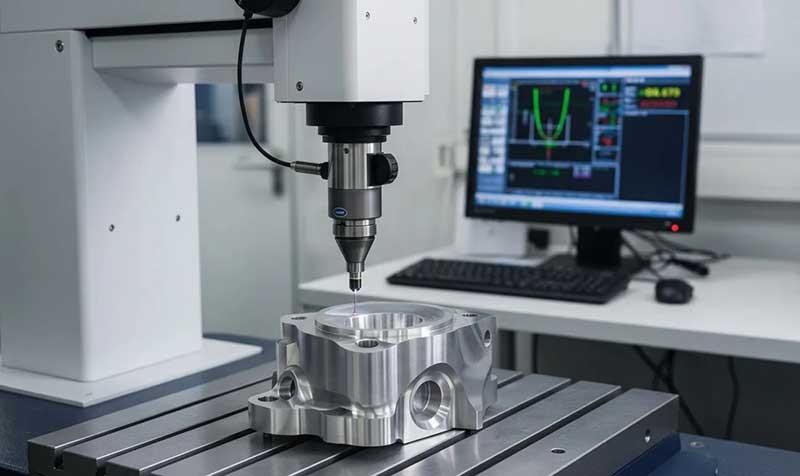
In-processCMM, laser interferometersMonitor critical dimensions in real time; prevent batch scrap
Finished productNon-destructive testing (ultrasonic, X-ray)Detect internal defects; ensure reliability

A medical device company implemented this three-tier system for orthopedic implants. First-pass yield rose from 98.5% to 99.9% . Customer complaints dropped 80% .

How Do Specialists Improve Efficiency and Reduce Costs?

Machining process optimization targets three areas:

  • Tool optimization: High-performance tools (coated carbide, diamond) extend tool life. TiAlN-coated tools last 2–3× longer when milling steel.
  • Cutting parameter optimization: Orthogonal testing determines optimal speed, feed, and depth. Machining 45 steel, increasing cutting speed from 100 m/min to 150 m/min boosted efficiency 50% .
  • Automation: Robotic loading and AGV logistics reduce manual intervention. One machine shop automated its production line. Per-capita output rose 60% . Labor costs dropped 40% .

Cost reduction also comes from material utilization. Nesting software arranges multiple parts on raw material stock, boosting utilization from 60% to over 85% . Single-batch processing costs fell 25% .


Conclusion

Machining specialists are the invisible cornerstone of modern manufacturing. Their expertise spans core technologies—CNC, multi-axis machining, precision programming—and extends into quality control, process optimization, and cross-functional collaboration.

As Industry 4.0 advances, the specialist’s role continues to evolve. Artificial intelligence, digital twins, and smart manufacturing systems are becoming standard. But technology alone doesn’t solve problems. The specialist’s experience, judgment, and ability to integrate new tools with practical knowledge remain irreplaceable.

For individuals, the path to expertise requires systematic training, years of hands-on practice, and a commitment to continuous learning. For businesses, partnering with skilled specialists—whether by developing internal talent or collaborating with expert shops—is essential to competing in high-end manufacturing.


FAQ

What software do machining specialists need to master?
Core software includes CAD (SolidWorks, AutoCAD) and CAM (Mastercam, UG NX). Advanced specialists also use SPC tools (Minitab) and simulation software (ANSYS).

What’s the main difference between multi-axis and standard CNC machining?
Multi-axis machining (like 5-axis) completes complex parts in one setup, reducing clamping operations and improving accuracy and efficiency. Standard 3-axis machining suits simpler parts with lower costs and easier operation.

How long does it take to become a machining expert?
Basic competence (independent operation) takes 1–2 years. Core skills (programming, precision control) take 3–5 years. True expertise in a specialized field (aerospace, medical) typically requires 5–10 years of focused practice.

What are common quality issues in machining, and how are they solved?
Common issues: dimensional deviation, poor surface finish, part deformation. Solutions include optimizing cutting parameters, using constant-temperature environments, adding stress-relief heat treatment, and selecting appropriate tools and fixtures.

What are the development trends in high-end machining?
Key trends: intelligence (AI-driven process optimization), green manufacturing (minimum-quantity lubrication, energy-efficient equipment), hybridization (additive + subtractive combined processes), and customization (low-volume, high-precision production).


Contact Yigu Technology for Custom Manufacturing

At Yigu Technology, our specialists combine deep technical expertise with hands-on experience across aerospace, automotive, medical, and industrial sectors. We don’t just run machines—we solve manufacturing challenges. From process optimization to custom components, our team delivers precision, reliability, and value. Contact us today to discuss how we can support your high-end manufacturing needs.

Scroll to Top