Introduction
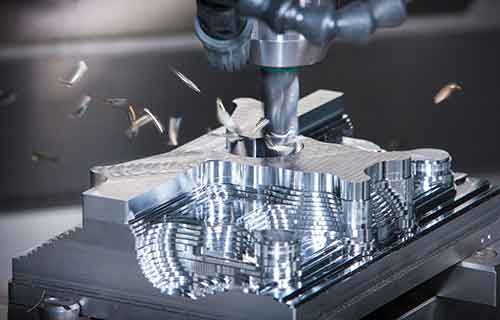
More and more companies rely on custom CNC machining services today. It makes sense. Outsourcing precision parts saves money and speeds up your timeline. But it also comes with real risks. You might get parts that don't fit. Costs could spike without warning. Or worse — your designs could leak to a competitor. These aren't just worries. They happen every day to buyers who skip the right due diligence.
Before you send that first quote request, you need to know five critical things. This guide covers quality consistency, hidden pricing traps, lead time nightmares, material confusion, and IP protection risks. We break each one down with real-world examples and actionable steps. Whether you're a startup founder or a procurement manager, this will save you from costly mistakes.
How Can You Guarantee Consistent Quality?
You don't just want parts that work once. You need consistent quality on every order. That means tight tolerances, every single time. The gap between "good enough" and "reliable" is where most problems start.
Look for Real Certifications
Not all certifications carry the same weight. Here's what actually matters:
| Certification | What It Covers | Best For |
|---|---|---|
| ISO 9001 | Basic quality management system | General manufacturing |
| AS9100 | Aerospace-grade quality standards | Mission-critical parts |
| ISO 13485 | Medical device quality control | Healthcare applications |
| IATF 16949 | Automotive quality requirements | Car and EV components |
A shop with ISO 9001 has a system. But a shop with AS9100 has been audited against the toughest standards in the world. That's a huge difference for tight-tolerance CNC parts.
Demand First-Article Inspections
A first-article inspection (FAI) is non-negotiable. This is where the supplier measures every dimension on your first part. They compare it against your CAD specs. They send you a full report before full production starts.
Here's a real case. A medical device startup we worked with ordered 500 titanium housings. The supplier passed ISO 9001. But they skipped the FAI. The first batch had a 0.03mm deviation on a critical bore. That sounds tiny. But it caused seal failure in the field. The cost? $47,000 in rework and a three-week delay. An FAI would have caught that in hour one.
Vet Their Quality Management System
Ask these questions before you order:
- Do you run in-process inspections or only final checks?
- What CMM (Coordinate Measuring Machine) do you use?
- Can you share your SPC (Statistical Process Control) data?
- How do you handle non-conforming parts?
If they can't answer these clearly, walk away. Quality consistency isn't luck. It's a system.
Why Is the Quote Never the Final Price?
Here's a painful truth. The number on the quote is almost never what you pay. Hidden costs in CNC machining are everywhere. And they add up fast.
The Real Cost Breakdown
Most buyers only see the per-part price. But the real bill looks like this:
| Cost Item | Typical Range | Why It Surprises Buyers |
|---|---|---|
| Setup fees | 50–300 per job | Machine changeover takes time |
| Tooling amortization | 200–2,000 | Custom tools get spread across units |
| Material minimums | 1–5 kg per order | You pay for scraps you didn't use |
| Post-processing | 2–15 per part | Deburring, anodizing, plating add up |
| Expedited shipping | 2x – 5x standard rate | Rush orders cost a lot more |
A Real Pricing Nightmare
A client once got a quote of 4.50perpart∗∗for200aluminumbrackets.Soundscheap,right?Thefinalinvoicewas∗∗11.20 per part. Why? They didn't ask about setup fees (150),post−machiningdeburring(3/part), and a 400toolingcharge.Totalsurprisecost:∗∗1,340** on a $900 order.
How to Get a Transparent Quote
Follow these steps:
- Ask for an all-in estimate — not just a per-part rate.
- Specify your quantities upfront — this changes tooling amortization.
- List every post-processing step you need.
- Confirm material waste factors — most shops charge for 10–20% extra raw stock.
- Get quotes from 3+ suppliers — this reveals who's hiding fees.
What Causes Lead Times to Spiral?
You need parts by Friday. They arrive in six weeks. Lead time delays are the #1 complaint we hear from CNC buyers. And they're almost always preventable.
The Top 5 Delay Triggers
| Trigger | Why It Happens | How to Avoid It |
|---|---|---|
| Supplier backlog | They overbooked their machines | Ask about current capacity before ordering |
| Raw material shortages | Aluminum and steel prices spike | Lock in material pricing with POs |
| Design revisions | You changed the CAD after quoting | Freeze designs before requesting quotes |
| Tooling delays | Custom tools take 1–3 weeks | Order tooling in parallel with design |
| Communication gaps | Email chains get lost | Use a shared project tracker |
Use Design-for-Manufacturability Reviews
This is the single best way to shrink lead times. A DFM review catches problems before they hit the shop floor. For example:
- A deep pocket that needs 4 tool changes? Flatten it.
- A 0.01mm tolerance on a non-critical face? Loosen it to 0.05mm.
- A custom alloy when 6061 aluminum works fine? Switch it.
One automotive client reduced their lead time from 6 weeks to 10 days just by simplifying two features after a DFM review. No new machines. No new supplier. Just smarter design.
Build a Backup Supplier List
Never depend on one shop. Keep 2–3 vetted backup suppliers ready. If your primary shop gets hit with a backlog, you can pivot in 48 hours instead of 4 weeks.
Which Material and Finish Should You Choose?
Picking the wrong material is expensive. Picking the wrong finish is worse. Most buyers either over-engineer (wasting money) or under-spec (causing part failure). Here's how to get it right.
Match Material to Application
Use this decision framework:
| Your Need | Best Material | Why |
|---|---|---|
| High strength, low weight | 7075 Aluminum | Aerospace-grade, very strong |
| Corrosion resistance | 316 Stainless Steel | Handles saltwater and chemicals |
| Low cost, general use | 6061 Aluminum | Easy to machine, cheap |
| Wear resistance | Delrin (POM) Plastic | Low friction, great for gears |
| Heat resistance | PEEK Plastic | Handles 250°C+ continuously |
The Over-Specification Trap
We see this constantly. A client ordered titanium brackets for an indoor consumer product. The spec called for aerospace-grade Ti-6Al-4V. But 6061 aluminum would have worked perfectly. The cost difference? 8x more per part. For 1,000 units, that's an extra $12,000 for zero performance gain.
Always ask: What does this part actually need to survive? Then pick the cheapest material that meets that need.
Surface Finish Quick Guide
| Finish | Ra Value (Roughness) | Best For |
|---|---|---|
| As-machined | 3.2 – 6.3 µm | Internal parts, no visibility |
| Anodized (clear) | 0.8 – 1.6 µm | Aluminum, corrosion + looks |
| Powder coat | 40 – 80 µm | Color options, outdoor use |
| Electropolished | 0.1 – 0.4 µm | Medical, food-grade, clean look |
| Chrome plating | 0.2 – 0.8 µm | High wear, decorative |
How Do You Protect Your Designs?
Sharing your CAD files with a third-party shop feels risky. It should. Your design is your competitive edge. If it leaks, you lose that edge forever.
NDAs Are Not Enough
A Non-Disclosure Agreement (NDA) is the bare minimum. But NDAs are hard to enforce across borders. Here's what actually protects you:
| Protection Method | Effectiveness | Effort Level |
|---|---|---|
| NDA + contract | Medium | Low |
| Secure file transfer (SFTP/ encrypted) | High | Medium |
| Watermarked drawings | High | Low |
| Split-file manufacturing | Very High | High |
| On-site production monitoring | Very High | Very High |
Split-File Manufacturing Is a Game-Changer
This means you send two separate files to two different suppliers. Neither one has the full picture. Only when the parts arrive can you assemble them. It sounds extreme. But for high-IP products, it's the gold standard.
A robotics company used this method for their proprietary joint design. One shop machined the housing. Another machined the internal core. Neither could copy the product alone. Zero IP leaks in 3 years.
Set Up Design Review Checkpoints
Don't just email a STEP file and hope for the best. Build review checkpoints into your process:
- Quote stage — Supplier reviews drawing for DFM feedback.
- Pre-production — Supplier sends a 3D print or sample for approval.
- First article — Full inspection report before mass production.
- Final delivery — Random sample pull from the batch.
Each checkpoint is a chance to catch miscommunication before it costs you thousands.
Conclusion
Ordering custom CNC machining services doesn't have to be a gamble. The five pain points we covered — quality inconsistency, hidden pricing, lead time delays, material confusion, and IP risks — are all solvable. You just need the right framework.
Here's your action plan before you place your next order:
- ✅ Verify certifications (ISO 9001 minimum, AS9100 for critical parts).
- ✅ Demand all-in pricing with no hidden fees.
- ✅ Lock designs before quoting and run a DFM review.
- ✅ Pick the cheapest material that actually meets your needs.
- ✅ Protect your IP with more than just an NDA.
When you do all five, CNC machining stops being a risk. It becomes a reliable competitive advantage. Start evaluating your suppliers against this checklist today.
FAQ
What tolerances can CNC machining achieve?
Standard CNC holds ±0.01mm to ±0.05mm. High-end shops with CMM inspection can hit ±0.002mm on critical features.
How much does custom CNC machining cost per part?
It varies wildly. Simple aluminum parts start at 1–5each∗∗.Complextitaniumorstainlesspartsrangefrom∗∗20–200+ each. Always get an all-in quote.
What's the fastest lead time for CNC prototyping?
Most shops offer 3–5 day turnaround for simple 1–10 part prototypes. Complex parts take 2–4 weeks. Rush options can cut this to 24–48 hours at 2–3x cost.
Should I sign an NDA with my CNC supplier?
Yes, always. But go further. Use encrypted file transfers, watermarked drawings, or split-file manufacturing for high-value IP.
What's the difference between 3-axis and 5-axis CNC?
3-axis machines move in X, Y, Z — great for simple parts. 5-axis adds two rotational axes — ideal for complex curves and undercuts in one setup.
Contact Yigu Technology for Custom Manufacturing
Need a reliable CNC machining partner who actually delivers on quality, pricing, and lead time? Yigu Technology specializes in precision custom parts for aerospace, medical, automotive, and consumer industries.
📞 Get your free quote today — no hidden fees, no surprises.
Yigu Technology — Precision You Can Trust.