Introduction
You have a part to make. It needs precision, quality, and consistency. But which machine should you use—a CNC mill or a CNC lathe? This is one of the most common questions in manufacturing, and the answer can significantly impact your project's cost, quality, and timeline.
Both processes are subtractive manufacturing methods, meaning they remove material to create finished parts. But they operate on fundamentally different principles. CNC milling uses a rotating cutting tool to shape a stationary workpiece. CNC turning uses a rotating workpiece while a stationary cutting tool removes material. Each excels at different geometries, materials, and production volumes.
This guide breaks down the differences, advantages, and limitations of both processes. By the end, you will know exactly which method suits your project—and why.
What Are the Core Differences?
At their simplest, milling and turning differ in what moves and what stays still.
CNC Milling: Rotating Tool, Stationary Part
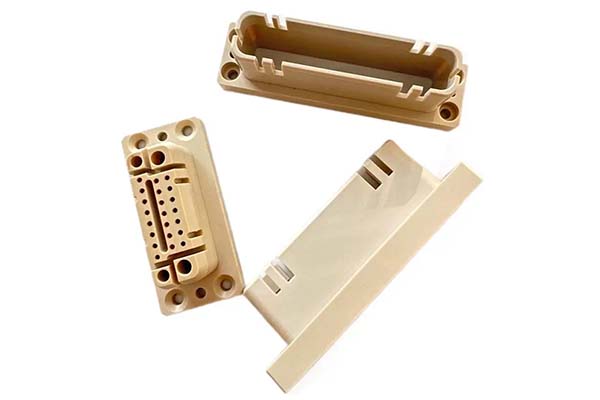
In CNC milling, a rotating cutting tool—typically an end mill—removes material from a stationary workpiece. The tool moves along multiple axes to create complex shapes.
- Tool movement: X, Y, Z axes (and often additional rotary axes)
- Workpiece: Fixed in place
- Best for: Complex geometries, flat surfaces, pockets, 3D contours
CNC Turning: Rotating Part, Stationary Tool
In CNC turning, the workpiece rotates while a stationary cutting tool removes material. The tool moves along the workpiece's axis to shape it.
- Tool movement: Primarily X and Z axes
- Workpiece: Rotating on a spindle
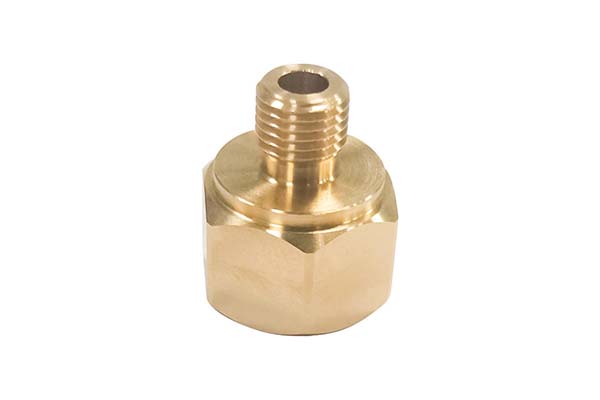
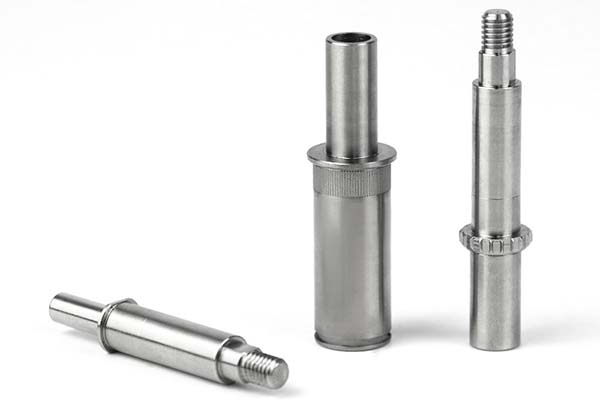
- Best for: Cylindrical shapes, shafts, threaded rods, bushings
| Feature | CNC Milling | CNC Turning |
|---|---|---|
| Cutting tool | Rotating (end mill) | Stationary (single-point tool) |
| Workpiece | Stationary | Rotating |
| Tool axes | X, Y, Z (multi-axis) | X, Z (primarily) |
| Ideal geometry | Complex, prismatic | Cylindrical, axisymmetric |
How Do Tools and Techniques Differ?
The tools and techniques in each process are tailored to their respective strengths.
Tools in CNC Milling
Milling uses rotating end mills in various configurations:
| End Mill Type | Best For |
|---|---|
| Square end mill | Flat surfaces, slots, pockets, square corners |
| Ball nose end mill | 3D contours, curved surfaces, mold cavities |
| Corner radius end mill | Rounded corners, reduced stress concentration |
| Roughing end mill | Fast material removal with serrated edges |
Movement: Milling tools move along multiple axes. In 3-axis milling, movement is along X, Y, and Z. In 5-axis milling, additional rotary axes (A and B) allow the tool to approach from any angle, enabling undercuts and complex geometries.
Tools in CNC Turning
Turning uses stationary single-point tools:
| Tool Type | Best For |
|---|---|
| External turning tool | Reducing outer diameter, creating cylindrical shapes |
| Internal turning tool | Machining inner diameters, bores, internal threads |
| Grooving tool | Cutting channels for O-rings, oil passages |
| Parting tool | Separating finished parts from raw stock |
| Threading tool | Cutting external or internal threads |
Movement: Turning tools move primarily along the X-axis (controlling diameter) and Z-axis (controlling length). The workpiece rotates continuously, enabling efficient cylindrical cutting.
How Does Material Removal Work?
The material removal process reflects the fundamental difference in how each machine operates.
Milling: Multi-Axis Cutting
In milling, the rotating end mill engages the stationary workpiece. The tool moves along programmed paths, removing material in a series of passes.
Example: Machining a mold cavity. The end mill moves along X for length, Y for width, and Z for depth—coordinated movements that create pockets, contours, and complex 3D surfaces.
Material removal rate: Varies by material, tool size, and machine power. Slower than turning for cylindrical features, but essential for complex shapes.
Turning: Continuous Rotation
In turning, the workpiece spins on the spindle while the cutting tool advances along it. The rotation allows continuous cutting around the entire circumference.
Example: Machining an engine shaft. The workpiece rotates at high speed. The turning tool moves along the Z-axis to control length while adjusting X-axis position to control diameter.
Material removal rate: Very high for cylindrical parts. The continuous cutting action removes material faster than milling for axisymmetric features.
What Types of Parts Does Each Process Produce?
The geometry of your part is the primary factor in choosing between milling and turning.
Parts Suited for CNC Milling
Milling excels at parts with:
- Complex 3D shapes and contours
- Flat surfaces and pockets
- Non-cylindrical geometries
- Multiple features on different faces
Common parts:
- Molds: Injection molds, die cast molds
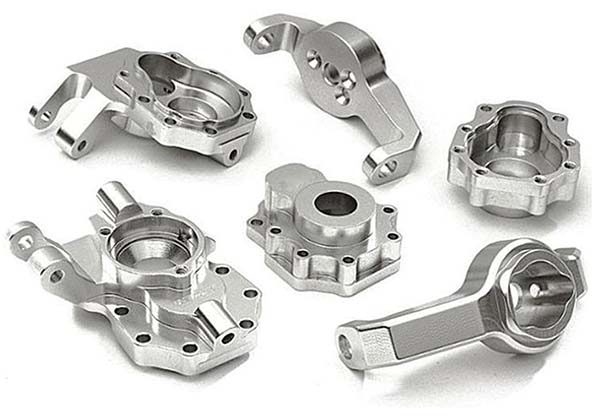
- Mechanical components: Gears, camshafts, housings
- Aerospace parts: Turbine blades, structural brackets
- Medical devices: Orthopedic implants, instrument housings
- Electronics: Heat sinks, enclosures
Parts Suited for CNC Turning
Turning excels at parts with:
- Cylindrical shapes
- Axisymmetric features
- Threads and grooves
- Consistent diameters
Common parts:
- Engine shafts: Crankshafts, camshafts, drive shafts
- Fasteners: Threaded rods, bolts, screws
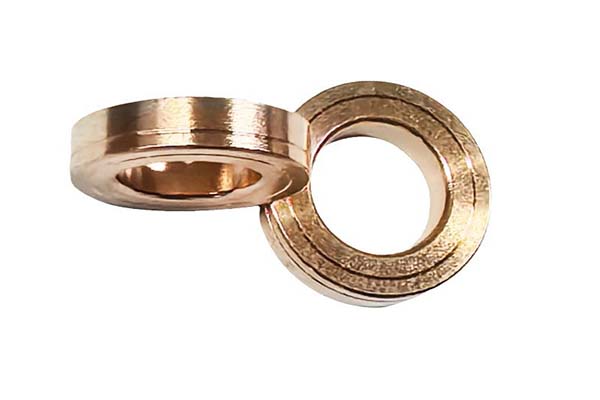
- Bushings and sleeves
- Hydraulic components: Pistons, cylinders
- Medical implants: Orthopedic screws, dental posts
What Are the Advantages and Limitations?
Each process has strengths and weaknesses. Understanding them helps you choose wisely.
CNC Milling: Pros and Cons
Advantages:
| Advantage | Why It Matters |
|---|---|
| Complex geometry capability | Creates 3D contours, undercuts, and intricate features |
| High precision | Achieves tolerances of ±0.005 mm |
| Versatility | Handles multiple operations in one setup |
| Ideal for prototyping | Cost-effective for small to medium batches |
Limitations:
| Limitation | Impact |
|---|---|
| Slower for cylindrical parts | Less efficient than turning for shafts |
| Tool wear | Faster wear when machining hard materials |
| Limited to certain geometries | Not optimal for long, slender cylindrical parts |
Tool wear mitigation: Use carbide-coated tools (TiAlN, AlTiN), reduce cutting speeds, and maintain adequate coolant.
CNC Turning: Pros and Cons
Advantages:
| Advantage | Why It Matters |
|---|---|
| High material removal rate | Removes material quickly for cylindrical parts |
| Excellent surface finish | Achieves Ra 0.4–0.8 μm finishes |
| High precision | Diameter tolerances to ±0.002 mm |
| Cost-effective for high volume | Ideal for mass production of cylindrical parts |
Limitations:
| Limitation | Impact |
|---|---|
| Limited to cylindrical shapes | Not suitable for complex non-axisymmetric features |
| Multi-axis complexity | Advanced turning centers exist but are expensive and complex to program |
| Setup for complex parts | Challenging for parts requiring both cylindrical and prismatic features |
How Do You Choose Between Milling and Turning?
Making the right choice requires evaluating your project across several dimensions.
Consider Part Geometry
| Geometry | Recommended Process |
|---|---|
| Complex 3D shapes, pockets, contours | CNC milling |
| Cylindrical shapes, shafts, threads | CNC turning |
| Parts with both cylindrical and prismatic features | Mill-turn (combination) or sequential processes |
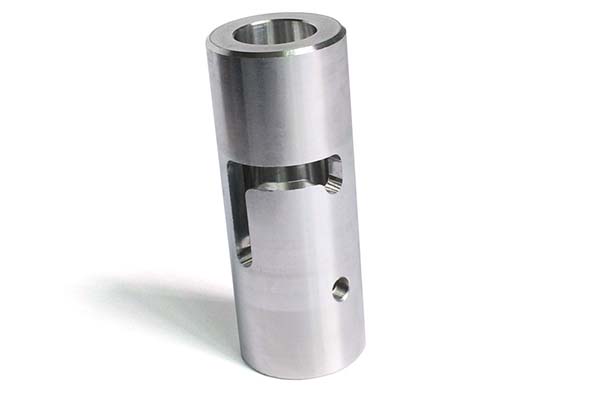
Example: A gear has cylindrical outer diameter and complex tooth geometry. The blank might be turned to shape, then teeth milled in a separate operation—or on a mill-turn machine.
Evaluate Material and Tolerances
| Material | Milling | Turning |
|---|---|---|
| Hard materials (hardened steel, titanium) | Good, with carbide tools and careful parameters | Good for cylindrical features |
| Soft materials (aluminum, plastics) | Excellent | Excellent, often faster for cylindrical parts |
| Tolerance requirements | ±0.005 mm achievable | ±0.002 mm achievable on diameters |
Analyze Cost and Volume
| Production Volume | Recommended Process |
|---|---|
| Prototypes (1–10 parts) | Milling often more cost-effective for complex parts |
| Small batch (10–100 parts) | Milling for complex; turning for cylindrical |
| Medium batch (100–1,000 parts) | Both viable; consider hybrid |
| High volume (1,000+ parts) | Turning for cylindrical; milling with automation for complex |
Decision Matrix
| If Your Part… | Choose… |
|---|---|
| Has complex 3D contours | Milling |
| Is primarily cylindrical | Turning |
| Requires tight diameter tolerances | Turning |
| Has undercuts or complex pockets | Milling |
| Needs both cylindrical and prismatic features | Mill-turn or sequential |
| Is a prototype with complex geometry | Milling |
| Is a high-volume shaft | Turning |
What About Combined Processes?
Many modern machines combine milling and turning capabilities.
Mill-Turn Centers
A mill-turn center can both rotate the workpiece (like a lathe) and perform milling operations with live tooling. This allows:
- Cylindrical turning on the same machine as milling features
- Single setup for complex parts
- Reduced handling and improved accuracy
Best for: Parts with both cylindrical and prismatic features, such as:
- Transmission components
- Valve bodies
- Shafts with keyways or flats
- Complex aerospace fittings
When to Use Separate Processes
For simpler parts, separate milling and turning operations may be more cost-effective. A dedicated lathe for cylindrical work and a separate mill for prismatic features often provides better throughput for high volumes.
Conclusion
CNC milling and CNC turning are both essential manufacturing processes, but they serve different purposes. Milling uses a rotating tool on a stationary workpiece to create complex, non-cylindrical shapes. Turning uses a rotating workpiece with a stationary tool to create precise cylindrical parts.
Choose milling when your part has complex geometries, 3D contours, pockets, or features on multiple faces. Choose turning when your part is cylindrical, axisymmetric, or requires high-volume production of shafts, threads, or bushings. For parts combining both characteristics, consider mill-turn machines or sequential processing.
By understanding the strengths and limitations of each process, you can select the right method for your project—ensuring quality, efficiency, and cost-effectiveness.
FAQs
What are the main differences between CNC milling and turning?
In CNC milling, a rotating cutting tool removes material from a stationary workpiece, moving along multiple axes (X, Y, Z). In CNC turning, a stationary cutting tool removes material from a rotating workpiece, moving primarily along X and Z axes. Milling is ideal for complex shapes; turning for cylindrical parts.
How do I choose between CNC milling and turning for my project?
Consider part geometry first. Complex, non-cylindrical shapes suit milling. Cylindrical parts suit turning. Then evaluate material, tolerances, volume, and cost. For parts with both characteristics, consider mill-turn centers or sequential processing.
Which process is more cost-effective for high-volume production?
CNC turning is typically more cost-effective for high-volume cylindrical parts like shafts and threaded rods due to faster material removal rates and continuous cutting action. For high-volume complex parts, automated milling with pallet systems can be cost-effective.
Can a single machine perform both milling and turning?
Yes. Mill-turn centers combine both capabilities. The workpiece rotates for turning operations, and live tooling performs milling operations without removing the part from the machine. This reduces setups and improves accuracy for complex parts.
What surface finishes can each process achieve?
CNC turning can achieve surface finishes as low as Ra 0.4–0.8 μm on cylindrical surfaces. CNC milling can achieve Ra 0.4–1.6 μm, depending on tool selection, parameters, and material. Both processes can achieve excellent finishes with proper techniques.
Contact Yigu Technology for Custom Manufacturing
At Yigu Technology, we offer both CNC milling and CNC turning services, along with mill-turn capabilities for complex parts. With 15 years of experience, advanced 5-axis machining, and ISO 9001 certification, we help you choose the right process for your project.
Our team evaluates your part geometry, material requirements, and production volume to recommend the most efficient approach. Whether you need complex milled components, precision-turned shafts, or combination parts, we have the expertise to deliver. Contact us today to discuss your project and let our experience guide your decision.