Introduction
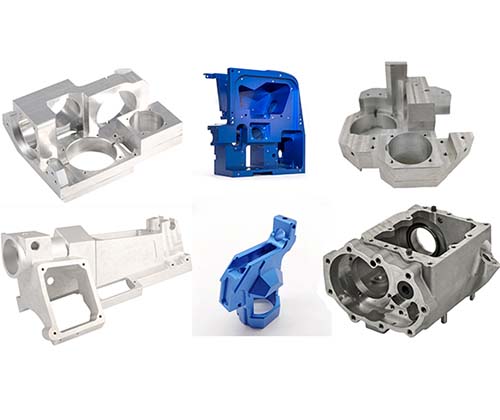
Think about the last time you rode a train. Thousands of tons of steel moved at 80 miles per hour — and it did not fall apart. That is no accident. It happens because of an unseen network of railroad fittings. These small but critical parts hold couplings, brake lines, suspension systems, and hydraulic connections together. From the steam-era cast iron days to today's high-precision CNC machining, the rail industry has always demanded more from every single component. The truth is simple: CNC machining is the decisive factor in producing railroad fittings that meet the industry's unforgiving demands for safety, durability, and compliance. Skip precision, and you risk failure. Get it right, and you keep trains running — and people safe.
1. What Fittings Need CNC Machining?
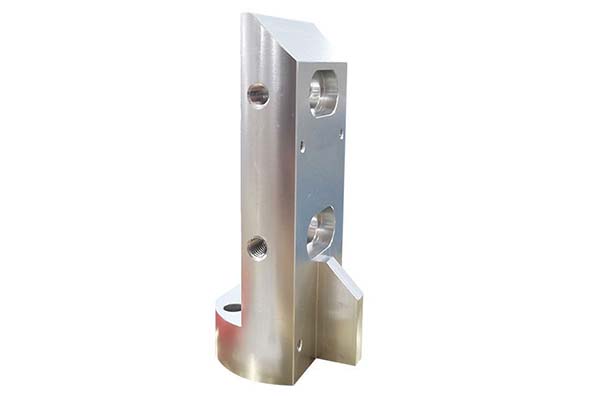
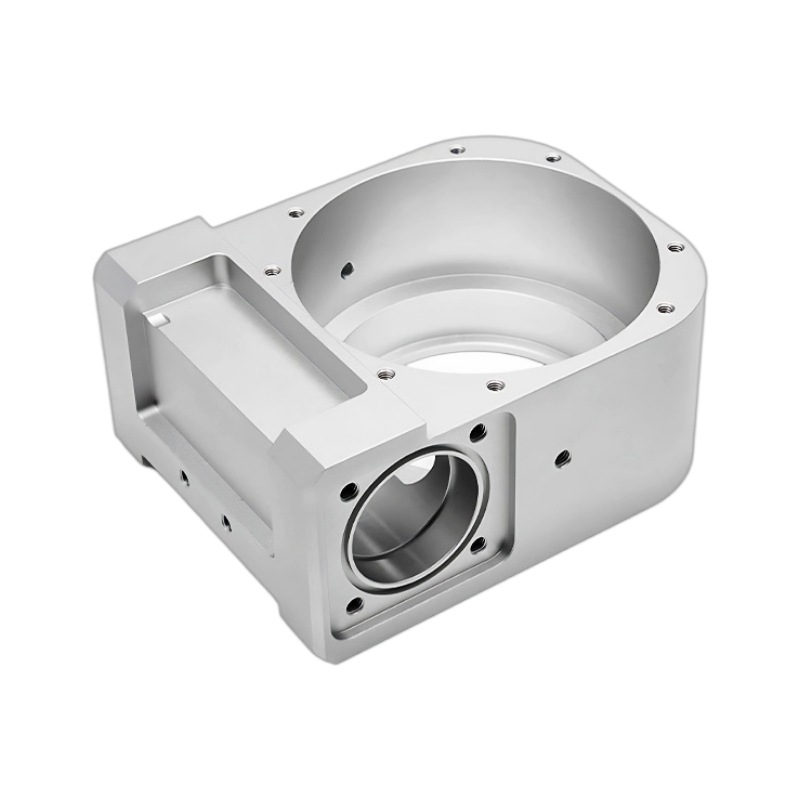
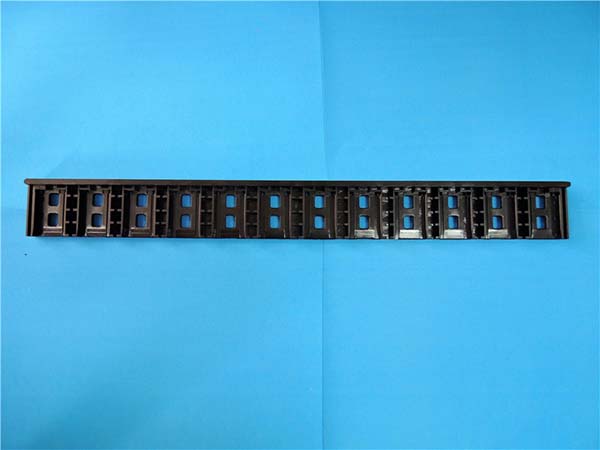
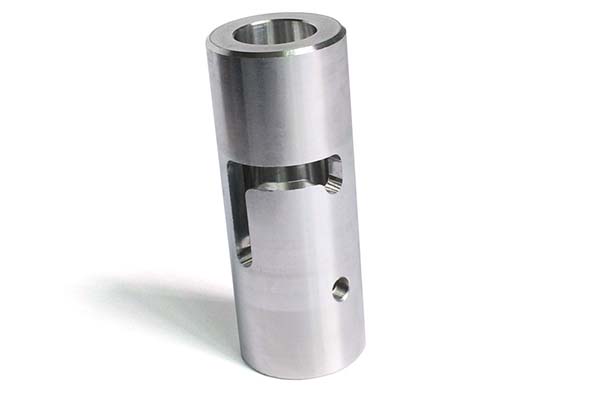
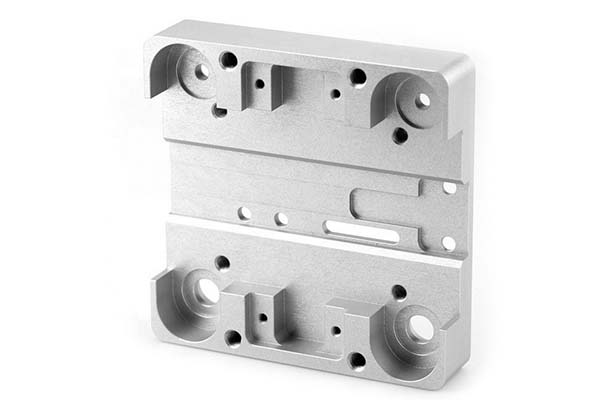
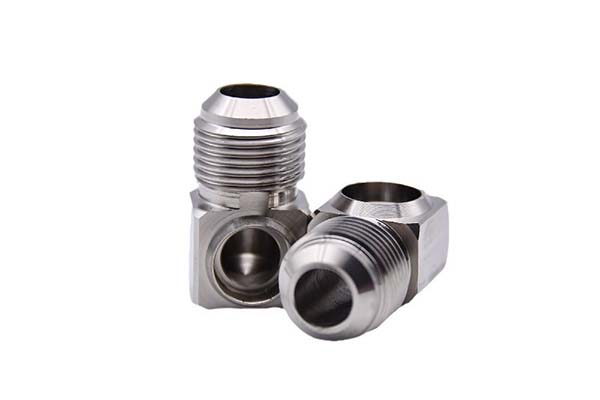
Not every rail part needs five-axis CNC work. But the ones that do? They cannot afford a single mistake. Here are the key categories:
| Fitting Type | Function | Why CNC Is Critical |
|---|---|---|
| Hydraulic & Pneumatic Connectors | Control brake pressure and air systems | Sealing surfaces need ±0.001" tolerance to prevent leaks |
| Brake Valve Bodies & Manifolds | Regulate braking force across the train | Internal bore geometry must match OEM specs exactly |
| Coupler & Draft Gear Parts | Connect cars and absorb shock | Interference fits demand tight dimensional control |
| Electrical Conduit Fittings | Protect wiring harnesses | Thread integrity prevents moisture ingress |
| Suspension & Bolster Attachments | Support car body weight | Load-bearing surfaces need flawless machining |
In short, any fitting that interfaces with multiple systems relies on CNC machining. The margin for error is basically zero.
2. Why Tolerance Control Matters So Much
Let us talk about the domino effect of dimensional inaccuracy. A railroad fitting does not work alone. It mates with a coupler, a hose, a valve seat, or a bolt pattern. If one dimension is off by even 0.003 inches, the whole assembly suffers.
Here is what happens when tolerances slip:
- Interference fits become loose fits — parts rattle and wear out fast
- Thread integrity fails — fluid leaks start under vibration
- Sealing surfaces do not seat — hydraulic pressure drops, brakes weaken
CNC machining achieves ±0.001" repeatability on a consistent basis. Compare that to casting or forging, which often struggle to hold tighter than ±0.005" without secondary machining. For railroad fittings, that difference is the line between safe and dangerous.
Real-world example: A Class I railroad in the Midwest found that brake manifold fittings from a non-CNC supplier were leaking at a rate of 12% per quarter. After switching to CNC-machined parts with ±0.001" bore tolerance, the leak rate dropped to under 0.5%. The savings in fluid loss and downtime paid for the upgrade in three months.
3. Best Materials for Rail Fittings
Material choice is not optional in rail. The environment is brutal — moisture, road salts, brake dust, and wild temperature swings attack every surface. Here is a breakdown of the top materials used in CNC-machined railroad fittings:
| Material | Best Use Case | Key Properties |
|---|---|---|
| Stainless Steel 316 | Corrosion-critical zones, coastal routes | Excellent saltwater resistance, good strength |
| 17-4PH Stainless Steel | High-stress structural fittings | Precipitation-hardened, very high yield strength |
| Brass & Bronze | Wear-resistant interfaces, low-friction parts | Self-lubricating, resists galling |
| Aluminum 6061/7075 | Weight-sensitive applications (passenger cars) | Light, strong, easy to machine |
| Inconel 718 | Extreme heat zones (near brakes/engines) | Handles 1000°F+, resists oxidation |
| Titanium Grade 5 | Ultra-light, ultra-strong needs | 45% lighter than steel, equal strength |
The key insight? CNC machining lets you work with these tough alloys precisely. Casting or forging alone cannot deliver the same dimensional accuracy with exotic metals. That is why rail shops rely on CNC for the final — and most critical — machining pass.
4. Solving the Custom Fitting Problem
Here is a pain point that keeps rail maintenance managers up at night: the OEM stopped making the part you need. Legacy fleets run for 30 to 40 years. But OEMs move on. They discontinue tooling. They stop stocking spare parts.
CNC machining solves this in three ways:
- Reverse engineering — Scan the old part, recreate the CAD model, and machine a perfect replacement
- Rapid prototyping — Test a new design in days, not months
- Bridging the gap — Deliver custom fittings with short lead times when no one else can
Case study: A regional rail operator in Texas needed replacement draft gear bushings for 1980s-era freight cars. The original OEM had shut down the tooling line 15 years earlier. A CNC shop reverse-engineered the part from a worn sample, machined it in 17-4PH stainless steel, and delivered 200 units in 6 weeks. The fleet stayed in service — no costly downtime.
This is the real value of CNC. It is not just about making new parts. It is about keeping old trains alive.
5. Quality Standards You Cannot Ignore
Railroad fittings are not consumer products. They fall under some of the strictest quality standards in any industry. Here is what compliant CNC-machined fittings must meet:
| Standard | What It Covers | Why It Matters |
|---|---|---|
| AAR M-1003 | Quality management for rail suppliers | Required for selling to North American railroads |
| AAR M-214 | Chemical and mechanical testing of steel | Ensures material meets rail-grade specs |
| FRA Regulations (49 CFR Part 229) | Federal safety rules for rail equipment | Non-compliance = operational bans |
| ISO/TS 22163 (IRIS) | International rail industry standard | Global market access, especially in Europe |
| EN 15085 | Welding and machining quality for rail | Mandatory for EU rail components |
On top of these, buyers demand material certifications (mill test reports) and often destructive testing — tensile tests, hardness checks, and even salt spray corrosion tests. A CNC shop that cannot produce this paperwork is not a rail-qualified supplier. Period.
6. Hidden Costs of Cheap Fittings
Let us talk money — because cutting corners on machined fittings always costs more later. Here is a real cost breakdown:
| Failure Mode | Direct Cost | Hidden Cost |
|---|---|---|
| Brake fluid leak | 200–500 per repair | Train delay, schedule disruption |
| Coupler failure | 1,000–5,000 per incident | Potential derailment, liability |
| Corrosion failure | 500–2,000 per part | Fleet-wide inspection, replacement wave |
| Regulatory violation | $10,000+ in fines | Operational ban, reputation damage |
Now compare that to a precision CNC-machined fitting that costs 20–40% more upfront but lasts 3 to 5 times longer. The total cost of ownership (TCO) analysis is clear: cheap fittings are expensive fittings.
Industry data point: According to the Federal Railroad Administration (FRA), track-related equipment failures account for roughly 22% of all rail incidents. A significant share of those trace back to substandard mechanical components — including fittings.
7. How to Pick the Right CNC Partner
Not every CNC shop can handle rail work. Here is a checklist to evaluate suppliers:
- ✅ Multi-axis CNC capability (3-axis minimum, 5-axis preferred for complex geometries)
- ✅ CMM inspection (Coordinate Measuring Machine for verification)
- ✅ Rail-specific certifications (AAR, IRIS, or EN 15085)
- ✅ Material expertise — Can they machine Inconel, titanium, and 17-4PH reliably?
- ✅ Lead time flexibility — Can they handle rush orders for fleet emergencies?
- ✅ Client references — Ask for case studies from Class I railroads or OEMs
| Evaluation Factor | Weak Supplier | Strong Supplier |
|---|---|---|
| Tolerance Capability | ±0.005" | ±0.001" or better |
| Material Range | Carbon steel only | 10+ alloys including exotic metals |
| Quality Docs | Basic CAD print | Full MTR, CMM report, compliance certs |
| Emergency Capacity | 8–12 week lead time | 1–3 week rush capability |
| Industry Experience | General machining | Dedicated rail or aerospace track record |
Do not just compare price. Compare risk. The cheapest quote often hides the most expensive failure.
Conclusion
Railroad fittings are small. But they carry enormous responsibility. Every coupler, every brake valve body, every hydraulic connector must perform flawlessly — under vibration, under load, under extreme weather — for decades. CNC machining is not a luxury for these parts. It is a necessity. It delivers the tolerance control, material versatility, and quality traceability that the rail industry demands. From solving the custom replacement crisis to meeting AAR and IRIS standards, CNC machining is the backbone of modern railroad fitting production. If you are sourcing rail fittings, do not ask "Can they machine it?" Ask "Can they machine it right — every single time?"
FAQ
What is the typical tolerance for CNC-machined railroad fittings?
Most rail fittings require ±0.001" to ±0.003" tolerance, depending on the function. Sealing surfaces and interference fits demand the tightest end.
Can CNC machining replace cast or forged rail fittings?
Yes — for many applications. CNC machining often serves as the final precision pass on cast or forged blanks, delivering accuracy that casting or forging alone cannot achieve.
What materials are hardest to machine for rail fittings?
Inconel 718 and titanium Grade 5 are the most challenging due to their hardness and heat resistance. Shops need proper tooling, coolant strategies, and experienced programmers.
How long does it take to CNC-machine custom rail fittings?
Standard lead times range from 2 to 6 weeks. Rush or emergency production can be as fast as 5 to 10 business days with the right shop.
Do CNC-machined rail fittings need certification?
Yes. For North America, AAR M-1003 and FRA compliance are standard. For Europe, EN 15085 and IRIS (ISO/TS 22163) apply. Always request full documentation.
Contact Yigu Technology for Custom Manufacturing
Need precision CNC-machined railroad fittings built to AAR, IRIS, or EN standards? Yigu Technology specializes in high-performance rail components — from hydraulic connectors to custom coupler parts. We offer multi-axis CNC machining, full CMM inspection, material certifications, and rapid prototyping for legacy fleet replacements.
📞 Get a quote today — and keep your trains running safe.