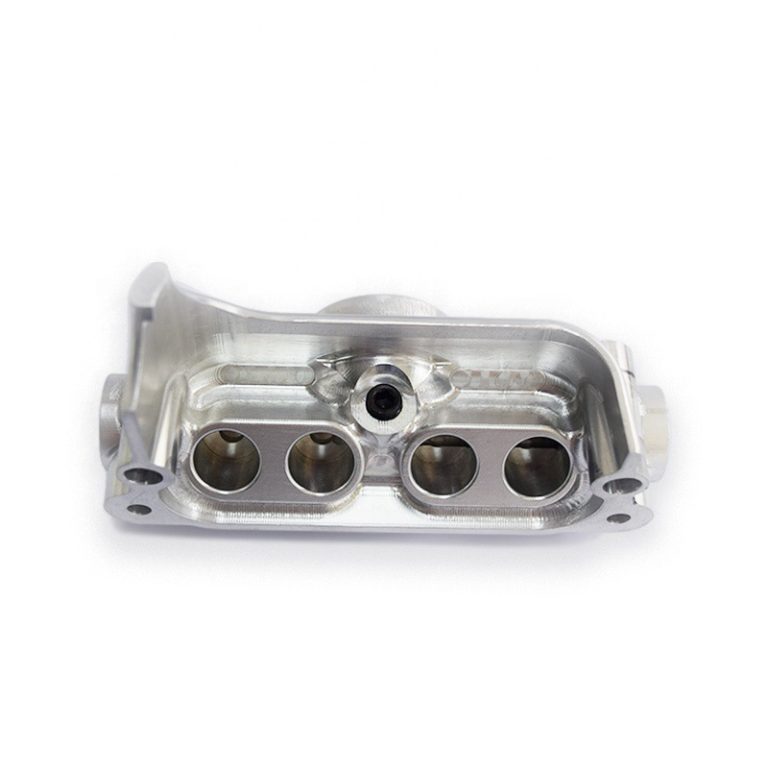
Introduction
Aluminum is everywhere. It's in your phone. It's in your car. It's even in airplanes. Yet here's the thing most people don't realize—aluminum CNC machining is way harder than it looks. You'd think a "soft" metal would be easy to cut. Wrong. Aluminum fights back. It warps, it gums up tools, and it ruins surface finishes if you don't know what you're doing.
This is why so many buyers hit the same walls. Material waste eats budgets. Surface defects kill cosmetic parts. Dimensional drift ruins tight tolerances. And picking the wrong alloy? That's a one-way ticket to failure.
The good news? When you master aluminum machining, the payoff is massive. You get unmatched strength-to-weight ratios, tight tolerances, and parts that look like they came off a showroom floor. This guide breaks down exactly why aluminum CNC machining dominates modern manufacturing—and how to avoid the costly mistakes that trip up even experienced teams.
1. What Makes Aluminum So Hard to Machine?
Thermal Expansion Is a Real Problem
Aluminum expands a lot when it heats up. Its thermal expansion coefficient is roughly twice that of steel. That means every degree of heat from your cutting tool pushes the part out of tolerance. For thin-walled parts, this is a nightmare. You machine one side, and the other side has already moved.
Here's a quick look at how aluminum compares:
| Material | Thermal Expansion (µm/m·°C) |
|---|---|
| Aluminum | 23.6 |
| Steel | 11.7 |
| Titanium | 8.6 |
| Copper | 16.5 |
Aluminum expands twice as fast as steel. That's why heat management isn't optional—it's survival.
Chips That Won't Behave
Aluminum doesn't make clean, broken chips like steel. It makes long, stringy, gummy chips. These wrap around tools, clog flutes, and get recut into the part surface. The result? Scratches, poor finish, and accelerated tool wear. In our shop, we've seen tool life drop by 40% just from bad chip evacuation on 6061-T6.
Built-Up Edge Ruins Finishes
Because aluminum is soft and sticky, it tends to weld onto the cutting edge. This is called a built-up edge (BUE). It changes the tool geometry mid-cut. You start with a sharp edge. Ten seconds later, you've got a blob of aluminum glued to it. The surface finish goes from smooth to rough instantly.
2. How Alloy Selection Changes Everything
6061-T6: The Universal Workhorse
6061-T6 is the most common CNC aluminum alloy for a reason. It machines well. It welds easy. It resists corrosion. And it's cheap. For general-purpose parts, enclosures, and structural brackets, this is your go-to.
Key properties:
- Tensile strength: 45,000 psi
- Machinability rating: 85% (vs. B1112 steel = 100%)
- Corrosion resistance: Excellent
7075-T6: Strength Champion
Need aerospace-grade strength? Go with 7075-T6. It's nearly as strong as some steels but weighs one-third as much. The catch? It's harder to machine. Tool wear goes up. Chip control gets worse. But for drone frames, high-stress brackets, and military parts, nothing else compares.
| Alloy | Strength (psi) | Machinability | Best For |
|---|---|---|---|
| 6061-T6 | 45,000 | Excellent | General, enclosures |
| 7075-T6 | 83,000 | Fair | Aerospace, structural |
| 2024-T3 | 68,000 | Good | Aircraft skins, fatigue parts |
| 5083-H116 | 40,000 | Very Good | Marine, chemical |
| 5052-H32 | 33,000 | Excellent | Sheet metal, electronics |
2024-T3: Built for Fatigue
2024-T3 is the alloy you find in aircraft fuselage skins. It handles repeated stress cycles better than almost anything else. But it's not great for anodizing—it can show streaky finishes. Know your end use before you pick it.
5083/5052: Marine-Grade Toughness
If your part sees saltwater or chemicals, 5083 or 5052 is the answer. These alloys have superior corrosion resistance. They machine like butter too. We used 5083 for a marine sensor housing last year—zero corrosion after 18 months in salt spray.
3. CNC Strategies That Stop Warping
Control Heat or Lose Tolerances
Heat is enemy number one. Here's what actually works:
- Through-spindle coolant delivers fluid right at the cutting zone. This drops part temperature fast.
- High-speed machining (HSM) removes material quickly with shallow cuts. Less heat per pass = less expansion.
- Trochoidal milling uses small radial steps with big axial depth. It keeps the tool engaged but cool.
We ran a test on a 2mm-wall 6061 box. With standard cooling, we got ±0.05mm tolerance drift. With through-spindle coolant + HSM, we hit ±0.01mm. That's a 5x improvement.
Workholding Makes or Breaks It
Clamping aluminum too hard distorts the part. Thin walls bend. Flat surfaces warp. The fix?
| Workholding Method | Best For | Distortion Risk |
|---|---|---|
| Vacuum chucks | Thin plates, large parts | Very Low |
| Soft jaw clamps | Irregular shapes | Low |
| Double-sided tape | Delicate cosmetic parts | Minimal |
| Standard vise | Thick, chunky parts | Medium-High |
Vacuum workholding is our top pick for thin-wall aluminum. It holds the part flat with zero clamping force. No distortion. No stress.
Rough First, Finish Last
Always separate roughing and finishing passes. Roughing removes bulk material fast—it generates heat. Finishing uses light cuts at high speed for accuracy. Mixing them causes residual stress and dimensional drift.
4. Getting Mirror-Grade Finishes on Aluminum
Cutting Parameters That Actually Work
Getting a Ra 0.8µm or better finish on aluminum isn't luck. It's math. Here's a proven starting point for 6061-T6:
| Operation | Spindle Speed | Feed Rate | Depth of Cut |
|---|---|---|---|
| Roughing | 8,000–12,000 RPM | 300–500 mm/min | 1.0–2.0 mm |
| Finishing | 15,000–22,000 RPM | 150–300 mm/min | 0.1–0.3 mm |
Climb milling is non-negotiable for good finishes. It pushes the chip down, not up. The result? Cleaner cuts, less burring, better surface quality.
Tool Choice Matters More Than You Think
| Tool Feature | Why It Helps |
|---|---|
| Polished flutes | Reduces aluminum adhesion |
| Sharp rake angles (15°–25°) | Cuts cleaner, less BUE |
| Diamond-like carbon (DLC) coating | Reduces friction, extends tool life |
| 3-flute design | Better chip evacuation |
We switched from standard carbide end mills to DLC-coated 3-flute tools on a consumer electronics project. Tool life jumped from 50 parts to 180 parts. Surface finish improved by 30%.
Post-Machining Treatments
Sometimes machining alone isn't enough. For mirror finishes, consider:
- Mass finishing (vibratory tumbling) — smooths micro-marks cheaply
- Chemical polishing — removes 5–15µm for a bright, even surface
- Bright dipping — quick etching for a uniform satin look
5. Why Anodizing Fails on Bad CNC Parts
The Hidden Link
Here's something most buyers miss. Anodizing quality starts at the machine. If your part has tool marks, burrs, or residual stress, the anodize layer will show every flaw. You'll get blotchy dye absorption, streaking, or even coating failure.
| Machining Defect | Anodizing Result |
|---|---|
| Tool chatter marks | Visible streaking in dye |
| Burrs on edges | Rough, uneven coating |
| Residual stress | Coating peels or cracks |
| Wrong alloy (7075) | Patchy, inconsistent color |
Alloy Matters for Anodizing
- 6000-series (6061, 6082): Anodizes beautifully. Uniform color. Great adhesion.
- 7000-series (7075): Anodizes okay, but can look mottled. Not ideal for cosmetic parts.
- 2000-series (2024): Often avoided for anodizing. Use clad 2024 (Alclad) instead.
Prep Steps Before Anodizing
- Deburr all edges — even 0.1mm burrs cause defects
- Clean thoroughly — no oil, no coolant residue
- Stress relieve if needed — especially for 7075 parts
- Mask non-anodized areas — use hard anodize-compatible tape
6. Design Choices That Make or Break Projects
Thin Walls Have Limits
Aluminum CNC has a practical wall thickness floor. For 6061-T6, that's about 1.5mm. Below that, the part vibrates, warps, and chips break unpredictably.
Pro tip: Add ribs instead of making walls thicker. A 1mm wall with a 3mm rib is stiffer than a 3mm solid wall—and lighter.
Internal Corners Need Radii
Sharp internal corners are a machining death trap. Tools are round. They can't cut a perfect 90° inside corner. Always design internal radii of at least 0.5mm (ideally 1mm+).
| Feature | Minimum Recommendation | Why |
|---|---|---|
| Internal corner radius | 0.5–1.0mm | Tool geometry limit |
| Wall thickness | 1.5mm+ (6061) | Vibration control |
| Pocket depth-to-width | 4:1 max | Tool deflection limit |
| Hole depth-to-diameter | 10:1 max | Chip evacuation |
Tolerance Realism Saves Money
Not every surface needs ±0.001". That's over-engineering—and it costs 2–3x more. Here's a practical guide:
| Tolerance | Cost Impact | When It's Needed |
|---|---|---|
| ±0.05mm | Baseline | Most general parts |
| ±0.01mm | +50–80% | Mating surfaces, seals |
| ±0.001mm | +200–300% | Aerospace, precision instruments |
Design for Stock Sizes
Aluminum comes in standard billet sizes: 2"×2", 3"×3", 4"×4", etc. Designing your part to fit standard stock dimensions can cut material waste by 15–25%. That's real money saved.
7. How to Vet a CNC Shop for Aluminum Expertise
Check the Equipment First
A shop that machines aluminum well will have:
- High-RPM spindles (12,000–24,000 RPM) — needed for finish passes
- Through-spindle coolant — not just flood coolant
- Vacuum or soft-jaw workholding — for thin-wall parts
- High-speed machining centers — not just basic 3-axis mills
Quality Systems That Matter
| Quality Check | What It Proves |
|---|---|
| CMM inspection | Dimensional accuracy is verified |
| Surface roughness tester | Ra values are measured, not guessed |
| Material certification (mill test reports) | You get what you paid for |
| First-article inspection (FAI) | First part is fully validated before production |
Look at Their Portfolio
A shop that's machined aerospace or medical aluminum knows what they're doing. Those industries demand tight tolerances and zero defects. If a shop has automotive, drone, or electronics case studies, that's a good sign too.
Ask About DFM Feedback
The best shops will tell you before you spend money that your design has problems. They'll suggest wall thickness changes, radius additions, or tolerance relaxations. If a shop just says "yes" to everything—run.
Conclusion
Aluminum CNC machining is the go-to choice for precision manufacturing for good reason. It delivers incredible strength-to-weight performance, machines fast, and looks great when done right. But "done right" is the hard part.
The challenges are real—thermal expansion, stringy chips, built-up edge, alloy confusion, and anodizing failures all trip up buyers who don't know what to ask for. The solution? Pick the right alloy for your application. Use the right CNC strategies. And work with a shop that actually understands aluminum—not just one that says they do.
When you get all three right, the results speak for themselves. Tighter tolerances. Better finishes. Lower costs. Faster lead times. That's why aluminum CNC machining isn't just popular—it's dominant.
FAQ
What is the best aluminum alloy for CNC machining?
6061-T6 is the best all-around choice. It machines easily, resists corrosion, and is affordable. For high-strength needs, use 7075-T6. For marine use, go with 5083.
Why does aluminum warp during CNC machining?
Aluminum has a high thermal expansion rate. Heat from cutting causes the part to grow. As it cools, it shrinks unevenly—causing warp and tolerance drift.
What surface finish can you achieve on aluminum CNC?
With proper tooling, parameters, and finishing passes, you can reach Ra 0.4–0.8µm (near-mirror). For true mirror finishes, add chemical polishing or mass finishing.
Can 7075 aluminum be anodized?
Yes, but it anodizes unevenly compared to 6000-series alloys. Expect slightly mottled results. For cosmetic anodizing, stick with 6061 or 6082.
How do I reduce tool wear when machining aluminum?
Use DLC-coated tools, run climb milling, keep spindle speeds high (15K+ RPM), and use through-spindle coolant to prevent built-up edge.
What wall thickness is minimum for aluminum CNC?
For 6061-T6, the practical minimum is 1.5mm. For 7075-T6, aim for 2.0mm+. Thinner walls need special fixtures and slow speeds.
Contact Yigu Technology for Custom Manufacturing
Need precision aluminum CNC machining done right the first time? Yigu Technology specializes in high-tolerance aluminum parts for aerospace, automotive, medical, and electronics industries. We offer full DFM support, material certification, and production-ready quality—on time, every time.
📩 Get your custom quote today. Reach out to our engineering team and let's turn your aluminum design into a finished part.
Contact Yigu Technology for custom manufacturing.