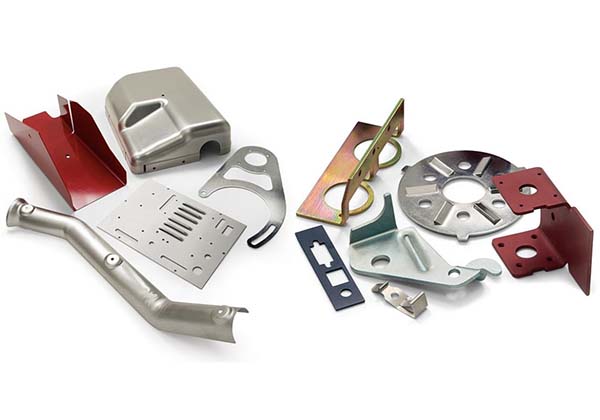
Walk into any modern machine shop or factory floor, and you'll likely see something surprising—a machine building parts by adding material rather than cutting it away. 3D printed mechanical parts have moved from laboratory curiosities to practical manufacturing solutions. But can they really replace traditionally machined components? Will your next replacement gear come from a printer instead of a foundry?
This article explores the reality behind additive manufacturing for mechanical components. We'll look at available technologies, material options, strength capabilities, and practical applications. Whether you're designing new products or maintaining existing equipment, you'll understand where 3D printing fits and when traditional methods still win.
Introduction
Mechanical parts form the backbone of modern industry. Gears transmit power. Brackets hold assemblies together. Housings protect sensitive components. For centuries, we made these parts by cutting away material—machining, milling, turning—or by casting molten metal into molds.
3D printing flips this process. Instead of removing material, we add it precisely where needed. A gear grows layer by layer from nothing but digital instructions and raw material. Complex internal features? No problem. Custom one-off designs? Actually cheaper than mass production.
The implications run deep. At Yigu technology, we've seen clients produce replacement parts for obsolete machinery—parts that haven't been manufactured in decades. We've helped medical device companies create custom implants matched to individual patients. We've watched automotive suppliers shrink prototype lead times from months to days.
But 3D printing isn't magic, and it isn't always the right answer. Let's look at what it can and can't do for mechanical parts.
What Makes 3D Printed Parts Different?
How Does Building Layer by Layer Change Things?
Think about how traditional machining creates a gear. You start with a solid metal cylinder. Then you cut away everything that isn't gear—the spaces between teeth, the center bore, keyways. You might remove 30-50% of the original material as chips and shavings.
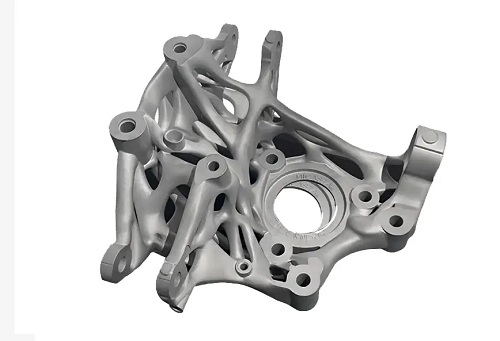
3D printing builds only the gear. No material wasted. But more importantly, you can create features impossible to machine. Curved internal cooling channels that follow part geometry. Lattice structures inside solid volumes that reduce weight while maintaining strength. Organic shapes optimized for stress distribution rather than machining access.
The process follows a straightforward path:
- Create a 3D model in CAD software, defining every dimension and feature
- Slice the model into thin layers (typically 0.05-0.3mm thick)
- Print the part layer by layer, building from nothing to finished component
- Post-process as needed—remove supports, smooth surfaces, heat treat
This additive approach fundamentally changes what "design for manufacturing" means. You design for function first, then worry about how to print it—rather than designing around machining limitations.
Which Materials Work for Mechanical Parts?
Thermoplastics: The Workhorses
PLA (Polylactic Acid) dominates entry-level printing. Made from corn starch, it prints easily at 170-180°C with minimal warping. Parts show good dimensional stability and detail. But PLA softens around 50-60°C and creeps under sustained load. Perfect for prototypes and low-stress applications. Not suitable for engine compartments or structural loads.
ABS (Acrylonitrile Butadiene Styrene) steps up to engineering applications. With heat deflection to 90-110°C and better impact resistance, ABS handles real-world conditions. Automotive interior components, brackets, and housings commonly use ABS. The trade-off? It warps during printing and emits strong fumes requiring ventilation.
Nylon (PA12, PA11) brings toughness and flexibility. Printed nylon parts resist fatigue and wear, making them ideal for gears, hinges, and living hinges. PA12 offers excellent chemical resistance and consistent mechanical properties. PA11, derived from renewable sources, provides similar performance with environmental benefits.
PEEK (Polyether Ether Ketone) represents the high end of thermoplastics. With continuous use temperatures to 260°C, chemical resistance, and mechanical strength approaching metals, PEEK serves aerospace, medical, and industrial applications. A PEEK replacement part for a high-temperature pump costs more than metal but offers corrosion resistance metal can't match.
| Material | Tensile Strength | Max Temp | Cost/kg | Best Applications |
|---|---|---|---|---|
| PLA | 50 MPa | 50°C | $20-30 | Prototypes, decorative |
| ABS | 40 MPa | 90°C | $25-40 | Brackets, housings |
| Nylon | 70 MPa | 120°C | $40-80 | Gears, hinges |
| PEEK | 100 MPa | 260°C | $300-500 | High-temp, medical |
Metals: When Strength Matters
Stainless steel (316L, 17-4PH) prints into corrosion-resistant parts with strength matching wrought material. Food processing equipment, marine components, and medical tools benefit from stainless steel's properties. A valve body printed in 316L costs more than cast but delivers better corrosion resistance and can include internal flow passages impossible to cast.
Titanium alloy (Ti6Al4V) combines light weight with exceptional strength and biocompatibility. Aerospace brackets save 40-60% weight compared to steel equivalents. Medical implants printed in titanium allow bone ingrowth into porous surfaces. The material costs $300-500 per kilogram, but the performance justifies the price for critical applications.
Aluminum (AlSi10Mg) offers good strength at lower cost and weight. Thermal conductivity makes it valuable for heat exchangers and cooling components. An automotive intercooler end tank printed in aluminum can incorporate optimized flow paths that improve efficiency by 15-20% over cast designs.
Inconel superalloys handle extreme temperatures and corrosive environments. Turbine components, exhaust systems, and chemical processing equipment printed in Inconel survive conditions that destroy other metals. The high cost ($150-300/kg) limits use to applications where nothing else works.
Composites: Best of Both Worlds
Carbon fiber reinforced nylon combines the toughness of nylon with the stiffness of carbon fiber. Printed parts achieve strength-to-weight ratios approaching metals. Automotive brackets, drone frames, and robotic arms benefit from these properties. The fibers also reduce warping during printing, improving dimensional accuracy.
Glass-filled materials offer improved stiffness and heat resistance at lower cost than carbon fiber. An electrical enclosure printed in glass-filled nylon withstands higher temperatures than standard nylon while maintaining electrical insulation properties.
How Strong Are 3D Printed Parts?
Understanding Mechanical Properties
Strength depends on orientation. Parts printed with layers parallel to load direction (fibers aligned along the stress) show higher strength than those printed with layers perpendicular to load. This anisotropy means designers must consider loading directions when orienting parts for printing.
Density affects performance. SLS-printed nylon parts achieve 92-96% density—slightly porous but strong enough for most applications. SLM metal parts reach 99%+ density, matching wrought material properties. FDM plastics show lower density with visible layer lines, reducing strength compared to molded equivalents.
Heat treatment improves metals. Printed metal parts often undergo stress relief annealing to reduce internal stresses from rapid cooling. Some alloys benefit from hot isostatic pressing (HIP) to eliminate any remaining porosity, achieving properties indistinguishable from forged material.
Real-World Strength Examples
A gearbox housing printed in carbon fiber nylon survived 50,000 cycles at 80% of design load before showing wear—comparable to the cast aluminum original. Weight savings: 35%. Cost for low volumes: 60% less than machining from billet.
A titanium bracket for an aircraft seat printed via SLM passed all certification tests at 45% lower weight than the machined original. Fatigue life exceeded requirements by 2x due to optimized stress distribution in the printed design.
A replacement gear printed in nylon for a vintage printing press handled 120% of rated torque for 18 months before needing replacement. The original manufacturer stopped making parts in 1972. Without 3D printing, the press would be scrap.
Which Technologies Produce Mechanical Parts?
FDM: Accessible and Versatile
Fused Deposition Modeling (FDM) extrudes melted thermoplastic through a nozzle, building parts layer by layer. Desktop machines cost $200-3,000. Industrial systems run $20,000-100,000+ with larger build volumes and better reliability.
Accuracy: ±0.1-0.4mm for desktop, ±0.05-0.1mm for industrial
Layer height: 0.1-0.4mm typical
Strengths: Low cost, wide material selection, large build sizes
Weaknesses: Visible layer lines, anisotropic strength, support removal required
Best for: Prototypes, large parts, low-volume production, fixtures and tooling
SLA: Precision and Surface Finish
Stereolithography (SLA) uses UV laser to cure liquid resin layer by layer. Parts emerge with smooth surfaces and fine details impossible on FDM.
Accuracy: ±0.05-0.15mm
Layer height: 0.025-0.1mm
Strengths: Exceptional detail, smooth surfaces, wide resin options
Weaknesses: Resin costs higher, parts can be brittle, post-curing required
Best for: Detailed prototypes, jewelry patterns, dental models, investment casting patterns
SLS: Functional Strength Without Supports
Selective Laser Sintering (SLS) fuses powder particles using a laser, building parts in a bed of unsintered powder that acts as natural support.
Accuracy: ±0.1-0.3mm
Layer height: 0.08-0.12mm
Strengths: No support structures, excellent material properties, complex geometries
Weaknesses: Surface roughness, higher equipment cost, powder handling required
Best for: Functional prototypes, end-use parts, complex geometries, small-to-medium batches
SLM/DMLS: Metal Parts That Perform
Selective Laser Melting (SLM) or Direct Metal Laser Sintering (DMLS) fully melts metal powder into solid, dense components.
Accuracy: ±0.05-0.1mm
Layer height: 0.02-0.05mm
Strengths: Full density metal, exceptional strength, complex internal features
Weaknesses: High cost, support structures required, post-processing necessary
Best for: Aerospace components, medical implants, high-performance automotive, tooling with conformal cooling
Can 3D Printed Parts Replace Machined Components?
When 3D Printing Wins
Low volumes favor 3D printing every time. A single custom bracket costing $500 to print would cost $5,000+ to machine due to setup and programming time. For 1-100 parts, printing dominates.
Complex geometries that require multiple machining setups or impossible tool access become simple with printing. Internal cooling channels, lattice structures, and organic shapes print as easily as simple blocks.
Weight optimization drives aerospace and automotive adoption. Topology-optimized designs produced by generative design software achieve 40-60% weight savings over conventionally designed parts—savings that compound into fuel efficiency and performance gains.
Obsolescence solutions keep old equipment running. When manufacturers stop making parts, 3D printing fills the gap. A printed replacement may not match original specifications exactly, but it keeps machinery operational.
When Traditional Machining Still Rules
High volumes (1,000+ parts) favor traditional methods. Once programmed and set up, CNC machines run parts faster than printers build them. For simple geometries, the cost per part drops well below printing.
Tight tolerances below ±0.05mm often require machining. While some printers achieve this precision, machined surfaces consistently hit ±0.01mm or better with proper equipment.
Specific surface finishes like mirror-polished or ground surfaces need machining after printing. As-built printed surfaces show characteristic roughness requiring secondary operations for smoothness.
Large parts exceeding printer build volumes obviously can't print in one piece. While large-format printers exist (1m+ build volumes), they remain expensive and specialized.
Decision Framework
| Factor | Choose 3D Printing When | Choose Machining When |
|---|---|---|
| Volume | 1-100 parts | 100+ parts |
| Complexity | High (internal features, organics) | Low to moderate |
| Material | Exotic or custom alloys | Standard stock sizes |
| Lead time | Days needed | Weeks acceptable |
| Tolerances | ±0.1mm sufficient | ±0.01mm required |
| Surface finish | As-built acceptable | Smooth required |
Yigu Technology's Experience
Working daily with both 3D printed and machined parts gives us practical perspective. Here's what we've learned:
A packaging equipment manufacturer needed 50 replacement wear strips for aging machines. Traditional machining: 6 weeks lead time, $1,200 each. SLS printing in nylon: 5 days lead time, $180 each. The parts lasted 8 months—same as originals—before needing replacement. The customer now stocks printed spares for all their legacy equipment.
A medical startup required 20 custom surgical guides for clinical trials. Machining would require programming each unique guide separately—prohibitively expensive. SLA printing produced all 20 guides in 48 hours at $85 each. Design changes during the trial cost nothing extra.
An aerospace supplier needed titanium brackets with internal strain gauge wiring channels. Machining couldn't create the curved channels without splitting the bracket into multiple pieces. SLM printed the complete assembly in one piece, reducing weight 35% and eliminating assembly labor.
The pattern is consistent: 3D printing excels where customization, complexity, or low volumes matter. Traditional methods win on simple, high-volume production. Smart manufacturers use both.
Future Trends
What's Coming for Printed Mechanical Parts
Larger build volumes expand possibilities. Systems now reaching 1m+ allow printing of entire assemblies rather than components.
Multi-material printing combines different materials in single parts—rigid structural sections with flexible seals, conductive traces within insulating bodies.
Faster printers reduce per-part costs. Print speeds double every 2-3 years, pushing economic crossover points toward higher volumes.
Better materials expand application ranges. New alloys specifically formulated for printing, composites with optimized fiber orientation, and high-temperature polymers push performance boundaries.
Integrated electronics printed directly into parts during manufacturing will create smart components with embedded sensing and connectivity.
Conclusion
Are 3D printed mechanical parts the future of manufacturing? Yes—but not the entire future.
3D printing excels where traditional methods struggle: customization, complexity, low volumes, and rapid iteration. It enables designs impossible to machine, produces parts on demand without inventory, and keeps obsolete equipment running. For these applications, printed parts aren't just alternatives—they're the only practical solution.
But traditional machining, casting, and molding remain essential for high volumes, tight tolerances, and specific surface finishes. The future isn't printed OR machined. It's printed AND machined, with smart manufacturers choosing the right tool for each job.
At Yigu technology, we've seen this hybrid future arrive. Clients who embrace both technologies gain flexibility their competitors lack. They bring products to market faster, respond to changes more nimbly, and solve problems that used to seem impossible.
The question isn't whether 3D printed mechanical parts belong in manufacturing. They already do. The question is how quickly you'll put them to work.
FAQ
What are the most common 3D printing technologies for mechanical parts?
FDM (fused deposition modeling) for large parts and prototypes, SLA (stereolithography) for detailed components, SLS (selective laser sintering) for functional polymer parts, and SLM/DMLS (selective laser melting) for metal components. Each serves different needs based on material, accuracy, and cost requirements.
How accurate are 3D printed mechanical parts?
Accuracy varies by technology: FDM ±0.1-0.4mm, SLA ±0.05-0.15mm, SLS ±0.1-0.3mm, SLM ±0.05-0.1mm. Industrial-grade printers achieve tighter tolerances than consumer equipment. Critical dimensions often receive final machining for precision requirements below ±0.05mm.
Can 3D printed mechanical parts meet high-strength requirements?
Yes, with appropriate materials and processes. Metal printed parts (titanium, stainless steel, Inconel) achieve 99%+ density with strength matching wrought material. High-performance polymers like PEEK offer strength approaching metals with chemical resistance and lower weight. Orientation affects strength—design parts with loading aligned to layer direction.
How long do 3D printed parts last?
Properly designed and printed parts last as long as traditionally manufactured equivalents in the same application. Metal printed components show comparable fatigue life when optimized for stress distribution. Polymer parts may show different wear characteristics but can match or exceed molded versions with appropriate material selection. Environmental factors (temperature, UV, chemicals) affect longevity as with any material.
What's the cost comparison between printed and machined parts?
For low volumes (1-100 parts), printing typically costs 50-80% less than machining due to eliminated setup and programming. For high volumes (1,000+ parts), machining becomes more economical as setup costs amortize. Complex geometries favor printing at any volume—features requiring multiple machining setups or impossible tool access add cost to machining but print for free.
Contact Yigu Technology for Custom Manufacturing
Need mechanical parts but unsure whether to print or machine? At Yigu technology, we bridge both worlds. Our team evaluates your specific requirements—volume, material, complexity, timeline—and recommends the optimal manufacturing approach.
We offer:
- Free project consultations
- 3D printing services across all major technologies
- CNC machining for precision components
- Material selection guidance
- Design optimization for manufacturability
- Post-processing including heat treatment and surface finishing
Stop guessing which manufacturing method fits your parts. [Contact Yigu Technology] today and let's build something great together.