Introduction
C95400 aluminum bronze is a high-strength alloy widely used in demanding industries, but its machining presents unique challenges. Its combination of hardness, toughness, and abrasive properties can lead to excessive tool wear, poor surface finishes, and difficulty maintaining tight tolerances. This guide addresses these pain points, offering expert strategies to master CNC machining of C95400 aluminum bronze —from alloy composition and mechanical properties to tool selection, cutting parameters, surface finish, and applications.
What Is the Alloy Identity and Composition of C95400?
C95400 is a premium aluminum bronze recognized under standards such as UNS C95400 , AMS 4871 , and ASTM B505 , ensuring consistent quality across manufacturers.
| Element | Composition Range |
|---|---|
| Copper (Cu) | Balance |
| Aluminum (Al) | 10 – 11.5% |
| Iron (Fe) | 3 – 5% |
| Nickel (Ni) | 1.5% |
As a high-strength bronze and primarily a cast alloy , C95400 derives its strength from aluminum, which forms intermetallic compounds during solidification. Iron and nickel enhance wear resistance and toughness—making it suitable for heavy-duty applications. However, these same alloying elements increase machinability challenges compared to softer copper alloys.
What Are the Mechanical and Physical Properties of C95400?
| Property | Value | Significance |
|---|---|---|
| Ultimate Tensile Strength (UTS) | 85 – 100 ksi | High strength for heavy-duty applications |
| Yield strength | 32 – 45 ksi | Balances strength and ductility |
| Elongation | 12% | Moderate ductility |
| Hardness (Brinell) | 170 – 200 | Significantly harder than many other bronzes; increases machining difficulty |
| Density | 0.269 lb/in³ | Slightly lighter than pure copper; reduces component weight in aerospace/marine |
| Electrical conductivity | 13% IACS | Low; not suitable for high-conductivity applications |
| Thermal conductivity | 33.9 Btu·ft/(hr·ft²·°F) | Efficient heat dissipation—pump sleeves |
| Modulus of elasticity | 15.5 Msi | Stiffness; maintains dimensional stability under load |
What Machinability and Recommended Practices Apply?
Machinability Rating
C95400 has a machinability rating of 60% compared to free-machining brass (rated 100%)—highlighting the need for specialized techniques.
Tool Selection
| Operation | Tool Recommendation | Why |
|---|---|---|
| Roughing | Carbide K20–K30 inserts | Excellent wear resistance against abrasive particles |
| Finishing | PCD (polycrystalline diamond) tools | Superior surface quality; higher cost |
Cutting Parameters
| Parameter | Range | Notes |
|---|---|---|
| Cutting speed | 150 – 250 m/min | Lower speeds (150–200 m/min) for roughing; higher (200–250 m/min) for finishing with PCD |
| Feed rate | 0.05 – 0.15 mm/tooth | Balances material removal and surface finish; faster risks tool chipping; slower causes rubbing and heat buildup |
Coolant and Chatter Control
| Requirement | Implementation |
|---|---|
| Coolant | Flood coolant essential—dissipates heat; flushes chips; reduces tool wear; coolant should have good lubricity to minimize friction |
| Chatter control | Interrupted cuts (gear/spline machining) require rigid setups; heavy-duty toolholders; proper machine rigidity |
How Do You Achieve Surface Finish and Dimensional Accuracy?
Surface Finish
| Target | Method |
|---|---|
| Ra 0.2 – 0.8 μm | Sharp tools; optimized cutting parameters; PCD tools particularly effective for finishing passes |
Dimensional Accuracy
| Requirement | Method |
|---|---|
| Tolerance | ±0.01 mm achievable with precision equipment and proper techniques—critical for aircraft fittings |
| Roundness | <1 μm—essential for rotating components (bushings, bearings) |
| Form accuracy | Straightness, flatness maintained through careful fixturing and machining sequence planning |
Burr-Free Edges
| Challenge | Solution |
|---|---|
| Toughness makes burr-free edges challenging | Sharp tools with proper rake angles; micro-deburring processes (abrasive flow machining) |
Mirror Finish Pass
| Parameter | Value |
|---|---|
| Feed rate | 0.02 – 0.05 mm/rev |
| Depth of cut | 0.05 – 0.1 mm |
| Tool | PCD tools |
| Result | Ultra-smooth surface; reduces friction—critical for moving components |
Inspection
| Method | Purpose |
|---|---|
| CMM (Coordinate Measuring Machine) | Verify dimensional accuracy |
| Roundness measurement | Ensure <1 μm for rotating components |
Where Is C95400 Applied?
| Industry | Applications | Why C95400? |
|---|---|---|
| Heavy-duty components | Heavy-duty bushings, crane bearings | High strength; wear resistance; withstands heavy loads |
| Marine | Propellers, valves | Excellent corrosion resistance in saltwater environments |
| Aerospace | Aircraft fittings | High strength-to-weight ratio; reliability under extreme conditions |
| Industrial machinery | Gears, valve bodies | Long service life; toughness |
| Pump components | Pump sleeves, wear plates | Wear resistance |
| Self-lubricating bushings | Low-maintenance components | When paired with appropriate lubricants; reduces maintenance in hard-to-reach areas |
What Is Yigu Technology’s Perspective?
At Yigu Technology , we specialize in machining C95400 aluminum bronze with extensive experience in overcoming its unique challenges:
- Tool selection: Carbide K20–K30 inserts for roughing; PCD tools for finishing to achieve Ra 0.2–0.8 μm surface finish.
- Cutting parameters: Cutting speeds 150–250 m/min; feed rates 0.05–0.15 mm/tooth; flood coolant essential for heat dissipation and chip evacuation.
- Quality control: CMM inspection for ±0.01 mm tolerances; roundness measurement <1 μm for rotating components; burr-free edges through sharp tools and micro-deburring processes.
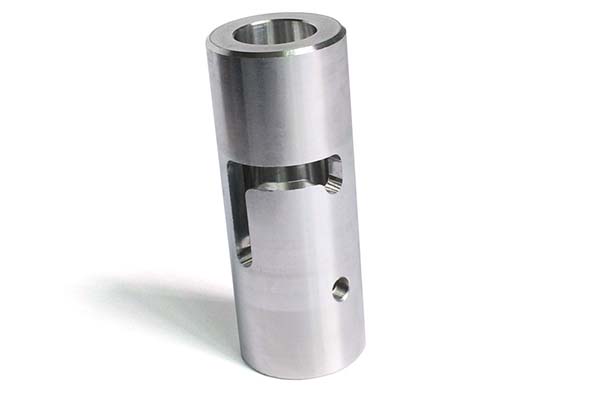
- Applications: Heavy-duty bushings, marine propellers, aircraft fittings, pump sleeves, gears.
Our expertise ensures parts meet the highest standards for surface finish and dimensional accuracy—delivering reliable components for demanding industries.
Conclusion
CNC machining C95400 aluminum bronze requires understanding its high-strength, abrasive properties and applying tailored strategies. C95400 contains 10–11.5% aluminum , 3–5% iron , and 1.5% nickel , achieving 85–100 ksi UTS , 170–200 HB hardness , and 60% machinability rating (vs. free-machining brass). Optimal machining parameters: cutting speeds 150–250 m/min , feed rates 0.05–0.15 mm/tooth , carbide K20–K30 inserts for roughing , PCD tools for finishing , and flood coolant for heat dissipation. Achievable surface finish: Ra 0.2–0.8 μm ; tolerances: ±0.01 mm ; roundness: <1 μm . Applications span heavy-duty bushings, marine propellers, aircraft fittings, gears, and pump sleeves—where high strength, wear resistance, and corrosion resistance are critical. With proper tooling, coolant management, and precision controls, C95400 delivers exceptional performance in demanding environments.
FAQs
Why is C95400 more difficult to machine than other bronzes?
C95400’s high aluminum, iron, and nickel content increases its hardness (170–200 HB) and toughness, making it more abrasive and resistant to cutting. This leads to higher tool wear and machining challenges compared to softer copper alloys.
What tool material is best for machining C95400?
Carbide inserts (K20–K30 grade) are preferred for roughing—offering excellent wear resistance against abrasive particles. PCD (polycrystalline diamond) tools are ideal for finishing to achieve high surface quality (Ra 0.2–0.8 μm) and extended tool life.
How does C95400’s corrosion resistance compare to other bronzes?
C95400 offers excellent corrosion resistance , especially in saltwater environments , surpassing many tin bronzes. This makes it a top choice for marine and offshore applications—propellers, valves, and underwater fittings.
Contact Yigu Technology for Custom Manufacturing
At Yigu Technology , we combine deep material knowledge with advanced CNC machining to deliver precision C95400 aluminum bronze components. Our 3-axis, 4-axis, and 5-axis CNC machines are equipped with carbide K20–K30 inserts , PCD finishing tools , and flood coolant systems to achieve tolerances as tight as ±0.01 mm and surface finishes Ra 0.2–0.8 μm . From heavy-duty bushings to aircraft fittings, we provide DFM feedback to optimize your designs for manufacturability.
Ready to machine your next C95400 project? Contact Yigu Technology today for a free consultation and quote. Let us help you achieve high-strength precision in every component.