Introduction
PTFE (Teflon) is one of the most versatile engineering plastics in manufacturing. Its chemical inertness, low friction, and wide thermal stability make it indispensable across industries—from chemical processing equipment to medical implants and semiconductor components. But these same properties that make PTFE valuable also make it notoriously difficult to machine.
Its low friction coefficient causes workpieces to slip during machining. Its flexibility leads to deformation under cutting forces. Its non-stick properties cause fine, fluffy chips that clog tools and compromise surface finish. And its tendency to creep means that dimensions measured immediately after machining may not represent final part geometry.
This guide addresses these challenges head-on. Drawing from practical machining experience, we will cover material properties, machine setup, tooling selection, cutting parameters, programming strategies, and quality control methods. Whether you are new to machining PTFE or looking to improve existing processes, you will find actionable strategies for producing precision components from this demanding material.
What Makes PTFE Unique for CNC Machining?
Key Material Properties
PTFE (polytetrafluoroethylene) is a fluoropolymer with a combination of properties unmatched by most other engineering materials. Understanding these properties is essential for developing an effective machining strategy.
Chemical inertness is PTFE’s signature characteristic. It resists nearly all chemicals—strong acids, alkalis, solvents—making it ideal for chemical processing equipment, laboratory tools, and semiconductor manufacturing. However, this inertness also means that conventional adhesives and coolants may not perform as expected.
Low friction coefficient of 0.04 (dry) makes PTFE one of the slipperiest materials available. This reduces wear in moving parts but creates significant challenges for workholding. PTFE workpieces tend to slip under cutting forces, requiring specialized fixturing.
Thermal stability allows PTFE to maintain properties from -200°C to 260°C. This wide range makes it suitable for extreme environments in aerospace and industrial applications. However, its low thermal conductivity means heat concentrates at the cutting zone, risking localized melting.
Electrical insulation is excellent, making PTFE a preferred material for high-frequency components and electrical insulators.
Mechanical strength is relatively low—tensile strength of 20–30 MPa. PTFE is also prone to creep, slowly deforming under sustained load. This affects both machining strategies and quality inspection timing.
| Property | PTFE (Teflon) | PEEK | PI Polyimide |
|---|---|---|---|
| Chemical Inertness | Excellent | Very Good | Excellent |
| Friction Coefficient | 0.04 | 0.30 | 0.35 |
| Continuous Use Temp | -200 to 260°C | -50 to 260°C | -200 to 300°C |
| Tensile Strength | 20–30 MPa | 90–100 MPa | 100–150 MPa |
Machining Challenges
PTFE’s properties create specific machining difficulties. Slippage occurs because the low friction coefficient prevents secure grip in standard workholding. Deformation happens because the material is flexible and deflects under cutting forces. Heat buildup is problematic because low thermal conductivity concentrates heat at the cutting zone. Chip management is difficult because PTFE produces fine, fluffy chips that cling to tools and fixtures. And dimensional measurement is complicated by creep—parts may change size hours after machining.
What Machine Setup Works Best for PTFE?
Workholding Solutions
Securing PTFE workpieces is the first critical step. Standard chucks and vises often fail because PTFE slips under cutting forces.
Soft-jaw fixtures are highly effective. Machined to match the workpiece contour, they distribute clamping pressure evenly. This prevents point loading that could deform the material while providing sufficient grip to prevent rotation or translation.
Vacuum chucks work well for thin sheets and flat parts. They apply uniform pressure across the entire surface, holding the workpiece without mechanical clamping that could cause deformation.
Double-sided tape or adhesive films provide additional security for thin sections. They prevent lifting and shifting during cutting, particularly useful for profiling operations.
Fixture design matters. For cylindrical parts like bushings and rods, collet chucks with serrated inserts can provide adequate grip when properly sized. For complex shapes, custom fixtures with multiple clamping points distribute forces effectively.
Machine Selection
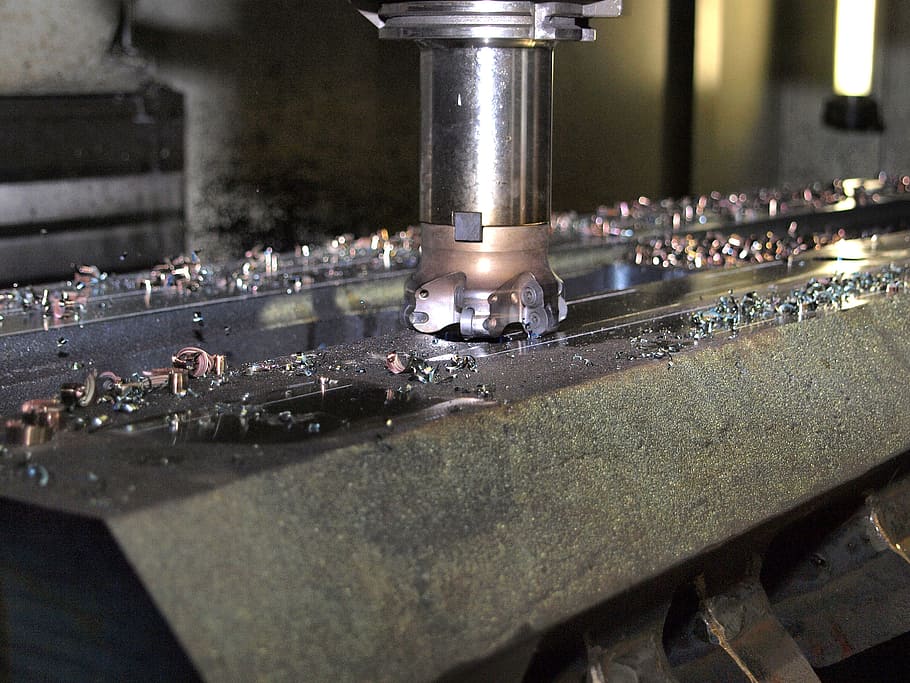
CNC milling machines with sensitive feed controls are ideal for PTFE. Spindle speeds in the 3000–6000 RPM range balance material removal against heat generation. Machines with high acceleration and deceleration capabilities handle PTFE’s requirement for smooth toolpath transitions.
CNC lathes for turning PTFE require low-vibration spindles and precise feed controls. Spindle speeds of 1500–3000 RPM with light cutting forces prevent the tool from “digging” into the flexible material.
5-axis machines reduce workpiece handling for complex parts. By machining from multiple angles in one setup, they minimize the number of times the workpiece must be repositioned—each repositioning being a potential source of slippage or deformation.
Laser cutting machines are effective for thin PTFE sheets. They produce clean edges without mechanical stress, preventing the deformation that can occur with conventional cutting of delicate sections.
What Cutting Tools and Parameters Deliver Quality?
Tool Selection
High-speed steel (HSS) tools perform well for PTFE at a lower cost than carbide. Their sharp edges cut cleanly, and they are less brittle than carbide, reducing the risk of chipping.
Carbide tools (grade K10) are preferred for high-volume production. They maintain sharpness longer and achieve better surface finishes. The added cost is justified by extended tool life and reduced tool change downtime.
Polycrystalline diamond (PCD) tools are the premium choice for ultra-smooth finishes. They achieve surface roughness below Ra 0.8 μm, essential for critical applications like semiconductor components and sealing surfaces.
Tool geometry requires specific features. A high rake angle (15–20°) reduces cutting forces, minimizing material deflection. 2-flute designs improve chip evacuation compared to 3- or 4-flute tools, preventing the fine PTFE chips from clogging the cutting zone.
Tool coatings like TiN (titanium nitride) reduce friction between tool and workpiece, extending tool life by 20–30% compared to uncoated tools.
Cutting Parameters
Proper parameters balance material removal against heat generation and deformation risk.
| Operation | Spindle Speed | Feed Rate | Depth of Cut |
|---|---|---|---|
| Milling | 3000–6000 RPM | 0.1–0.2 mm/tooth | 0.5–2.0 mm |
| Turning | 1500–3000 RPM | 0.05–0.15 mm/rev | 0.5–1.5 mm |
| Finishing Pass | 3000–4000 RPM | 0.05–0.1 mm/tooth | 0.1–0.2 mm |
Spindle speed should be moderate. Too low, and cutting forces increase, risking deformation. Too high, and heat buildup causes localized melting. The range of 3000–6000 RPM for milling provides a safe balance.
Feed rate must be controlled. For milling, 0.1–0.2 mm/tooth works well. For turning, 0.05–0.15 mm/rev prevents the tool from “digging” into the flexible material.
Depth of cut should be limited. Multiple shallow passes—0.5–2.0 mm for roughing, 0.1–0.2 mm for finishing—minimize deflection and heat generation compared to single deep cuts.
How Do You Program CNC Machines for PTFE?
Toolpath Strategies
Smooth, continuous toolpaths are essential for PTFE. Abrupt direction changes cause the workpiece to shift in its fixturing. Circular interpolation around corners, rather than sharp angle changes, maintains consistent cutting forces.
Climb milling—cutting with the tool rotation—reduces material deflection compared to conventional milling. The cutting edge engages the material at maximum thickness, shearing cleanly rather than pushing.
Layered cutting using multiple shallow passes instead of deep cuts minimizes deformation. While cycle time increases, dimensional accuracy improves significantly—critical for tight tolerance applications.
CAD/CAM Considerations
PTFE-specific toolpath templates in advanced CAD/CAM software optimize cutting strategies. These templates incorporate recommended speeds, feeds, and toolpath patterns based on material properties.
Simulation before cutting identifies potential tool collisions and excessive cutting forces. Virtual machining reveals areas where the tool may deflect the workpiece, allowing programming adjustments before material is cut.
Nesting efficiency matters for cost control. PTFE material costs are relatively high. Efficient nesting—arranging parts to minimize waste—reduces material consumption and overall cost.
G-Code Adjustments
Slow initial feed rates secure the workpiece before full cutting begins. Starting with reduced feeds allows the cutting forces to stabilize, preventing initial slippage.
Gradual feed increases as cutting progresses maintain stability. A program that ramps up feed rates after the first passes proves more reliable than constant feed from the start.
Rapid traverse moves should avoid crossing the workpiece. Positioning moves over empty space prevent accidental contact that could dislodge the workpiece.
What Quality Control Methods Ensure Precision?
Dimensional Inspection Timing
PTFE’s creep behavior—slow deformation under load—means dimensions measured immediately after machining may not reflect final part geometry. The material continues to relax, changing size over hours.
24-hour post-machining measurement is standard practice for precision PTFE parts. Allowing the material to stabilize before inspection ensures that measurements represent the final component geometry.
Coordinate Measuring Machines (CMMs) verify critical dimensions with accuracy to ±0.002 mm. For PTFE parts with tolerances of ±0.02–0.05 mm, CMM inspection confirms that specifications are met after stabilization.
Surface Finish Requirements
Standard PTFE machining achieves surface roughness of Ra 1.6–3.2 μm. With proper tooling and parameters—sharp carbide or PCD tools, light finishing passes—surface roughness can be reduced to Ra 0.8–1.6 μm.
For sealing surfaces in chemical processing equipment, Ra below 1.6 μm is often required. Profilometer measurement verifies that finish specifications are met.
Tolerance Control
Typical PTFE part tolerances are ±0.02–0.05 mm. Achieving these requires rigid setups, low cutting forces, and proper tool selection. Statistical process control (SPC) tracks dimensional variations across production runs, identifying trends before parts go out of specification.
Non-Destructive Testing
Visual inspection under magnification checks for surface defects—cracks, tears, tool marks. PTFE’s white or off-white color makes surface imperfections readily visible.
Pressure testing verifies leak-tightness for seals and gaskets. Components are subjected to operating pressures to confirm sealing performance.
Quality Standards
Compliance with ISO 9001 is baseline for quality management. For food contact applications, FDA 21 CFR 177.1550 certification confirms PTFE material meets safety requirements. For medical applications, biocompatibility documentation is required.
Where Are CNC Machined PTFE Parts Used?
Chemical Processing Equipment
PTFE’s chemical inertness makes it the material of choice for valves, gaskets, pump components, and reaction vessels. In aggressive chemical environments, PTFE components outlast metals that would corrode.
A chemical processing plant using PTFE-lined valves and fittings reported 5x longer service life compared to stainless steel components handling hydrochloric acid.
Medical Implants and Devices
Biocompatibility and low friction make PTFE suitable for prosthetic joints, catheter components, and surgical instruments. The material does not react with body tissues, and its low friction reduces wear and tissue irritation.
Semiconductor Components
Purity and resistance to plasma etching chemicals are critical in semiconductor manufacturing. PTFE wafer handling tools and chamber liners prevent contamination that could affect chip yields.
Food Processing Machinery
Non-stick properties and FDA compliance make PTFE ideal for conveyor belts, gaskets, and molds in food processing. Easy cleaning and resistance to food acids ensure sanitary operation.
Automotive Parts
Resistance to oils and fuels combined with thermal stability to 260°C makes PTFE suitable for gaskets, seals, and fuel system components in high-temperature under-hood environments.
Aerospace Components
Low outgassing in vacuum environments and thermal stability across wide temperature ranges make PTFE valuable for electrical insulators and hydraulic system parts in aircraft and spacecraft.
Laboratory Equipment
Chemical inertness ensures that PTFE beaker liners, stirrers, and reaction vessels do not contaminate experiments. The material withstands the aggressive chemicals used in analytical chemistry.
Conclusion
CNC machining of PTFE (Teflon) requires a specialized approach that respects the material’s unique properties. Its low friction demands secure workholding. Its flexibility requires reduced cutting forces. Its low thermal conductivity demands heat management. Its creep behavior requires careful inspection timing.
Success comes from integrating appropriate techniques across the entire process. Workholding with soft jaws, vacuum chucks, or adhesives prevents slippage. Tool selection with sharp edges, high rake angles, and appropriate coatings cuts cleanly. Cutting parameters balanced for speed, feed, and depth minimize heat and deformation. Programming with smooth toolpaths and layered cuts maintains stability. Quality control with delayed measurement and CMM inspection accounts for creep.
The applications span critical industries. Chemical processing relies on PTFE’s inertness. Medical devices depend on its biocompatibility. Semiconductor manufacturing demands its purity. Food processing values its non-stick properties. Aerospace utilizes its thermal stability.
For manufacturers willing to adapt their processes to PTFE’s demands, the material delivers exceptional value. Its combination of chemical resistance, low friction, and thermal stability, when unlocked through precision machining, produces components that perform reliably in the most demanding environments.
FAQ
Why is PTFE (Teflon) difficult to machine, and how do I overcome it?
PTFE’s low friction causes slippage during machining; its flexibility leads to deformation. Overcome these challenges by using secure fixturing—vacuum chucks, soft jaws, or double-sided tape. Use slow feed rates (0.1–0.2 mm/tooth) and sharp tools with high rake angles to reduce cutting forces. Take multiple shallow passes rather than deep cuts.
What surface roughness can be achieved when machining PTFE?
With proper tooling and parameters, PTFE achieves surface roughness of Ra 0.8–1.6 μm. This requires sharp carbide or PCD tools, moderate spindle speeds (3000–4000 RPM for finishing), and light finishing passes (0.1–0.2 mm depth of cut).
Which CNC machine tools are best for PTFE?
CNC milling machines and CNC lathes with sensitive feed controls are most effective. For thin sheets, laser cutting machines produce clean edges without mechanical stress. For complex parts, multi-axis machines reduce workpiece handling and minimize deformation risk.
What tolerances can be achieved when machining PTFE?
Typical PTFE part tolerances are ±0.02–0.05 mm. Achieving these requires rigid setups, low cutting forces, sharp tools, and multiple shallow passes. For critical applications, 5-axis machining with minimal workpiece handling improves consistency.
How do I handle PTFE’s creep in quality inspection?
PTFE creeps—slowly deforms under stress—meaning dimensions change after machining. Allow 24 hours after machining before final inspection to let the material stabilize. Use CMM (Coordinate Measuring Machine) verification for critical dimensions after stabilization.
Contact Yigu Technology for Custom Manufacturing
Need precision PTFE components for demanding applications? Yigu Technology specializes in CNC machining of PTFE (Teflon) for chemical processing, medical, semiconductor, food processing, and aerospace industries. Our engineers select the right workholding, tools, and parameters to overcome PTFE’s unique challenges and deliver reliable parts. Contact us today to discuss your project.