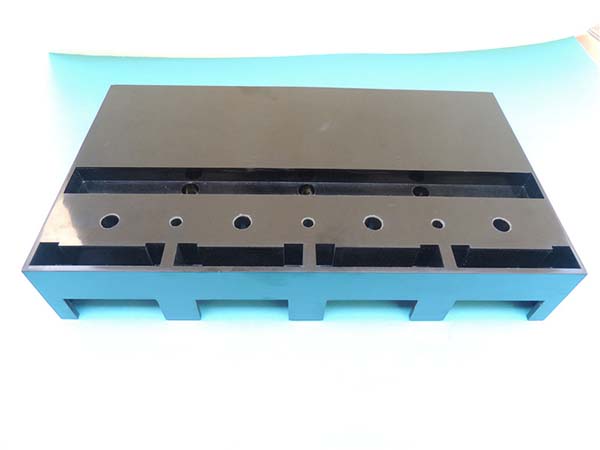
Introduction
PVDF (polyvinylidene fluoride) offers exceptional chemical resistance, high purity, and impressive thermal stability. These properties make it a top choice for chemical processing equipment, semiconductor components, and medical devices. But the same qualities that make PVDF valuable also create machining challenges. Its abrasiveness accelerates tool wear. Its toughness causes deformation under cutting forces. And its sensitivity to heat can lead to surface defects if parameters are not carefully controlled. This guide addresses these pain points directly. You will learn how to select the right tools, optimize machining parameters, and implement quality control measures that turn PVDF’s challenges into reliable, repeatable results.
What Makes PVDF Unique?
Chemical and Physical Properties
PVDF belongs to the fluoropolymer family. Its molecular structure combines high chemical resistance with mechanical strength that sets it apart from other plastics.
Key properties that matter for machining:
- Chemical resistance: Withstands acids, bases, solvents, and halogenated compounds
- Thermal stability: Continuous use up to 150°C; short-term exposure to 170°C
- Mechanical strength: Tensile strength of 40–50 MPa; flexural modulus of 2–3 GPa
- Purity: Low extractable content; FDA-compliant grades available
- Dielectric properties: Excellent electrical insulation for high-frequency applications
- UV resistance: Maintains properties under prolonged outdoor exposure
PVDF vs. Other Engineering Plastics
| Property | PVDF | PTFE | HDPE |
|---|---|---|---|
| Chemical resistance | Excellent | Excellent | Good |
| Continuous service temperature | 150°C | 260°C | 120–130°C |
| Tensile strength (MPa) | 40–50 | 20–30 | 20–30 |
| Density (g/cm³) | 1.77–1.80 | 2.1–2.3 | 0.94–0.96 |
| Machinability | Moderate | Difficult | Easy |
Compared to PTFE, PVDF offers higher strength and better machinability. Compared to HDPE, it provides superior chemical resistance and temperature capability.
What Machining Challenges Does PVDF Present?
Abrasive Wear on Cutting Tools
PVDF contains a crystalline structure that acts like an abrasive during cutting. This accelerates tool wear significantly compared to softer plastics like acetal or nylon.
Real-world impact:
A manufacturer machining PVDF valve bodies found that standard high-speed steel (HSS) tools lasted only 40–50 parts before edge wear caused surface finish degradation. Switching to carbide tools extended tool life to 250–300 parts—a sixfold improvement.
Deformation Under Cutting Forces
PVDF’s combination of strength and toughness means it does not cut cleanly like brittle materials. Instead, it tends to deflect under tool pressure. This deflection leads to dimensional inaccuracies, especially on thin walls or delicate features.
Heat Sensitivity During Machining
Although PVDF withstands service temperatures up to 150°C, machining heat above 180°C causes localized softening. The result: smearing, burr formation, and warping. Heat also induces residual stresses that can cause parts to shift dimensionally hours after machining.
Which Tools Work Best for PVDF?
Carbide Tools
Tungsten carbide (WC-Co) inserts with hardness of 90–92 HRA form the backbone of PVDF machining. Uncoated carbide performs better than coated variants because coatings can promote material adhesion.
Tool geometry considerations:
- 2–4 flutes with 35°–45° helix angle for efficient chip evacuation
- Sharp cutting edges (radius < 0.02 mm) to reduce deformation
- Positive rake angles to minimize cutting forces
Polycrystalline Diamond (PCD) Tools
PCD tools offer superior wear resistance for high-volume or high-precision applications. They achieve surface finishes below Ra 0.8 μm—critical for semiconductor components where particle generation must be minimized.
Trade-off: PCD tools cost significantly more than carbide. For most applications, carbide provides the best balance of tool life and cost. Reserve PCD for precision-critical parts or production runs exceeding 1,000 pieces.
High-Speed Steel (HSS) Tools
HSS works for low-volume prototyping or one-off parts. However, tool life is 5–10 times shorter than carbide. For production runs, the labor cost of frequent tool changes typically outweighs the lower initial tool cost.
Tool Wear Management
Establish a tool replacement schedule based on measured wear:
| Tool Type | Typical Life (parts per edge) | Replacement Indicator |
|---|---|---|
| Carbide | 200–500 | Flank wear >0.2 mm |
| PCD | 800–1,500 | Surface finish degrades |
| HSS | 40–80 | Visible edge rounding |
How Do You Optimize Machining Parameters?
Cutting Speed and Feed Rate
The goal is to remove material quickly enough to minimize heat generation while maintaining chip control.
| Operation | Cutting Speed (m/min) | Feed Rate | Depth of Cut |
|---|---|---|---|
| Milling (roughing) | 100–200 | 0.1–0.2 mm/tooth | 0.5–2.0 mm |
| Milling (finishing) | 150–200 | 0.05–0.1 mm/tooth | 0.1–0.3 mm |
| Turning | 150–200 | 0.1–0.15 mm/rev | 0.3–1.5 mm |
| Drilling | 50–100 | 0.05–0.1 mm/rev | N/A |
Coolant Strategy
Coolant serves two critical functions: heat removal and chip flushing. PVDF’s low thermal conductivity means heat concentrates at the cutting zone without adequate cooling.
Recommended approach:
- High-pressure coolant at 30–50 bar
- Deionized water for standard applications
- Specialized fluorinated coolants for high-purity requirements (medical, semiconductor)
Toolpath Optimization
Smooth toolpaths reduce stress on the material. Use:
- Circular interpolation instead of sharp corners
- Arc transitions between direction changes
- Climb milling rather than conventional milling to reduce material pull
Case example:
A semiconductor component supplier reduced post-machining warping by 60% by switching from linear toolpaths to arc transitions. The change lowered peak cutting forces and distributed heat more evenly across the cut.
How Do You Ensure Quality?
Dimensional Accuracy
PVDF’s moderate flexural modulus means residual stresses from machining can cause subtle dimensional shifts. This makes timing of inspections critical.
Best practice:
- Allow 2 hours of stress relaxation after machining before final inspection
- Use coordinate measuring machines (CMMs) with high-resolution probes
- Expect achievable tolerances of ±0.05–0.1 mm for standard parts
- Precision applications can achieve ±0.02–0.03 mm with optimized parameters
Surface Finish Requirements
Surface finish directly affects part performance in critical applications:
| Application | Required Ra (μm) | Method |
|---|---|---|
| General industrial | 1.6–3.2 | Standard finishing passes |
| Precision parts | 0.8–1.6 | Sharp tools + optimized feeds |
| Semiconductor | <0.8 | PCD tools + light finishing passes |
Cleanliness Standards
For medical and semiconductor applications, particle contamination is unacceptable. Implement:
- Ultrasonic cleaning after machining
- Particle counting per ISO 14644-1 Class 5 standards (≤10 particles/ft³ ≥0.5 μm)
- Cleanroom packaging for sensitive components
Statistical Process Control (SPC)
Monitor key parameters across production runs:
- Cutting speed and feed rate consistency
- Tool wear progression
- Critical dimension variation
SPC reduces dimensional variation by 25–40% in high-volume PVDF machining.
Where Is CNC-Machined PVDF Used?
Chemical Processing
PVDF’s corrosion resistance makes it the material of choice for valves, pumps, and tank liners. It withstands aggressive media including acids, bases, and solvents that would degrade other plastics.
Example: A chemical plant replaced stainless steel valve components with PVDF, eliminating corrosion-related failures. The machined PVDF parts maintained dimensional stability after three years of continuous exposure to hydrochloric acid.
Semiconductor Industry
The semiconductor industry demands materials with high purity and low particle generation. PVDF meets ISO Class 5 cleanroom standards, making it suitable for wafer handling equipment, chemical delivery systems, and cleanroom fixtures.
Medical Devices
FDA-compliant PVDF grades support applications requiring biocompatibility (ISO 10993 compliance). Surgical instrument components and fluid handling systems benefit from its resistance to sterilization processes including autoclaving and gamma radiation.
Electrical Components
PVDF’s dielectric properties make it ideal for insulators, connectors, and cable jackets. It performs reliably in high-voltage and high-frequency environments where other plastics would degrade.
Aerospace Components
Structural parts and wire insulation leverage PVDF’s UV resistance and thermal stability. Components withstand extreme temperature fluctuations and prolonged outdoor exposure without degradation.
What Does a Real-World PVDF Machining Process Look Like?
A manufacturer of chemical processing valves faced three problems: rapid tool wear, inconsistent surface finish, and parts that went out of tolerance after assembly.
Initial state:
- HSS tools replaced every 60 parts
- Surface finish Ra 2.5–4.0 μm
- 12% scrap rate due to dimensional shifts
Implemented changes:
- Switched to carbide tools with 45° helix angle
- Reduced cutting speed from 250 m/min to 180 m/min
- Added high-pressure coolant at 40 bar
- Introduced 2-hour stress relaxation before final inspection
- Changed from conventional to climb milling
Results after 3 months:
- Tool life increased to 350 parts per edge
- Surface finish improved to Ra 0.9–1.2 μm
- Scrap rate dropped to 3%
- Annual tooling cost reduced by 45%
Conclusion
CNC machining of PVDF requires a deliberate approach that respects the material’s unique properties. Its abrasiveness demands carbide or PCD tools with sharp edges and proper geometry. Its toughness requires optimized feeds, speeds, and toolpaths to prevent deformation. Its heat sensitivity makes high-pressure coolant non-negotiable. Quality assurance must account for stress relaxation and cleanliness requirements where applicable. When these elements come together, PVDF machines into precision components that leverage its exceptional chemical resistance, purity, and thermal stability. The investment in proper tooling and parameter optimization pays back through longer tool life, consistent quality, and reduced scrap.
FAQs
Why does PVDF cause rapid tool wear, and how can I reduce it?
PVDF contains a crystalline structure that acts as an abrasive during cutting. Mitigation involves using carbide or PCD tools, maintaining cutting speeds of 150–200 m/min to minimize friction, and applying high-pressure coolant to flush away abrasive chips. These measures typically extend tool life by 30–50%.
How do I prevent heat-induced defects when machining PVDF?
PVDF softens above 180°C, causing smearing or warping. Prevention includes using spindle speeds of 6,000–8,000 RPM, feed rates of 0.15–0.2 mm/tooth, and high-pressure coolant to dissipate heat. Toolpath optimization with minimal tool engagement time further reduces heat buildup.
What tolerances can I expect when machining PVDF?
Standard tolerances range from ±0.05 mm to ±0.1 mm. Precision applications—such as semiconductor components—can achieve ±0.02 mm to ±0.03 mm with rigid machining centers, PCD tools, and post-machining stress relief. Allow 2 hours of relaxation time before final inspection for best results.
Can PVDF be machined without coolant?
Coolant is strongly recommended for production machining. PVDF’s low thermal conductivity concentrates heat at the cutting zone without coolant, leading to localized softening, poor surface finish, and accelerated tool wear. For very light cuts or one-off prototypes, compressed air may suffice, but production runs require liquid coolant.
What is the best tool material for machining PVDF?
Carbide tools provide the best balance of cost and performance for most applications. Uncoated carbide with sharp edges and a high helix angle (35°–45°) resists wear while preventing material adhesion. PCD tools are recommended for precision applications requiring surface finishes below Ra 0.8 μm or production runs exceeding 1,000 parts.
Contact Yigu Technology for Custom Manufacturing
At Yigu Technology, we specialize in CNC machining of PVDF and other high-performance plastics. Our engineering team understands the material’s unique challenges—from abrasive wear to thermal sensitivity—and selects the right tools, parameters, and coolant strategies for each project. We operate multi-axis machining centers in temperature-controlled environments and maintain ISO Class 5 cleanroom capabilities for semiconductor and medical applications. Quality control includes CMM inspection, surface profilometry, and particle counting where required. Whether you need chemical processing components, semiconductor fixtures, or medical device parts, we deliver precision results with consistency you can rely on. Contact us to discuss your PVDF machining project.