Introduction
In the world of precision engineering, the materials that enable high performance often go unnoticed. Brass turning components are one such example. From the fuel nozzles in jet engines to the surgical instruments in operating rooms, these precision-engineered parts play a critical role in ensuring reliability, accuracy, and durability.
Brass—an alloy of copper and zinc—offers a unique combination of properties. It machines easily, resists corrosion, conducts electricity well, and maintains dimensional stability under stress. These characteristics make it the material of choice for applications where tolerances are tight and failure is not an option. This guide explores how brass turning components are manufactured, their role in precision engineering, and the industries that depend on them.
What Are Brass Turning Components?
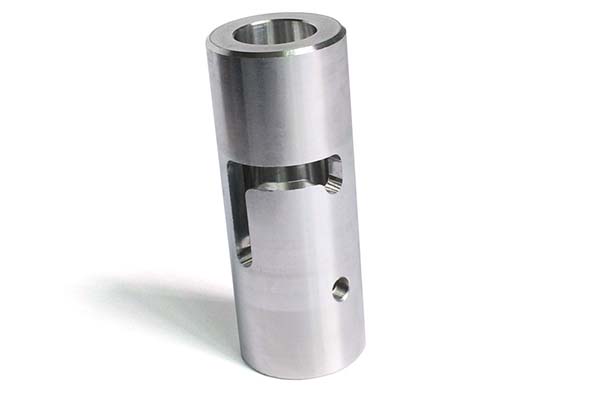
Brass turning components are precision parts produced through the metal turning process, where a rotating brass workpiece is shaped by stationary cutting tools.
The Turning Process
The process begins with a solid brass rod, bar, or tube clamped onto a lathe spindle. As the spindle rotates—typically at hundreds to thousands of RPM—a cutting tool removes material to achieve the desired shape and dimensions.
| Lathe Type | Operation | Precision Capability |
|---|---|---|
| Manual lathe | Operator-controlled via hand wheels | Operator skill dependent |
| CNC lathe | Computer-controlled with G-code programming | ±0.0005 inches (±0.0127 mm) |
CNC lathes dominate modern production. They use high-resolution encoders and advanced control systems to monitor and adjust cutting in real time. For brass, CNC turning can achieve tolerances as tight as ±0.001 inches (±0.0254 mm) for standard precision and ±0.0005 inches (±0.0127 mm) for high-precision applications.
Key Process Parameters
- Cutting speed: 200–300 m/min for brass
- Surface finish: Ra 0.8–1.6 µm achievable without secondary operations
- Tool materials: High-speed steel, carbide, diamond-coated inserts
What Material Properties Make Brass Ideal for Turning?
Brass’s unique combination of properties makes it exceptionally well-suited for precision turning.
Excellent Machinability
Brass machines faster and more easily than many other metals. The presence of zinc reduces copper’s hardness, allowing:
- Faster cutting speeds: 2–3× faster than stainless steel
- Longer tool life: Reduced wear compared to harder materials
- Smooth chip formation: Clean cuts, better surface finishes
- Lower production costs: Higher throughput, less tooling expense
Corrosion Resistance
Brass forms a protective oxide layer when exposed to air, providing good resistance in:
- Moderate humidity environments
- Plumbing and water systems
- Marine applications (with appropriate alloy selection)
Example: Brass fittings are widely used in water supply systems because they resist corrosion and do not leach harmful metals into drinking water.
Electrical Conductivity
Brass conducts electricity at 28–35% IACS (International Annealed Copper Standard)—lower than pure copper but sufficient for many electrical applications.
Applications: Connectors, switches, relays where reliable electrical contact and mechanical durability are required.
Mechanical Strength
Brass offers a balance of strength and ductility that can be tuned by adjusting copper-zinc ratio:
| Alloy Type | Zinc Content | Characteristics | Applications |
|---|---|---|---|
| Low zinc | 20–30% | Better formability, corrosion resistance | Plumbing, decorative |
| High zinc | 35–40% | Higher strength, hardness (tensile 400–500 MPa) | Gears, structural parts |
How Do Brass Turning Components Enable Precision Engineering?
Brass turning components are essential to precision engineering because they combine high-precision machining, complex geometry capability, and material stability.
High-Precision Machining
Modern CNC lathes achieve tolerances of ±0.0005 inches (±0.0127 mm) when turning brass. This level of precision is crucial for:
- High-speed motor shafts: Diameter tolerances as tight as ±0.001 inches
- Optical instruments: Components requiring exact positioning
- Precision measuring devices: Where small deviations cause measurement errors
Comparison: Aluminum, with higher thermal expansion and softer nature, typically achieves ±0.002–0.005 inches in similar high-precision operations. Brass offers superior stability.
Complex Geometric Shapes
Brass’s workability enables the creation of intricate designs:
| Industry | Complex Feature | Requirement |
|---|---|---|
| Aerospace | Fuel nozzles with internal channels | Precise orifice diameters, curved passages |
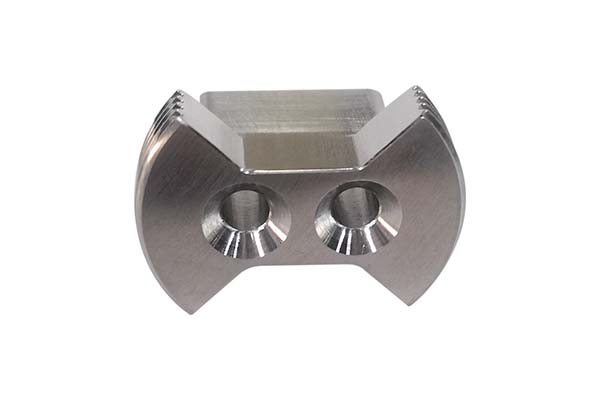
| Medical | Surgical instrument jaws | Multi-faceted shapes, serrated surfaces |
| Electronics | Heat sinks with fin structures | Maximized surface area for heat transfer |
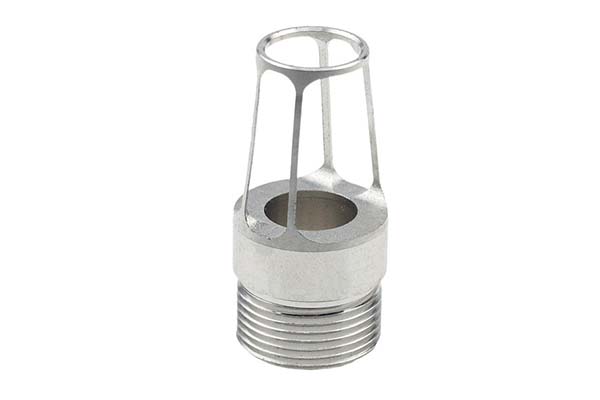
Example: In aircraft engines, fuel nozzles require internal channels with precise geometries to ensure proper fuel atomization. Brass can be machined to form these complex shapes with required smoothness and accuracy.
What Industries Rely on Brass Turning Components?
Brass turning components serve industries where precision, reliability, and performance are critical.
Aerospace Industry
Aerospace demands the highest levels of precision and reliability.
| Component | Application | Precision Requirement |
|---|---|---|
| Fuel nozzles | Engine fuel atomization | ±0.002 inches; complex internal channels |
| Bearing housings | Rotating assemblies | Tight tolerances, smooth surfaces |
| Valve seats | Fluid control systems | Wear resistance, sealing accuracy |
| Connectors | Avionics systems | Reliable electrical contact, mechanical stability |
Impact: Brass fuel nozzles improve engine performance by ensuring even fuel distribution, reducing consumption and emissions. In avionics, brass connectors provide reliable signal transmission with conductivity of 28–35% IACS.
Medical Field
Medical applications require biocompatibility, corrosion resistance, and high precision.
| Component | Application | Key Requirement |
|---|---|---|
| Forceps, clamps | Surgical instruments | Serrated jaws, precise grip |
| Sample holders | Blood analyzers | ±0.0005 inches tolerance |
| Fluid connectors | Diagnostic equipment | Corrosion resistance, leak-free seals |
| Micro-valves | Fluid control | Precision operation, biocompatibility |
Example: Surgical forceps made from brass maintain integrity after repeated autoclave cycles. Their corrosion resistance ensures sterility and functionality in critical procedures.
Electronics Industry
Electronics leverage brass’s conductivity and machinability.
| Component | Application | Performance |
|---|---|---|
| Connectors (USB, etc.) | Signal transmission | Thousands of mating cycles without degradation |
| Heat sinks | Thermal management | Thermal conductivity 110–130 W/(m·K); complex fin structures |
| Switch contacts | Electrical switching | Low resistance, mechanical durability |
Example: In a USB connector, brass contact pins provide efficient signal transfer with low resistance while maintaining shape integrity after repeated insertions. Brass heat sinks in graphics cards dissipate heat efficiently, improving component lifespan.
How Do You Ensure Quality in Brass Turning?
Quality issues in brass turning—such as surface roughness and dimensional deviation—can be addressed through proper process control.
Common Issues and Solutions
| Issue | Causes | Solutions |
|---|---|---|
| Surface roughness | Low cutting speed, dull tools, vibration | Optimize speed (200–300 m/min), replace tools, use vibration-damping fixtures |
| Dimensional deviation | Thermal expansion, incorrect tool setting, programming errors | Use coolant to control temperature, calibrate tools, verify CNC programs |
Thermal Expansion Management
Brass has a relatively high coefficient of thermal expansion. During machining, temperature rise can cause dimensional changes.
Solution: Use effective coolant to control workpiece temperature. Measure components after allowing stabilization.
Tool Setting and Programming
Best practices:
- Double-check and calibrate tool settings before production
- Use rigorous program verification and simulation
- Implement in-process measurement and timely adjustments
How Do You Choose the Right Brass Alloy?
Selecting the appropriate brass alloy depends on application requirements.
| Factor | Low Zinc (20–30%) | High Zinc (35–40%) |
|---|---|---|
| Strength | Moderate | Higher (tensile 400–500 MPa) |
| Corrosion resistance | Better | Moderate |
| Conductivity | Higher | Lower |
| Formability | Better | Moderate |
| Typical alloy | C26000 (cartridge brass) | C36000 (free-machining brass) |
| Best applications | Plumbing, decorative, corrosion-resistant parts | Gears, structural parts, high-strength components |
Alloy Selection Guide
- For high mechanical loads: Choose C36000 or similar high-zinc alloys (35–40% zinc). These offer tensile strength up to 500 MPa, suitable for gears and structural components.
- For corrosion resistance: Choose C26000 or similar low-zinc alloys (20–30% zinc). These provide better corrosion resistance for plumbing and marine applications.
- For electrical conductivity: Choose higher-copper alloys (C22000 commercial bronze) for applications requiring efficient signal transmission.
Conclusion
Brass turning components are essential to precision engineering across aerospace, medical, electronics, and industrial sectors. The material’s excellent machinability, corrosion resistance, electrical conductivity, and tunable mechanical properties make it ideal for high-precision applications.
Modern CNC turning achieves tolerances of ±0.0005 inches and surface finishes of Ra 0.8–1.6 µm—capabilities that enable complex geometries like fuel nozzle internal channels, surgical instrument jaws, and electronic heat sinks. By selecting the right alloy (high-zinc for strength, low-zinc for corrosion resistance) and controlling process parameters (cutting speed, coolant, tool condition), manufacturers produce components that perform reliably in the most demanding environments.
As precision engineering pushes toward tighter tolerances and more complex designs, brass turning components will continue to drive innovation—enabling more efficient engines, safer medical devices, and more reliable electronics.
FAQs
What are the common quality issues in brass turning production and how do you solve them?
Common issues include surface roughness (caused by low cutting speed, dull tools, or vibration) and dimensional deviation (caused by thermal expansion, incorrect tool setting, or programming errors). Solutions: optimize cutting speed (200–300 m/min), replace tools when worn, use vibration-damping fixtures, apply effective coolant to control temperature, calibrate tools, and verify CNC programs through simulation.
How do you choose the right brass alloy for different precision engineering applications?
Consider three factors: strength—choose high-zinc alloys (C36000, 35–40% zinc) for high mechanical loads; corrosion resistance—choose low-zinc alloys (C26000, 20–30% zinc) for moisture or chemical exposure; conductivity—choose higher-copper alloys (C22000) for electrical applications requiring efficient signal transmission.
What tolerances can CNC turning achieve with brass?
Standard CNC turning achieves ±0.001 inches (±0.0254 mm) for brass components. High-precision setups with rigid machines, sharp tools, and effective cooling achieve ±0.0005 inches (±0.0127 mm) —suitable for optical instruments, medical devices, and aerospace components.
Why is brass preferred over aluminum for some precision turning applications?
Brass offers more stable machining performance than aluminum. Aluminum’s higher thermal expansion coefficient (23.1 μm/m·K vs. 19.0 μm/m·K for brass) and softer nature can cause dimensional variations. Brass typically achieves tighter tolerances (±0.0005 inches vs. ±0.002–0.005 inches for aluminum) and better surface finishes in similar operations.
What surface finishes can be achieved with brass turning?
Without secondary operations, brass turning achieves Ra 0.8–1.6 μm surface finish. With optimized parameters (sharp tools, proper speeds, adequate cooling), finishes can be improved further. For critical applications, polishing or other finishing processes can achieve Ra values below 0.4 μm.
Contact Yigu Technology for Custom Manufacturing
At Yigu Technology, we specialize in precision brass turning components for aerospace, medical, electronics, and industrial applications. With 15 years of experience, advanced CNC turning capabilities, and ISO 9001 certification, we deliver components that meet the tightest tolerances.
Our team selects the right brass alloy for your application—high-zinc for strength, low-zinc for corrosion resistance, or specialty alloys for specific requirements. We optimize cutting parameters, tool selection, and cooling strategies to achieve the precision and surface finish your project demands. Contact us today to discuss your brass turning project.