Introduction
The automotive industry is one of the most demanding in manufacturing. A new vehicle model involves thousands of components, complex systems, and rigorous safety requirements. Getting it right requires more than good design—it requires thorough automotive prototype development. Prototypes allow engineers to test, validate, and refine every aspect of a vehicle before production. This guide covers the key components of automotive prototypes, the development process, and real-world examples of successful programs.
Why Are Automotive Prototypes Essential?
Automotive prototypes are physical embodiments of new vehicle concepts. They represent the transition from digital designs to tangible models that can be tested, evaluated, and refined.
Accelerating Development
In today’s competitive market, time-to-market is critical. Historically, developing a new vehicle could take 5 to 7 years. With effective prototyping, some manufacturers have reduced this timeline to 2 to 3 years. By building and testing prototypes early, engineers identify design flaws, performance issues, and manufacturing challenges sooner.
Validating Design Feasibility
Prototypes validate whether complex designs can be translated into functional, manufacturable vehicles. A prototype allows testing of aerodynamics in wind tunnels, measuring airflow, identifying high-drag areas, and making design modifications to improve fuel efficiency.
In electric vehicle development, prototypes have been instrumental in validating the integration of large battery packs, electric motors, and advanced charging systems—ensuring these new designs are technically feasible and safe.
What Are the Key Components of an Automotive Prototype?
A vehicle prototype is a complex assembly of interconnected systems. Each must be tested and validated.
Chassis
The chassis is the backbone that supports and connects all major components. It determines handling characteristics, stability, and safety.
| Chassis Type | Characteristics | Applications |
|---|---|---|
| Ladder Frame | Two parallel rails with cross-members; high strength, durable | Trucks, SUVs, heavy-duty vehicles |
| Unibody | Body and chassis integrated into single structure; lighter, more efficient | Most passenger cars |
A ladder frame chassis can weigh 30–40% more than a comparable unibody chassis in a mid-size vehicle.
The suspension system, integral to the chassis, impacts ride quality. Independent suspension (MacPherson strut, double-wishbone) allows each wheel to move independently, offering better handling. Non-independent suspension (beam axle) is simpler and more cost-effective.
Powertrain
The powertrain generates and transmits power to the wheels. It includes the engine, transmission, drive shafts, and differentials.
Engine types:
- Gasoline: High-revving, smooth operation
- Diesel: Better fuel efficiency, higher torque—popular for heavy-duty vehicles
- Hybrid: Combines internal combustion with electric motor
- Electric: Zero tailpipe emissions, instant torque, reduced maintenance
A medium-sized diesel truck can achieve 30–40% better fuel economy than a gasoline equivalent in long-haul operations.
Energy efficiency comparison:
- Electric motors convert over 90% of electrical energy into mechanical energy
- Best-performing gasoline engines achieve 30–40% efficiency
Transmission types:
- Manual: Engaging driving experience
- Automatic: Convenience, smoother operation
- CVT (Continuously Variable Transmission): Infinite gear ratios for fuel efficiency
- DCT (Dual-Clutch Transmission): Combines manual efficiency with automatic convenience
Body Structure
The body structure provides occupant protection, gives the vehicle its appearance, and affects interior space.
Crash protection: High-strength steel, aluminum, and advanced composites enhance crashworthiness while reducing weight. The body absorbs and dissipates energy during impact, minimizing forces transferred to passengers.
Aerodynamics: A sleek body reduces air resistance. A sports car may have a drag coefficient as low as 0.25. A boxy SUV may be closer to 0.40. A reduction of 0.05 in drag coefficient can improve fuel economy by 3–5% at highway speeds.
Interior functionality: Designers consider headroom, legroom, cargo space, and component integration (doors, windows, seats, dashboard).
Electrical and Electronic Systems
Modern vehicles have increasingly complex electrical and electronic systems.
Battery systems:
- Lead-acid: Traditional ICE vehicles
- Lithium-ion: EVs and hybrids—high energy density, long cycle life
- A typical mid-size EV may have a 60–80 kWh battery pack, providing 300–400 km range
Sensors: Speed sensors, oxygen sensors, proximity sensors for parking assist—providing real-time data to control units for optimizing performance, safety, and efficiency.
ADAS (Advanced Driver-Assistance Systems):
- Adaptive cruise control
- Lane-keeping assist
- Automatic emergency braking
- Blind-spot monitoring
According to the Insurance Institute for Highway Safety (IIHS), vehicles with automatic emergency braking reduce rear-end collisions by up to 50%.
Infotainment: Touch-screen displays, smartphone integration, navigation—serving as central control hubs for vehicle functions.
What Does the Prototype Development Process Look Like?
Automotive prototype development follows a structured path.
Concept Phase
Early prototypes validate basic concepts. These may be clay models for exterior styling or simple mock-ups for interior layout. Designers and engineers evaluate proportions, ergonomics, and initial feasibility.
Engineering Phase
Functional prototypes are built to test specific systems. Powertrain prototypes verify engine performance, cooling, and emissions. Chassis prototypes evaluate handling, ride quality, and durability.
Integration Phase
Working prototypes combine all systems into a complete vehicle. These are used for comprehensive testing—safety (crash tests), durability (road testing), and performance (acceleration, braking, handling).
Validation Phase
Pre-production prototypes are built using production-intent processes. They validate manufacturing feasibility and ensure that final quality standards can be met consistently.
What Are Real-World Success Stories?
Real examples show the power of automotive prototyping.
Tesla Model S
When Tesla developed the Model S, the electric vehicle market was in its infancy. Challenges included battery technology limitations and charging infrastructure.
Battery innovation: Engineers developed a high-energy-density battery pack using thousands of small lithium-ion cells. This design improved energy storage and thermal management. Initial prototypes achieved about 200 miles of range. Current versions exceed 400 miles.
Design: Sleek, aerodynamic body with low drag coefficient. Lightweight aluminum body structure improved energy efficiency. Minimalist interior with large central touch-screen set a new standard.
Impact: The Model S demonstrated that EVs could be high-performance, luxurious, and practical. Some versions accelerate from 0 to 60 mph in under 3 seconds. Since launch in 2012, Tesla has sold hundreds of thousands of Model S vehicles globally.
Toyota Prius
Toyota developed the Prius in the 1990s to significantly reduce fuel consumption and emissions.
Hybrid Synergy Drive (HSD): The prototype introduced a system combining a gasoline engine with an electric motor and power-split device. Engineers integrated these components for smooth operation and optimal efficiency.
In low-speed city driving, the Prius runs on electric power—zero tailpipe emissions. When more power is needed, the gasoline engine engages. The system switches automatically based on driving conditions.
Impact: The Prius became synonymous with hybrid technology and paved the way for widespread adoption of electrified vehicles.
What Challenges Must Be Addressed?
Automotive prototype development faces several hurdles.
Technological Challenges
- Battery technology: Pursuing higher energy density, faster charging, longer life
- ADAS sensors: Improving accuracy and reliability in all weather conditions
- New materials: Ensuring durability and repairability of advanced composites
Cost Challenges
Developing prototypes is expensive, especially with new technologies. Balancing innovation with cost-effectiveness is a constant struggle. A single prototype vehicle can cost $500,000 to $1,000,000 or more.
Regulatory Requirements
Safety, emissions, and environmental regulations are becoming increasingly stringent. Prototypes must demonstrate compliance before production can begin.
How Does Yigu Technology Support Automotive Prototyping?
At Yigu Technology, we support automotive clients with precision prototypes for all vehicle systems.
We Cover the Key Components
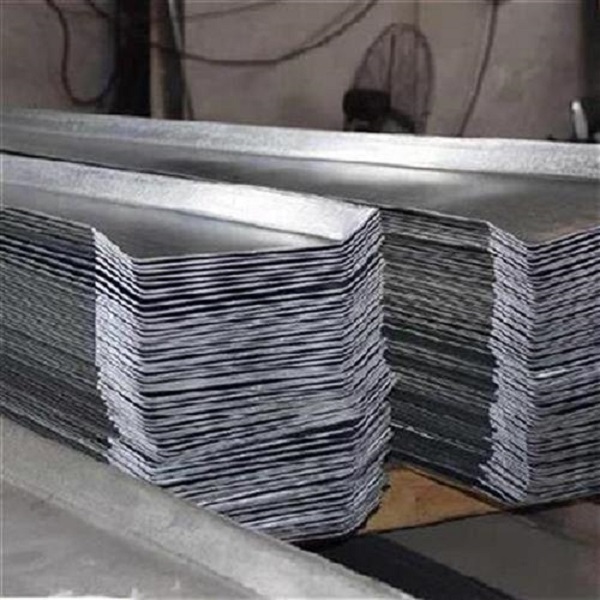
- Chassis components: CNC-machined brackets, suspension parts, structural elements
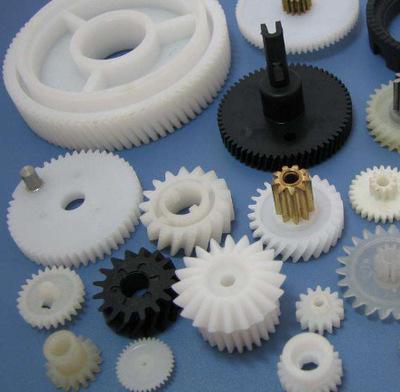
- Powertrain parts: Engine components, transmission housings, cooling system parts
- Body structures: Enclosures, brackets, interior trim components
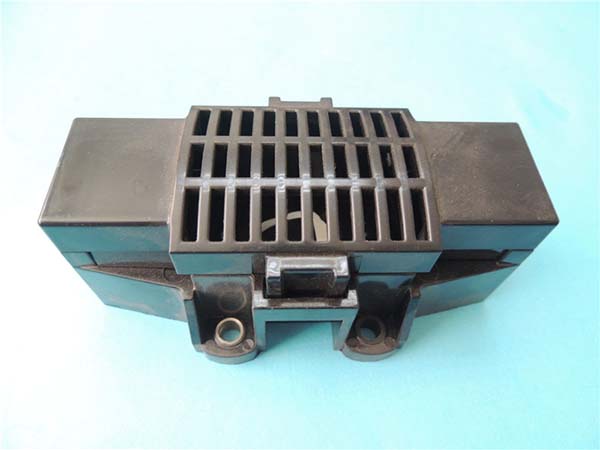
- Electrical systems: Housings for sensors, battery enclosures, electronic control unit cases
We Match Process to Purpose
- 3D printing: Rapid iteration for concept validation, complex geometries
- CNC machining: Precision metal and plastic parts for functional testing
- Rapid tooling: Small-batch injection-molded parts for pre-production validation
We Provide DFM Expertise
Our engineers review designs for manufacturability, identifying issues early. This upfront work saves time and cost as projects move toward production.
Conclusion
Automotive prototype development is a complex but essential process. It transforms concepts into testable vehicles, validating performance, safety, and manufacturability. Key components—chassis, powertrain, body structure, electrical systems—each require thorough testing. The development process moves from concept through engineering, integration, and validation phases.
Successful prototypes have driven industry transformations, from Tesla’s electric revolution to Toyota’s hybrid leadership. While challenges in technology, cost, and regulation remain, effective prototyping reduces risk and accelerates time to market.
Frequently Asked Questions
What is the difference between a concept prototype and a functional prototype?
A concept prototype validates basic design and appearance—often clay models or simple mock-ups. A functional prototype includes working systems—engine, transmission, suspension—for testing performance and durability.
How long does automotive prototype development typically take?
With effective prototyping, development can take 2 to 3 years. Without modern prototyping methods, development historically took 5 to 7 years. The timeline depends on vehicle complexity and new technology integration.
What materials are used in automotive prototypes?
Materials range from clay for styling models to aluminum, steel, composites, and plastics for functional prototypes. Production-intent prototypes use materials that match final production specifications.
How many prototypes are built for a new vehicle?
Hundreds to thousands. Early prototypes validate concepts. Later prototypes test specific systems. Pre-production prototypes validate manufacturing processes. Each serves a distinct purpose.
Why are prototypes critical for electric vehicle development?
EVs involve new technologies—battery packs, electric motors, thermal management systems—that require extensive testing. Prototypes validate integration, safety, range, and performance before production.
Contact Yigu Technology for Custom Manufacturing
Ready to bring your automotive prototype to life? Yigu Technology offers precision prototyping for chassis, powertrain, body, and electrical components. Our engineers help you select the right materials and processes for functional testing and validation. Contact us today to discuss your project.