Introduction
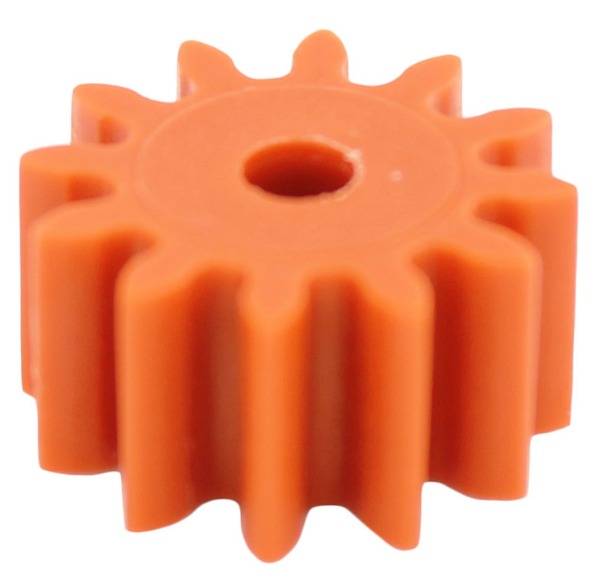
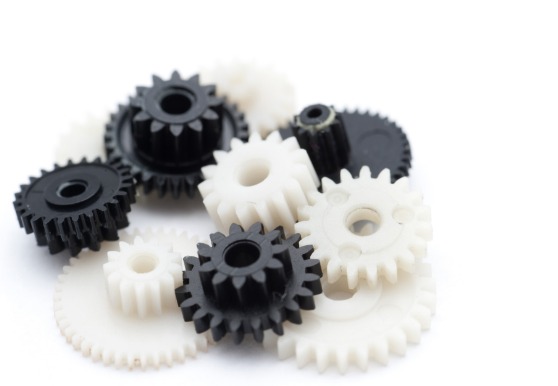
Custom plastic gears are everywhere—yet most people never see them. They quietly transfer motion in surgical robots, adjust camera lenses, lift car windows, and drive conveyor belts. Unlike off-the-shelf gears, custom plastic gears are designed for specific applications, optimized for performance, weight, noise, and cost. But how do you specify the right gear? This guide walks you through the three critical pillars of custom plastic gears: design, cost, and material considerations. By understanding these elements, you will make better decisions for your next project.
What Design Factors Matter Most?
Function and Application
The intended application drives all design decisions. Different industries impose different requirements.
| Industry | Application | Key Requirements |
|---|---|---|
| Medical | Surgical robots, drug-delivery pumps | Precision, biocompatibility, reliability |
| Automotive | Windshield wipers, power windows, seat adjusters | Durability, torque, weather resistance |
| Consumer Electronics | Cameras, printers, small motors | Lightweight, precise, quiet operation |
In a drug-delivery pump, the gear must deliver precise medication at a controlled rate—requiring high-precision gear design. In a windshield wiper system, the gear must withstand continuous back-and-forth motion and exposure to weather.
Load and Torque Requirements
Load is the force the gear bears. Torque is the rotational force it transmits. These determine fundamental gear parameters.
Modulus: A measure of tooth size. Higher loads require larger modulus gears.
- Heavy-duty conveyor: Modulus 5 or higher
- Small hobby robot: Modulus 1 or 2
Tooth Profile: The shape of gear teeth affects load capacity.
- Involute: Most common; good load distribution; easy to manufacture
- Cycloidal: Smoother operation; higher efficiency in high-torque applications
In an electric vehicle transmission, tooth profile choice significantly impacts performance.
Tolerance and Precision
Tolerance is the allowable deviation from ideal dimensions. Smaller tolerances mean higher precision—and higher cost.
| Precision Level | Tolerance Range | Applications | Manufacturing Difficulty |
|---|---|---|---|
| Low | ±0.2–0.5 mm | Simple toys, low-cost products | Easy |
| Medium | ±0.05–0.1 mm | Household appliances, washing machines | Moderate |
| High | ±0.001–0.01 mm | Aerospace, high-end medical equipment | Difficult, costly |
In a telescope focusing mechanism, even slight dimensional deviation causes misalignment and image distortion. In a washing machine, medium precision is sufficient.
What Material Considerations Are Critical?
Common Plastic Materials
| Material | Tensile Strength (MPa) | Wear Resistance | Dimensional Stability | Chemical Resistance |
|---|---|---|---|---|
| Nylon (PA) | 80–90 | High | Affected by moisture | Good (sensitive to strong acids/bases) |
| POM (Acetal) | 60–70 | High | Excellent | Good |
| Polycarbonate (PC) | 60–70 | Moderate | Good | Fair (affected by some solvents) |
Nylon (Polyamide, PA)
Nylon 6 and Nylon 66 are popular for their strength, toughness, and wear resistance. Tensile strength reaches 80–90 MPa.
Advantages:
- High strength handles heavy loads
- Good wear resistance extends life
- Relatively high melting point for moderate temperatures
Limitations:
- Hygroscopic: Absorbs moisture, causing dimensional changes
- In humid environments, gear dimensions may shift over time
POM (Acetal)
POM offers high rigidity, excellent fatigue resistance, and outstanding dimensional stability. Tensile strength is 60–70 MPa.
Advantages:
- Low coefficient of friction ensures smooth operation
- Excellent dimensional stability maintains precision
- Good chemical resistance to oils, solvents, common chemicals
Best for: Small motors, precision instruments, applications requiring quiet, efficient operation.
Polycarbonate (PC)
PC is valued for high impact resistance and transparency. Tensile strength is 60–70 MPa.
Advantages:
- High impact resistance handles shocks
- Transparency allows visual inspection
- Maintains properties at elevated temperatures
Limitations:
- Lower surface hardness than nylon or POM
- May wear faster in high-friction applications without surface treatment
How Material Properties Impact Performance
Strength: Determines ability to withstand applied forces. High-strength materials (nylon) handle higher loads without tooth breakage or deformation.
Wear Resistance: Affects gear lifespan. In continuously operating conveyor systems, highly wear-resistant materials (POM) reduce replacement frequency and maintenance costs.
Corrosion Resistance: Critical in chemical plants or outdoor equipment. POM withstands harsh conditions where other materials would degrade.
How Do You Choose the Right Material?
Consider the Application Environment
| Environment | Recommended Materials |
|---|---|
| High temperature | Heat-resistant nylon grades, PEEK |
| Moisture/humidity | POM (nylon may swell) |
| Chemicals | POM, PEEK |
| Outdoor/UV exposure | UV-stabilized grades |
Consider Load and Torque
| Requirement | Recommended Materials |
|---|---|
| High load, high torque | Nylon (high strength) |
| Moderate load | POM or nylon |
| Low load | POM (cost-effective) |
Conduct Cost-Benefit Analysis
High-performance materials offer superior properties but come at higher cost. For simple consumer products, lower-cost materials may be entirely adequate. Balance:
- Performance requirements
- Expected lifespan
- Production volume
- Budget constraints
How Do You Optimize Cost?
Design Optimization
Simplify gear structure without compromising function:
- Remove unnecessary features
- Use standard tooth profiles where possible
- Optimize for injection molding (uniform wall thickness, draft angles)
Material Selection
Choose materials that meet requirements without over-specifying:
- If extreme strength isn't needed, standard nylon may suffice over reinforced grades
- If chemical resistance isn't required, less expensive options may work
Manufacturing Efficiency
Work with suppliers who:
- Have efficient production processes
- Offer economies of scale
- Minimize material waste
- Provide design feedback for manufacturability
Volume Considerations
| Volume | Manufacturing Approach | Cost Impact |
|---|---|---|
| Prototype/low volume | 3D printing, machining | Higher per-unit cost |
| Medium volume | Soft tooling, injection molding | Moderate per-unit cost |
| High volume | Hard tooling, injection molding | Lowest per-unit cost |
Tooling costs are amortized over production volume. High-volume orders significantly reduce per-unit cost.
What Does the Custom Gear Design Process Look Like?
Step 1: Define Requirements
Document:
- Load and torque specifications
- Operating environment (temperature, moisture, chemicals)
- Speed and precision requirements
- Expected lifespan
- Production volume
Step 2: Material Selection
Match material properties to requirements:
- Strength for load capacity
- Wear resistance for lifespan
- Chemical resistance for environment
- Dimensional stability for precision
Step 3: Design and Simulation
Use CAD/CAM software to:
- Create 3D models
- Perform stress analysis
- Optimize tooth profile
- Simulate operation under load
Step 4: Prototyping
Produce prototypes to validate:
- Form, fit, and function
- Assembly compatibility
- Performance under actual operating conditions
Step 5: Production and Quality Control
Implement:
- Precise injection molding parameters
- In-process inspections
- Final dimensional verification (CMM, optical inspection)
Real-World Example: Custom Gear Selection
A medical device company needed a gear for a portable surgical tool. Requirements:
- High precision: ±0.02 mm tolerance
- Corrosion resistance: For sterilization
- Lightweight: For handheld use
- Moderate load: 20 Nm torque
Material decision: POM (acetal)—excellent dimensional stability, good chemical resistance, lightweight.
Design optimization: Simplified tooth profile reduced manufacturing complexity.
Result: Custom gear met all specifications at 35% lower cost than the initial metal alternative.
Yigu Technology's Perspective
At Yigu Technology, we see custom plastic gears as solutions to specific engineering challenges—not commodities. Our approach combines design expertise, material knowledge, and manufacturing efficiency.
We recently worked with an automotive supplier developing a new power window mechanism. The client needed:
- 30% weight reduction compared to metal
- 10,000-cycle durability without failure
- Quiet operation for premium vehicle interiors
Our solution: Glass-filled nylon gears with optimized tooth profiles. We achieved:
- 40% weight reduction
- 15,000-cycle durability (exceeding requirements)
- Noise reduction of 8 decibels
Our process includes:
- Design collaboration: Engineers work with clients from concept to production
- Material expertise: Wide range of plastics matched to applications
- Cost optimization: Lean manufacturing and efficient tooling
- Quality assurance: Rigorous inspection at every stage
We are committed to delivering custom plastic gears that perform reliably, fit precisely, and provide value over their service life.
Conclusion
Custom plastic gears offer advantages that metal cannot match: lightweight construction, quiet operation, corrosion resistance, and design flexibility. But realizing these benefits requires careful attention to three interconnected factors:
Design: Function, load, torque, and precision requirements determine gear geometry, tooth profile, and tolerances.
Material: Nylon offers strength; POM provides dimensional stability and wear resistance; polycarbonate delivers impact resistance. Match material properties to application demands.
Cost: Optimize through design simplification, appropriate material selection, and efficient manufacturing processes.
When these elements align, custom plastic gears deliver reliable, cost-effective performance across automotive, medical, consumer electronics, and industrial applications.
FAQ About Custom Plastic Gears
What are the most common applications of custom plastic gears?
Custom plastic gears are used in automotive (windshield wipers, power windows, seat adjusters), medical (surgical robots, drug-delivery pumps, diagnostic equipment), consumer electronics (cameras, printers, small motors), and industrial machinery (conveyors, packaging equipment).
How can I reduce the cost of custom plastic gears without sacrificing quality?
Optimize design—simplify structure without compromising function. Choose cost-effective materials that meet performance requirements (not over-specifying). Work with suppliers who have efficient production processes and economies of scale. Higher volumes reduce per-unit costs through amortized tooling.
How do I choose the right plastic material for my custom gears?
Consider application environment first: high temperature (heat-resistant nylon, PEEK), moisture (POM), chemicals (POM, PEEK). Then consider load and torque: high loads require high-strength materials (nylon). Finally, conduct cost-benefit analysis—balance performance needs with budget.
What precision levels are achievable with custom plastic gears?
High-precision gears achieve tolerances of ±0.001–0.01 mm for aerospace and high-end medical applications. Medium-precision gears (±0.05–0.1 mm) suit household appliances. Low-precision gears (±0.2–0.5 mm) are adequate for simple toys and cost-sensitive applications.
Contact Yigu Technology for Custom Manufacturing
Need custom plastic gears for your application? Yigu Technology provides end-to-end gear solutions—from design and material selection to precision manufacturing. We serve automotive, medical, electronics, and industrial clients. Contact us today to discuss your project.