Introduction
You have heard about AM50A magnesium alloy. It promises a balanced mix of strength, ductility, and corrosion resistance. Automotive engineers use it for seat frames. Product designers choose it for power tool housings. The appeal is clear: one material that handles moderate loads while staying lightweight.
But the reality can be frustrating. Maybe your thin-walled parts are not filling completely. Perhaps some castings crack during assembly. Or corrosion appears sooner than expected.
These challenges are fixable. AM50A remains a popular choice for good reason. This guide explains its properties, the process controls that matter, and how to get consistent results across diverse applications.
What Makes AM50A Unique Among Magnesium Alloys?
A Balanced Formula for Versatility
AM50A gets its name from its composition. It contains 5% aluminum and 0.3% manganese. The balance is magnesium.
The aluminum provides moderate strength. The manganese does something more important: it traps harmful impurities like iron. This prevents galvanic corrosion, giving AM50A better humidity resistance than many other magnesium alloys.
| Property | Typical Value | Why It Matters |
|---|---|---|
| Tensile strength | 200–230 MPa | Handles moderate structural loads |
| Yield strength | 120–140 MPa | Resists permanent deformation |
| Elongation | 8–10% | Absorbs impacts without cracking |
| Hardness | 55–65 HB | Adequate for non-wear parts |
| Density | 1.78 g/cm³ | 30% lighter than aluminum |
Corrosion Resistance That Stands Out
AM50A's manganese content is its secret weapon. When manganese combines with iron impurities, it forms harmless particles instead of allowing iron to create corrosion cells.
The result? Uncoated AM50A withstands 40–60 hours in salt spray tests. That is better than AZ91D in humid environments. For indoor or protected outdoor applications, this level of protection often eliminates the need for coatings.
A client manufacturing outdoor lighting fixtures switched from AZ91D to AM50A. Their warranty claims for corrosion dropped by over 60% . The parts now survive humidity exposure without additional coating costs.
Casting Fluidity and Structure
AM50A flows well, though not as easily as AZ91D. Minimum wall thickness typically runs around 1.0 mm. Complex geometries fill reliably when the die design accounts for this.
The uniform grain structure forms through controlled cooling. Proper cooling minimizes porosity and ensures consistent mechanical properties across the part.
Thermal conductivity of 70–75 W/m·K works well for heat-dissipating applications like electrical housings. Electrical conductivity at 21% IACS suits low-current connectors.
How Should You Optimize the Die Casting Process?
Protection and Process Parameters
Magnesium reacts with oxygen. AM50A needs inert gas shielding just like other magnesium alloys.
The standard mixture: argon with 0.2% sulfur hexafluoride (SF₆) . The argon pushes oxygen away. The SF₆ creates a protective film on the molten metal.
Hot-chamber die casting is the preferred method. Key parameters differ from AZ91D:
| Parameter | AM50A Range | Why |
|---|---|---|
| Injection speed | 2–3 m/s | Slower to avoid internal stress |
| Injection pressure | 20–45 MPa | Lower preserves ductility |
| Die temperature | 170–210°C | Warmer improves flow |
| Die material | H13 steel with nitride coating | Standard for magnesium |
Lubrication requires care. Water-based lubricants with boron nitride work well. Too much lubricant contaminates the melt and weakens the part. Too little causes sticking.
Die Design That Preserves Ductility
AM50A's moderate fluidity means die design decisions matter more than with more fluid alloys.
Draft angles should be 1 to 1.5 degrees. This eases ejection and reduces stress that could cause cracking. Preserving ductility means avoiding any unnecessary stress during demolding.
Venting needs 0.15 to 0.2 mm gaps in deep cavities. Trapped air creates porosity. Porosity reduces tensile strength and creates weak points where cracks can start.
Gating systems should use smooth runners. Turbulence introduces air and creates internal stress. Fill time targets 0.6 to 0.9 seconds—slower than AM60B to avoid stress, faster than needed for some other alloys.
Cooling Rate Control
Cooling rates affect the final grain structure. For AM50A, the target is 25 to 40°C per second.
Faster cooling improves strength. Slower cooling preserves ductility. The balanced target produces a grain structure that delivers both.
A transmission housing manufacturer I worked with had consistent cracking issues. Their cooling rate was too fast at 50°C/s . The parts were strong but brittle. Slowing to 30°C/s eliminated cracking while maintaining adequate strength.
What Post-Casting Steps Does AM50A Need?
Minimal Processing to Preserve Properties
AM50A requires less post-processing than many alloys. Over-processing can actually harm its properties.
Shot blasting with 100 to 120 grit media removes surface oxides. Use lower pressure than with harder alloys. Aggressive blasting can work-harden the surface, reducing elongation. A client making power tool housings learned this the hard way. Their parts showed elongation below 6% after aggressive blasting. Switching to finer media and lower pressure restored the full 8–10% range.
Chromate conversion coating at 0.5 to 1 μm thickness adds corrosion protection. This extends salt spray resistance to 100–150 hours. The coating does not affect mechanical properties when applied correctly.
Quality Control That Matters
AM50A's balanced properties require specific verification steps.
- Tensile testing confirms both strength and elongation
- Visual inspection catches surface porosity
- Ultrasonic testing for safety-related parts detects internal defects
For automotive components like seat frames, ultrasonic testing is non-negotiable. Internal voids that would not affect a housing could cause failure under crash loads.
Where Does AM50A Perform Best?
Automotive Components
AM50A shines in automotive applications where both strength and impact absorption matter.
Seat frames benefit from the 8–10% elongation. In a crash, the frame bends rather than cracks, absorbing energy. Instrument panel supports and door modules use similar properties.
Weight savings are dramatic. Replacing steel with AM50A reduces part weight by 60–70% . For a seat frame, that can mean several kilograms per vehicle. Across a production run of 100,000 vehicles , the total weight reduction adds up significantly.
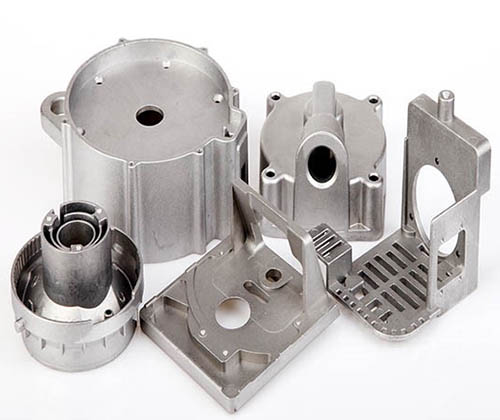
Transmission housings with moderate wall thickness also work well. The combination of strength and castability handles the loads while keeping weight low.
Consumer Products
Portable devices need lightweight construction that survives everyday use.
Power tool housings made from AM50A reduce user fatigue. The material absorbs vibration and withstands drops better than some alternatives. Camera bodies leverage the smooth surface finish and corrosion resistance.
Electrical housings for routers and battery packs use AM50A's EMI shielding properties. The metal blocks electromagnetic interference that could affect sensitive electronics.
Outdoor lighting fixtures and garden tools benefit from the corrosion resistance. One client's garden shear housings previously showed rust after one season. AM50A parts lasted three seasons without visible corrosion.
Industrial and Medical Applications
Small pump housings and conveyor components use AM50A for its balance of strength and formability. The alloy reduces assembly complexity compared to multi-piece fabrications.
Medical devices like wheelchair components and portable oxygen tank frames benefit from the light weight . Patients and caregivers handle these items daily. Every gram saved improves usability.
Prototyping with AM50A is common. Its properties scale predictably to mass production. A medical device maker tested their new design with AM50A prototypes. The performance matched production parts, allowing them to validate designs without waiting for final tooling.
Why Choose AM50A Over Other Magnesium Alloys?
Balanced Performance Across Properties
AM50A sits between AZ91D and AM60B in the magnesium alloy family.
| Alloy | Strength | Ductility | Corrosion Resistance | Best Use |
|---|---|---|---|---|
| AZ91D | Highest | Lowest | Moderate | Structural housings, high strength needs |
| AM50A | Moderate | High | Good | General-purpose, balanced requirements |
| AM60B | Higher than AM50A | Highest | Better | Impact-absorbing parts, high ductility needs |
For applications where no single property dominates, AM50A often delivers the best cost-performance balance.
Cost Efficiency in Production
AM50A's raw material cost sits between AZ91D (lower) and AM60B (higher). The real savings come from production efficiency.
Cycle times of 30 to 50 seconds per part keep output high. Die life often exceeds 400,000 cycles with proper maintenance.
Scrap rates with good process control run 5–7% . That is comparable to other magnesium alloys and significantly better than many aluminum casting processes.
Design Flexibility
AM50A handles complex geometries reliably. Thin walls, internal features, and fine details are all achievable.
The ability to use one alloy for multiple part types simplifies supply chains. An automotive supplier I worked with consolidated three different alloys into AM50A for their interior components. Inventory complexity dropped. Quality consistency improved.
Surface finishing options are flexible. AM50A accepts paint, powder coating, and plating well. A consumer electronics client used powder-coated AM50A for their premium product line. The finish quality matched aluminum at lower weight.
Yigu Technology’s Perspective
At Yigu Technology , we work with AM50A regularly. Our clients come from automotive, consumer products, and medical equipment sectors. We have learned what works and what does not.
Our standard approach includes:
- Injection speed optimized at 2.5–3 m/s to balance fill and stress
- Cooling rates at 30–35°C/s to preserve ductility
- Draft angles at 1.2 degrees to ease ejection without over-processing
- Precision venting and gating tailored to each part geometry
- Chromate coating for corrosion protection when needed
We recently helped a power tool manufacturer convert from AZ91D to AM50A for their drill housings. The AZ91D parts had occasional cracking during drop tests. The AM50A parts passed the same tests consistently. The client reduced warranty claims and simplified their material inventory.
Conclusion
AM50A magnesium alloy delivers a balanced set of properties that suit a wide range of applications. Its strength handles moderate loads. Its ductility absorbs impacts without cracking. Its corrosion resistance performs well in humid environments.
Success depends on proper process control. Inert gas protection prevents oxidation. Moderate injection speeds preserve ductility. Controlled cooling rates create the right grain structure. Minimal post-processing maintains the material's inherent properties.
For applications where no single property dominates—seat frames, power tool housings, medical devices—AM50A often offers the best combination of performance, cost, and versatility.
FAQ
Why is my AM50A showing lower elongation than expected?
Low elongation usually comes from rapid cooling or contamination. Slow the cooling rate to 25–30°C/s to allow larger, more ductile grains to form. Check material purity—iron content above 0.005% creates brittle intermetallic compounds. Verify injection pressure stays below 45 MPa ; excess pressure introduces internal stress. Finally, review shot blasting parameters. Aggressive blasting work-hardens the surface. Use 120-grit media with lower pressure.
How does AM50A compare to AM60B and AZ91D?
AM50A balances the properties of both. It has higher ductility than AZ91D (8–10% vs. 3–5% elongation ) but lower strength. It has slightly lower strength than AM60B (200–230 MPa vs. 220–250 MPa tensile ) but better corrosion resistance. Choose AM50A for general-purpose parts where neither maximum strength nor extreme ductility is required. It offers the best cost-performance balance for most applications.
Can AM50A handle high-temperature applications?
AM50A performs well up to about 100°C . Above 130°C , strength drops by 20–25% . For parts near engines or exhaust systems, consider hybrid designs. Use AM50A for cooler sections and heat-resistant aluminum like A380 for high-heat areas. For continuous exposure above 150°C , AM50A is not suitable. The strength loss under load creates safety risks.
What causes porosity in AM50A castings?
Porosity typically comes from gas entrapment or inadequate venting. Verify vent gaps in deep cavities measure 0.15–0.2 mm . Check that injection parameters are not too fast; excessive speed traps air. Ensure inert gas shielding is working properly. Oxidation during filling creates gas that becomes porosity. Also check for over-lubrication, which can vaporize and create gas pockets.
Is AM50A suitable for outdoor applications?
Yes, with proper protection. Uncoated AM50A withstands 40–60 hours in salt spray tests . This works for outdoor applications with occasional moisture exposure. For continuous outdoor exposure or marine environments, add chromate conversion coating (0.5–1 μm ) or powder coating. Coated AM50A lasts 3–5 years in most outdoor applications.
Contact Yigu Technology for Custom Manufacturing
Looking for a manufacturing partner experienced with AM50A and other magnesium alloys? Yigu Technology specializes in custom die casting for automotive, consumer, and industrial applications. Our team understands how to optimize the process for balanced properties—strength, ductility, and corrosion resistance. Contact us to discuss your project requirements. We will help you select the right alloy and process to achieve consistent, reliable results.