Introduction
Walk through any factory floor or look inside the products around you. You will find die casting parts everywhere. Engine components in cars. Casings for smartphones. Housings for power tools. The reason is simple: die casting delivers results that other manufacturing methods struggle to match.
This guide walks you through the key advantages of die casting parts. You will learn why this process dominates high-volume manufacturing. You will see how it saves money over time. And you will understand why industries from automotive to aerospace rely on it for critical components.
How Does Die Casting Achieve High Precision?
Intricate Designs Made Possible
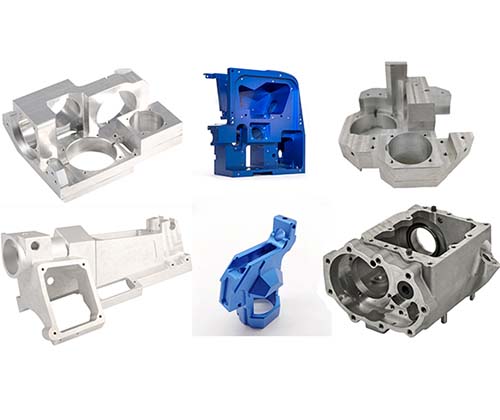
Die casting forces molten metal into a mold cavity under high pressure. This pressure pushes the metal into every small feature of the mold. The result? Parts that capture even the most complex shapes accurately.
Think about an automotive cylinder head. It contains multiple chambers, coolant passages, oil channels, and intake and exhaust ports. All these features must work together for proper engine performance. Die casting produces these complex geometries in a single operation.
Aerospace components take this further. Engineers design parts with internal lattice structures or honeycomb patterns. These features reduce weight while maintaining strength. Machining such internal structures would be extremely difficult. Die casting makes them routine.
Tight Tolerances You Can Rely On
Precision matters. Die casting delivers tolerances that other casting methods cannot match.
| Alloy Type | Typical Tolerance Range |
|---|---|
| Aluminum alloys | ±0.05 – ±0.15 mm |
| Zinc alloys | ±0.03 – ±0.10 mm |
| Sand casting (for comparison) | ±0.5 – ±1.0 mm |
These tight tolerances mean parts fit together correctly the first time. Electronic connectors and housings often require no additional machining after casting. They come out of the mold ready for assembly.
A medical device manufacturer I worked with switched from machined components to die cast parts. The original parts required three separate machining operations after rough casting. The die cast versions came out at final dimensions. Assembly time dropped by 40% .
Why Is Die Casting So Efficient for High Volumes?
Cycle Times That Keep Production Moving
Cycle time is the time from one shot to the next. Die casting machines work fast. Very fast.
Modern high-speed machines achieve cycle times of 5 to 15 seconds for small to medium parts. A small zinc alloy housing for electronics can complete a full cycle in just 5 seconds.
Compare this to investment casting. That process requires creating a wax pattern, building a ceramic shell, melting out the wax, and pouring metal. Cycle times run from several minutes to hours.
The speed comes from two factors:
- High-pressure injection fills the mold quickly
- Integrated cooling channels remove heat rapidly
A consumer electronics client needed 2 million parts per year. With a 10-second cycle time, one machine running two shifts produced their entire volume. Switching to a slower process would have required multiple machines and higher labor costs.
Mass Production Feasibility
Die casting molds are built for endurance. They are made from high-strength steel alloys designed to withstand repeated high-pressure injections.
A well-maintained die can produce hundreds of thousands of parts. Many exceed one million shots before needing major refurbishment.
The automotive industry demonstrates this scale. A major car manufacturer producing 500,000 vehicles per year might use dozens of die cast parts per vehicle. That is millions of components annually. Die casting handles this volume consistently.
The economics improve with volume. Fixed costs like mold making and setup spread across more units. Per-part costs drop significantly as quantities rise.
What Material Options Does Die Casting Offer?
Aluminum Alloys: Lightweight and Corrosion-Resistant
Aluminum alloys are the most common choice for die casting. They offer a compelling combination of properties.
Density is about one-third that of steel. This weight advantage matters in automotive and aerospace applications. An aluminum engine block can reduce overall vehicle weight significantly, improving fuel efficiency.
Corrosion resistance comes from a natural oxide layer. The metal forms this protective film when exposed to air. This makes aluminum suitable for outdoor applications and environments with moisture exposure.
Thermal conductivity is excellent. Aluminum dissipates heat effectively. This makes it ideal for heat sinks in electronics and LED lighting.
Typical tensile strength for A380 aluminum alloy ranges from 300 to 330 MPa . That is strong enough for structural automotive components.
Zinc Alloys: Precision and Stability
Zinc alloys excel where dimensional stability matters. Parts maintain their shape and size accurately over time.
High dimensional stability makes zinc ideal for precision components. Watch parts, electronic connectors, and small mechanical assemblies benefit from this property.
Mechanical properties are strong. ZA-8 zinc alloy offers tensile strength of 275 to 325 MPa .
Surface finish is naturally smooth. Many zinc die cast parts require no additional finishing before use. This saves time and money.
Melting point is lower than aluminum. This reduces energy consumption during the casting process.
Magnesium Alloys: The Lightest Structural Metal
Magnesium alloys are the lightest structural metals available. Density is about 1.74 g/cm³ —even lower than aluminum.
Strength-to-weight ratio is exceptional. This makes magnesium valuable in aerospace and automotive applications where every gram counts. Aircraft interiors and structural components use magnesium to save weight while maintaining strength.
Damping properties absorb vibrations effectively. High-end electronic devices and automotive components use magnesium to reduce noise and vibration.
AZ91D, the most common magnesium die casting alloy, offers tensile strength of 230 to 260 MPa with 3–5% elongation .
Does Die Casting Save Money Over Time?
Initial Tooling Costs vs. Long-Term Value
Yes, die casting molds cost more upfront. A medium-sized aluminum mold for an automotive component might cost $50,000 to $100,000 . Complex molds can exceed that range.
But here is where the math changes.
| Production Volume | Tooling Cost Per Part ($100,000 Mold) |
|---|---|
| 10,000 parts | $10.00 |
| 100,000 parts | $1.00 |
| 500,000 parts | $0.20 |
| 1,000,000 parts | $0.10 |
For high-volume production, the per-part tooling cost becomes negligible. The real savings come from reduced processing and faster cycle times.
Reduced Secondary Processing
Die cast parts often come out of the mold nearly finished.
Surface finish on aluminum die cast parts can reach Ra 0.8–3.2 μm . Many consumer electronics casings require no additional polishing. They go directly from the casting machine to assembly.
Machining requirements are minimal. Tight tolerances mean critical dimensions are already correct. What machining remains is usually light and fast.
Secondary processing costs drop by 30–50% compared to sand casting or other methods. Each eliminated step saves labor, energy, and time.
A power tool manufacturer I worked with produced a motor housing. Their previous sand cast version required four secondary operations : machining mounting surfaces, drilling holes, polishing visible areas, and applying a protective coating. The die cast version required one operation : drilling two holes that could not be cast in place. Cost per part dropped by 35% .
What About Surface Finish and Quality?
Smooth Surfaces Straight from the Mold
Die cast parts arrive with good surface quality. No additional finishing is needed for many applications.
Surface roughness on aluminum die cast parts typically falls between Ra 0.8 and 3.2 μm . Compare this to sand casting, where roughness often exceeds Ra 12.5 μm .
This matters for visible parts. Smartphone casings, laptop frames, and decorative trim all benefit from smooth as-cast surfaces. The parts look good without expensive polishing operations.
Surface quality also affects coating adhesion. Smooth surfaces accept paint, powder coating, and plating evenly. There are no rough spots that create thin coating areas or adhesion failures.
Consistent Quality Across Production Runs
Die casting produces consistent parts. Every shot repeats the same process. Every part matches the previous one.
Process control monitors injection speed, pressure, temperature, and cooling rates. Modern machines maintain these parameters within tight ranges.
Quality verification happens at multiple stages. In-process checks catch issues early. Final inspection confirms dimensions and surface quality.
A client producing automotive interior trim parts tracked their defect rate. Over 500,000 parts , the scrap rate stayed under 3% . Consistency at this level protects production schedules and reduces waste.
Yigu Technology’s Perspective
At Yigu Technology , we see die casting as a cornerstone of efficient manufacturing. The process combines precision, speed, and material versatility in ways few alternatives can match.
We work with clients across automotive, consumer electronics, and industrial equipment sectors. Each project starts with understanding the part’s requirements. Then we select the right alloy and design the tooling to maximize the advantages die casting offers.
For complex geometries, we leverage the process’s ability to capture fine details. For high volumes, we optimize cycle times and cooling to maximize output. For cost-sensitive projects, we balance tooling investment against long-term per-part savings.
Our in-house technical team supports clients from design through production. We help optimize part designs for manufacturability. We select the right alloys for each application. And we maintain rigorous quality controls to ensure consistent results.
Conclusion
Die casting parts offer clear advantages in modern manufacturing. High precision and complex geometries come standard. Cycle times measured in seconds enable high-volume production. A range of alloys—aluminum, zinc, magnesium—provides options for different applications. And despite higher initial tooling costs, the long-term economics favor die casting for production runs of any significant size.
The process delivers consistent quality with smooth surfaces straight from the mold. Secondary processing requirements are minimal. The result is a manufacturing method that balances performance, quality, and cost effectively.
FAQ
What materials are commonly used for die casting parts?
Aluminum alloys (like A380 and ADC12) are the most common due to their light weight and corrosion resistance. Zinc alloys offer excellent dimensional stability for precision parts. Magnesium alloys provide the lightest structural options with good strength-to-weight ratios. Each material family serves different application needs.
How accurate are die casting dimensions?
Aluminum die cast parts typically achieve tolerances of ±0.05 to ±0.15 mm for small to medium parts. Zinc alloys reach even tighter tolerances of ±0.03 to ±0.10 mm. This precision often eliminates the need for secondary machining operations.
Is die casting suitable for small batch production?
Die casting is generally not cost-effective for very small batches. The initial tooling investment spreads across the production volume. For runs under 5,000 to 10,000 parts , the per-part cost may be higher than alternative methods. However, for high-volume production, die casting delivers the lowest per-part cost among metal forming processes.
How long do die casting molds last?
Well-maintained molds typically last 500,000 to 1,000,000 shots. The exact life depends on the alloy being cast, the part geometry, and maintenance practices. Harder alloys like aluminum cause more wear than zinc. Proper cooling and lubrication extend mold life significantly.
What surface finish can I expect from die cast parts?
Surface roughness typically ranges from Ra 0.8 to 3.2 μm for aluminum die cast parts. This is smooth enough for many visible applications without additional finishing. When higher aesthetics are needed, the surface accepts painting, plating, and powder coating readily.
Contact Yigu Technology for Custom Manufacturing
Looking for a manufacturing partner who understands die casting inside and out? Yigu Technology specializes in custom die cast parts across aluminum, zinc, and magnesium alloys. Our team provides design support, process optimization, and quality control to ensure your parts meet specifications consistently. Contact us to discuss your project requirements and see how die casting can work for your application.