Introduction
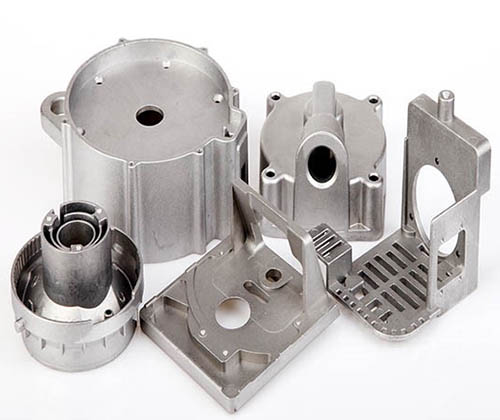
You have heard about AZ91D magnesium alloy. It is often called the workhorse of die casting. Manufacturers use it for everything from automotive parts to power tools. The promise is simple: lightweight parts, good strength, and cost-effective production.
But real-world results can fall short. Maybe your parts show porosity. Perhaps corrosion appears faster than expected. Or the fine details you need just do not fill properly.
The good news? These problems have solutions. AZ91D remains the most widely used magnesium die casting alloy for good reason. This guide explains its properties, the process controls that matter, and how to get consistent results for your high-volume applications.
What Makes AZ91D the Industry Standard?
A Balanced Formula for Performance
AZ91D gets its name from its composition. It contains 9% aluminum and 1% zinc, with magnesium making up the balance. These numbers matter.
The aluminum provides strength and improves casting fluidity. The zinc refines the grain structure and boosts corrosion resistance. Together, they create an alloy that flows well into molds while delivering reliable mechanical properties.
| Property | Typical Value | Why It Matters |
|---|---|---|
| Tensile strength | 230–260 MPa | Handles structural loads |
| Yield strength | 150–170 MPa | Resists permanent deformation |
| Elongation | 3–5% | Allows some flexibility before breaking |
| Hardness | 65–75 HB | Balances wear resistance with machinability |
| Density | 1.81 g/cm³ | 33% lighter than aluminum |
Exceptional Casting Fluidity
AZ91D flows into thin sections easily. Wall thicknesses down to 0.5 mm are possible. Complex shapes with fine details—like logos or small threaded features—fill completely when process conditions are right.
This fluidity comes from its eutectic composition. The aluminum and magnesium combination melts at a consistent temperature. The metal remains fluid long enough to fill every cavity before solidifying.
A consumer electronics client once struggled with another magnesium alloy. Their laptop frames showed incomplete fills at the thin edges. Switching to AZ91D solved the problem immediately. The parts came out fully formed with sharp details.
How Should You Optimize the Die Casting Process?
Protection Against Oxidation
Magnesium reacts with oxygen. When molten, it can ignite or form oxides that weaken the part. Inert gas shielding is non-negotiable.
The standard approach uses a mixture of argon and sulfur hexafluoride (SF₆) . The argon pushes oxygen away. The SF₆ creates a protective film on the molten metal surface. Without this protection, surface oxides form. Those oxides lead to porosity and poor surface finish.
Hot-chamber die casting works best for AZ91D. The machine holds the molten metal in a heated chamber. It injects directly into the die. Cycle times are faster than cold-chamber methods.
Key parameters to control:
- Injection speed: 3–5 meters per second
- Injection pressure: 30–60 MPa
- Die temperature: 160–200°C (preheated)
These settings are lower than those for aluminum. That matters because it extends die life. A well-maintained die can produce 500,000 or more shots before requiring significant refurbishment.
Die Design Details That Matter
AZ91D flows well, but good die design still makes the difference between success and scrap.
Draft angles can be smaller than for aluminum. 0.5 to 1 degree usually suffices. The metal does not stick to the die as readily as aluminum does. This allows more design flexibility.
Venting is critical. Deep cavities need vents with 0.1 to 0.15 mm gaps. These allow trapped air to escape before the metal solidifies. Poor venting creates gas porosity—tiny holes that weaken the part.
Gating systems should use wide runners. The goal is to minimize pressure drop. The die should fill in 0.3 to 0.6 seconds. Fast filling prevents premature solidification and ensures complete cavity fill.
Cooling Rate Control
Cooling speed affects final properties. Faster cooling produces a finer grain structure. That translates to higher strength.
For thick sections, slower cooling prevents internal stresses. Stresses can cause cracking after ejection. The ideal approach balances cooling rates across the part geometry.
A transmission housing manufacturer I worked with had consistent cracking issues. The problem traced to uneven cooling. Thick sections cooled slower than thin ones, creating internal stress. Redesigning cooling channels in the die solved the problem and dropped scrap rates from 12% to under 4%.
What Post-Casting Steps Does AZ91D Need?
Surface Protection Basics
AZ91D has better corrosion resistance than pure magnesium. But it still needs protection for most applications.
Chromate conversion coating is the standard first step. It creates a thin, protective layer. Salt spray resistance extends from 24–48 hours (uncoated) to 100–200 hours (coated) . This works for indoor applications or mild outdoor use.
For harsher environments, additional coatings matter:
| Environment | Recommended Protection |
|---|---|
| Indoor, dry | Chromate coating only |
| Indoor, humid | Chromate + powder coating |
| Outdoor, mild | Powder coating or e-coat |
| Outdoor, marine | Electroless nickel plating |
Surface Preparation Steps
Before coating, the surface needs proper preparation.
Shot blasting with 80–100 grit media removes surface oxides. It also creates a textured surface that coatings bond to better.
Vibratory finishing smooths rough areas. Surface finish can improve from Ra 3–5 μm to Ra 1–2 μm. This matters for visible parts like automotive interior trim or consumer electronics.
Quality Control Checks
Consistent quality requires verification at multiple stages.
- X-ray inspection reveals internal porosity
- Hardness testing confirms material properties
- Dimensional checks ensure part geometry
- Salt spray testing verifies coating effectiveness
One automotive supplier skipped X-ray inspection for cost reasons. Three months into production, field failures appeared. Porosity in high-stress areas caused cracks. The recall cost far more than the inspection program would have.
Where Does AZ91D Perform Best?
Automotive Applications
Weight reduction drives automotive adoption. Every kilogram saved improves fuel efficiency or EV range.
Engine components like valve covers and oil pans are common applications. Replacing an aluminum oil pan with AZ91D saves 1.5–2 kg per vehicle. Multiply that across thousands of vehicles, and the impact is significant.
Transmission housings benefit from AZ91D's strength and castability. The alloy handles moderate temperatures well—up to about 120°C. For hotter locations near exhaust components, other materials may be better.
Automotive interiors use AZ91D for dashboard frames, steering components, and door handles. The alloy captures fine details well. Surface finish often requires minimal post-processing.
Consumer Electronics
Portable devices demand lightweight construction. AZ91D reduces weight by 20–30% compared to aluminum while maintaining structural integrity.
Power tool housings benefit from both weight reduction and durability. Camera bodies leverage the alloy's ability to produce smooth, paintable surfaces. Laptop frames use AZ91D for its balance of strength and thin-wall capability.
EMI shielding is another advantage. AZ91D blocks electromagnetic interference effectively. This protects sensitive electronics inside routers, battery packs, and other devices.
Industrial and Hardware Applications
Portable industrial equipment uses AZ91D to reduce operator fatigue. Pump housings, gearbox covers, and tool bodies all benefit.
For high-volume hardware components, AZ91D offers cost-effectiveness. Fast cycle times and long die life keep per-part costs low. Prototyping with AZ91D also works well—its properties scale predictably to mass production.
What Performance Benefits Drive Its Popularity?
Cost Efficiency in High-Volume Runs
AZ91D's economics improve with volume.
Cycle times typically range from 20 to 40 seconds per part. Fast cycles mean more parts per hour. Die life often exceeds 500,000 cycles with proper maintenance.
Scrap rates average 5–8% with good process control. That compares favorably to 8–12% for some other magnesium alloys. Lower scrap means lower material cost per good part.
Raw material costs for magnesium are higher than for aluminum. But the weight savings often offset this difference. In electric vehicles, every kilogram of weight reduction increases range. That makes the higher material cost worthwhile.
Design Flexibility
Complex geometries become practical with AZ91D. Thin walls, internal channels, and fine details are all achievable.
This flexibility often reduces part counts. A component that previously required multiple pieces can become a single casting. Fewer parts mean less assembly labor and lower inventory costs.
Surface finish quality is good enough for many visible applications. When higher aesthetics are needed, the alloy accepts painting, plating, and powder coating well.
Sustainability Advantages
AZ91D is 100% recyclable. Reclaimed material retains about 95% of its original properties. This reduces both material costs and environmental impact.
Energy requirements for magnesium production are about 40% lower than for aluminum. For manufacturers tracking carbon footprints, this difference matters.
Lightweight parts also reduce transportation emissions. When components travel from supplier to assembly plant to end customer, weight savings compound across the supply chain.
Yigu Technology’s Perspective
At Yigu Technology, we work with AZ91D regularly. Our clients come from automotive, consumer electronics, and industrial equipment sectors. We have learned what works and what does not.
Our standard approach includes:
- Injection speed optimized at 4–5 m/s for most applications
- Argon/SF₆ gas shielding to prevent oxidation
- Precision venting and gating designs tailored to each part
- Custom cooling strategies to refine grain structure
- Post-treatment options from chromate coating to powder coating
We recently helped an automotive client convert a steel bracket to AZ91D. The original steel part weighed 1.8 kg. Our AZ91D version weighed 0.6 kg. The client saved weight without sacrificing structural performance. And the die casting process delivered consistent quality across 50,000 units per month.
Conclusion
AZ91D magnesium alloy delivers on its promises when the process matches the material. Proper oxidation protection, thoughtful die design, controlled cooling, and appropriate post-treatment all matter. Get these right, and you get lightweight, strong parts with excellent detail at competitive costs for high-volume production.
The alloy is not right for every application. High-temperature environments above 150°C demand other materials. Extreme corrosion conditions require robust coatings. But for the vast middle ground of automotive, electronics, and industrial components, AZ91D remains the workhorse it is known to be.
FAQ
Why is my AZ91D corroding faster than expected?
Corrosion issues usually trace to inadequate post-treatment or contamination. Verify chromate coating thickness is 0.5–1 μm. Too thin leaves bare spots. Avoid direct contact with dissimilar metals like steel or copper without insulation. Galvanic reactions accelerate corrosion significantly. Also check material purity—iron content above 0.005% creates corrosion-causing impurities.
How does AZ91D compare to AM60B magnesium alloy?
AZ91D offers better casting fluidity and higher strength (230–260 MPa vs. 220–250 MPa). But it has lower ductility (3–5% elongation vs. 10–12% for AM60B). Use AM60B for impact-absorbing parts like door beams. Use AZ91D for structural parts like housings that need strength. AZ91D is also 10–15% less expensive, making it better for cost-sensitive, high-volume applications.
Can AZ91D handle high-temperature applications?
AZ91D performs well up to about 120°C. Above 150°C, strength drops significantly—by about 30% at 180°C. For parts near exhaust systems or other heat sources, consider hybrid designs. Use AZ91D for cooler sections and aluminum (like A380) for high-heat areas. For continuous high-temperature exposure, aluminum alloys are more suitable.
What causes porosity in AZ91D castings?
Porosity usually comes from gas entrapment or inadequate venting. Ensure vents in deep cavities are properly sized (0.1–0.15 mm gaps). Verify that injection parameters are correct—too fast or too slow can trap air. Also check that inert gas shielding is working properly. Oxidation during filling creates gas that becomes porosity.
How long do AZ91D dies typically last?
With proper maintenance, dies for AZ91D often exceed 500,000 shots. The alloy's lower injection pressures (compared to aluminum) reduce die wear. Using H13 tool steel with nitride coatings extends life further. Regular maintenance—cleaning, lubrication, and crack inspection—keeps dies producing quality parts longer.
Contact Yigu Technology for Custom Manufacturing
Looking for a manufacturing partner experienced with AZ91D and other magnesium alloys? Yigu Technology specializes in custom die casting for automotive, electronics, and industrial applications. Our team handles everything from design optimization to post-treatment. Contact us to discuss your project requirements and see how we can help you achieve consistent, cost-effective results.