Introduction
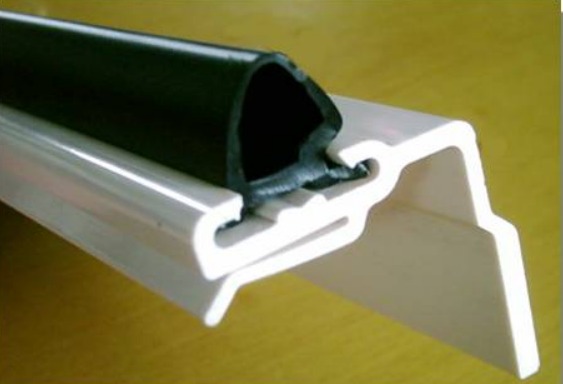
Dual injection molding—also known as two-shot or multi-shot injection molding—is an advanced manufacturing process that combines two different materials into a single, integrated product in one continuous cycle. Unlike traditional injection molding, which produces single-material parts, dual injection molding creates components with distinct properties in different areas: rigid structural sections alongside soft-touch surfaces, multiple colors, or integrated seals.
This technology has transformed product design across industries. From toothbrushes with comfortable grips to automotive steering wheels with soft-touch surfaces, dual injection molding eliminates assembly steps, creates permanent bonds between materials, and enables complex designs that would be impossible with single-shot molding.
This guide explains what dual injection molding is, how the process works step by step, its applications across industries, and key considerations for successful implementation. Whether you are a designer, engineer, or manufacturer, this comprehensive overview will help you understand the capabilities and benefits of this powerful manufacturing technique.
What Is Dual Injection Molding?
Dual injection molding is a manufacturing process that uses two injection units to inject two different materials into a single mold in sequence. The materials bond together during molding, creating a unified part with combined properties.
How It Differs from Traditional Injection Molding
| Aspect | Traditional Injection Molding | Dual Injection Molding |
|---|---|---|
| Materials | Single material | Two (or more) materials |
| Cycle | One injection | Two injections in one cycle |
| Assembly | Often requires post-molding assembly | No assembly; integrated part |
| Bond | N/A | Chemical or mechanical bond |
| Applications | Single-material parts | Multi-material; soft-touch; multi-color |
Common Examples
- Toothbrush – Hard plastic handle + soft TPE grip
- Steering wheel – Rigid core + soft-touch outer layer
- Smartphone case – Hard inner shell + soft outer grip
- Surgical instrument handle – Strong base + non-slip grip
- Power tool – Structural housing + vibration-damping grip
How Does the Dual Injection Molding Process Work?
The process consists of two main stages: first shot and second shot. Each requires precise control.
Step 1: Material Preparation
Two different plastic materials are selected based on the product’s requirements.
| Material Type | Purpose | Examples |
|---|---|---|
| First shot (structural) | Provides strength, rigidity, base form | ABS, PC, PP, nylon |
| Second shot (functional) | Adds grip, softness, color, sealing | TPE, silicone, colored materials |
Pre-treatment:
- Drying – Hygroscopic materials (nylon, ABS, PC) must be dried to prevent moisture-related defects
- Drying conditions: Nylon at 80–100°C for 4–6 hours; ABS at 80–90°C for 2–4 hours
- Pre-heating – May improve flow characteristics and reduce energy requirements
Step 2: Machine Setup
A dual injection molding machine has specialized features:
| Feature | Function |
|---|---|
| Two injection units | Each with its own hopper, screw, and barrel; handles different materials |
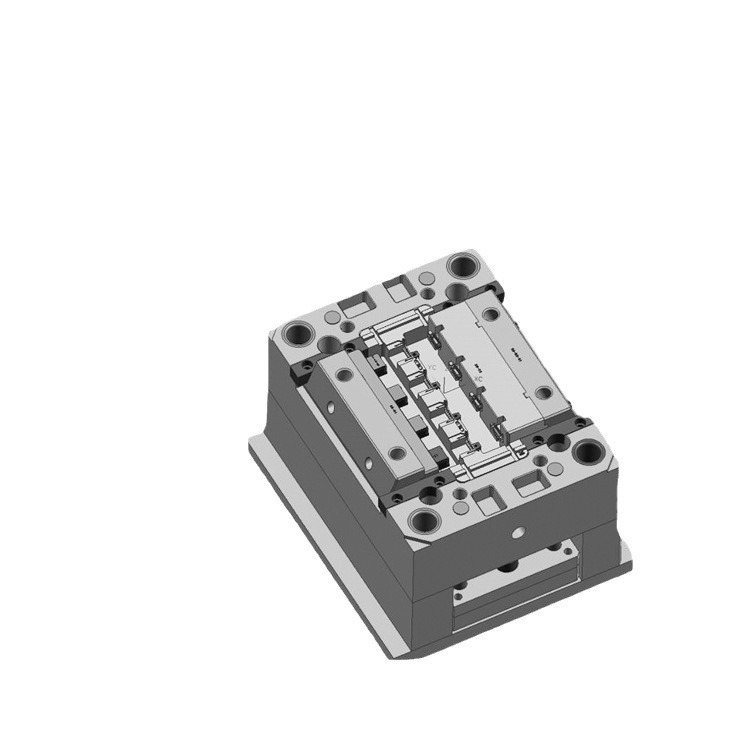
| Mold movement mechanism | Rotary or slide mold to reposition the first-shot part for second injection |
| Precise control system | Coordinates injection timing, pressure, temperature for both materials |
Common mold mechanisms:
- Rotary mold – Mounted on a turntable; rotates 180° between shots
- Slide-type mold – Mold halves slide horizontally or vertically to expose the part
Step 3: First Shot Injection
The first material is injected into the mold cavity under controlled conditions.
| Parameter | Typical Range | Effect |
|---|---|---|
| Injection pressure | 80–120 MPa | Ensures complete filling of first-shot cavity |
| Injection speed | Moderate | Fills without material degradation |
| Temperature | Material-dependent | Affects flow and bonding readiness |
Example: For an automotive interior component, a rigid ABS first shot may be injected at 80–120 MPa, forming the structural base.
Step 4: Cooling and Solidification (First Shot)
The first material cools and solidifies enough to maintain its shape but remains warm enough to bond with the second material.
Solidification time is critical:
- Too short → first shot may deform during second injection
- Too long → increases cycle time; may reduce bond strength
Step 5: Mold Movement
After the first shot has solidified sufficiently, the mold repositions:
- Rotary mold – Rotates 180° to present the first-shot part to the second injection unit
- Slide mold – Slides to expose the part for second injection
This movement occurs in seconds, typically 2–5 seconds.
Step 6: Second Shot Injection
The second material is injected onto or around the first-shot part.
| Parameter | Typical Range | Effect |
|---|---|---|
| Injection pressure | Lower than first shot (30–60 MPa) | Prevents displacing first-shot material |
| Injection temperature | Material-dependent | Hot enough to bond; not so hot as to distort first shot |
Bonding mechanism:
- Chemical bonding – Second material reacts with first; creates molecular bond
- Mechanical interlock – First shot has undercuts that second material flows into
Example: A soft TPE second shot is injected over the ABS handle, bonding to create a comfortable, non-slip grip.
Step 7: Cooling and Solidification (Second Shot)
The second material cools and solidifies, bonding permanently with the first shot. Cooling must be uniform to prevent stress and warpage.
Step 8: Ejection
The mold opens. Ejector pins push the finished dual-material part out. The part is now ready—no assembly required.
What Are the Key Design and Process Considerations?
Material Compatibility
Materials must bond effectively. Key factors:
| Factor | Consideration |
|---|---|
| Chemical compatibility | Some materials bond chemically; others require mechanical interlock |
| Melt temperature | Second material must be hot enough to bond but not distort first shot |
| Shrinkage rates | Mismatched shrinkage causes stress; delamination |
Common compatible pairs:
- ABS + TPE
- Polycarbonate + TPE
- Polypropylene + TPE
- Nylon + TPE (with surface treatment)
Mold Design
| Element | Importance |
|---|---|
| Mold movement mechanism | Rotary or slide must be precise; alignment critical |
| Cooling system | Balanced cooling for both materials; prevent warpage |
| Gate placement | First-shot gates; second-shot gates; avoid flow interference |
| Venting | Adequate venting for both injections; prevent air traps |
Process Parameters
| Parameter | First Shot | Second Shot |
|---|---|---|
| Injection pressure | 80–120 MPa | 30–60 MPa (lower) |
| Injection speed | Moderate | Controlled to avoid displacing first shot |
| Temperature | Material-specific | Hot enough for bonding |
| Cooling time | Sufficient for handling | Sufficient for complete solidification |
What Are the Advantages of Dual Injection Molding?
| Advantage | Explanation |
|---|---|
| No assembly | Finished part in one cycle; eliminates secondary operations |
| Permanent bond | Chemical or mechanical bond stronger than adhesives |
| Design freedom | Combine rigid and flexible; multiple colors; integrated seals |
| Improved ergonomics | Soft-touch grips on rigid structures |
| Enhanced aesthetics | Multi-color designs; seamless surfaces |
| Reduced labor | Automated process; minimal human intervention |
| Consistent quality | No assembly variation; repeatable process |
What Are the Challenges and How Do You Overcome Them?
| Challenge | Solution |
|---|---|
| Poor material bonding | Select compatible materials; optimize second-shot temperature; add mechanical interlocks |
| First-shot deformation | Ensure adequate cooling before second shot; reduce second-shot pressure |
| Flash between shots | Precise mold alignment; adequate clamping force |
| Warpage | Balanced cooling; uniform wall thickness |
| Complex mold design | Advanced CAD/CAM; mold flow analysis; experienced mold makers |
What Are the Applications Across Industries?
Automotive Industry
| Component | Materials | Benefits |
|---|---|---|
| Steering wheels | Rigid core + soft TPE | Comfortable grip; reduced fatigue |
| Dashboard panels | Hard ABS + soft-touch areas | Luxury feel; safety |
| Door handles | Structural plastic + soft outer | Better grip; scratch resistance |
| Interior trim | Multi-color; soft surfaces | Aesthetics; comfort |
Consumer Electronics
| Component | Materials | Benefits |
|---|---|---|
| Smartphone cases | Hard PC + soft TPE | Protection + grip |
| Headphones | Rigid structure + soft ear cushions | Comfort; noise isolation |
| Remote controls | Hard body + soft buttons | Ergonomics; tactile feedback |
| Power tools | Structural housing + vibration-damping grip | Comfort; control |
Medical Devices
| Component | Materials | Benefits |
|---|---|---|
| Surgical instrument handles | Strong base + non-slip TPE | Secure grip even when wet |
| Diagnostic equipment | Hard outer shell + biocompatible inner | Protection; hygiene |
| Drug delivery devices | Rigid body + soft seals | Functionality; patient comfort |
Consumer Goods
| Component | Materials | Benefits |
|---|---|---|
| Toothbrushes | Hard handle + soft grip | Comfort; control |
| Kitchen utensils | Rigid core + soft grip | Ergonomics; safety |
| Toys | Multi-color; soft features | Aesthetics; safety |
How Does Dual Injection Molding Compare to Overmolding?
| Aspect | Dual Injection Molding | Overmolding |
|---|---|---|
| Process | One machine; two injection units; one cycle | Two separate steps; may involve two machines |
| Automation | Fully automated | May require manual part transfer |
| Bond strength | Chemical or mechanical | Primarily mechanical |
| Tooling cost | Higher | Lower |
| Cycle time | Longer than single-shot | Two cycles; transfer time |
| Best for | High volume; permanent bond | Lower volume; prototypes; simple overmolding |
How Does Yigu Technology Approach Dual Injection Molding?
At Yigu Technology, we have extensive experience in dual injection molding for custom plastic and plastic-metal components. Our expertise ensures successful integration of multiple materials.
Our Approach
| Step | Method |
|---|---|
| Material selection | Carefully choose compatible materials based on product requirements |
| Mold design | Advanced CAD/CAM for complex molds; rotary and slide mechanisms |
| Process optimization | Fine-tune injection parameters for both shots; ensure strong bonding |
| Quality control | Inspect bond strength; dimensional accuracy; surface finish |
| Continuous improvement | Monitor production data; refine parameters |
Example: For a power tool handle, we combine rigid ABS for structural integrity with soft TPE for grip comfort—all in one seamless part.
Conclusion
Dual injection molding is a powerful manufacturing technology that creates integrated, multi-material parts in a single cycle. Key benefits:
- No assembly – Finished part directly from the mold
- Permanent bonds – Stronger than adhesives; won’t separate
- Design freedom – Combine rigid and flexible; multiple colors; integrated seals
- Improved aesthetics – Seamless surfaces; professional appearance
- Cost-effective – Eliminates secondary operations; reduces labor
While tooling and equipment costs are higher than traditional injection molding, the benefits in assembly reduction, design flexibility, and product quality make dual injection molding the preferred choice for high-volume applications requiring material combinations.
Frequently Asked Questions (FAQ)
What types of materials can be used in dual injection molding?
Common material pairs include rigid thermoplastics (ABS, PC, PP, nylon) with flexible thermoplastic elastomers (TPE) . Multi-color applications use different colors of the same material. Material compatibility is critical—materials must bond chemically or be designed with mechanical interlocks. Always test bond strength before production.
How does dual injection molding compare to traditional injection molding in cost?
Higher initial investment—dual injection molding machines cost more than single-shot machines; molds are more complex and expensive. However, long-term savings can offset higher upfront costs: eliminates assembly steps, reduces labor, lowers inventory (one SKU vs. multiple components). For high-volume production (50,000+ parts annually), dual injection molding is often more cost-effective overall.
What are key considerations for mold design in dual injection molding?
Key considerations: mold movement mechanism (rotary or slide must be precise), cooling system (balanced for both materials), gate placement (first-shot and second-shot gates must not interfere), venting (adequate for both injections), and material flow paths (ensure proper filling and bonding). Mold flow analysis is essential to predict and prevent issues before tooling.
What causes poor bonding between materials and how do you fix it?
Poor bonding is caused by incompatible materials, insufficient second-shot temperature (too cold to bond), contaminated first-shot surface, or lack of mechanical interlock. Solutions: select compatible materials; increase second-shot temperature; clean first-shot surface; design undercuts or grooves for mechanical lock; optimize injection pressure for second shot.
Can dual injection molding be used for low-volume production?
Dual injection molding is most cost-effective for high-volume production due to higher tooling and equipment costs. For low volumes (under 10,000 parts), alternative methods like overmolding or assembly may be more economical. However, for complex parts that cannot be produced any other way, dual injection molding may be justified even at lower volumes.
Contact Yigu Technology for Custom Manufacturing
At Yigu Technology, we specialize in dual injection molding for high-quality, multi-material custom parts. Our expertise spans automotive, medical, electronics, and consumer goods industries where material combinations enhance product performance.
Our dual injection molding capabilities include:
- Material selection expertise – Compatible pairs for strong bonds
- Precision mold design – Rotary and slide molds for complex geometries
- Process optimization – Fine-tuned parameters for both materials
- Quality assurance – Bond testing; dimensional inspection
- Volume flexibility – High-volume production; custom solutions
We help clients eliminate assembly, improve ergonomics, and create integrated designs that perform better and last longer.
Contact us today to discuss your dual injection molding project. Let our expertise help you combine materials for superior products.