Introduction
You turn the key. The engine fires smoothly. You press the accelerator. The car responds instantly. You brake. The calipers grip evenly, bringing the vehicle to a controlled stop. You drive for years, tens of thousands of miles, without engine trouble, without transmission failure, without brake problems.
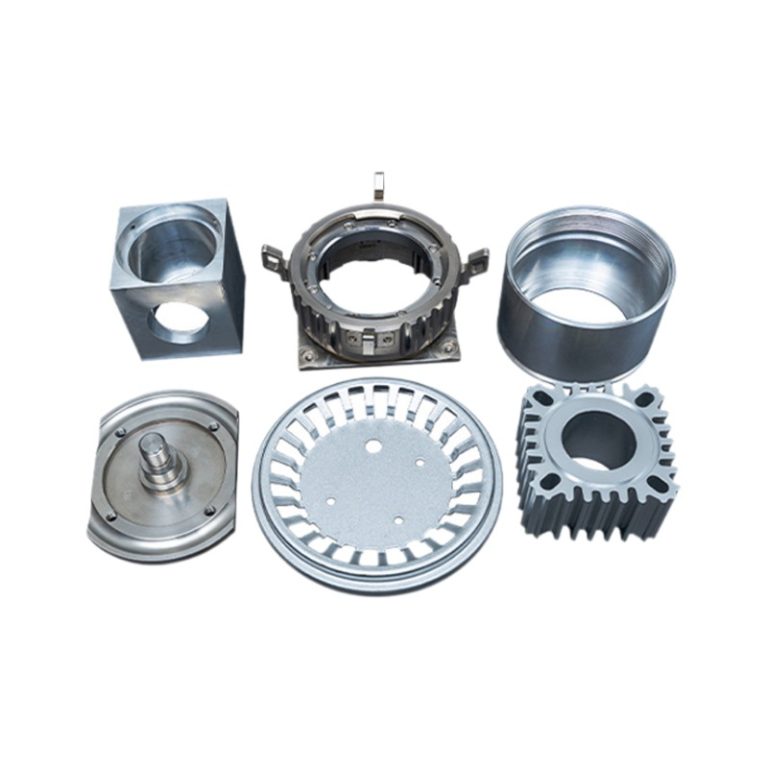
This reliability is not an accident. It is the result of engineering excellence applied to every component inside your vehicle. From the pistons that fire thousands of times per minute to the sensors that monitor emissions, precision machine auto components are designed, manufactured, and tested to standards that would have been unimaginable a generation ago.
At Yigu Technology, we supply precision components to the automotive industry. We see daily how engineering excellence—in precision, materials, quality control, and design—enables vehicles that are safer, more efficient, and more reliable. This guide explores the key aspects of engineering excellence that drive precision machine auto components.
What Does Precision Mean in Auto Component Manufacturing?
Tight Tolerances for Critical Performance
Precision in auto components is measured in microns. A piston that is off by 0.01 mm can cause:
- Inefficient combustion
- Increased fuel consumption
- Oil leakage past rings
- Premature engine wear
Industry standards: High-performance engine components require dimensional accuracy of ±0.001 inches (±0.025 mm) or better. Critical components like fuel injector nozzles demand tolerances in the nanometer range.
| Component | Typical Tolerance | Consequence of Deviation |
|---|---|---|
| Engine pistons | ±0.005–0.01 mm | Power loss; increased fuel consumption; engine damage |
| Fuel injector nozzles | ±0.001–0.005 mm | Poor atomization; incomplete combustion; emissions |
| Transmission gears | ±0.01–0.02 mm | Noise; vibration; premature wear |
| Brake calipers | ±0.02–0.05 mm | Uneven braking; pedal feel issues |
| Bearing surfaces | ±0.005 mm | Friction; heat; early failure |
Achieving Precision with Advanced Machining
CNC machining is the foundation of precision auto component manufacturing. Computer-controlled tools follow programmed paths with accuracy that manual methods cannot match.
Key technologies:
- 5-axis machining: Complex geometries in a single setup
- High-speed machining: Faster material removal with better surface finish
- In-process inspection: Real-time measurement and adjustment
How Does Innovation in Design and Materials Drive Excellence?
Lightweighting for Fuel Efficiency
Every kilogram removed from a vehicle improves fuel economy. Studies show that a 10% reduction in vehicle weight leads to a 6–8% improvement in fuel efficiency.
| Material | Application | Weight Reduction vs. Steel |
|---|---|---|
| Aluminum alloys | Engine blocks, cylinder heads | 30–40% lighter |
| High-strength steel | Suspension, chassis | 15–25% lighter (same strength) |
| Carbon fiber composites | Body panels, structural components | 50–60% lighter |
| Magnesium alloys | Transmission cases, brackets | 60–70% lighter |
| Engineering plastics | Interior components, covers | 70–80% lighter |
Engine blocks: Aluminum alloy blocks reduce engine weight by up to 30% compared to cast iron, improving fuel efficiency and handling.
Suspension components: High-strength steel control arms provide the same strength as conventional steel with 15–20% less weight, improving handling stability by 15–20%.
Advanced Materials for Demanding Applications
| Component | Material | Why |
|---|---|---|
| Fuel injector nozzles | Hardened stainless steel | Wear resistance; precision orifices |
| Turbocharger blades | Inconel or titanium | High-temperature strength |
| Piston rings | Cast iron with coatings | Wear resistance; low friction |
| Bearings | Copper-lead alloys | Load capacity; conformability |
| Gaskets | Multi-layer steel | Sealing under thermal cycling |
Design Optimization with Computational Tools
Modern auto components are not designed by trial and error. Engineers use simulation tools to optimize performance before manufacturing.
| Tool | Application | Benefit |
|---|---|---|
| CFD (Computational Fluid Dynamics) | Fuel injectors, intake manifolds | Optimizes flow; improves combustion efficiency |
| FEA (Finite Element Analysis) | Structural components | Predicts stress; enables weight reduction |
| Thermal analysis | Engine components | Manages heat; prevents failure |
| Multi-body dynamics | Suspension, drivetrain | Optimizes motion; reduces wear |
Case Study: Fuel Injector Optimization
Using CFD simulations, engineers can refine injector designs to achieve precise fuel atomization. A study found that a 10% improvement in fuel injector nozzle precision leads to a 5–7% increase in combustion efficiency.
Case Study: Air Intake Manifold Design
CFD analysis enables engineers to optimize manifold shape for better air-fuel mixture distribution. Optimized designs have been shown to:
- Reduce nitrogen oxide (NOx) emissions by 10–15%
- Increase engine torque by 5–8%
- Improve overall combustion efficiency
What Role Does Quality Control Play?
Rigorous Inspection at Every Stage
Quality control is the backbone of engineering excellence. Every component is inspected—often multiple times—before it reaches assembly.
Inspection stages:
- Raw material inspection: Certifications verify composition and properties
- In-process inspection: Dimensions checked during machining
- Final inspection: 100% verification of critical features
- Assembly validation: Fit and function testing
Inspection Technologies
| Method | Application | Typical Accuracy |
|---|---|---|
| CMM (Coordinate Measuring Machine) | Dimensional verification | ±0.0001 inches (±0.0025 mm) |
| X-ray inspection | Internal defects in castings | Detects voids, inclusions |
| Ultrasonic testing | Subsurface defects | Detects cracks, porosity |
| Optical comparators | Profiles, threads, edges | ±0.005 mm |
| Surface profilometer | Surface finish | ±0.01 μm |
Transmission gears: CMMs measure tooth profiles, pitch diameters, and run-out tolerances to ensure smooth meshing and efficient power transmission.
Brake discs: Statistical Process Control (SPC) monitors thickness variation. If variation exceeds acceptable range, adjustments are made to the machining process.
Statistical Process Control (SPC)
SPC collects and analyzes production data to detect process variations before they result in defects.
Benefits:
- Reduces defect rates by up to 50%
- Identifies trends before parts go out of spec
- Enables proactive process adjustment
- Provides data for continuous improvement
How Does Design Innovation Enhance Performance?
Piston Design Evolution
Traditional piston designs have been refined through engineering analysis. The slipper-skirt piston reduces friction between the piston and cylinder wall.
Case Study: High-Performance Engine
A study found that using a slipper-skirt piston:
- Reduced friction by 20%
- Increased engine power output by 3–5%
- Improved fuel efficiency by 2–3%
Fuel Injector Precision
Modern fuel injectors achieve extremely precise fuel atomization through:
- Micron-level hole diameters
- Optimized hole geometry
- Consistent manufacturing processes
Impact: Better atomization means more complete combustion, which reduces emissions and improves fuel economy.
Turbocharger Components
Turbocharger blades operate under extreme conditions—high temperature, high rotational speed, high stress. Engineering excellence in:
- Material selection: Inconel or titanium for high-temperature strength
- Cooling channel design: EDM-machined internal passages for heat dissipation
- Aerodynamic optimization: CFD-designed blade profiles for efficiency
What Are the Key Components of Engineering Excellence?
Precision Manufacturing Techniques
| Technique | Application | Precision Capability |
|---|---|---|
| Ultra-precision machining | Fuel injector nozzles | Tolerances in nanometer range |
| EDM (Electrical Discharge Machining) | Turbocharger blade cooling channels | Complex internal geometries |
| 5-axis CNC machining | Engine blocks, cylinder heads | Complex shapes in one setup |
| Grinding and honing | Bearing surfaces, cylinder bores | Surface finish Ra <0.2 μm |
Fuel injector nozzles: Ultra-precision machining achieves hole diameters and surface finishes that ensure proper atomization. A 10% improvement in nozzle precision can increase combustion efficiency by 5–7%.
Turbocharger blades: EDM creates intricate cooling channels impossible with traditional machining, improving heat dissipation and durability under high-temperature, high-stress conditions.
Material Selection and Optimization
| Component | Traditional Material | Modern Material | Benefit |
|---|---|---|---|
| Engine block | Cast iron | Aluminum alloy | 30% weight reduction |
| Control arms | Standard steel | High-strength steel | 15–20% weight reduction; improved handling |
| Piston | Aluminum | Aluminum with coatings | Reduced friction; longer life |
| Valve seats | Cast iron | Powder metal alloys | Wear resistance; heat dissipation |
Quality Control Systems
| System | Purpose | Impact |
|---|---|---|
| ISO 9001 | Quality management | Consistent processes; documented quality |
| IATF 16949 | Automotive quality | Industry-specific requirements |
| SPC | Process control | 50% defect reduction |
| CMM inspection | Dimensional verification | ±0.0001 inch accuracy |
How Does Engineering Excellence Translate to Real-World Performance?
Improved Fuel Efficiency
Every precision component contributes to overall fuel economy:
- Lightweight materials reduce vehicle weight
- Precision-machined engine components reduce internal friction
- Optimized fuel injectors improve combustion
- Low-friction bearings reduce drivetrain losses
Reduced Emissions
Precision components enable cleaner combustion:
- Tighter tolerances in fuel systems enable precise fuel delivery
- Optimized intake manifolds improve air-fuel mixing
- Precision-machined exhaust components support aftertreatment systems
Enhanced Durability
Vehicles today last longer than ever—200,000 miles is now standard. Engineering excellence contributes through:
- Wear-resistant materials
- Precision fits that distribute loads evenly
- Stress-optimized designs that resist fatigue
- Quality control that eliminates defects
Improved Safety
Safety-critical components demand the highest precision:
- Brake calipers must apply force evenly
- Steering components must have consistent geometry
- Suspension parts must withstand dynamic loads without failure
- Airbag sensors must respond accurately
Yigu Technology's Perspective
At Yigu Technology, engineering excellence in precision auto components is at the core of what we do. As a custom supplier of plastic and metal components, we work with automotive clients to deliver parts that meet demanding specifications.
Our approach:
- Customized solutions: Every project has unique requirements. We work from initial design concept to final delivery.
- Material expertise: Our team evaluates materials to meet performance, durability, and cost requirements. For high-temperature applications, we select heat-resistant alloys or engineering plastics.
- Precision manufacturing: 5-axis CNC machining, precision turning, and in-process inspection ensure components meet tight tolerances.
- Quality control: CMM inspection, material certifications, and documentation ensure traceability and compliance.
Examples of our work:
- Engine components: Precision-machined aluminum parts with ±0.01 mm tolerances
- Interior trim: Custom plastic components with specified surface finish and durability
- Sensor housings: Corrosion-resistant stainless steel with sealing surfaces
- Structural brackets: High-strength steel with optimized design for weight reduction
We understand that in automotive manufacturing, there is no room for compromise. Every component must perform reliably over years of service. Engineering excellence is not a goal—it is a requirement.
Conclusion
Engineering excellence in precision machine auto components is a multi-faceted discipline that combines:
- Precision manufacturing: Tolerances measured in microns; achieved through CNC machining, EDM, and ultra-precision techniques
- Innovation in design and materials: Lightweight alloys, high-strength steels, and composites that reduce weight and improve performance
- Stringent quality control: CMM inspection, SPC, and certifications that ensure every component meets specifications
- Design optimization: CFD, FEA, and simulation tools that refine designs before manufacturing
The result is vehicles that are:
- More fuel-efficient: Through lightweighting and optimized components
- Cleaner: Through precise fuel systems and combustion optimization
- More durable: Through wear-resistant materials and precision fits
- Safer: Through consistently manufactured safety-critical components
From the pistons that fire thousands of times per minute to the sensors that monitor emissions, engineering excellence in precision auto components drives the performance, reliability, and safety of every vehicle on the road.
FAQ
What are the common materials used in precision machine auto components?
Common materials include:
- Aluminum alloys: Low density, high strength-to-weight ratio, corrosion resistance. Used in engine components (cylinder heads, blocks), transmission cases, suspension components.
- High-strength steel: High strength, toughness. Used in crankshafts, axles, control arms, chassis components.
- Engineering plastics (polyamide, polycarbonate): Low cost, good moldability, lightweight. Used in interior components, covers, housings.
- Stainless steel: Corrosion resistance. Used in exhaust components, fuel system parts, sensors.
- Titanium alloys: High strength-to-weight, corrosion resistance. Used in high-performance valves, connecting rods.
- Composites (carbon fiber): Very high strength-to-weight. Used in high-performance body panels, structural components.
How can I ensure the quality of precision machine auto components?
Ensure quality by:
- Selecting certified suppliers: ISO 9001, IATF 16949 certifications indicate established quality systems
- Participating in quality control: Request raw material certifications, in-process inspection reports, and final inspection documentation
- Verifying critical dimensions: Review CMM reports for critical features
- Conducting third-party inspections: Independent labs can verify compliance with specifications
- Auditing suppliers: Regular visits ensure processes remain consistent
A well-implemented quality system can reduce defect rates by up to 50% compared to unmanaged processes.
What are the latest trends in precision machine auto component engineering?
Key trends include:
- Smart components: Sensors integrated into components to monitor temperature, vibration, wear. Enables predictive maintenance and reduces unexpected failures.
- Lightweighting: Increased use of carbon fiber composites, aluminum, magnesium, and high-strength steel to reduce vehicle weight.
- Green manufacturing: Energy-efficient production processes; recyclable materials; reduced waste.
- Additive manufacturing: 3D printing for prototypes, tooling, and low-volume production of complex geometries.
- Digital twins: Virtual models that simulate performance and optimize designs before manufacturing.
- Electric vehicle components: New components—battery enclosures, motor housings, power electronics cooling—require new materials and manufacturing processes.
What is the role of simulation in auto component design?
Simulation tools enable engineers to optimize designs before manufacturing:
- CFD (Computational Fluid Dynamics) : Optimizes fuel injector nozzle geometry, intake manifold shape, and exhaust flow. A 10% improvement in injector precision can increase combustion efficiency by 5–7%.
- FEA (Finite Element Analysis) : Predicts stress and fatigue life; enables weight reduction while maintaining strength.
- Thermal analysis: Manages heat in engine components, brakes, and electronics.
- Multi-body dynamics: Optimizes suspension and drivetrain components for smooth motion and reduced wear.
These tools reduce development time, improve performance, and lower costs by identifying issues before physical prototypes are built.
How does precision machining affect automotive safety?
Precision machining directly impacts safety through:
- Brake components: Calipers, rotors, and master cylinders must have consistent dimensions to apply braking force evenly. Uneven braking can cause loss of control.
- Steering components: Tie rods, steering racks, and knuckles must have precise geometry to maintain alignment and responsiveness.
- Suspension components: Control arms, ball joints, and links must withstand dynamic loads without failure.
- Airbag sensors: Must trigger at the correct threshold—precision in sensor housings and components is critical.
- Engine components: Catastrophic engine failure can cause loss of power at critical moments; precision prevents such failures.
In automotive manufacturing, safety-critical components are subject to 100% inspection and stringent quality standards.
Contact Yigu Technology for Custom Manufacturing
At Yigu Technology, we specialize in precision machine auto components for automotive applications. Our capabilities include 5-axis CNC machining, precision turning, and multi-process manufacturing with a focus on quality and reliability.
We serve automotive clients with:
- Engine components: Aluminum and steel parts with tight tolerances
- Transmission components: Gears, shafts, housings
- Suspension parts: Control arms, brackets, mounts
- Interior components: Custom plastic parts with specified finishes
- Sensor housings: Corrosion-resistant stainless steel
- Battery enclosures: Lightweight aluminum for EV applications
Our quality system is IATF 16949 certified—the automotive industry standard. We provide material certifications, inspection reports, and full traceability.
Contact us today to discuss your precision auto component needs. Let us bring engineering excellence to your next project.