Introduction
You have a new product idea. You need to turn it into something real. But how? One path leads to CNC machining—removing material from a solid block until only the part remains. Another leads to rapid prototyping—building the part layer by layer from nothing.
Both are valid. Both have strengths. But they serve different purposes, work with different materials, and fit different stages of product development. Choose wrong, and you waste time and money. Choose right, and you accelerate development while controlling costs.
At Yigu Technology, we use both processes daily. We have machined thousands of parts and printed hundreds of prototypes. This guide compares the two approaches, helps you understand their differences, and gives you a framework for deciding which is right for your project.
What Is CNC Machining?
A Subtractive Process
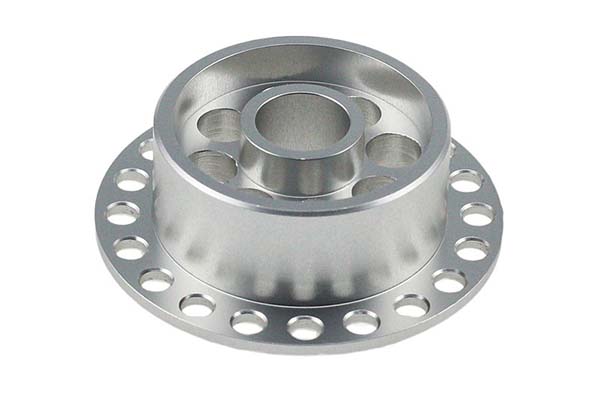
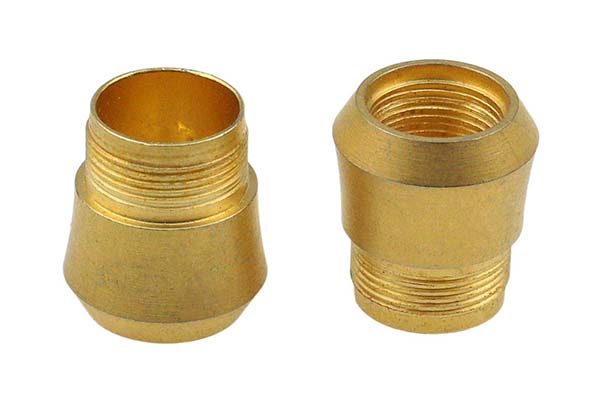
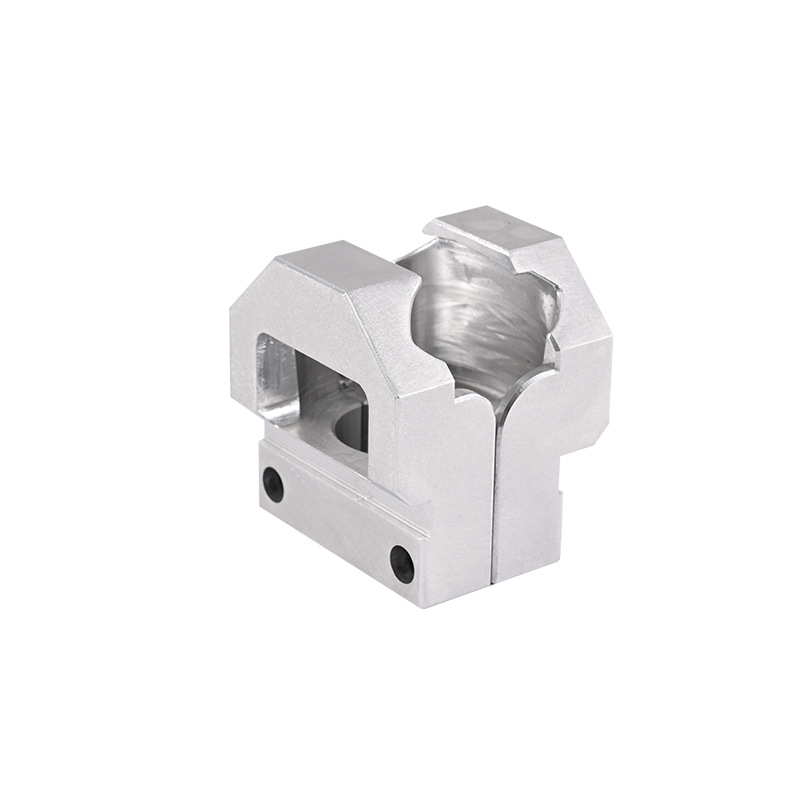
CNC machining is subtractive manufacturing. It starts with a solid block of material—metal, plastic, or composite. Then, guided by computer programs, cutting tools remove material until the final shape emerges.
The process follows a clear sequence:
- Design: A 3D CAD model of the part
- Programming: The model is converted to G-code (machine instructions)
- Setup: Material is clamped, tools are loaded
- Machining: The machine follows the program, removing material
- Inspection: The finished part is measured against specifications
What CNC Machining Does Well
| Advantage | Why It Matters |
|---|---|
| High precision | Tolerances as tight as ±0.005 mm; repeatable part to part |
| Wide material range | Metals (aluminum, steel, titanium), plastics (PEEK, acetal), composites |
| Production-ready | Parts are functional, not just visual models |
| Strength | Solid material retains full mechanical properties |
| Surface finish | Can achieve Ra 0.4–1.6 μm directly from machining |
What CNC Machining Does Not Do Well
| Limitation | Impact |
|---|---|
| Material waste | Removes material; chips can be 50–80% of starting stock |
| Internal complexity | Difficult to machine internal cavities or undercuts |
| Setup time | Requires programming, tooling, and fixturing before first cut |
| Cost per part | High initial investment; economical at volume |
What Is Rapid Prototyping?
An Additive Process
Rapid prototyping is additive manufacturing. It builds parts layer by layer from digital designs. Instead of removing material, it adds material exactly where needed.
Common technologies include:
| Technology | Process | Materials |
|---|---|---|
| FDM (Fused Deposition Modeling) | Extrudes melted plastic filament | ABS, PLA, nylon, PETG |
| SLA (Stereolithography) | Cures liquid resin with laser | Photopolymer resins |
| SLS (Selective Laser Sintering) | Fuses powder particles with laser | Nylon, polyamide, some metals |
| Metal SLS / DMLS | Sinters metal powder | Stainless steel, titanium, aluminum |
What Rapid Prototyping Does Well
| Advantage | Why It Matters |
|---|---|
| Speed | Parts in hours, not days; no tooling required |
| Low setup cost | No fixtures, no tooling, no programming |
| Design freedom | Internal cavities, complex geometries, organic shapes |
| Minimal waste | Material only where needed; 90–95% material efficiency |
| Iteration friendly | Changes are free—just modify the CAD file |
What Rapid Prototyping Does Not Do Well
| Limitation | Impact |
|---|---|
| Precision | Tolerances typically ±0.1–0.3 mm; poorer than CNC |
| Surface finish | Layer lines visible; requires post-processing |
| Material properties | Parts may be anisotropic (weaker in one direction) |
| Material range | Limited compared to CNC; fewer high-strength options |
| Production scale | Slow for large volumes; per-part time does not decrease with quantity |
How Do the Processes Compare Directly?
Manufacturing Process
| Aspect | CNC Machining | Rapid Prototyping |
|---|---|---|
| Method | Subtractive (removes material) | Additive (adds material) |
| Starting point | Solid block or sheet | Digital file; raw material in powder, filament, or resin |
| Typical time | Hours to days | Hours for small parts |
Material Range
| Material Type | CNC Machining | Rapid Prototyping |
|---|---|---|
| Aluminum | Excellent | Limited (metal 3D printing available, costly) |
| Steel | Excellent | Limited |
| Stainless steel | Excellent | Possible with metal SLS, high cost |
| Titanium | Excellent | Possible, very high cost |
| ABS/PLA | Good | Excellent (FDM) |
| Nylon | Good | Excellent (SLS) |
| PEEK | Good | Limited (specialty printers only) |
| Resins | Not applicable | Excellent (SLA) |
| Composites | Possible (with specialized tools) | Limited |
Speed and Setup
| Factor | CNC Machining | Rapid Prototyping |
|---|---|---|
| Initial setup | 1–4 hours (programming, fixturing) | 15–60 minutes (file prep, material loading) |
| First part lead time | 1–5 days typical | 1–24 hours typical |
| Per-part time | Decreases with volume | Constant per part; no volume advantage |
Cost Efficiency
| Volume | CNC Machining | Rapid Prototyping |
|---|---|---|
| 1–10 parts | Higher cost due to setup | Lower cost; no setup overhead |
| 10–100 parts | Moderate; setup costs spread | Moderate; per-part time adds up |
| 100+ parts | Economical; fast cycle times | Impractical; too slow |
Rule of thumb: Rapid prototyping wins for low volumes (1–50 parts). CNC machining wins for high volumes (100+ parts). The crossover point depends on part complexity and material.
Part Complexity
| Feature | CNC Machining | Rapid Prototyping |
|---|---|---|
| External 3D shapes | Excellent with 5-axis | Excellent |
| Internal cavities | Difficult; requires multiple setups | Trivial; built in one operation |
| Undercuts | Requires special tooling or multiple setups | Built without additional cost |
| Thin walls (<1 mm) | Possible but challenging | Possible; may require support |
| Threads | Excellent; tapped or milled | Limited; may require post-processing |
Surface Finish and Tolerances
| Metric | CNC Machining | Rapid Prototyping |
|---|---|---|
| Typical tolerance | ±0.01–0.05 mm | ±0.1–0.3 mm |
| Best achievable | ±0.002–0.005 mm | ±0.05 mm (with post-processing) |
| Surface finish (as-built) | Ra 0.8–3.2 μm | Ra 5–20 μm (visible layer lines) |
| Post-processing needed | Minimal | Often required (sanding, polishing, coating) |
Waste Management
| Aspect | CNC Machining | Rapid Prototyping |
|---|---|---|
| Material efficiency | 50–80% of starting stock becomes chips | 90–95% of material becomes part |
| Waste type | Chips (often recyclable) | Support structures, unused powder |
| Recycling | Metals readily recyclable | Plastics and resins more difficult |
Where Is Each Process Used?
CNC Machining Applications
Aerospace: Turbine blades, structural brackets, landing gear components
- Why: Requires high strength, tight tolerances, and certified materials
Automotive: Engine blocks, transmission components, brake calipers
- Why: Demands durability, precision, and cost-effective mass production
Medical Devices: Surgical instruments, orthopedic implants
- Why: Needs biocompatible materials, tight tolerances, and sterilizable surfaces
Electronics: Heat sinks, housings, connectors
- Why: Requires precise dimensions, good thermal conductivity
Rapid Prototyping Applications
Consumer Electronics: Design models, form-and-fit prototypes
- Why: Fast iteration; test ergonomics before committing to tooling
Healthcare: Custom prosthetics, dental aligners, surgical guides
- Why: Patient-specific customization; complex geometries
Architecture: Scale models, detailed structures
- Why: Complex shapes; visual fidelity
R&D: Proof-of-concept models, functional testing
- Why: Speed; multiple design iterations in days, not weeks
When Should You Choose Each Process?
Choose CNC Machining When
- High precision is required (tolerances < ±0.05 mm)
- Material strength matters (metal, high-performance plastic)
- Production volume is medium to high (100+ parts)
- Surface finish needs to be ready for use without post-processing
- Part must withstand mechanical stress or extreme environments
- Material certification is required (aerospace, medical)
Real-World Example:
A medical device company needed titanium orthopedic implants. The parts required ±0.01 mm tolerances, biocompatible material, and sterile packaging. CNC machining was the only viable option. Rapid prototyping could not meet the precision or material requirements.
Choose Rapid Prototyping When
- Speed is the priority (first part in hours)
- Design is not finalized; multiple iterations expected
- Complex internal features are needed
- Volume is low (1–50 parts)
- Tooling cost must be avoided
- Visual or form-and-fit testing is the goal
Real-World Example:
A consumer electronics company was designing a new handheld device. They needed to test ergonomics and button placement. They printed 20 iterations in two weeks using SLA printing. Each iteration cost less than ¥500. CNC machining would have taken longer and cost more for each design change.
What Is Hybrid Manufacturing?
Combining Both Processes
The line between CNC machining and rapid prototyping is blurring. Hybrid manufacturing combines additive and subtractive processes in a single workflow.
Common approaches:
- Print then machine: A part is 3D printed near-net shape, then CNC machined to final tolerances on critical surfaces.
- Machine then print: A base structure is machined, then features are added additively.
- Integrated hybrid machines: Equipment that combines both capabilities in one unit.
Benefits of hybrid:
- Complex internal structures (additive) with precise mating surfaces (subtractive)
- Reduced material waste (additive for bulk shape)
- Faster than machining from solid
- More precise than printing alone
Real-World Example:
An aerospace company needed a bracket with internal cooling channels. The channels were printed using metal SLS. The mounting surfaces and threaded holes were then CNC machined to final tolerances. The result: a part that was 30% lighter than the fully machined version, with the same precision on critical features.
What Future Trends Are Emerging?
AI and Automation
Artificial intelligence is improving both processes:
- CNC: AI optimizes toolpaths, predicts tool wear, adjusts parameters in real time
- 3D printing: AI detects print defects, optimizes support structures, improves layer adhesion
Expanded Material Options
Both processes are adding new materials:
| Material | CNC Machining | Rapid Prototyping |
|---|---|---|
| Bio-compatible polymers | PEEK, medical-grade plastics | Bio-resins, medical-grade filaments |
| Metal composites | Aluminum matrix composites | Metal SLS with copper, aluminum |
| Ceramics | Limited (grinding) | Emerging (ceramic SLA) |
Sustainability Initiatives
Both processes are becoming more sustainable:
- CNC: High-pressure coolant systems reduce waste; recycling programs for metal chips
- 3D printing: Material efficiency reduces waste; bio-based filaments emerging
Conclusion
CNC machining and rapid prototyping are not competitors. They are complementary tools, each suited to different stages of product development and different production requirements.
| Factor | CNC Machining | Rapid Prototyping |
|---|---|---|
| Best for | Production parts, high volumes | Prototypes, low volumes |
| Precision | Highest | Moderate |
| Materials | Wide range | Limited |
| Speed | Setup slower; per-part fast | Setup fast; per-part slow |
| Cost | High setup; low per-part | Low setup; higher per-part |
The smart approach is to use both strategically. Rapid prototyping accelerates early development, allowing you to iterate quickly and validate designs. CNC machining delivers final parts with the precision, strength, and material properties required for production.
FAQ
What is the primary difference between CNC machining and rapid prototyping?
The primary difference is the manufacturing process. CNC machining is subtractive—it removes material from a solid block to create a part. Rapid prototyping is additive—it builds parts layer by layer from the bottom up. This fundamental difference affects material options, precision, speed, and cost structure.
Which process is more cost-effective for low-volume production?
For low-volume production (1–50 parts), rapid prototyping is generally more cost-effective because it requires no tooling, no fixturing, and minimal setup time. The cost per part is constant regardless of quantity. CNC machining has higher upfront costs for programming and setup but becomes more economical as volume increases.
When should I choose CNC machining over rapid prototyping?
Choose CNC machining when you need:
- High precision (tolerances < ±0.05 mm)
- Hard materials (metals, high-performance plastics)
- Mass production (100+ parts)
- Durability for functional, load-bearing applications
- Tight surface finish requirements without post-processing
Industries like aerospace, automotive, and medical device manufacturing typically require CNC machining for production parts.
Can rapid prototyping produce functional parts for end-use?
Yes, for certain applications. With advanced technologies like SLS (nylon) and metal SLS (titanium, stainless steel), rapid prototyping can produce parts that are functional and durable. However, they may not match the precision, surface finish, or material certification of CNC-machined parts. For high-stress or safety-critical applications, CNC machining remains the standard.
How do I decide which process to use for my project?
Follow this decision framework:
- What is the purpose? Prototype or production?
- What volume? 1–50 parts? Consider rapid prototyping. 100+ parts? Consider CNC.
- What material? Metal or high-performance plastic? CNC. Standard plastic? Both possible.
- What precision? Tolerances < ±0.05 mm? CNC. ±0.1 mm acceptable? Both possible.
- What timeline? Part needed tomorrow? Rapid prototyping. Part needed in a week? Both possible.
Often, the optimal approach is to prototype with additive, produce with subtractive.
Contact Yigu Technology for Custom Manufacturing
At Yigu Technology, we offer both CNC machining and rapid prototyping services. We help you choose the right process for each stage of your project.
Our CNC machining capabilities include 3-axis and 5-axis milling, CNC turning, and multi-process manufacturing. We work with metals, plastics, and composites to produce precision components for aerospace, medical, automotive, and industrial applications.
Our rapid prototyping services include FDM, SLA, and SLS technologies, allowing fast iteration and design validation before committing to production tooling.
We do not just make parts. We help you develop them—from first concept to final production.
Contact us today to discuss your project and let us recommend the right approach for your needs.