Introduction
Have you ever wondered how aerospace engine blades withstand extreme temperatures or how medical implants fit the human body with micron-level accuracy? The answer lies in precision machining. This specialized manufacturing process transforms raw materials into components with tolerances as tight as ±0.001 mm—a fraction of a human hair’s width.
Choosing the right precision machining partner can make or break your product development. The wrong choice leads to quality issues, delayed deliveries, and increased costs. This guide walks you through the core technologies, industry applications, and selection criteria you need to evaluate potential partners. Whether you are in aerospace, medical devices, automotive, or electronics, you will leave with a clear framework for making an informed decision.
Why Does Precision Machining Matter?
The Backbone of High-End Manufacturing
Precision machining is not just another manufacturing process—it is the foundation upon which modern high-tech industries are built. When components must perform in extreme conditions, accuracy becomes non-negotiable.
Real-world impact:
- In automotive engines, precision-machined pistons can reduce fuel consumption by 3–5%
- In semiconductor manufacturing, micron-scale pin processing determines the performance limits of electronic devices
- In aerospace, a turbine blade tolerance of ±0.002 mm can prevent vibration failures during high-speed rotation
The global precision machining market exceeded $800 billion in 2024, with a compound annual growth rate of 7.2%. This growth reflects the increasing demand for high-quality, accurately manufactured components across every industrial sector.
What Core Technologies Define Precision Machining?
CNC Machining: The Universal Foundation
CNC machining (Computer Numerical Control) is the backbone of precision manufacturing. Computer programs control machine tools with accuracy that manual machining cannot match. Compared to traditional methods, CNC machining improves precision by a factor of 10 or more and boosts production efficiency by 30–50%.
Case study: An aviation parts manufacturer switched to CNC machining centers for landing gear components. Tolerances improved to ±0.005 mm, and the pass rate jumped from 82% to 99.7%. This single change reduced scrap costs and eliminated rework delays.
Key advantages:
- Batch processing of complex parts with consistent quality
- Minimal human error
- Suitable for aerospace, automotive, electronics, and more
Common equipment includes CNC lathes (for cylindrical parts) and CNC milling machines (for complex shapes and features).
5-Axis Machining: Mastering Complex Surfaces
When parts have curved surfaces, undercuts, or intricate geometries, 5-axis machining becomes essential. Unlike 3-axis machines that work from limited angles, 5-axis systems add two rotary axes, allowing the tool to approach the workpiece from any direction in a single setup.
Comparison: 3-Axis vs. 5-Axis Machining
| Parameter | 3-Axis Machining | 5-Axis Machining |
|---|---|---|
| Complexity | Simple flat/curved surfaces | Complex freeform shapes |
| Number of setups | 2–3 setups required | One setup completes all |
| Typical tolerance | ±0.01 mm | ±0.003 mm |
| Production efficiency | Baseline | 40–60% increase |
Case study: An electric vehicle manufacturer used 5-axis machining to produce motor rotors. Surface accuracy reached ±0.003 mm, and motor efficiency improved by 8%. The single-setup process also eliminated alignment errors from repositioning.
Milling and Turning: Traditional Processes, Modern Precision
Milling uses rotating cutting tools to remove material. It is ideal for structural features like planes, grooves, gears, and complex contours.
Turning rotates the workpiece while a stationary tool cuts. It is the go-to process for shafts, discs, and other round components.
Medical application: A joint implant manufacturer uses CNC milling to machine curved bearing surfaces with surface roughness below Ra 0.8 μm. This smoothness is critical for compatibility with the human body and long-term implant success.
Automotive application: Gearbox gears require tooth pitch errors below 0.02 mm to ensure smooth, quiet operation. Precision turning achieves this consistently across production runs.
Ultra-Precision and Micro Machining
Ultra-precision machining achieves accuracy at the nanometer level (0.001 μm). It is essential for semiconductor chips, optical lenses, and other components where microscopic errors affect performance.
Example: Smartphone camera lenses made from sapphire require surface flatness errors below 0.005 μm. Ultra-precision grinding achieves this clarity, enabling sharp images.
Micro machining focuses on tiny components, typically 0.1–10 mm in size. MEMS (Micro-Electro-Mechanical Systems) sensors rely on this technology. One MEMS manufacturer produces pressure sensor chips with line widths of just 5 μm—about 1/10 the diameter of a human hair.
Machining Accuracy and Tolerance: Measuring Quality
Machining accuracy refers to how closely the finished part matches the design dimensions. Tolerance is the allowable deviation from the nominal dimension. These are the primary metrics for judging precision machining quality.
| Industry | Typical Tolerance | Consequence of Non-Compliance |
|---|---|---|
| Aerospace | ±0.002–0.003 mm | Vibration hazards, engine failure |
| Medical implants | ±0.001–0.002 mm | Patient discomfort, implant rejection |
| Automotive | ±0.005–0.01 mm | Noise, reduced efficiency |
| Semiconductor | ±0.0001 mm | Chip performance degradation |
High-quality precision machining companies use coordinate measuring machines (CMMs) and laser interferometers to inspect every batch, ensuring tolerances meet specifications.
Where Is Precision Machining Applied?
Aerospace Component Machining: Pushing Limits
Aerospace demands components that survive extreme heat, pressure, and mechanical stress. Engine blades, landing gear structures, and satellite antenna brackets all require precision machining.
Case study: An aero-engine manufacturer partnered with a precision machining company to produce turbine blades. Using 5-axis machining and ultra-precision grinding, they achieved form and position tolerances of ±0.003 mm. The blades passed testing at 1,200°C and 20,000 rpm—conditions that would destroy conventionally machined parts.
Medical Device Precision: Protecting Lives
Medical machining requires zero defects and biocompatibility. Materials are typically titanium alloys or medical-grade stainless steel. Components must perform flawlessly inside the human body.
Case study: An orthopedic company produces artificial hip joints using CNC turning and surface polishing. The joint surface roundness error is below 0.002 mm. With an ultra-smooth coating, these implants last 25+ years and have been used in over 500,000 surgeries worldwide.
Common applications:
- Surgical instruments: Minimally invasive forceps, orthopedic drills
- Implants: Artificial joints, heart stents
- Diagnostic equipment: CT detector components, ultrasound probes
Automotive Precision Components: Driving Performance
Electric vehicles and autonomous driving systems demand increasingly precise components. Motor rotors, gearbox gears, and sensor brackets all benefit from precision machining.
Case study: An EV manufacturer used precision turning and grinding to produce motor shafts. Cylindrical error was controlled within 0.0015 mm. The result: motor noise reduced by 15 dB and driving range increased by 5% .
Electronic Semiconductor Processing: Enabling Miniaturization
Semiconductor manufacturing requires nanometer-level precision. The workpiece table in a chip lithography machine must move with accuracy of ±0.0001 mm—1/1000 the diameter of a human hair. This precision enables production of 7nm and smaller advanced process chips.
Key applications: Chip pins, PCBs, semiconductor packaging molds, sensor chips
Mold Manufacturing and Defense Applications
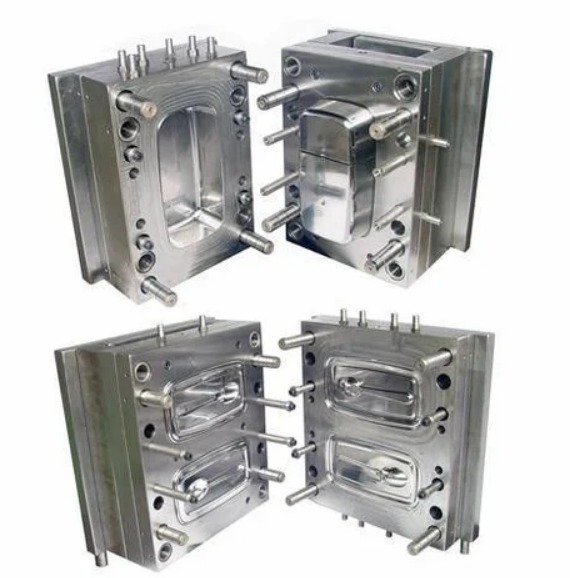
Mold making directly impacts product quality. An appliance company producing air conditioner shells uses CNC milling and EDM (electrical discharge machining) to achieve mold cavity tolerances of ±0.005 mm. The resulting shells have a 99.5% pass rate, increasing annual capacity by 30%.
In defense, precision machining enables missile guidance systems and nuclear reactor components. One defense contractor uses 5-axis machining and ultra-precision inspection to produce gyroscopes with drift error below 0.001°/h—critical for accurate missile targeting.
How Do You Evaluate a Precision Machining Partner?
Certifications: ISO 9001 and AS9100
Certifications provide objective proof of quality management systems. ISO 9001 is the baseline standard for general precision machining. For aerospace applications, AS9100 certification is essential—it adds requirements for traceability, risk management, and safety.
Data point: A precision machining company that obtained dual certification saw customer complaint rates drop from 3.2% to 0.8%. International orders increased to 40% of their business.
What to look for: Priority to companies with relevant certifications for your industry. For medical devices, also check ISO 13485.
Inspection and Quality Control Systems
Quality is not inspected in—it is built in. But thorough inspection ensures it stays there. High-quality companies maintain:
- CMM (Coordinate Measuring Machine): Accuracy to ±0.001 mm
- Laser interferometers: For measuring machine positioning accuracy
- Surface roughness testers: Verifying Ra values
- Three-inspection system: Self-inspection, mutual inspection, and dedicated quality control
Best practice: Ask about testing equipment, quality control processes, and traceability. For critical projects, visit the laboratory to verify capabilities.
Engineering and Design Support
A capable precision machining partner does more than follow drawings. They provide design for manufacturability (DFM) feedback, material recommendations, and process optimization.
Case study: An electronics company developing a new sensor collaborated with their machining partner early in design. The partner suggested structural changes that reduced machining difficulty by 30% and production costs by 15%—without compromising sensor performance.
What to look for: An engineering team with expertise in materials science, mechanical design, and your specific application area.
Prototyping to Mass Production Capability
The ability to move seamlessly from prototype to production is a sign of a mature partner. The same machines, programs, and quality systems should support both phases.
Case study: A medical device company worked with a machining partner who first produced prototypes via 3D printing for design validation, then quickly switched to CNC machining for production. This approach shortened time-to-market by 6 months.
What to ask: What is your typical lead time for prototypes? What is your production capacity? How do you manage the transition?
Customization and Supply Chain Management
Customization capability matters when your parts have unique requirements. A new energy company needed a non-standard motor housing with complex geometry. Their machining partner optimized the 5-axis toolpath to achieve tolerances of ±0.004 mm and successfully scaled to production.
Supply chain management ensures consistent material quality. Top-tier companies maintain relationships with certified material suppliers, perform incoming material inspections, and manage inventory to prevent shortages.
What Questions Should You Ask Potential Partners?
Initial Screening Questions
- What certifications do you hold? (ISO 9001, AS9100, ISO 13485, IATF 16949)
- What is your typical tolerance range? (Look for ±0.005 mm or better for precision work)
- What inspection equipment do you have on-site? (CMM, optical comparator, surface tester)
- What industries have you worked with? (Relevant experience matters)
- Can you provide references or case studies? (Talk to existing customers if possible)
Questions for Quote Evaluation
- Is the scope clearly defined? (Materials, tolerances, surface finish, quantities)
- Are there hidden costs? (Setup fees, tooling, shipping)
- What is the stated lead time? (Is it realistic for your needs?)
- How are quality issues handled? (Warranty, rework policy)
Yigu Technology’s Perspective
At Yigu Technology, we believe precision machining is about more than equipment—it is about expertise, process control, and partnership. We maintain ISO 9001 and IATF 16949 certifications and operate a full range of CNC equipment: 3-axis, 4-axis, and 5-axis milling; CNC turning; wire EDM; and grinding.
Our approach: Every project starts with a thorough review of your design and application. Our engineering team provides DFM feedback early, identifying potential issues before programming begins. During production, we perform in-process inspections and document results. We ship with full traceability.
Recent example: A defense contractor needed precision gyroscope components with tolerances of ±0.002 mm on critical features. Using 5-axis machining and CMM inspection, we delivered 500 units with zero defects. The components passed all environmental testing and are now in production systems.
We view quality, communication, and reliability as the foundations of lasting partnerships. When you succeed, we succeed.
Conclusion
Choosing the right precision machining company requires evaluating multiple factors. Core technologies—CNC machining, 5-axis capabilities, ultra-precision processes—determine what is possible. Industry applications demonstrate relevant experience. Certifications, inspection systems, and engineering support ensure consistent quality.
The right partner does more than machine parts. They become an extension of your engineering team, offering feedback that improves designs, reduces costs, and accelerates timelines. Take time to screen candidates thoroughly. Visit facilities when possible. Talk to references.
Precision machining is an investment in your product’s success. Choose wisely, and you gain a partner who helps you innovate with confidence.
FAQ
How accurate can precision machining be?
Conventional precision machining typically achieves tolerances of ±0.005 mm. Ultra-precision machining reaches the nanometer level (±0.0001 mm). The achievable accuracy depends on the process, equipment, and material.
What are the special requirements for precision machining in aerospace?
Aerospace components must withstand high temperatures and pressures, maintain tight tolerances (typically ±0.003 mm or better), and meet AS9100 certification requirements. Full traceability of materials and processes is mandatory.
How can I judge the strength of a precision machining company?
Evaluate certifications (ISO 9001, AS9100), inspection equipment (CMMs, laser interferometers), industry case studies, engineering support capabilities, and delivery track record. A strong partner will have documented quality systems and verifiable experience in your industry.
What is the typical process for custom precision machining?
The usual process is: customer provides drawings → company evaluates process feasibility → quotation → prototype production → customer validation → mass production → inspection and delivery. A good partner will provide DFM feedback early in the process.
What are common materials for precision machining?
Common materials include aluminum alloys, stainless steel, titanium alloys, copper alloys, engineering plastics (POM, PEEK), and ceramics. Material selection depends on application requirements such as strength, weight, corrosion resistance, and biocompatibility.
Contact Yigu Technology for Custom Manufacturing
Ready to partner with a precision machining company that delivers quality and reliability? Yigu Technology combines advanced capabilities with engineering expertise to meet your most demanding requirements.
- Core technologies: CNC milling (3, 4, 5-axis), CNC turning, wire EDM, grinding
- Materials: Aluminum, stainless steel, titanium, copper alloys, engineering plastics
- Certifications: ISO 9001, IATF 16949
- Industries: Aerospace, medical devices, automotive, electronics, defense
- Volumes: Prototyping to high-volume production
Contact our engineering team to discuss your project. We will provide a thorough capability assessment, DFM feedback, and a competitive quote. Let us show you what true precision machining partnership looks like.