Introduction
Your business has a great idea. You need prototypes, custom parts, or small production runs. Buying a 3D printer seems like the obvious move—until you realize the costs: equipment, maintenance, materials, training, and the time to learn it all. For many businesses, outsourcing 3D printing is the smarter choice. It gives you access to advanced technology without the capital investment, expertise without the learning curve, and scalability without the risk. From medical device companies cutting development time in half to automotive manufacturers producing custom parts on demand, outsourcing 3D printing is driving business growth. This guide explores how to effectively outsource 3D printing—from selecting the right provider to managing the process and ensuring quality.
What Is Outsourcing 3D Printing?
Definition and Overview
Outsourcing 3D printing means delegating your 3D printing tasks to external service providers instead of handling them in-house. You provide the digital designs; they provide the equipment, materials, and expertise to turn those designs into physical parts.
This strategic approach enables businesses to:
- Access cutting-edge technologies without buying expensive equipment
- Tap specialized expertise without extensive training
- Scale production up or down based on demand
- Focus on core competencies while experts handle manufacturing
Why Outsource Instead of Buying?
| Factor | In-House Printing | Outsourcing |
|---|---|---|
| Equipment Cost | $200–$1,000,000+ upfront | $0—pay per part |
| Learning Curve | Weeks to months | None—provider handles it |
| Maintenance | Your responsibility | Provider's responsibility |
| Material Inventory | You buy and store | Provider supplies |
| Technology Updates | You buy new machines | Provider upgrades |
| Scalability | Limited by your machines | Unlimited—use multiple providers |
| Expertise | You develop it | Provider has it |
| Best for | Frequent, consistent printing | Variable demand, specialized needs |
What Are the Benefits of Outsourcing 3D Printing?
Cost Savings
The most obvious benefit: you avoid huge upfront investments. Industrial 3D printers cost $50,000–$1,000,000+ . Maintenance adds more. Materials require inventory. Training takes time. Outsourcing converts fixed costs to variable costs—you pay only when you need parts.
Real-world example: A medical device company outsourced prototyping of new surgical instruments. They reduced prototyping costs by 30% and development time by 50% . No equipment to buy, no operators to train.
Access to Advanced Technology
3D printing technology evolves rapidly. A machine bought today may be obsolete in three years. Outsourcing gives you access to the latest equipment without the depreciation.
What you get:
- Industrial FDM for large parts
- High-resolution SLA for detailed models
- SLS for durable functional parts
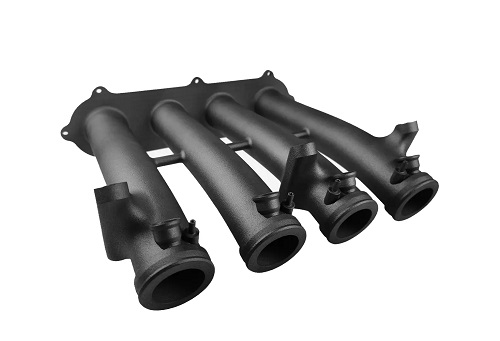
- Metal printing for production components
- Multi-material and color printing
Scalability
Demand fluctuates. One month you need 10 prototypes; the next, 1,000 production parts. In-house printing can't easily scale. Outsourcing gives you:
- Capacity on demand: Use multiple providers for large orders
- No idle machines: You don't pay for unused capacity
- Geographic flexibility: Print near customers worldwide
Speed to Market
Professional services have streamlined processes, dedicated staff, and optimized workflows. They can often deliver faster than an in-house operation, especially for complex parts.
Real-world example: An automotive company outsourced custom parts for a limited-edition model. The provider's speed and flexibility helped them meet tight production timelines and market demand.
Expertise and Experience
3D printing has nuances. Design for manufacturability. Material selection. Post-processing. Outsourcing providers have:
- Engineers who review your designs for printability
- Material experts who recommend the right options
- Technicians who optimize print parameters
- Quality specialists who inspect finished parts
Focus on Core Business
Your business isn't 3D printing—it's whatever you make or do. Outsourcing lets you focus on your core competencies while experts handle manufacturing.
How Do You Select a 3D Printing Service Provider?
Criteria for Selection
Experience and Reputation
- How long have they been in business?
- Do they have experience in your industry?
- What do client reviews say?
- Can they provide references?
Technology and Capabilities
- Do they have the right printers for your needs?
- FDM for large parts? SLA for detail? SLS for durability? Metal for production?
- What build volumes can they handle?
- Do they offer multi-material or color printing?
Material Options
- Do they offer the materials your project requires?
- PLA, ABS, nylon for plastics? Stainless steel, titanium, aluminum for metals?
- Specialty materials like biocompatible resins or castable wax?
- Can they recommend alternatives if your first choice isn't available?
Pricing and Transparency
- How do they structure pricing? Per part? Per hour? Per gram?
- Are quotes detailed and itemized?
- Are there hidden fees for file review, supports, or post-processing?
- Do they offer volume discounts?
Turnaround Time
- What are standard lead times?
- Do they offer expedited options?
- Do they reliably meet deadlines?
Customer Support
- Are they responsive to inquiries?
- Do they offer design assistance?
- Will they collaborate closely throughout your project?
Research and Evaluation
Online Reviews and Testimonials
Check Google, Yelp, Trustpilot, and industry forums. Look for patterns—both positive and negative.
Portfolio and Case Studies
Review their past work. Do they have experience with projects like yours? Can they show examples?
References and Recommendations
Ask industry peers who they use. Get referrals from trusted partners.
Site Visits and Trial Prints
If possible, visit the facility. See their equipment, meet their team. Request sample prints to inspect quality firsthand.
How Do You Manage the Outsourcing Process?
Communication and Collaboration
Clear Requirements
Define your project specifications thoroughly:
- 3D model files (STL, STEP, or preferred format)
- Dimensions and tolerances
- Material requirements
- Quantity needed
- Desired finish (as-printed, sanded, painted, etc.)
- Timeline
- Any special requirements (certifications, testing)
Regular Updates
Establish a schedule for progress updates. Weekly check-ins. Milestone reviews. Photos of in-progress prints.
Feedback Loop
Create mechanisms for feedback. What's working? What needs adjustment? Continuous improvement requires open communication.
Collaborative Tools
Use project management tools (Trello, Asana), communication platforms (Slack, Zoom), and cloud storage (Google Drive) to keep everyone aligned.
Quality Control and Assurance
Set Quality Standards
Define clear benchmarks:
- Dimensional accuracy (±0.1 mm? ±0.5 mm?)
- Surface finish (Ra value, visual appearance)
- Mechanical properties (strength, flexibility)
- Color matching
Inspection and Testing
Implement checks at key stages:
- First article inspection
- In-process monitoring
- Final inspection before shipping
- Third-party testing if required
Certification and Compliance
For regulated industries, ensure the provider follows:
- ISO standards
- Medical device regulations (ISO 13485)
- Aerospace requirements (AS9100)
- Material certifications
Continuous Improvement
Use feedback and data to refine processes. Each project teaches something for the next.
What Are Real-World Success Stories?
Medical Device Manufacturer
Challenge: A medical device company needed rapid prototyping of new surgical instruments. In-house printing would require significant investment and learning time.
Solution: They outsourced to a specialized 3D printing service.
Results:
- 50% reduction in product development time
- 30% lower prototyping costs
- Faster iterations led to better designs
- Quicker time-to-market for new devices
Lesson: Outsourcing enabled rapid testing and refinement without capital investment.
Automotive Industry
Challenge: An automotive company needed custom parts for a limited-edition model. Traditional manufacturing would be too slow and expensive for low volumes.
Solution: They partnered with a 3D printing service for production.
Results:
- Faster prototyping and design flexibility
- Lower production costs than traditional methods
- Met tight production timelines
- Successfully launched limited-edition vehicle
Lesson: Outsourcing provided scalability and speed that in-house couldn't match.
Aerospace Sector
Challenge: An aerospace manufacturer needed complex, lightweight components using advanced metal 3D printing. In-house capability would require multi-million dollar investment.
Solution: They outsourced production to a specialized metal printing service.
Results:
- Significant material cost savings
- Enhanced part performance through optimized designs
- Reduced waste compared to machining
- Met stringent industry requirements
Lesson: Outsourcing gave access to advanced technology without capital investment.
Key Lessons Learned
- Strategic partnerships matter: Long-term relationships with trusted providers yield better results than transactional engagements.
- Flexibility is key: Adapt processes based on feedback and evolving needs.
- Communication is crucial: Clear, ongoing communication prevents misunderstandings.
- Quality requires vigilance: Define standards, inspect results, maintain feedback loops.
- Value over cost: The cheapest provider rarely delivers the best results.
What Are Common Challenges and How Do You Overcome Them?
Challenge: Communication Barriers
Problem: Misunderstandings about requirements, timelines, or expectations.
Solution:
- Provide detailed specifications in writing
- Use visual aids (annotated screenshots, reference images)
- Schedule regular check-ins
- Confirm understanding with summaries after discussions
Challenge: Quality Control Issues
Problem: Parts don't meet specifications—wrong dimensions, poor surface finish, weak structure.
Solution:
- Define clear quality standards upfront
- Request samples or first article inspection
- Implement inspection at multiple stages
- Establish clear process for addressing defects
Challenge: Logistical Concerns
Problem: Shipping delays, customs issues, damaged parts in transit.
Solution:
- Factor shipping time into project timeline
- Use tracked, insured shipping
- Consider local providers to minimize logistics
- Inspect immediately upon receipt
Challenge: Intellectual Property Protection
Problem: Sharing digital designs with external parties raises IP concerns.
Solution:
- Use non-disclosure agreements (NDAs)
- Work with reputable providers who protect client data
- Consider watermarking or securing files
- Understand provider's data handling policies
Challenge: Cost Overruns
Problem: Final cost exceeds initial quote.
Solution:
- Get detailed, itemized quotes
- Clarify what's included and what's extra
- Ask about potential additional costs upfront
- Build contingency into budget
What Does the Future Hold for Outsourcing 3D Printing?
Increased Adoption of Additive Manufacturing
As more industries adopt 3D printing, outsourcing becomes an even more attractive option. Companies can access additive manufacturing without significant upfront investment.
Integration with Digital Technologies
AI, IoT, and blockchain are enhancing outsourcing:
- AI: Optimized designs, automated quoting
- IoT: Real-time production tracking
- Blockchain: Secure IP protection, supply chain traceability
Sustainability Focus
Growing demand for sustainable practices drives:
- Eco-friendly materials (recycled plastics, biodegradable filaments)
- Reduced waste through optimized designs
- Local production to minimize shipping
Globalization of Services
3D printing services are becoming accessible worldwide. Businesses can tap specialized expertise and lower-cost options globally.
Customization and Personalization
Advancements enable even greater customization. Businesses can cater to niche markets and meet individual consumer demands more effectively.
How Does Yigu Technology Approach Outsourcing?
As a non-standard plastic and metal products custom supplier, Yigu Technology partners with businesses to deliver quality 3D printed parts through transparent, collaborative outsourcing relationships.
Our Approach
Client partnership: We work closely with you to understand your needs, recommend solutions, and deliver results.
Technical expertise: Our engineers review your designs, suggest optimizations, and select the right materials and processes.
Quality commitment: Every part inspected, every process validated, every client satisfied.
Transparent communication: Detailed quotes, regular updates, open dialogue.
Our Experience
Medical device company: Reduced prototyping time by 50%, costs by 30%. Faster iterations, better designs, quicker market entry.
Automotive manufacturer: Produced custom parts for limited edition vehicle. Met tight deadlines, delivered quality, enabled launch.
Aerospace client: Manufactured complex metal components with optimized designs. Reduced waste, enhanced performance, met industry standards.
Our Capabilities
- Multiple 3D printing technologies (FDM, SLA, SLS, metal)
- Wide material selection (plastics, resins, metals)
- Post-processing services (sanding, painting, heat treatment)
- Quality assurance and inspection
- Design assistance and optimization
Conclusion
Outsourcing 3D printing offers businesses a powerful path to growth:
- Cost savings: No capital investment, pay per part
- Access to technology: Latest equipment without depreciation
- Scalability: Capacity on demand, geographic flexibility
- Speed: Faster time-to-market
- Expertise: Professional guidance, quality results
- Focus: Concentrate on core business
Real-world examples prove the value:
- Medical device companies cut development time 50%, costs 30%
- Automotive manufacturers meet tight deadlines, launch limited editions
- Aerospace clients access advanced metal printing without multi-million dollar investment
Success requires:
- Careful provider selection: Experience, technology, materials, pricing, support
- Thorough research: Reviews, portfolio, references, samples
- Clear communication: Detailed specs, regular updates, feedback loops
- Quality vigilance: Defined standards, inspection, continuous improvement
Common challenges—communication, quality, logistics, IP, costs—can be overcome with planning and good partnerships.
The future of outsourcing is bright: increased adoption, digital integration, sustainability, globalization, and customization.
For businesses ready to grow, outsourcing 3D printing is not just an option—it's a strategic advantage.
Frequently Asked Questions
Q1: What are the typical costs associated with outsourcing 3D printing?
Costs depend on design complexity, material, size, quantity, and finishing requirements. Providers charge per part, per gram, or per hour. Get detailed quotes and factor in potential additional costs for post-processing, design revisions, or expedited shipping.
Q2: How can I ensure the quality of outsourced 3D prints?
Select reputable providers with strong portfolios. Define quality standards upfront. Request samples or prototypes. Implement inspection procedures. Maintain open communication and feedback loops. Regular quality reviews help maintain consistency.
Q3: What are some common challenges when outsourcing 3D printing, and how can they be overcome?
Common challenges include:
- Communication barriers: Overcome with clear specs, regular updates, and confirmation summaries
- Quality issues: Address with defined standards, inspection, and clear defect resolution processes
- Logistical concerns: Mitigate with tracked shipping, local providers, and immediate inspection
- IP protection: Use NDAs, work with reputable providers, understand their data policies
- Cost overruns: Avoid with detailed quotes, clarified inclusions, and contingency budgets
Q4: How do I choose between multiple 3D printing quotes?
Compare not just price but:
- Technology and capabilities
- Material options
- Post-processing included
- Turnaround time
- Quality assurance
- Communication and support
- Portfolio and reputation
Prioritize value over lowest cost.
Q5: Can I outsource both prototyping and production?
Yes. Many providers offer services from initial prototypes through bridge production to full manufacturing. Using the same provider across stages ensures consistency and streamlined processes.
Q6: How do I protect my intellectual property when outsourcing?
- Use non-disclosure agreements (NDAs)
- Work with providers who have strong data security
- Ask about their IP protection policies
- Consider watermarking files for traceability
- Choose established, reputable providers
Q7: What information should I provide when requesting a quote?
Provide:
- 3D model files (STL, STEP, or preferred format)
- Dimensions and tolerances
- Material preferences
- Quantity needed
- Desired finish
- Timeline
- Any special requirements (certifications, testing)
The more information, the more accurate the quote.
Contact Yigu Technology for Custom Manufacturing
Ready to explore outsourcing 3D printing for your business? At Yigu Technology, we partner with you to deliver quality parts, on time, at fair prices. Our team helps you select the right technology and materials, optimize designs for printability, and scale from prototype to production.
Visit our website to see our capabilities. Contact us today for a free consultation and detailed quote. Let's grow your business together.