Introduction
Imagine a plastic that nothing sticks to. One that withstands 260°C continuously. One that resists almost every chemical known—acids, bases, solvents, fuels.
That’s PTFE —polytetrafluoroethylene. It’s the material behind non-stick cookware, high-performance seals, and critical aerospace components. But injection molding PTFE is notoriously difficult. Its extremely high melting point demands specialized equipment. Its non-stick properties fight against mold filling and ejection. And processing errors degrade the material, releasing toxic fumes.
This guide walks through PTFE injection molding—material properties, process parameters, mold design, defect prevention, and applications. Whether you’re molding seals, insulators, or chemical processing components, you’ll find practical insights here.
What Makes PTFE a Unique Engineering Material?
PTFE’s properties make it indispensable in extreme environments. But those same properties create processing challenges.
Key Properties
| Property | Value | Significance |
|---|---|---|
| Melting point | 327°C | Extremely high; requires specialized equipment |
| Continuous use temperature | 260°C | Suitable for high-heat applications |
| Short-term peak | 300°C | Brief exposure possible without degradation |
| Coefficient of friction | As low as 0.04 | One of the lowest of any solid material |
| Chemical resistance | Resists nearly all chemicals | Ideal for aggressive environments |
| Tensile strength | 15–30 MPa | Lower than many engineering plastics |
| Thermal conductivity | 0.25 W/m·K | Low; affects cooling and cycle time |
| Dielectric constant | Low | Excellent electrical insulator |
Non-Stick Properties
PTFE has extremely low surface energy. Nothing sticks to it. This makes it invaluable for applications requiring low friction or easy cleaning. But in molding, the material resists sticking to itself—and to the mold.
Chemical Inertness
PTFE resists strong acids, bases, and organic solvents . In chemical processing equipment, it outperforms metals that corrode and other plastics that degrade.
Thermal and Electrical Performance
PTFE operates continuously at 260°C —far above most plastics. It maintains electrical insulation properties at high frequencies, making it ideal for connectors and cable jackets.
Limitations
- Low mechanical strength compared to PEEK or nylon
- Poor creep resistance —deforms under constant load over time
- Low thermal conductivity —slow cooling extends cycle times
- High processing temperature —requires specialized equipment
What Process Parameters Are Required for PTFE Injection Molding?
Melt Temperature: Extreme Heat
PTFE melts at 327°C . Processing requires temperatures between 360–390°C .
| Parameter | Range | Critical Notes |
|---|---|---|
| Melt temperature | 360–390°C | Exceeding 400°C causes degradation |
| Injection pressure | 1000–2000 bar | High pressure needed for flow |
| Injection speed | 5–20 mm/s | Slow; fast speeds cause shear degradation |
| Cooling time | 30–60 seconds | Low thermal conductivity extends cooling |
| Cycle time | 90–180 seconds | Much longer than most plastics |
Exceeding 400°C causes thermal degradation. The material releases toxic fumes, and properties decline.
Material Handling
PTFE absorbs very little moisture. Drying is typically not required . However, contamination is a serious concern. Store material in clean, dry environments. Even trace contaminants can compromise chemical inertness.
Specialized Equipment
Standard injection molding machines cannot process PTFE. Requirements include:
- Nickel-plated or Hastelloy barrels and screws : Resist corrosion from degradation byproducts
- High-temperature capability : Heating systems reaching 400°C
- Ram injection : Often used instead of screw injection to minimize shear, which can degrade PTFE
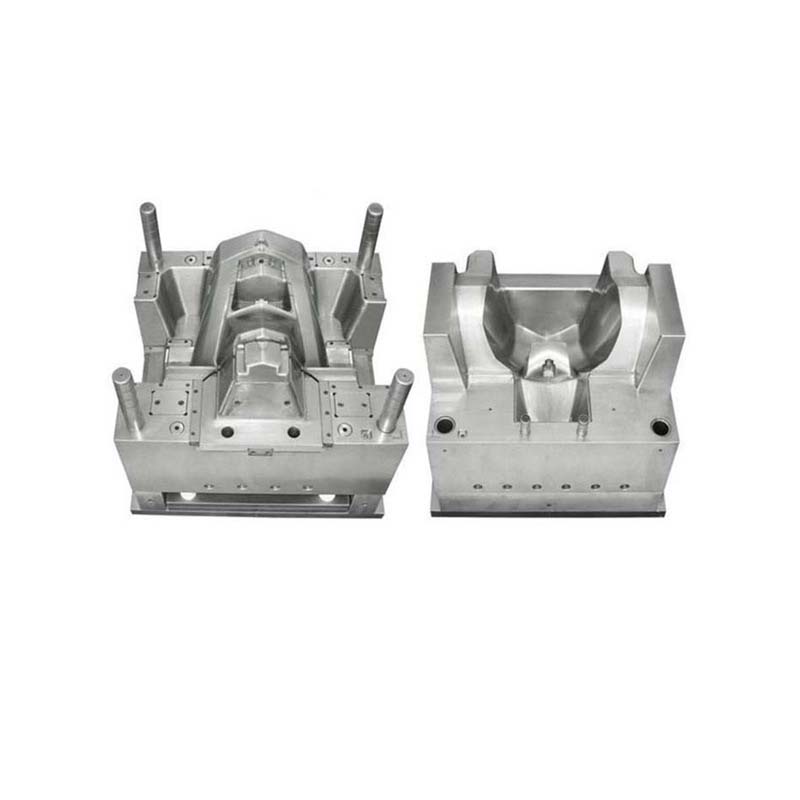
How Should You Design Molds for PTFE?
Venting: More Than Standard
PTFE releases volatile compounds during melting. Standard venting is inadequate.
| Vent Feature | Requirement | Standard Plastics |
|---|---|---|
| Depth | 0.05–0.1 mm | 0.01–0.02 mm |
| Width | 10–20 mm | 5–8 mm |
Place vents at the end of flow paths and around thick sections where volatiles accumulate.
Cooling Channel Layout
PTFE’s low thermal conductivity demands aggressive cooling:
- Channel placement: 5–8 mm from cavity surface
- Channel diameter: 10–15 mm
- Flow rate: 4–6 m/s (turbulent flow for efficient heat transfer)
- Coolant temperature: 80–100°C to prevent thermal shock
Draft Angles and Surface Finish
The non-stick property works against mold release. Parts don’t stick—but they also don’t stay in the cavity. Larger draft angles are essential:
- Draft angle: 5–8° per side (standard plastics: 0.5–2°)
- Surface finish: Ra 0.2–0.4 μm for smooth release
- Special coatings: Some molds use coatings to further improve release
Mold Materials
PTFE’s high processing temperature requires heat-resistant mold materials:
| Material | Application |
|---|---|
| H13 tool steel | Standard for PTFE molding |
| Nickel-based superalloys | High-volume production; extreme temperatures |
Hot Runner Systems
Hot runners for PTFE are rare . The material’s high processing temperature and degradation sensitivity make them difficult. When used, they must be made from Hastelloy or similar heat-resistant alloys.
What Defects Occur in PTFE Molding and How Do You Fix Them?
| Defect | Common Causes | Solutions |
|---|---|---|
| Warpage | Uneven cooling; residual stress | Balance cooling channels; optimize annealing |
| Voids | Trapped air; thermal degradation | Increase venting; reduce melt temperature |
| Short shots | Insufficient pressure or temperature | Increase injection pressure; verify melt temp |
| Surface defects | Mold contamination; improper flow | Clean mold thoroughly; adjust injection speed |
| Discoloration | Thermal degradation | Reduce melt temperature; check residence time |
Quality Control Measures
Statistical process control (SPC) : Monitor critical parameters with tight tolerances:
- Melt temperature: ±1°C
- Injection pressure: ±50 bar
Dimensional inspection : Use precision CMMs. Target tolerances: ±0.03 mm for critical components.
Surface testing : Contact angle measurements should exceed 110° . Values below indicate contamination or surface issues that compromise non-stick properties.
Chemical inertness testing : Periodic exposure to aggressive fluids verifies that processing hasn’t compromised PTFE’s key property.
Where Is PTFE Injection Molding Used?
Chemical Processing Equipment
Valves, seals, gaskets, and pump components. PTFE resists corrosive chemicals that destroy metals and other plastics. In chemical plants, PTFE parts last years where alternatives fail in months.
Electrical Components
Insulators, connectors, and cable jackets. PTFE’s low dielectric constant and high-temperature performance make it ideal for high-frequency and high-heat electrical applications.
Medical Devices
Surgical instruments, fluid handling components, and implantable devices. PTFE offers biocompatibility and resistance to bodily fluids.
Food Processing Equipment
Seals, gaskets, and non-stick surfaces. PTFE complies with food safety standards and provides easy cleaning.
Aerospace Components
Hydraulic systems, seals, and wire insulation. PTFE withstands extreme temperatures and resists aviation fuels and hydraulic fluids.
What Post-Processing Options Are Available?
Machining
PTFE machines well with carbide or diamond tools . Key considerations:
- Low speeds: 500–1500 RPM to avoid heat buildup
- Minimal coolant: Use sparingly to prevent contamination
- Sharp tools: Dull tools cause tearing rather than cutting
Adhesive Bonding
PTFE resists bonding. Surface treatment is required:
- Sodium etching : Chemical treatment modifies surface for adhesion
- Specialized adhesives : Formulated specifically for PTFE
- Cure temperature: 80–120°C
Heat Treatment (Annealing)
Annealing relieves internal stress:
- Temperature: 200–230°C
- Time: 2–4 hours
- Cooling: Slow to prevent stress reformation
Annealing reduces warpage and improves dimensional stability.
Yigu Technology's Perspective
At Yigu Technology , PTFE injection molding requires a different mindset. The material doesn’t behave like ABS or nylon. It demands higher temperatures, slower speeds, and more aggressive venting.
Our equipment is built for the challenge. Nickel-plated barrels resist corrosion. Precision temperature controls maintain ±1°C accuracy. Our molds use H13 tool steel with 5–8° draft angles and 0.05–0.1 mm vents .
We understand that PTFE’s chemical inertness is its value. We protect that property through clean material handling, precise process control, and rigorous quality testing.
Conclusion
PTFE injection molding pushes the limits of plastic processing. Melt temperatures exceed 360°C . Injection pressure reaches 2000 bar . Cooling takes minutes. Molds require large vents, steep draft angles, and aggressive cooling.
But the results justify the effort. Parts resist nearly all chemicals. They operate continuously at 260°C . They provide non-stick surfaces and electrical insulation that other materials cannot match.
Success requires specialized equipment, precise process control, and mold designs tailored to PTFE’s unique behavior. When these elements align, PTFE delivers performance in the most demanding applications.
FAQ
Is PTFE suitable for continuous use at high temperatures?
Yes. PTFE can be used continuously at temperatures up to 260°C . Short-term exposure to 300°C is possible. Prolonged exposure above 260°C may cause gradual degradation. For applications exceeding 260°C, consider alternatives like PEEK.
Can PTFE be colored or modified with additives?
PTFE is naturally white. It can be colored with compatible pigments, though color options are limited. Fillers like glass fiber , carbon , or bronze are often added to improve mechanical strength, creep resistance, or wear properties. Fillers typically reduce the non-stick and chemical resistance properties.
What safety precautions are needed when injection molding PTFE?
Proper ventilation is critical . Degraded PTFE releases toxic fumes, including hydrogen fluoride and perfluoroisobutylene. Use fume extraction systems . Operators should wear appropriate PPE including respirators. Control melt temperature carefully—exceeding 400°C accelerates degradation. Monitor residence time ; material left in the barrel too long degrades.
Why is PTFE injection molding more difficult than other plastics?
Three factors: extremely high melt temperature (360–390°C) demands specialized equipment; non-stick properties cause mold filling and ejection challenges; low thermal conductivity extends cooling times dramatically. Additionally, PTFE is shear-sensitive —fast injection speeds cause degradation.
What is the difference between PTFE and modified PTFE for injection molding?
Standard PTFE is not truly melt-processable; it requires ram injection and specialized techniques. Modified PTFE incorporates small amounts of co-monomers that improve melt flow, making injection molding more feasible. Modified grades still require high temperatures but offer better processability while retaining most of PTFE’s key properties.
Contact Yigu Technology for Custom Manufacturing
At Yigu Technology , we specialize in PTFE injection molding for demanding applications. Our high-temperature equipment, corrosion-resistant components, and precision process control deliver consistent quality. We serve chemical processing, medical, aerospace, and industrial clients who require PTFE’s unique properties. Contact us today to discuss your PTFE injection molding project.