Introduction
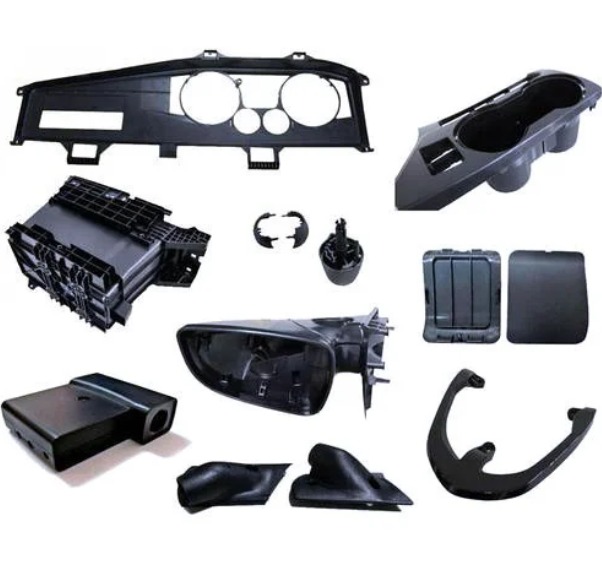
Injection molding is the backbone of modern plastic manufacturing. It produces billions of parts annually—from tiny medical components to large automotive panels—with remarkable speed and consistency. But the true power of injection molding lies in its ability to deliver two essential qualities simultaneously: precision and efficiency.
Precision ensures parts meet exact specifications, fit together correctly, and perform reliably. Efficiency enables high-volume production at low per-part costs, meeting market demands without compromising quality. When these two elements are balanced, manufacturers achieve competitive advantage.
This guide explores how injection molding achieves precision and efficiency, the factors that influence each, and practical strategies for optimization. You will learn the science behind the process and how to apply it in your operations.
What Is Injection Molding?
Injection molding is a manufacturing process where molten material—typically plastic—is injected into a mold cavity under high pressure. The material cools and solidifies, taking the shape of the cavity. The mold opens, and the finished part is ejected.
The Basic Process
| Stage | Description |
|---|---|
| Material feeding | Plastic pellets are fed into a heated barrel |
| Melting and mixing | The material is melted and homogenized; temperatures typically 130–300°C depending on material |
| Injection | Molten plastic is forced into the mold cavity at 50–200 MPa pressure |
| Cooling and solidification | The part cools; cooling time depends on thickness and material |
| Ejection | The mold opens and the finished part is ejected |
Why Precision and Efficiency Matter
| Factor | Importance |
|---|---|
| Precision | Ensures parts meet tolerances; fit correctly; function reliably |
| Efficiency | Reduces cost per part; enables rapid response to market demand |
Example: In automotive interior components, a deviation of even 0.1 mm can cause gaps between parts, affecting aesthetics and functionality. In aerospace, precision is critical for safety and performance.
What Factors Affect Shaping Precision?
Precision in injection molding depends on mold design, material selection, and process parameters.
Mold Design
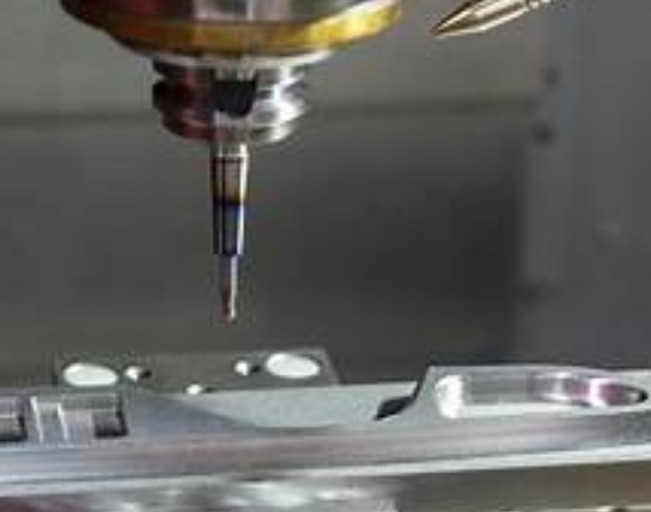
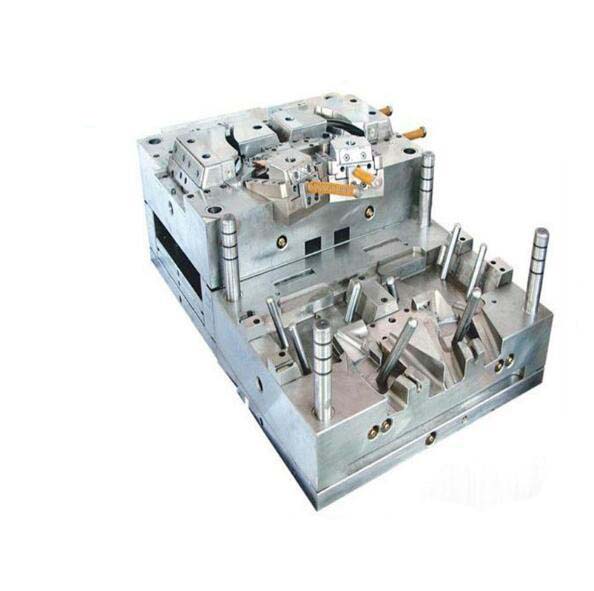
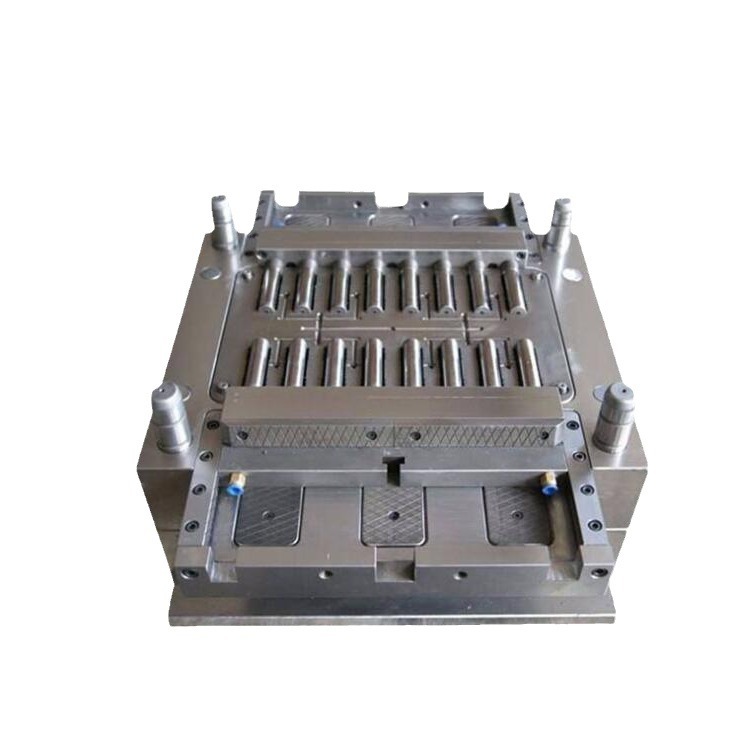
Mold design is the foundation of precision. The mold determines the final shape of every part.
| Design Element | Impact on Precision |
|---|---|
| Tolerance control | Molds machined to ±0.01 mm produce parts within ±0.05–0.1 mm |
| Parting line selection | Poor selection causes flash; misalignment; dimensional errors |
| Gate location | Affects flow balance; weld lines; stress distribution |
| Cooling channel design | Uneven cooling causes warpage; dimensional instability |
Best practice: Use advanced CAD/CAM software for mold design. For high-precision molds, machining accuracy can reach ±0.01 mm or better.
Material Selection
Different plastics have distinct properties that affect precision.
| Material Property | Effect on Precision |
|---|---|
| Shrinkage rate | PP shrinks 1–2%; PC shrinks 0.5–0.7%—affects final dimensions |
| Coefficient of thermal expansion | Higher expansion causes more dimensional change with temperature |
| Viscosity | High viscosity requires higher pressure; may cause incomplete filling |
| Moisture sensitivity | Moisture causes voids; surface defects; dimensional instability |
Example: A 100 mm part made from polypropylene may shrink 1–2 mm after cooling, while a polycarbonate part shrinks only 0.5–0.7 mm. Mold design must account for this.
Process Parameters
Process parameters directly control how the material fills and solidifies.
| Parameter | Optimal Range | Effect on Precision |
|---|---|---|
| Melt temperature | Material-dependent (e.g., ABS: 200–240°C) | Too low = poor flow; too high = degradation |
| Mold temperature | 40–100°C depending on material | Affects cooling rate; warpage; surface finish |
| Injection pressure | 50–200 MPa | Too low = incomplete fill; too high = over-packing; stress |
| Holding pressure | 50–80% of injection pressure | Compensates for shrinkage; prevents sink marks |
| Injection speed | 20–100 mm/s | Too slow = flow marks; too fast = shear stress; warpage |
Study finding: Increasing injection pressure from 80 MPa to 100 MPa reduced filling time from 0.5 to 0.3 seconds and improved dimensional accuracy due to more complete filling.
What Factors Affect Efficiency?
Efficiency determines how many parts can be produced per hour and the cost per part.
Cycle Time
Cycle time is the total time from injection to ejection. Shorter cycle times mean higher output.
| Component | Typical Share | Optimization Strategy |
|---|---|---|
| Injection | 5–15% | Optimize speed; reduce fill time |
| Holding | 10–20% | Minimize while maintaining quality |
| Cooling | 50–80% | Efficient cooling channels; conformal cooling |
| Mold open/eject | 5–10% | Fast machine movements; robotics |
Cooling optimization example: Using conformal cooling channels reduced cooling time by 30% for plastic bottle caps, increasing output by 20%.
Machine Performance
The injection molding machine’s capabilities directly affect efficiency.
| Machine Feature | Impact on Efficiency |
|---|---|
| Injection speed | High-speed machines (500–1000 mm/s) fill thin walls in fractions of a second |
| Clamping force | Sufficient force prevents flash; reduces downtime |
| Energy efficiency | Servo-hydraulic or all-electric machines reduce energy costs |
| Reliability | Well-maintained machines have less downtime |
Example: A high-speed machine producing disposable cups at 800 mm/s fills the mold in under a second, compared to several seconds on slower equipment.
Automation Level
Automation dramatically improves efficiency.
| Automation Type | Efficiency Gain |
|---|---|
| Robotic part handling | Removes parts in 1–2 seconds vs. 5–8 seconds manually |
| Automated material feeding | Continuous supply; no downtime for material changes |
| Automated quality inspection | 100% inspection at production speed |
| Automated recycling | Regrind and reuse scrap without manual intervention |
Example: A furniture component factory increased production efficiency by 30–40% after implementing automated material handling and recycling systems.
How Do You Balance Precision and Efficiency?
Precision and efficiency are not mutually exclusive. Optimal processes deliver both.
Process Optimization Strategies
| Strategy | Precision Benefit | Efficiency Benefit |
|---|---|---|
| Mold flow analysis | Predicts filling; eliminates defects | Reduces trial-and-error; faster startup |
| Scientific molding | Data-driven parameter setting | Consistent cycles; minimal variation |
| Conformal cooling | Uniform cooling; less warpage | 15–30% cycle time reduction |
| Hot runner systems | Consistent melt; no runner waste | Eliminates runner cooling; faster cycles |
| Process monitoring | Real-time quality control | Reduces scrap; less downtime |
Case Study: Automotive Component Production
| Factor | Before Optimization | After Optimization | Improvement |
|---|---|---|---|
| Defect rate | 15% | <5% | 67% reduction |
| Cycle time | 45 seconds | 33.75 seconds | 25% reduction |
| Tolerances | ±0.2 mm | ±0.1 mm | 50% tighter |
Actions taken:
- Redesigned parting lines based on flow simulation
- Switched to low-shrinkage polypropylene alloy (shrinkage 1.5% → 0.8%)
- Adjusted melt temperature: 220°C → 210°C
- Increased injection pressure: 90 → 105 MPa
- Optimized injection speed: 60 mm/s
Case Study: Medical Device Manufacturing
| Factor | Before Optimization | After Optimization | Improvement |
|---|---|---|---|
| Defect rate | 3% | <1% | 67% reduction |
| Production output | Baseline | +40% | 300 more syringes per hour |
Actions taken:
- High-precision mold with ±0.03 mm tolerances
- Medical-grade polypropylene with excellent flow
- High-performance machine with precise controls
- Automated robotic handling and inspection
What Are Common Defects Related to Precision and Efficiency?
Understanding defects helps identify optimization opportunities.
| Defect | Related to | Cause | Solution |
|---|---|---|---|
| Short shot | Efficiency + Precision | Low pressure; low temperature | Increase pressure; raise temperature |
| Flash | Efficiency (waste) | Excessive pressure; worn mold | Reduce pressure; repair mold |
| Warpage | Precision | Uneven cooling; internal stress | Balance cooling; optimize parameters |
| Sink marks | Precision | Insufficient holding pressure | Increase holding pressure/time |
| Flow lines | Precision (surface) | Slow injection; low temperature | Increase speed; raise temperature |
| Inconsistent dimensions | Precision | Process variation | Implement SPC; stabilize parameters |
What Tips Can Improve Both Precision and Efficiency?
For Mold Designers
Use Advanced Design Software
- CAD for accurate 3D modeling
- CAE (mold flow analysis) to simulate filling, cooling, and warpage
- Benefit: Companies using CAE software reduce mold-related defects by 40–50%
Optimize Cooling Channel Design
- Place channels close to cavity surface
- Follow part contour for uniform cooling
- Consider conformal cooling for complex parts
- Benefit: Conformal cooling reduces cycle time by 15–20% compared to traditional channels
Design for Manufacturability (DFM)
- Uniform wall thickness prevents warpage
- Adequate draft angles for easy ejection
- Proper gate placement for balanced flow
For Operators
Regular Machine Maintenance
- Clean injection nozzle regularly to prevent blockages
- Check and maintain hydraulic systems
- Replace worn parts promptly
- Benefit: Regular maintenance reduces machine downtime by 30%
Precise Process Parameter Control
- Monitor temperature, pressure, and speed in real time
- Use sensors and control systems for accuracy
- Adjust parameters based on part quality observation
- Example: If short shots occur, increase injection pressure gradually while monitoring results
Statistical Process Control (SPC)
- Track key parameters (temperature, pressure, cycle time)
- Detect trends before defects occur
- Maintain process stability
How Does Automation Enhance Precision and Efficiency?
Automation addresses both precision and efficiency simultaneously.
| Automation Application | Precision Benefit | Efficiency Benefit |
|---|---|---|
| Robotic part removal | Consistent extraction; no damage | 2–5 seconds saved per cycle |
| Vision inspection | 100% quality check; detects defects | No manual inspection; immediate feedback |
| Automated material handling | Consistent material feed | No downtime; continuous operation |
| Closed-loop process control | Real-time parameter adjustment | Consistent cycles; reduced scrap |
Conclusion
Injection molding achieves both shaping precision and efficiency through careful attention to:
- Mold design – Precise tolerances; optimized parting lines; efficient cooling
- Material selection – Matching shrinkage, viscosity, and properties to requirements
- Process parameters – Controlled temperature, pressure, speed, and timing
- Machine performance – High-speed injection; sufficient clamping; reliability
- Automation – Robotic handling; automated inspection; material management
When these elements are optimized, manufacturers achieve:
- Tighter tolerances (±0.05 mm or better)
- Lower defect rates (<5% typical; <1% for optimized processes)
- Shorter cycle times (20–50% reduction possible)
- Higher output (30–40% increase with automation)
The result is a manufacturing process that delivers high-quality parts at competitive costs—meeting market demands while maintaining the precision required for critical applications.
Frequently Asked Questions (FAQ)
How does mold temperature affect injection molding precision?
Mold temperature determines the cooling rate of the molten material. Lower mold temperatures cause faster cooling, which can increase viscosity, cause injection pressure loss, and potentially lead to incomplete filling. Higher mold temperatures improve melt flow and surface quality but may increase cycle time and part shrinkage. For crystalline plastics, higher temperatures affect the degree of crystallinity, which impacts mechanical properties and dimensional stability.
What are common defects in injection molding related to low efficiency?
Low efficiency often manifests as short shots (incomplete filling) due to slow injection or insufficient pressure. Long cycle times cause warping as parts cool unevenly during extended cooling periods. Inconsistent process parameters due to inefficient machine operation result in variations in part quality, such as inconsistent wall thickness. These defects increase scrap rates, further reducing efficiency.
Can the same injection molding machine be used for different materials?
Yes, but adjustments are required. Different materials have different melting points, viscosities, and processing requirements. Temperature settings, injection pressure, and speed must be optimized for each material. Switching from low-viscosity polyethylene to high-viscosity engineering plastic requires careful parameter adjustment. Some materials may require specialized screws or barrels to ensure proper processing and consistent quality.
What is the most effective way to reduce cycle time?
The most effective way is cooling optimization, as cooling accounts for 50–80% of cycle time. Conformal cooling channels that follow the part contour provide uniform cooling and can reduce cycle time by 15–30%. Additional strategies: minimize injection and holding times through parameter optimization; use fast machine movements for mold open/close; implement robotic part removal to reduce ejection delays.
How can I improve both precision and efficiency simultaneously?
Use mold flow analysis to predict and eliminate defects before tooling. Implement scientific molding—data-driven process development rather than trial-and-error. Optimize cooling systems for uniform temperature distribution. Use hot runner systems to eliminate runner cooling and waste. Install process monitoring with real-time feedback to maintain stability. These approaches improve precision while reducing cycle time and scrap.
Contact Yigu Technology for Custom Manufacturing
At Yigu Technology, we specialize in injection molding that balances precision and efficiency. Our expertise spans automotive, medical, electronics, and consumer goods industries where both quality and productivity matter.
Our capabilities include:
- Precision mold design – Tolerances to ±0.01 mm; conformal cooling
- Scientific molding – Data-driven process development
- Advanced automation – Robotic handling; vision inspection
- Process optimization – Cycle time reduction; defect prevention
- Material expertise – Engineering plastics; medical grades; commodity resins
We help clients achieve the optimal balance between precision and efficiency—delivering high-quality parts at competitive costs with reliable production schedules.
Contact us today to discuss your injection molding project. Let our expertise help you shape precision and efficiency into every part.