Introduction
You land a new order, but your shop floor can’t handle the volume. You invest heavily in new machine tools, yet production efficiency barely improves. Sound familiar?
These challenges all trace back to one thing: machining capacity. It’s the measure of what your equipment can do—how precise, how fast, and how consistently. And it directly determines whether you win orders, meet deadlines, and stay profitable.
Simply put, machining capacity answers three questions:
- Can you machine it? (equipment capability)
- Can you machine it well? (precision and quality)
- Can you machine it fast? (efficiency and throughput)
For manufacturers, understanding your own machining capacity isn’t just technical knowledge. It’s the foundation for quoting accurately, optimizing processes, and staying competitive.
What Machine Specifications Define Capacity?
Machining capacity starts with hardware. These parameters set the boundaries of what’s possible.
How Does the Number of Axes Matter?
The number of axes determines machining complexity and flexibility.
| Machine Type | Best For | Cost Context |
|---|---|---|
| 3-axis | Flat surfaces, simple curves, standard parts | Low cost; unit cost 30% of 5-axis for simple work |
| 5-axis | Complex curved surfaces, one-setup forming of intricate parts | Higher investment; cycle time savings offset cost |
An aerospace parts company switched to 5-axis machining for complex structural parts. Machining time dropped from 8 hours to 2.5 hours. Scrap rates fell from 5% to 0.8% .
What Key Parameters Set the Upper Limits?
Beyond axis count, these specifications define what a machine can handle:
| Parameter | Role | Industry Reference (Mid-Range) |
|---|---|---|
| Travel range | Limits maximum part size | X/Y/Z: 800 × 600 × 500 mm |
| Spindle speed | Affects cutting efficiency, high-speed capability | 8,000–15,000 rpm |
| Spindle torque | Determines cutting force for hard materials | 15–30 N·m |
| Spindle power | Provides cutting energy | 11–22 kW |
| Table size | Accommodates workpiece dimensions | 1,000 × 600 mm |
| Weight capacity | Maximum workpiece weight | 500–1,000 kg |
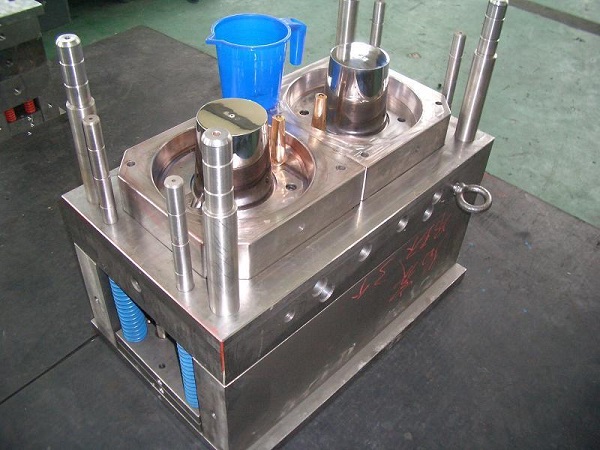
A mold shop processed large injection molds weighing 800 kg on a machine rated for 500 kg. They had to split the mold into sections, machine separately, and reassemble. The result: 30% longer processing time and accuracy deviations.
After upgrading to a machine with 1,500 kg capacity, they machined the mold as a single piece. Accuracy improved to ±0.005 mm. Production efficiency rose 40% .
How Does Precision Define Machining Quality?
If machine parameters are “hard power,” precision is “soft power.” It determines whether parts meet design requirements—especially critical in high-end manufacturing.
What Do Accuracy and Surface Finish Mean?
Machining accuracy measures how closely actual dimensions match design specifications. Surface finish (Ra) reflects surface smoothness.
For a smartphone lens holder:
- Accuracy requirement: ±0.002 mm
- Surface finish: Ra ≤ 0.8 μm
If surface finish falls short, optical performance suffers.
Why Do Tolerance Control and Repeatability Matter?
Tolerance control defines the allowable deviation range. For an automotive bearing, if the inner ring tolerance exceeds design limits, the bearing runs noisy and fails prematurely.
Repeatable positioning accuracy measures how precisely a machine returns to the same position across multiple operations. Industry standard: ≤ ±0.003 mm.
An electronics component factory ignored repeatability issues. Their machine held ±0.01 mm in specification, but batch-to-batch variation caused connector pin misalignment. The result: a ¥1 million order loss.
What About Dynamic Accuracy, Thermal Stability, and Vibration?
At high cutting speeds, these factors become critical:
- Dynamic accuracy: Maintaining precision while axes are in motion
- Thermal stability: Controlling temperature-induced errors
- Vibration control: Minimizing cutting-induced oscillations
A new energy auto parts factory machining motor housings experienced excessive vibration at high speeds. Surface finish degraded. By optimizing the machine’s damping structure and adjusting cutting parameters, they reduced vibration amplitude by 60% and increased machining efficiency by 25% .
Thermal stability matters too. One machine showed 0.01 mm spindle thermal deformation after 4 hours of continuous operation. Installing a constant-temperature cooling system reduced deformation to 0.003 mm .
How Does Material Adaptability Expand Capability?
Different materials place different demands on machining capacity. The range of materials you can process directly affects the orders you can accept.
What About Common Metals?
Carbon steel and cast iron are forgiving. Standard 3-axis machines handle them efficiently with low tool wear.
Aluminum alloys require attention to cutting speed and feed to avoid material sticking. An aerospace parts manufacturer machining aluminum brackets used high-speed cutting—12,000 rpm spindle speed—and increased output per unit time by 30% .
How Do Composites and Superalloys Challenge Capacity?
These materials separate capable shops from the rest.
| Material | Challenges | Solutions | Results |
|---|---|---|---|
| Composites (carbon fiber) | High hardness, fiber delamination | Diamond-coated tools, optimized cutting angles | Scrap rate from 15% to 3% |
| Superalloys (titanium, nickel-based) | High temperature resistance, rapid tool wear | High-torque machines, PCD tools, 5-axis capability | Cutting efficiency up 40%, tool life doubled |
An aero engine company machining titanium blades used 5-axis machining centers with PCD tools. Cutting efficiency rose 40%. Tool life extended 2×.
How Does Hardness Processing Capability Scale?
Hardened steel (HRC 60+) demands high torque and rigid machines. A mold shop machining hardened steel molds couldn’t cut effectively with their original machine—insufficient torque.
Upgrading to a high-torque spindle enabled one-setup machining. Cycle time shortened 50% .
Cutting parameter optimization matters for all materials. For 45 steel:
- Optimal: 80 m/min cutting speed, 0.2 mm/r feed
- Blindly increasing speed reduces tool life by over 60%
How Do Capacity and Efficiency Indicators Quantify Capability?
Machining capacity ultimately shows up in quantifiable metrics—numbers that affect profitability directly.
What Are Batch Processing Capacity and Output Rates?
Batch processing capacity measures maximum output over time. Output per unit time (parts/hour) is the direct measure.
A standard parts factory using automated lines with 3-axis machining centers produces 1,000 M10 bolts per hour. Manual operation on ordinary machines yields only 200 per hour.
Improving batch capacity requires:
- Machine stability
- Automation integration
- Process optimization (standardized fixtures, reduced changeover time)
How Do Tool Change, Clamping Time, and Utilization Affect Throughput?
Tool change time and clamping time are non-cutting activities that eat productivity:
- Manual tool change: 30–60 seconds
- Automatic tool change (machining center with tool magazine): 5–10 seconds
Utilization rate (actual working time ÷ planned working time) reflects how well equipment is used. Industry excellence: ≥85% .
A machine shop improved utilization from 65% to 88% through maintenance optimization and production scheduling. Annual capacity rose 30% .
What Are OEE and Cycle Time?
OEE (Overall Equipment Effectiveness) is the standard metric for equipment efficiency:
OEE = Availability × Performance × Quality
Industry average: about 60% . Top performers exceed 85% .
An auto parts factory used OEE management to identify 20% downtime. Optimizing maintenance schedules and training reduced downtime to 5% . OEE rose from 62% to 83% . Per-unit cost dropped 18% .
Cycle time (average time per part) sets production limits. A line with 30-second cycle time theoretically produces 960 parts per 8-hour shift. Reducing cycle time to 25 seconds increases capacity to 1,152 parts per shift.
Conclusion
Machining capacity isn’t just about the machines you own. It’s the combination of hardware specifications, precision capability, material adaptability, and operational efficiency.
Understanding your own capacity lets you:
- Quote accurately—know what you can actually deliver
- Invest wisely—target upgrades where they matter most
- Optimize processes—identify and eliminate bottlenecks
- Win the right work—match orders to your strengths
The path to stronger competitiveness isn’t always new equipment. Often it’s better use of what you have: process optimization, improved maintenance, OEE management, and skilled operators who understand how to push machines to their limits without crossing them.
FAQ
How do I quickly assess my machining capacity?
Focus on three areas: (1) Hardware parameters—axis count, travel, spindle power—do they match your work? (2) Precision indicators—accuracy, repeatability—do they meet specifications? (3) Efficiency data—OEE, output per hour—does it align with production plans?
How do I choose between 3-axis and 5-axis machines?
For simple parts and high volume, 3-axis machines offer lower cost and higher efficiency. For complex curved surfaces, irregular shapes, or when you need reduced clamping and lower scrap rates, 5-axis machines pay off.
How can I improve machining efficiency for superalloys and composites?
Use specialized tools (PCD, ceramic). Optimize cutting parameters—reduce speed, increase feed to manage tool wear. Ensure machine rigidity and thermal stability to minimize vibration and thermal deformation.
What are the key measures for improving OEE?
Reduce downtime—optimize maintenance schedules, address faults quickly. Improve performance efficiency—minimize idle time, optimize cutting parameters. Increase quality pass rate—strengthen process control, refine processes.
What options exist when machining capacity is insufficient besides buying new equipment?
Optimize processes—cutting parameters, tooling, fixtures. Improve management—OEE tracking, standardized work. Consider outsourcing—partner with shops that have complementary capabilities for overflow work.
Contact Yigu Technology for Custom Manufacturing
At Yigu Technology, we understand that machining capacity is the foundation of manufacturing competitiveness. Our expertise spans equipment selection, process optimization, and custom component manufacturing across materials from standard steels to advanced superalloys. Whether you need to expand your capacity or partner with a shop that has the capabilities you require, contact us today to discuss your manufacturing needs.