Introduction
Production speed, part precision, and manufacturing cost all trace back to one thing: manufacturing processing technology. The right technology choices can increase production efficiency by over 30%. The wrong choices lead to rework, delays, and wasted materials.
This matters across every industry. Auto parts demand high-volume consistency. Aerospace components require extreme precision. Medical devices need flawless surface finishes. In each case, the machining process directly determines success.
This guide walks you through processing fundamentals. You will learn about traditional and modern methods, equipment selection, parameter optimization, and advanced technologies. By the end, you will have a clear framework for choosing the right processes for your production needs.
What Are the Core Classifications of Processing Technology?
Manufacturing processing changes the shape and properties of materials through physical or chemical means. All methods fall into three core categories.
| Category | Principle | Common Methods | Best Applications |
|---|---|---|---|
| Subtractive Manufacturing | Removes material to create shape | Turning, milling, drilling, grinding | Mass production, precision parts |
| Additive Manufacturing | Builds layers to create shape | 3D printing (FDM, SLA, SLS) | Complex structures, custom products |
| Molding Processes | Forms material through deformation or flow | Forging, casting, injection molding | Near-net shape, reduced machining |
Near-net forming technology deserves special attention. It creates parts close to final shape, reducing subsequent machining. This saves material and lowers costs significantly.
What Are the Core Traditional Cutting Processes?
Traditional cutting remains the backbone of manufacturing. Here is how each process serves production.
| Process | Function | Typical Applications | Key Advantages |
|---|---|---|---|
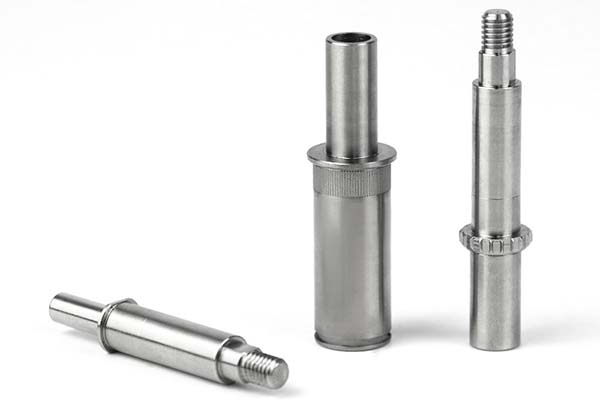
| Turning | Machines rotating parts | Motor shafts, gear blanks, pulleys | High efficiency, ideal for mass production |
| Milling | Machines flat surfaces, slots, complex contours | Machine tool beds, mold cavities, brackets | Flexible, handles complex shapes |
| Drilling | Creates round holes | Assembly holes, oil passages, fastener holes | Simple operation, highly versatile |
| Grinding | High-precision surface finishing | Precision bearings, machine tool guides, cutting tools | Accuracy to IT5+, Ra ≤0.8 μm |
Real case: An auto parts factory produces engine crankshafts. They use a combined process of "turning roughing + grinding finishing." This approach ensures mass production efficiency while controlling journal roundness tolerance within 0.005 mm—critical for high-speed engine operation.
What Equipment and Tools Drive Modern Processing?
Behind every efficient process lies capable equipment and proper tooling.
Core Processing Equipment
Machine tools fall into two main categories:
- Conventional machine tools: Manual operation, suitable for simple parts, small batches, or repair work
- CNC machine tools: Computer numerical control, automated operation, precision and efficiency
CNC penetration in manufacturing now reaches 75% (source: International Machine Tool Manufacturers Association). Key equipment highlights include:
- Multi-axis machining centers (5-axis or more): Complete complex parts in one setup, reducing clamping errors. Essential for aerospace components.
- EDM (Electrical Discharge Machining): Uses electrical sparks to erode material. Ideal for hard-to-cut materials like mold steel and carbide with hardness above HRC 60.
The Critical Role of Tools and Tooling
| Component | Function | Impact |
|---|---|---|
| Cutting Tools | The "teeth" of machining | Tool material directly affects efficiency and quality |
| Fixtures | Hold workpieces securely | Good design shortens clamping time by 40% and reduces errors |
| Spindle | Rotates the tool | High-speed spindle (≥10,000 rpm) enables high-speed cutting |
| Tool Magazine | Stores and changes tools automatically | Improves automation, reduces tool change time |
Tool materials matter. PCD (polycrystalline diamond) tools last 5–10 times longer than carbide when machining aluminum alloys.
How Do Process Parameters and Quality Control Interact?
Precision control separates good manufacturing from great manufacturing.
Core Cutting Parameters
Three parameters drive cutting performance:
- Cutting speed: Too high accelerates tool wear. Too low reduces efficiency.
- Feed rate: Affects surface roughness. Lower feed = smoother surface, but slower production.
- Depth of cut: Determines material removed per pass. Must match machine power and tool strength.
Practical tip: When machining 45 steel with carbide tools, the optimal combination is:
- Cutting speed: 100–150 m/min
- Feed rate: 0.1–0.2 mm/rev
- Depth of cut: 2–5 mm
This balance achieves efficiency while protecting tool life.
Quality Control Methods
| Quality Indicator | What It Measures | Typical Tool |
|---|---|---|
| Tolerance and Fit | Assembly accuracy | Micrometers, bore gauges |
| Surface Roughness | Wear resistance, sealing | Roughness tester |
| Form and Position Tolerance | Straightness, parallelism, roundness | CMM (Coordinate Measuring Machine) |
SPC (Statistical Process Control) monitors data fluctuations during production. It warns of quality risks before defects occur.
Real case: An electronics parts factory applied SPC. Their defect rate dropped from 1.2% to 0.3% —a 75% reduction in scrap.
How Do Material Properties Affect Processing?
Materials are not created equal. Their properties directly determine processing success.
Machinability Matters
Machinability describes how easily a material can be cut. Mild steel machines easily. Stainless steel and superalloys are difficult materials requiring specialized approaches.
Hardness Drives Tool Choice
Higher hardness means higher cutting resistance and faster tool wear. For hardened steel at HRC 55, standard tools fail quickly. CBN (cubic boron nitride) tools become necessary.
Heat Treatment Timing
Heat treatment changes material properties. Hardness increases after quenching, but machinability decreases. The typical approach is "machine first, then heat treat." If post-heat-treatment machining is unavoidable, cutting parameters must be adjusted.
Real case: Machining titanium alloy—a classic difficult material—requires:
- Low cutting speed (30–50 m/min)
- High feed rate
- High-pressure cooling (≥10 MPa)
- Specialized titanium tooling
Result: Tool life extended from 20 minutes to 80 minutes per edge.
Tool Wear and Chip Control
Tool wear has two main forms:
- Mechanical wear: from abrasive action
- Thermochemical wear: from heat—accounts for 60% of wear in high-speed cutting
Cutting fluid reduces tool temperature by 30–50°C, extending tool life. Chip control—managing how chips form and evacuate—prevents chips from wrapping around the workpiece, ensuring machining safety.
What Advanced Technologies Are Shaping the Future?
New technologies push the boundaries of what manufacturing can achieve.
Advanced Processing Technologies
| Technology | Description | Key Advantage |
|---|---|---|
| High-Speed Machining | 5–10× traditional cutting speeds | 30–50% efficiency gain, excellent surface quality |
| Precision/Micro Machining | Accuracy to micron or nanometer level | Essential for semiconductors, medical devices |
| Laser Processing | Non-contact cutting, welding, marking | Flexibility, no tool wear |
| Water Jet Cutting | High-pressure water + abrasive | Cuts brittle and heat-sensitive materials without thermal damage |
| Ultrasonic Processing | Vibrations for hard, brittle materials | Minimal surface damage |
Hybrid Manufacturing Technology
Hybrid manufacturing combines additive and subtractive processes. "3D printing + CNC finishing" uses additive manufacturing for complex geometry and subtractive manufacturing for precision.
This approach is gaining ground in aerospace part production. It can reduce manufacturing costs by 20–30% compared to traditional methods alone.
Conclusion
Manufacturing processing technology sits at the heart of industrial production. The right choices in processes, equipment, tools, and parameters drive efficiency, precision, and cost-effectiveness.
Key principles to remember:
- Match the process to your material and volume requirements
- Optimize cutting parameters for balance between speed and tool life
- Use SPC and quality control to catch issues early
- Consider advanced technologies when they offer clear ROI
With Industry 4.0 advancing, processing technology moves toward intelligence, efficiency, and sustainability. For most manufacturers, the biggest gains come not from chasing the newest technology, but from mastering the basics—parameter optimization, tool upgrades, and process refinement.
FAQ
How do I choose between additive and subtractive manufacturing?
For mass production of simple parts, choose subtractive manufacturing—it is efficient and cost-effective. For complex structures, custom products, or small batches, additive manufacturing works well. For high-precision requirements, consider hybrid manufacturing that combines both.
What are the core considerations when machining difficult materials?
Select specialized tools (CBN, PCD, or coated carbide). Reduce cutting speed. Increase feed rate. Strengthen cooling and lubrication. Optimize tool geometry angles for the specific material.
How can I reduce production costs through process optimization?
Use near-net forming to reduce machining allowance. Optimize cutting parameters to improve efficiency. Choose high-life tools to reduce changeover costs. Apply SPC to lower defect rates. These low-cost methods often yield significant savings.
What is the core difference between CNC and conventional machines?
CNC machines use computer programs for automatic control. They deliver high precision and efficiency, suitable for complex parts and mass production. Conventional machines rely on manual operation and work best for simple parts, small batches, or repair work.
What cutting speed should I use for different materials?
For aluminum with carbide tools, 300–800 m/min. For steel (45 steel), 100–150 m/min. For stainless steel, 60–100 m/min. For titanium, 30–50 m/min. For hardened steel, 50–80 m/min with CBN tools. Always start conservative and adjust based on tool wear and surface finish.
Contact Yigu Technology for Custom Manufacturing
At Yigu Technology, we live at the intersection of design, processing technology, and production. Our experience across automotive, aerospace, medical, and industrial sectors has taught us one thing: the right process choices make all the difference.
We offer:
- CNC machining (3-axis to 5-axis) for precision components
- Process optimization to reduce cycle times and extend tool life
- Material expertise across metals, plastics, and composites
- Quality control with CMM inspection and SPC monitoring
- Design for Manufacturing (DFM) reviews to catch issues early
Whether you need high-volume production runs or complex custom parts, our engineering team works with you to select the optimal processes, tools, and parameters for your specific requirements.
Contact us today to discuss your project. Let our processing expertise help you achieve efficient, precise, and cost-effective production.