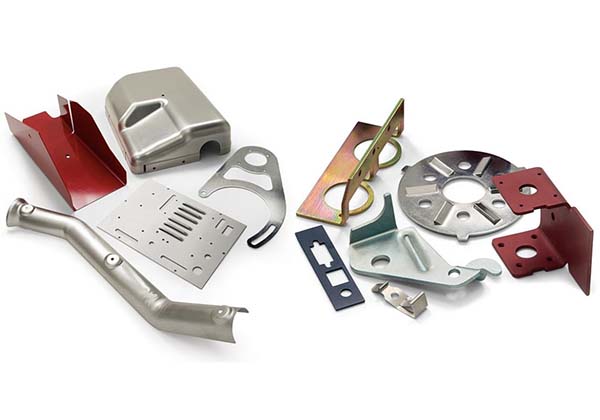
Manufacturers often face a difficult choice. They need stainless steel’s corrosion resistance, but the high nickel content of grades like SUS304 drives up costs. They could use carbon steel, but it rusts. SUS430 offers a middle path. As a ferritic stainless steel, it delivers good corrosion resistance at a lower cost. It contains 16% to 18% chromium and less than 0.5% nickel. This composition makes it affordable while still providing reliable performance for many applications. But stamping SUS430 requires understanding its unique characteristics. It has lower ductility than austenitic grades. It shows more springback. Its chromium content can wear tools. This guide covers SUS430’s properties, stamping techniques, and applications. You will learn how to work with this material efficiently.
What Makes SUS430 Different from Other Stainless Steels?
SUS430 is a ferritic stainless steel. Its microstructure is body-centered cubic, unlike the face-centered cubic structure of austenitic grades like SUS304. This difference affects every aspect of its behavior.
Chemical Composition
| Element | Percentage |
|---|---|
| Chromium | 16–18% |
| Nickel | ≤0.5% |
| Carbon | ≤0.12% |
| Manganese | ≤1.0% |
| Silicon | ≤1.0% |
The low nickel content is key. Nickel is expensive. By minimizing it, SUS430 costs 20% to 30% less than SUS304 while still providing corrosion resistance.
Mechanical Properties
| Property | SUS430 | SUS304 |
|---|---|---|
| Tensile strength | 450 MPa | 520 MPa |
| Yield strength | 205 MPa | 215 MPa |
| Elongation | 22% | 40% |
| Hardness | ≤183 HB | ≤187 HB |
SUS430 matches SUS304 in basic strength but falls short in ductility. It stretches about half as much before breaking. This limits its use in deep drawing or complex forming.
Magnetic Behavior
SUS430 is magnetic, unlike austenitic stainless steels. This is an advantage for some applications—sensor components, electromagnetic devices, and parts that need to be detected by magnetic sorting equipment. For other applications, it may be a limitation.
Thermal Conductivity
SUS430 conducts heat better than SUS304. This makes it suitable for parts exposed to heat, such as oven components, toasters, and exhaust systems. It dissipates heat more efficiently, reducing hot spots.
How Does SUS430 Compare to Other Stainless Steels?
| Grade | Type | Corrosion Resistance | Formability | Cost | Magnetic |
|---|---|---|---|---|---|
| SUS304 | Austenitic | Excellent | Excellent | High | No |
| SUS316 | Austenitic | Superior | Good | Very high | No |
| SUS430 | Ferritic | Good | Moderate | Moderate | Yes |
| SUS409 | Ferritic | Fair | Moderate | Low | Yes |
SUS430 occupies a practical middle ground. It offers better corrosion resistance than SUS409 but costs less than SUS304. For indoor applications, moderate environments, and cost-sensitive projects, it is often the best choice.
How Do You Stamp SUS430 Successfully?
Stamping SUS430 requires adjustments to account for its lower ductility and different forming behavior.
Blanking and Piercing
SUS430’s chromium content makes it more abrasive than austenitic grades. Use carbide tooling for high-volume production. Tool steel with coatings like TiN works for moderate volumes.
Die clearance should be 8% to 10% of material thickness—slightly higher than for SUS304. This reduces shear stress on the material and extends tool life. Sharper angles and tighter clearances increase the risk of tool wear and edge cracking.
Bending and Forming
SUS430 shows 3 to 5 degrees of springback—more than SUS304. Compensate with:
- Over-bending: 2 to 4 degrees beyond the target angle
- Bottoming dies: Strike the material to reduce elastic recovery
- FEA simulation: Predict springback for complex parts
Minimum bend radius should be 1.5× to 2× material thickness. Tighter radii risk cracking, especially when bending perpendicular to the rolling direction.
Shallow Drawing
SUS430 can be drawn for shallow parts, but draw ratios should be limited to 1.5:1. A 100 mm blank can become a 150 mm deep part. Deeper draws risk necking and tearing.
Use:
- Mineral-based lubricants: These work well with ferritic steels
- Moderate press speeds: 15 to 20 strokes per minute
- Polished dies: Reduce friction and prevent galling
Progressive Die Stamping
Progressive dies are efficient for high-volume SUS430 parts like automotive trim and appliance components. Design considerations:
- Minimize localized stress: Avoid sharp transitions between stations
- Generous radii: Reduce stress concentration
- Balanced forming: Distribute work across multiple stations
Tool Wear Monitoring
SUS430’s chromium content gradually wears tools. Inspect dies every 5,000 strokes for signs of wear. Dull punches increase burrs and reduce part quality. Regular maintenance extends tool life and maintains consistency.
What Quality Controls Are Essential?
Material Verification
Verify incoming SUS430 against ASTM A240 or JIS G4305 specifications. Check:
- Chemical composition
- Mechanical properties
- Surface finish
- Thickness tolerance (±5% typical)
Dimensional Control
Use coordinate measuring machines (CMMs) to verify critical dimensions. Monitor:
- Flatness (≤2 mm/m)
- Hole positions
- Bend angles
- Overall part dimensions
Surface Inspection
Inspect for surface defects:
- Roll marks
- Scratches
- Pitting
- Galling marks
Surface finish specifications include:
- 2B: Matte finish, standard
- BA: Bright annealed, reflective
- No. 4: Brushed, decorative
Corrosion Testing
For parts that will face moisture, conduct salt spray testing per ASTM B117. SUS430 typically resists white rust for 24 to 48 hours. Results depend on surface finish and post-stamping treatments.
Ferrite Content
Measure ferrite content to ensure material consistency. Optimal range is 80% to 90%. Variations can affect magnetic properties and formability.
Where Is SUS430 Stamping Used?
Kitchen Appliances
SUS430 is common in household appliances. It resists water, mild detergents, and food acids. Examples include:
- Range hoods and oven exteriors
- Sinks and countertops
- Washing machine drums
- Dishwasher interiors
Automotive Industry
Automotive applications leverage SUS430’s heat resistance and cost advantage:
- Exhaust system components (mufflers, pipes)
- Wheel covers and trim
- Door sill plates
- Heat shields
Architectural Trim
SUS430’s appearance and corrosion resistance suit interior architectural applications:
- Elevator panels
- Door frames and trim
- Handrails
- Wall cladding
HVAC Ducting
High thermal conductivity and moisture resistance make SUS430 suitable for:
- Air handling systems
- Ductwork components
- Vent covers
Solar Panel Frames
Renewable energy applications use SUS430 for:
- Solar panel frames and mounting hardware
- Ground-mounted structures
The material balances durability in outdoor environments with lower cost.
What Are the Limitations of SUS430?
Corrosion Resistance
SUS430 relies on a chromium oxide layer for protection. It resists air and fresh water well. However, it is susceptible to:
- Chloride pitting: Saltwater, swimming pool chemicals, and high-chloride cleaners
- Creep corrosion: In high-humidity environments with contaminants
For outdoor or coastal applications, SUS304 or SUS316 is a better choice.
Heat Resistance
SUS430 withstands oxidation up to 815°C. It is suitable for oven parts and cyclic heat exposure in appliances. However, prolonged exposure at high temperatures can reduce corrosion resistance.
Weldability
Welding SUS430 is possible but has consequences. Heat causes chromium carbide precipitation at grain boundaries. This depletes chromium in adjacent areas, reducing corrosion resistance. For critical applications:
- Use low-heat welding techniques (laser, TIG with low heat input)
- Apply post-weld annealing to restore corrosion resistance
- Avoid welding for parts that will face corrosive environments
How Can You Enhance SUS430’s Performance?
Passivation
Passivation treats the surface with nitric or citric acid to remove free iron and thicken the chromium oxide layer. This improves corrosion resistance without changing appearance.
Surface Finishing
Different surface finishes serve different purposes:
- 2B: Standard matte, good for painting or coating
- BA: Bright annealed, reflective, decorative
- No. 4: Brushed, hides fingerprints, decorative
Coatings
For outdoor applications or enhanced corrosion resistance, apply:
- Clear coatings
- Powder coating
- Paint (with proper primers)
Conclusion
SUS430 offers a practical balance of performance and cost. It delivers good corrosion resistance without the high nickel content of austenitic grades. Its magnetic properties suit some applications. Its thermal conductivity benefits heat-exposed parts. And its lower cost makes it attractive for high-volume, cost-sensitive projects.
But stamping SUS430 requires understanding its limits. It has lower ductility than SUS304. It shows more springback. Its chromium content wears tools gradually. Success comes from using the right tooling, proper clearances, and careful process control.
When these factors are managed, SUS430 delivers reliable, cost-effective parts for appliances, automotive trim, architectural components, and more. It is not a replacement for austenitic grades in harsh environments. For indoor applications, moderate exposure, and cost-conscious projects, it is an excellent choice.
FAQ About Metal Stamping SUS430
Can SUS430 be used in outdoor applications?
SUS430 can be used outdoors in dry climates but may rust in humid or coastal areas. For outdoor applications, apply a protective coating or choose SUS304 for better corrosion resistance. Salt spray testing typically shows 24 to 48 hours of resistance before white rust appears.
How does SUS430 compare to SUS304 in stamping cost?
SUS430 is 20% to 30% cheaper than SUS304 due to its lower nickel content. The cost difference is significant for high-volume production. However, SUS430’s lower ductility may require more careful process design, which can offset some savings.
Is welding SUS430 advisable for stamped parts?
Welding is possible but may reduce corrosion resistance. The heat from welding causes chromium carbide precipitation, depleting chromium at the weld zone. For critical parts, use low-heat welding techniques and post-weld annealing to restore corrosion resistance. For non-critical parts, welding may be acceptable without special treatment.
What is the minimum bend radius for SUS430?
The minimum bend radius is typically 1.5× to 2× material thickness. For a 1 mm sheet, use a 1.5 mm to 2 mm radius. Tighter radii risk cracking, especially when bending perpendicular to the rolling direction. Annealed material can bend slightly tighter than cold-rolled.
How do you prevent tool wear when stamping SUS430?
Use carbide tooling for high-volume production. For moderate volumes, use coated tool steel (TiN, AlTiN). Maintain proper die clearance (8% to 10% of thickness). Inspect dies every 5,000 strokes and sharpen as needed. Proper lubrication with mineral-based oils also reduces wear.
Contact Yigu Technology for Custom Manufacturing
Stamping SUS430 requires experience with ferritic stainless steels and their unique characteristics. At Yigu Technology, we specialize in custom metal stamping for appliance, automotive, and industrial clients. Our team helps you select the right material grade for your application. We design tooling with proper clearances and radii to prevent cracking and wear. Our presses run at optimized speeds with appropriate lubricants. Quality control includes dimensional inspection, surface finish verification, and salt spray testing. Whether you need appliance components, automotive trim, or architectural parts, we have the capabilities to deliver cost-effective, reliable solutions. Contact us today to discuss your project.