Introduction
Manufacturers working with abrasive materials face a persistent challenge. Glass-filled plastics, metal powders, and abrasive alloys wear down mold components quickly. Even high-strength steels struggle, with lifespans as short as 10,000 to 50,000 cycles in extreme cases. The result? Frequent replacements, production downtime, and inconsistent part quality.
Tungsten carbide (YG8) solves this problem. As one of the hardest and most wear-resistant materials available, YG8 endures the harshest abrasive conditions. It extends mold life by 5 to 10 times compared to traditional materials.
This guide explores how YG8 performs in demanding applications. You will learn about its properties, where it excels, and how to work with this exceptional material.
What Is Tungsten Carbide (YG8)?
YG8 is a cemented carbide composed of tungsten carbide (WC) particles bonded with 8 percent cobalt (Co) . The “YG” designation comes from the Chinese “Yin Gang” (tungsten steel). The “8” refers to the cobalt content percentage. This composition balances hardness with toughness—critical for withstanding both abrasion and impact.
Standard specifications: YG8 adheres to international standards like ISO 513 for cemented carbides. Strict controls on grain size (typically 1–5 μm) and cobalt distribution ensure consistent hardness and compressive strength across batches.
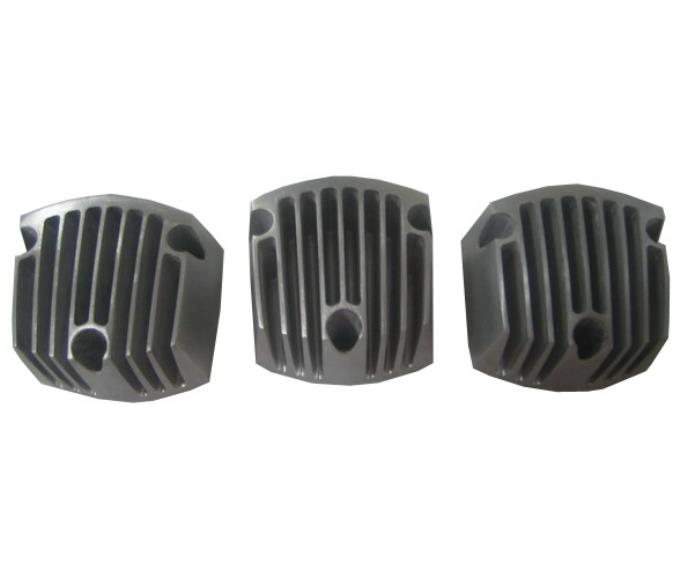
Supplier brands: Leading manufacturers include Sandvik (Sweden), Kennametal (USA), and Chinese suppliers like Zhuzhou Cemented Carbide Group. These brands produce YG8 in inserts, rods, and custom shapes optimized for mold components like cores, cavities, and wear plates.
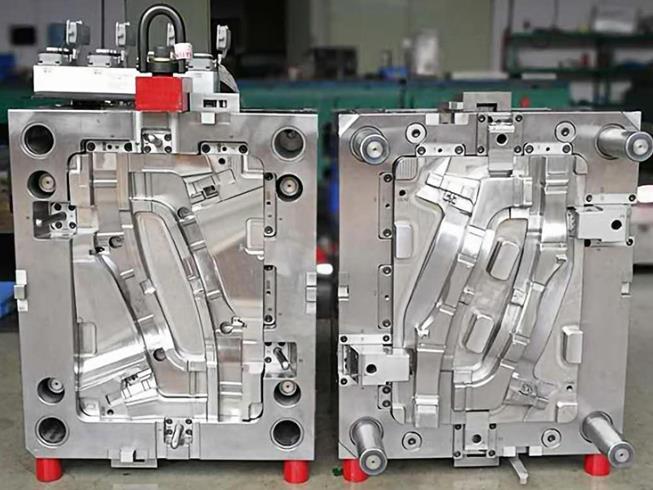
Industry usage: YG8 is used in 5 to 10 percent of high-wear molds, particularly in applications involving glass-filled plastics (20%+ filler), metal injection molding (MIM), and die casting of abrasive alloys. Its ability to withstand 500,000+ cycles in harsh conditions makes it a top choice for automotive and industrial part production.
What Properties Make YG8 Exceptional?
| Property | YG8 Performance | Comparison |
|---|---|---|
| Hardness | 89 HRA (~70 HRC) | Tool steel: 60–65 HRC |
| Wear Resistance | 5–10x greater than tool steel | Loses only 0.1–0.3 mm per 100,000 cycles; steel loses 1–3 mm |
| Compressive Strength | 4,000–4,500 MPa | Withstands pressures up to 30,000 psi without deformation |
| Thermal Expansion | 5.5–6.5 μm/m·°C | Steel: 11–12 μm/m·°C; Aluminum: 23–24 μm/m·°C |
| Toughness | Moderate; 8% cobalt provides sufficient toughness for low-impact applications | Less brittle than higher-hardness carbides (e.g., YG6 with 6% cobalt) |
High Hardness
YG8 achieves hardness of 89 HRA, equivalent to approximately 70 HRC. This makes it one of the hardest materials used in mold making. It resists scratching, gouging, and wear from even the most abrasive materials—including 30 percent glass-filled nylon and aluminum die-casting alloys.
High Wear Resistance
YG8’s wear resistance is 5 to 10 times greater than tool steel and 20 times greater than aluminum. In abrasive wear tests, it loses only 0.1 to 0.3 mm of material per 100,000 cycles. Under the same conditions, steel loses 1 to 3 mm.
Good Compressive Strength
With compressive strength of 4,000 to 4,500 MPa, YG8 withstands high molding pressures—up to 30,000 psi—without deformation. This is critical for maintaining dimensional accuracy in high-volume production.
Low Coefficient of Thermal Expansion
YG8’s thermal expansion coefficient is 5.5 to 6.5 μm/m·°C, much lower than steel (11–12 μm/m·°C) and aluminum (23–24 μm/m·°C). This stability minimizes dimensional changes during temperature cycles, ensuring consistent part quality.
Toughness
While YG8 is more brittle than steel, its 8 percent cobalt binder provides sufficient toughness to resist fracture in low-impact applications. It is less prone to chipping than higher-hardness carbides like YG6 (6% cobalt), making it versatile for most mold components.
Chemical Composition
The 92 percent tungsten carbide and 8 percent cobalt blend is key to YG8’s performance. Tungsten carbide provides hardness. Cobalt acts as a ductile binder, distributing stress and preventing catastrophic failure.
Where Is YG8 Used in Mold Making?
| Application | Why YG8 Excels |
|---|---|
| Injection molding for abrasive plastics | Withstands abrasive flow of glass, mineral, or carbon fiber fillers (20%+); maintains surface finish and dimensional accuracy for 500,000+ cycles |
| Die casting | Resists wear from molten aluminum, zinc, and oxides; outlasts steel by 5–8x in shot sleeves and plunger tips |
| High-precision molds | Low thermal expansion and high hardness ensure tight tolerances (±0.0001 inches) over long production runs; ideal for medical micro-components and electronics connectors |
| Automotive molds | Withstands glass-filled plastics used for intake manifolds and structural components; reduces tooling costs for high-volume production (100,000+ parts) |
| Metal injection molding (MIM) | Withstands abrasive flow of metal-filled feedstocks; ensures consistent part quality and extends mold life |
How Do You Machine and Fabricate YG8?
Machining YG8 requires specialized techniques due to its extreme hardness. Traditional cutting tools will not work.
Precision Machining
YG8 cannot be machined with traditional tools. Diamond tools are mandatory. Diamond grinding wheels, drills, and end mills are used. Cutting speeds are slow—5 to 15 SFM—to avoid tool damage.
CNC Milling
CNC milling uses diamond-coated carbide tools or electroplated diamond end mills. Rigid machine setups are critical. Vibration causes tool chipping and poor surface finish.
Electrical Discharge Machining (EDM)
EDM is the most efficient way to machine complex geometries in YG8. Wire EDM achieves tight tolerances (±0.0001 inches) and fine surface finishes (Ra 0.1–0.2 μm). It is ideal for intricate mold details.
Grinding
Diamond grinding wheels (120–400 grit) are used for final shaping and surface finishing. Coolant is essential to dissipate heat. Excessive temperatures can weaken the cobalt binder and reduce toughness.
Surface Finishing
YG8 polishes to a smooth finish (Ra 0.05–0.1 μm) with diamond pastes (3–6 μm). A smooth mold surface prevents scratching of the finished part—critical for cosmetic applications.
Machining Challenges
The primary challenge is tool wear. Diamond tools wear 5 to 10 times faster than when machining steel. YG8’s brittleness also requires careful handling to avoid chipping during machining and assembly.
How Do You Maintain and Repair YG8 Molds?
Proper maintenance maximizes the lifespan of YG8 molds, which can exceed 1 million cycles with care.
Mold Cleaning
Clean YG8 surfaces with soft brushes and mild solvents to remove plastic or metal residue. Avoid abrasive cleaners, which can damage the surface and reduce wear resistance.
Surface Treatment
A thin diamond-like carbon (DLC) coating can further enhance wear resistance, extending life by 20 to 30 percent in extreme applications. This is particularly useful for molds running 30%+ glass-filled plastics.
Repair Welding
YG8 cannot be welded with traditional methods due to its high melting point. Instead, damaged areas are repaired by bonding new YG8 inserts using high-strength adhesives or brazing with silver-based alloys.
Preventive Maintenance
Inspect YG8 components monthly for chipping or cracks, especially in high-impact areas like mold parting lines. Replace worn inserts before they cause part defects.
Inspection
Use optical microscopy to check for surface wear or micro-cracks, which can propagate and cause catastrophic failure. Ultrasonic testing detects internal defects in large YG8 components.
How Does YG8 Compare to Other Mold Materials?
| Material | Hardness | Wear Resistance | Relative Cost | Best For |
|---|---|---|---|---|
| YG8 Tungsten Carbide | 89 HRA (~70 HRC) | 5–10x steel | High | High-wear, abrasive applications (glass-filled plastics, die casting, MIM) |
| Tool Steel (D2, H13) | 60–65 HRC | Baseline | Medium | General-purpose molds |
| Copper Alloys (Ampco 940) | 380 HBV | Moderate | Medium-High | High thermal conductivity applications |
| Aluminum | 150–200 HB | Poor | Low | Prototyping, low-volume runs |
YG8 vs. Tool Steel: YG8 offers 5–10x greater wear resistance but costs more upfront. For abrasive applications, the longer tool life justifies the investment.
YG8 vs. Copper Alloys: YG8 provides superior wear resistance but lower thermal conductivity. Choose YG8 for abrasion-dominated failures; choose copper alloys for thermal management.
Cost-effectiveness: While YG8’s machining costs are 3 to 4 times higher than steel, its extended life reduces replacement costs by 70 to 80 percent over time.
Yigu Technology’s Perspective
As a custom manufacturing supplier, we recommend YG8 for clients facing extreme wear challenges. We have seen it extend mold life from 50,000 cycles (with steel) to 500,000+ cycles in 30% glass-filled plastic molds. This drastically reduces downtime and replacement costs.
While YG8’s machining costs are higher, the long-term savings are undeniable. Our team uses advanced EDM and diamond grinding to achieve precise YG8 components, ensuring seamless integration with steel mold bases.
For high-volume, abrasive applications, YG8 is the only cost-effective solution. Its performance justifies the investment in tooling and machining.
Conclusion
Tungsten carbide (YG8) offers unmatched wear resistance for demanding molding applications. Its hardness—89 HRA—and compressive strength—4,000–4,500 MPa—enable it to withstand abrasive materials and high pressures that quickly destroy steel tools. Its low thermal expansion ensures dimensional stability across temperature cycles.
From glass-filled plastic injection molds to die casting and metal injection molding, YG8 delivers extended tool life and consistent part quality. While machining costs are higher and brittleness requires careful handling, the long-term savings in reduced downtime and replacements make it the material of choice for high-wear applications.
For manufacturers facing extreme abrasion, YG8 transforms mold performance.
FAQ
Can YG8 tungsten carbide be used for low-volume mold applications?
YG8 is rarely cost-effective for low-volume runs (under 50,000 cycles) due to its high machining costs. Steel or copper alloys are better choices for lower volumes. Reserve YG8 for high-volume, abrasive applications where its wear resistance delivers long-term savings.
Is YG8 suitable for molds requiring impact resistance?
YG8 has moderate toughness but can chip under high impact—for example, from sudden mold closure. For impact-prone applications, consider a lower-hardness carbide grade like YG10 (10% cobalt) for better toughness. Wear resistance will be slightly reduced.
How does YG8 perform in high-temperature molding applications?
YG8 maintains its hardness and wear resistance at temperatures up to 500°C (932°F) . This makes it suitable for high-temperature plastics like PEEK and for die casting applications. Above 600°C, the cobalt binder softens, so avoid prolonged exposure to extreme heat.
Contact Yigu Technology for Custom Manufacturing
Looking for mold components that withstand extreme wear? Yigu Technology specializes in custom non-standard plastic and metal products. Our team has extensive experience with YG8 tungsten carbide and other high-performance materials.
Reach out today to discuss your next project. Let us help you select the right material for your demanding applications.