Introduction
Manufacturing precision components from hard, conductive materials presents a constant challenge. Traditional cutting methods often struggle with complex geometries, extreme hardness, or tight tolerances. Wire EDM machining offers a fundamentally different approach. Instead of mechanical cutting, it uses electrical discharges to erode material with microscopic accuracy.
This guide explains how wire EDM works, where it excels, and how to determine if it fits your project needs. You will learn about its precision capabilities, material versatility, and real-world applications across aerospace, medical, and mold-making industries. By the end, you will understand why many engineers turn to this technology when conventional machining reaches its limits.
How Does Wire EDM Actually Work?
The Science of Electrical Discharge
Wire EDM stands for Electrical Discharge Machining. Despite the complex name, the principle is straightforward. A thin wire carries electrical pulses to the workpiece. Each pulse creates a spark that melts and vaporizes a tiny amount of material.
The wire never touches the part. Instead, it maintains a small gap—typically 5 to 50 microns—filled with dielectric fluid. This fluid acts as an insulator until the voltage is high enough to create a spark. It also cools the work area and flushes away debris.
Key components:
- Wire electrode: Usually brass or copper, ranging from 0.02 to 0.3 mm in diameter
- Dielectric fluid: Deionized water or oil that controls the spark and removes particles
- Power supply: Generates pulses at 1 to 500 kHz, controlling energy and material removal
- Wire guide system: Diamond-coated rollers that maintain straightness within 0.001 mm
When the spark occurs, temperatures at the contact point reach up to 10,000°C. This intense heat vaporizes the material, creating a small crater. Each pulse removes a minute amount, building the final shape through thousands of individual discharges.
Slow-Wire vs. Fast-Wire EDM
Two main variations exist, each suited to different needs.
| Type | Wire Speed | Typical Accuracy | Best For |
|---|---|---|---|
| Slow-wire EDM | 0.1–15 m/min | ±0.001 mm or better | High-precision molds, aerospace components, medical devices |
| Fast-wire EDM | 5–10 m/s | ±0.01 mm | Larger parts, less critical tolerances, cost-sensitive applications |
Slow-wire EDM achieves the highest precision because the wire moves slowly and is guided with extreme accuracy. The wire is typically used once and discarded, ensuring consistent performance.
Fast-wire EDM reuses the wire multiple times. It sacrifices some precision for speed and lower operating costs. For many industrial applications, ±0.01 mm is still far better than conventional machining.
What Makes Wire EDM So Precise?
Dimensional Accuracy Beyond Conventional Limits
Wire EDM achieves levels of precision that mechanical cutting cannot match. For slow-wire systems, dimensional accuracy reaches ±0.001 mm. To put this in perspective, a human hair is about 0.07 mm thick. Wire EDM cuts with accuracy roughly 70 times finer than a hair.
Example: Machining a 10 mm thick tungsten carbide component with a 0.2 mm wide slot. Wire EDM maintains slot width variation below 0.005 mm across the entire length. Milling the same feature would typically achieve ±0.1 mm at best.
Superior Surface Finish
Surface finish matters for friction, wear, and appearance. Wire EDM produces finishes that often eliminate secondary polishing operations.
- Slow-wire EDM: Ra 0.1–0.8 μm
- Laser cutting: Ra 1.6–3.2 μm
- Plasma cutting: Ra 12.5 μm or rougher
A smoother surface means less friction in moving parts and reduced risk of stress concentration points that could lead to failure.
Minimal Heat Affected Zone
Traditional cutting generates heat that can alter material properties. Wire EDM concentrates heat in an extremely small area. The heat affected zone is typically less than 50 μm deep. This preserves the original material characteristics—critical for aerospace alloys and medical implants where strength and biocompatibility cannot be compromised.
What Materials Can Wire EDM Cut?
Hardness Is Not a Barrier
Wire EDM cuts any conductive material regardless of hardness. Unlike milling, where harder materials require slower speeds and specialized tooling, EDM removes material through thermal erosion. The wire never experiences cutting forces.
Materials commonly processed:
- Titanium alloys (Ti-6Al-4V): Aerospace and medical implants
- Inconel 718: Jet engine components, high-temperature applications
- Tungsten carbide: Mold inserts, cutting tools, wear parts
- Stainless steel: Medical instruments, precision components
- Cobalt-chromium: Orthopedic implants
- Nitinol: Shape-memory medical devices
- Graphite: EDM electrodes
- Copper-tungsten: Electrical contacts
No Material Waste From Structural Damage
Because wire EDM does not apply mechanical force, it can cut thin-walled structures without deformation. Thin walls as fine as 0.1 mm in stainless steel are achievable. This capability is essential for lightweight aerospace components and delicate medical devices.
What Complex Shapes Can Wire EDM Create?
Sharp Internal Corners
Traditional milling leaves rounded corners equal to the cutter radius. Wire EDM produces internal radii as small as 0.05 mm. This is crucial for mold cavities where sharp corners are needed to form precise plastic parts. Injection molds for smartphone casings, for instance, require such sharp details to achieve the sleek, seamless designs consumers expect.
Tapered Cuts and Angles
Wire EDM machines can tilt the wire to cut angles up to 30 degrees. This capability is essential for:
- Turbine blades: Airfoil profiles with complex taper for aerodynamic efficiency
- Bone reamers: Tapered flutes for surgical debris removal
- Extrusion dies: Tapered openings for controlled material flow
Thin-Wall Structures
Aerospace and medical applications often demand thin walls to reduce weight while maintaining strength. Wire EDM cuts stainless steel walls as thin as 0.1 mm without distortion. A heat exchanger component with such thin walls maximizes thermal transfer while minimizing weight—a critical combination in aircraft design.
How Does Wire EDM Compare to Other Cutting Methods?
Precision Comparison
| Parameter | Slow-Wire EDM | Laser Cutting | Plasma Cutting |
|---|---|---|---|
| Dimensional accuracy | ±0.001 mm | ±0.2 mm | ±1 mm |
| Surface roughness (Ra) | 0.1–0.8 μm | 1.6–3.2 μm | 12.5 μm+ |
| Minimum feature size | 50 μm | 100 μm | 500 μm |
| Material hardness limit | No restriction | <50 HRC | <40 HRC |
Real-world implication: A mold cavity requiring ±0.01 mm accuracy is routine for wire EDM. Laser cutting cannot meet this tolerance. Plasma cutting is off by a factor of 100.
When to Choose Wire EDM
Wire EDM is the right choice when:
- Tolerances exceed conventional machining capabilities
- Materials are too hard for milling or turning
- Parts have sharp internal corners or thin walls
- Heat-affected zones must be minimized
- Surface finish requirements are demanding
Where Is Wire EDM Used in Industry?
Aerospace: Flight-Critical Components
Aircraft engines and airframes demand components that withstand extreme conditions. Wire EDM machines titanium compressor blades with chordal tolerances of ±0.01 mm. This precision ensures aerodynamic efficiency at supersonic speeds.
Case study: A Boeing supplier used slow-wire EDM to machine complex Inconel 718 structural brackets. Compared to CNC milling, wire EDM reduced material waste by 40% while achieving a surface finish of Ra 0.4 μm. For expensive superalloys, this waste reduction translates to significant cost savings.
Medical Devices: Micro-Precision for Life-Saving Tools
Minimally invasive surgery requires instruments that are both small and precise. Wire EDM cuts 0.3 mm diameter holes through 10 mm thick stainless steel—a depth-to-diameter ratio of 30:1. Laparoscopic graspers rely on such features for reliable operation.
Orthopedic applications: Patient-specific knee implants made from cobalt-chromium are machined to match MRI scans within ±0.05 mm. This accuracy ensures perfect bone integration and reduces post-surgical complications.
Mold Making: The Backbone of Mass Production
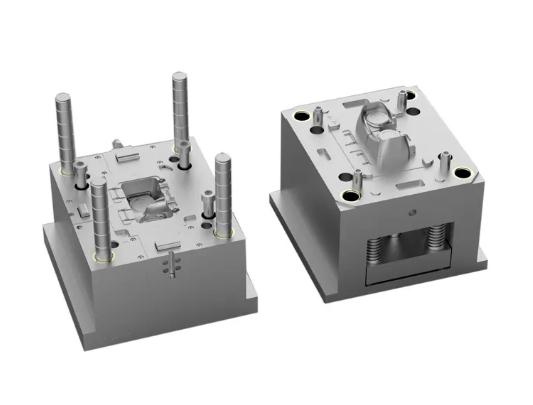
Molds determine the quality of every part produced from them. Wire EDM creates injection molds for smartphone casings with 0.02 mm tolerance on 0.3 mm thick ribs. Intricate texturing, such as anti-slip patterns, is also possible.
Case study: An automotive supplier used slow-wire EDM to machine a 500 mm long aluminum die with 0.003 mm flatness. Post-machining polishing time decreased by 60%. The die produced consistent parts across millions of cycles.
What Should You Look for in a Wire EDM Partner?
Technical Capability
Machine fleet: Look for slow-wire EDM machines capable of sub-micron accuracy. Multi-axis machines (up to 6 axes) are essential for complex tapers and intricate geometries.
Material expertise: Different materials require different parameters. A partner experienced with tungsten carbide, for example, will have optimized wire tension and pulse settings for this extremely hard material. This expertise prevents wire breaks and ensures clean cuts.
Quality Systems
Inspection equipment: On-site coordinate measuring machines (CMMs) and surface finish testers allow in-process verification. Ask if the provider offers first-article inspection reports with detailed measurements.
Certifications: ISO 9001 is standard. For medical or aerospace work, look for ISO 13485 or AS9100 certification. These demonstrate commitment to quality management and traceability.
Flexibility and Speed
Prototyping to production: The right partner handles small prototype runs and high-volume production. Rapid turnaround (24–48 hours) for prototypes allows quick design iterations. Automated loading systems enable consistent output for production volumes of 500+ parts per week.
Yigu Technology’s Experience With Wire EDM
At Yigu Technology, we integrate wire EDM into our precision manufacturing services alongside CNC machining, turning, and surface finishing. Our slow-wire EDM equipment achieves tolerances down to ±0.002 mm on critical features.
Recent project: A medical device client required 200 titanium surgical instrument components with internal slots measuring 0.5 mm wide by 8 mm deep. Tolerances were ±0.005 mm on slot width. Using slow-wire EDM with deionized water dielectric, we completed the order with zero defects and a surface finish of Ra 0.4 μm. The client eliminated post-machining deburring entirely.
We maintain ISO 9001 and IATF 16949 certifications, ensuring consistent quality across all processes. Our engineering team provides DFM feedback to optimize designs for wire EDM, reducing cost and lead time.
Conclusion
Wire EDM machining fills a critical gap in precision manufacturing. When tolerances tighten beyond what milling or turning can achieve, when materials become too hard for conventional tools, or when geometries grow too complex for mechanical cutting, wire EDM delivers.
Its ability to hold ±0.001 mm accuracy, cut any conductive material regardless of hardness, and create sharp internal corners, thin walls, and precise tapers makes it indispensable for aerospace, medical, and mold-making applications.
Selecting the right partner matters. Look for advanced equipment, material expertise, robust quality systems, and the flexibility to scale from prototypes to production. With the right partner, wire EDM becomes not just a machining method but a strategic capability that expands what your products can achieve.
FAQ
What materials are suitable for wire EDM?
Wire EDM can machine any conductive material, regardless of hardness. Common materials include titanium alloys, Inconel, tungsten carbide, stainless steel, cobalt-chromium, Nitinol, graphite, and copper-tungsten composites. There is no upper limit on material hardness, making it ideal for superalloys and carbides.
How accurate is wire EDM compared to other cutting methods?
Slow-wire EDM achieves dimensional accuracy of ±0.001 mm, far exceeding laser cutting (±0.2 mm) and plasma cutting (±1 mm). It also produces superior surface finish (Ra 0.1–0.8 μm) and can create smaller features (down to 50 μm) than alternative methods.
Can wire EDM be used for high-volume production?
Yes. Modern wire EDM systems with automated wire threading, pallet changers, and robotic loading can run unattended for extended periods. Production volumes of 500+ parts per week are common. The key is selecting a partner with the right equipment and process controls for repeatable results.
What is the typical lead time for wire EDM parts?
Prototype quantities can be completed in 24–48 hours depending on complexity. Production orders typically require 2–4 weeks, including material sourcing, programming, machining, and inspection. Expedited services are available for urgent projects.
Does wire EDM affect material properties?
The heat affected zone in wire EDM is typically less than 50 μm deep, preserving the bulk material properties. This is critical for aerospace alloys and medical implants where mechanical integrity and biocompatibility must remain intact.
Contact Yigu Technology for Custom Manufacturing
Looking for precision wire EDM services backed by engineering expertise? Yigu Technology combines advanced EDM capabilities with CNC machining, turning, and finishing to deliver complete manufacturing solutions.
- Wire EDM: Slow-wire and fast-wire capabilities with tolerances to ±0.002 mm
- Supporting processes: CNC milling, turning, grinding, surface finishing
- Quality certifications: ISO 9001, IATF 16949
- Industries served: Aerospace, medical devices, automotive, industrial equipment
Contact our engineering team to discuss your project requirements. We will provide a detailed capability assessment, DFM feedback, and a competitive quote tailored to your specifications.