Introduction
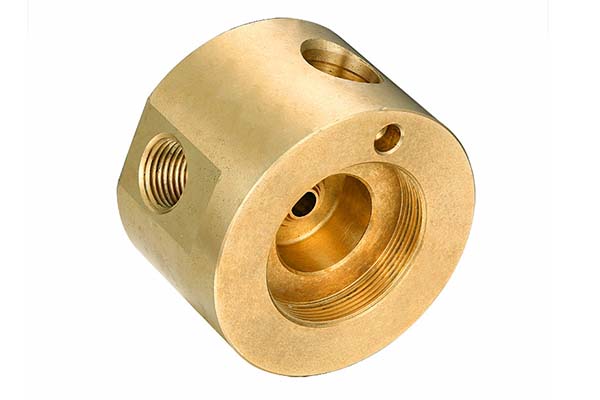
C14500 tellurium copper occupies a unique position in the world of machining. Unlike pure copper—which is notoriously “gummy” and difficult to cut—this alloy contains 0.4–0.7% tellurium, giving it exceptional machinability while retaining excellent electrical and thermal conductivity. With a machinability index of 90% (compared to 20% for pure copper), it cuts cleanly, produces manageable chips, and reduces tool wear. But mastering it still requires understanding its properties and applying the right techniques. This guide covers material properties, machining strategies, tooling, parameters, surface quality, and applications—helping you achieve top-quality C14500 parts.
What Makes C14500 Tellurium Copper Unique?
Material Composition and Properties
C14500 is a tellurium copper alloy. The tellurium content (0.4–0.7%) creates a free-machining copper with properties that balance performance and processability.
| Property | C14500 Value | Significance |
|---|---|---|
| Tellurium content | 0.4–0.7% | Enables free-machining characteristics |
| Machinability index | 90% (compared to 100% for free-cutting brass) | Excellent machinability; clean cuts, manageable chips |
| Electrical conductivity | 90% IACS | Suitable for electrical applications requiring conductivity |
| Thermal conductivity | High | Efficient heat transfer—ideal for welding torch tips, electrodes |
| Corrosion resistance | Good | Durable in marine and industrial environments |
| Lead-free | Yes | Complies with regulations; safe for medical, food processing |
Key advantages:
- Stress-corrosion cracking resistance: Durable in environments with stress and moisture
- Non-sparking: Critical safety feature for oil, gas, and chemical processing
- Lead-free: Increasingly important under strict material regulations
What Machining Strategies Work for C14500?
High-Speed CNC Turning
C14500’s free-machining nature allows high cutting speeds without excessive tool wear. This increases productivity and improves surface finish.
Key principles:
- Maintain consistent speed matched to tooling
- Use sharp, coated inserts
- Monitor for chip formation—C14500 produces short, manageable chips
Precision Milling
For precision milling, focus on maintaining tight tolerances. The alloy’s stability during machining makes accurate dimensions achievable.
Considerations:
- Use proper fixturing to prevent movement
- Climb milling typically yields better results
- Maintain consistent chip load to avoid rubbing
Micro-Drilling
Micro-drilling is more manageable in C14500 than in many other coppers. The tellurium helps the drill cut cleanly, reducing breakage risk.
Applications:
- Pin contacts
- Electrical connector components
- Small-diameter holes requiring precision
Trochoidal Milling
Trochoidal milling involves the tool moving in a circular path while advancing. This technique reduces tool engagement time, controls heat buildup, and extends tool life.
Benefits for C14500:
- Effective for larger areas
- Reduces thermal stress
- Extends tool life even with a free-machining alloy
Climb vs. Conventional Milling
| Strategy | Effect |
|---|---|
| Climb milling | Tool pulled into material; smoother cut; less chip buildup |
| Conventional milling | May produce more friction and heat; can affect surface finish |
Recommendation: Climb milling is generally preferred for C14500.
Adaptive Toolpaths
Adaptive toolpaths adjust feed rate and speed based on material and cut conditions. This optimizes cutting conditions, improving efficiency and producing uniform surface finish.
Chip Thinning
Chip thinning is particularly useful in high-speed machining. By adjusting feed rate and cutting speed, chips remain thin and easy to evacuate—preventing clogging and maintaining a clean cutting area.
What Coolant Strategies Work Best?
Coolant-Through-Spindle
Coolant-through-spindle systems deliver coolant directly to the cutting edge. This reduces heat, flushes chips, and extends tool life. It is highly effective for C14500, especially in drilling and deep milling.
Minimum Quantity Lubrication (MQL)
MQL uses a small amount of lubricant—enough to reduce friction without flood cooling. Benefits include:
- Less mess
- Reduced coolant consumption
- Ideal for precision parts where excess coolant could cause issues
Recommendation: Both strategies work well; choose based on your shop’s capabilities and part requirements.
What Tooling and Cutting Parameters Are Optimal?
Tool Materials
| Tool Type | Best For | Notes |
|---|---|---|
| Coated carbide inserts | General machining | Coatings reduce friction and wear; extend tool life |
| PCD (polycrystalline diamond) | High precision, smooth finishes | Extremely hard; wear-resistant; ideal for tight tolerances |
Tool Geometry
Rake angle: 10–15° is optimal. This allows clean cutting, reduces cutting forces and heat, and promotes proper chip formation.
Polished flutes: Recommended for drills and end mills. Polished surfaces prevent chip adhesion, ensuring smooth chip evacuation.
Cutting Parameters
| Parameter | Recommended Range | Notes |
|---|---|---|
| Surface speed | 200–350 m/min | Balances cutting efficiency with tool life |
| Feed rate | 0.05–0.15 mm/tooth | Maintains precision while keeping production moving |
| Depth of cut | 0.5–2 mm | Deeper cuts require more power and generate more heat; adjust speed/feed accordingly |
Edge Radius Control and Tool Life Optimization
Edge radius: Properly controlled edge radius reduces burrs and ensures smooth cuts. Monitor and maintain tool geometry for consistent results.
Tool life optimization:
- Regular inspection—even free-machining alloys wear tools
- Replace tools before they become dull to prevent poor cuts and part damage
- Track tool life data to establish replacement schedules
What Surface Quality and Dimensional Accuracy Are Achievable?
Surface Finish
| Finish Level | Ra Value | Method |
|---|---|---|
| Standard | 0.8–1.6 μm | Standard parameters, carbide tools |
| High-quality | 0.4–0.8 μm | Optimized parameters, sharp tools |
| Mirror finish | 0.2–0.4 μm | PCD tools, final light pass |
Achieving mirror finish:
- Use sharp PCD tool
- Light finishing pass
- Slow feed rate, high speed
- Results in reflective surface—critical for RF coaxial components where signal integrity depends on surface smoothness
Dimensional Tolerances
C14500 can hold tight tolerances when machined properly:
| Part Type | Achievable Tolerance |
|---|---|
| Standard | ±0.02–0.05 mm |
| Precision | ±0.01 mm |
| High-precision (with optimized process) | ±0.005 mm |
Key factors:
- Stability during cutting
- Good machinability compared to less machinable copper alloys
- Proper fixturing and machine calibration
Burr-Free Machining and Micro-Deburring
While C14500 is less prone to burrs than pure copper, burr-free machining still requires attention:
Prevention:
- Sharp tools with proper rake angle
- Optimized feed rates
- Climb milling
Removal:
- Micro-deburring techniques remove any remaining burrs
- Ensures parts are safe to handle and function correctly
Surface Integrity, Flatness, and Cylindricity
Surface integrity: Avoid excessive heat during machining to prevent surface damage that could affect conductivity or corrosion resistance.
Part flatness: Achievable with proper fixturing and stable machining conditions.
Cylindricity: C14500’s stability helps maintain roundness; ensure machine calibration and proper workholding.
CMM Inspection
For critical parts, regular CMM (Coordinate Measuring Machine) inspection ensures dimensions and tolerances meet specifications. This is especially important in aerospace, medical, and high-reliability applications.
Where Is C14500 Used?
| Application | Why C14500 |
|---|---|
| Electrical connectors, pin contacts | Good conductivity; machinability for precise forms |
| Relay sockets | Conductive, easy to machine; stable, wear-resistant |
| Welding torch tips, plasma electrodes | High thermal conductivity; machinability for complex shapes; withstands high temperatures |
| Bus bars for EVs | Efficient conductivity; complex shapes; growing electric vehicle demand |
| RF coaxial parts | Precise dimensions; smooth surfaces for signal integrity |
| Aerospace terminals | Tight tolerances; reliability in harsh environments |
| Power distribution components | Conductivity, machinability, durability |
A Real-World C14500 Machining Success
A manufacturer producing electrical connectors for the EV industry faced challenges with pure copper:
- Rapid tool wear: 50 parts per carbide tool
- Poor surface finish: Ra 3.2–6.3 μm
- Burrs: Required extensive deburring
Switched to C14500 with optimized process:
- PCD tooling for finishing
- Surface speed: 300 m/min
- Climb milling, adaptive toolpaths
- Coolant-through-spindle
Results:
- Tool life increased to 500 parts per tool
- Surface finish improved to Ra 0.4 μm
- Burrs eliminated
- Cycle time reduced by 40%
- Scrap rate dropped from 10% to 1%
Conclusion
C14500 tellurium copper combines the best of both worlds: excellent machinability (90% index) with good electrical and thermal conductivity (90% IACS). Its free-machining nature enables high-speed turning, precision milling, and micro-drilling with manageable chips and reduced tool wear. Optimal machining strategies—climb milling, trochoidal milling, adaptive toolpaths—further enhance efficiency and surface quality. Tooling choices like coated carbide and PCD, with 10–15° rake angles and polished flutes, deliver long tool life and fine finishes. Achievable surface finishes reach Ra 0.2–0.4 μm with mirror-finish passes, and tolerances hold to ±0.01 mm or better. Applications span electrical connectors, EV bus bars, RF coaxial parts, aerospace terminals, and welding components. For precision parts requiring conductivity, machinability, and reliability, C14500 is an outstanding choice.
FAQs
Is C14500 suitable for high-temperature applications?
C14500 can handle moderate high temperatures but is not ideal for extremely high-temperature environments. Its high thermal conductivity helps dissipate heat, but prolonged exposure to very high temperatures can affect its mechanical properties. For sustained high-temperature applications, consider materials like copper-zirconium or copper-chromium alloys.
How does C14500 compare to C11000 (pure copper) in terms of machinability?
C14500 is dramatically easier to machine. C11000 has a machinability index of approximately 20% , while C14500 is 90% . Pure copper is gummy, produces long stringy chips, causes tool build-up, and wears tools rapidly. C14500 cuts cleanly, produces manageable chips, and significantly reduces tool wear—making it far more efficient to process.
Can C14500 be used in marine environments?
Yes. C14500 has good corrosion resistance, including resistance to seawater and marine atmospheres. Its stress-corrosion cracking resistance adds durability in environments with stress and moisture. It is suitable for components used in boats, offshore equipment, and coastal applications.
What is the best tooling for achieving a mirror finish on C14500?
For mirror finishes (Ra 0.2–0.4 μm), PCD (polycrystalline diamond) tools are best. Use a light finishing pass (0.05–0.1 mm depth) with slow feed rate (0.03–0.05 mm/tooth) and high surface speed (300–350 m/min). Sharp tool edges and stable machine conditions are essential.
Is C14500 lead-free?
Yes. C14500 is a lead-free copper alloy, containing no added lead. This makes it suitable for applications with strict lead-content regulations—medical devices, food processing equipment, and environmentally sensitive components. The tellurium addition provides machinability without lead.
Contact Yigu Technology for Custom Manufacturing
At Yigu Technology, we specialize in CNC machining C14500 tellurium copper for electrical, automotive, aerospace, and industrial applications. Our expertise in tool selection (coated carbide, PCD), cutting parameters (200–350 m/min, optimized feeds), and coolant strategies (through-spindle, MQL) ensures efficient processing and high-quality results. We achieve surface finishes as low as Ra 0.2 μm and tolerances down to ±0.005 mm. Whether you need electrical connectors, EV bus bars, RF coaxial components, or precision terminals, we deliver C14500 parts that meet your specifications. Contact us to discuss your tellurium copper machining project.