Discover how this advanced plasma-based coating technology creates exceptionally hard, uniform, and durable surfaces for demanding applications.
Introduction
Manufacturers and engineers often grapple with coatings that fail prematurely. A cutting tool's coating might chip after a few uses. A medical implant's surface could corrode in the body. A precision optical part might have uneven layers that distort light.
Traditional plating methods like electroplating struggle with adhesion. Spray coatings often lack thickness control. What is needed is a process that creates strong, uniform, high-performance coatings.
This is where surface treatment ion plating stands out. By using plasma and ionized particles to deposit coatings, it forms metallurgically bonded layers with exceptional properties. It solves critical challenges across industries.
In this guide, you will learn how ion plating works, what properties it offers, and why it is a top choice for demanding environments.
What Is Ion Plating?
Ion plating is a subset of physical vapor deposition (PVD). It combines evaporation or sputtering with ionized gas—plasma—to enhance coating adhesion and uniformity.
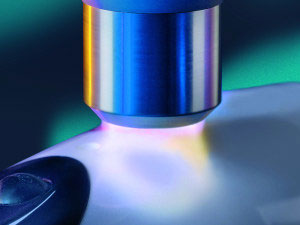
The process occurs in a vacuum chamber. A metal or ceramic source is evaporated or sputtered, creating a vapor. Argon gas is introduced and ionized into plasma using an electric field.
The substrate is biased negatively. This attracts ionized metal particles and argon ions, which bombard the substrate surface. This bombardment cleans the surface and heats it. It promotes strong bonding as the coating deposits.
How Does It Compare to Other Coating Methods?
Ion plating offers distinct advantages over traditional coating methods. The table below shows how it stacks up:
| Feature | Ion Plating | Electroplating | Spray Coating |
|---|---|---|---|
| Adhesion Strength | >50 N/cm² | 10-20 N/cm² | 5-15 N/cm² |
| Thickness Uniformity | ±5% across complex shapes | Poor on recesses | Inconsistent |
| Hardness | Up to 3,500 HV | 150-300 HV | Variable |
| Coating Materials | Metals, ceramics, compounds | Limited to metals | Limited to liquids |
| Environmental Impact | Low (no toxic chemicals) | Moderate (heavy metals) | High (VOCs) |
This comparison shows why ion plating is preferred for high-value components where precision and durability are critical.
What Steps Are Involved in the Process?
The ion plating process is a precise sequence of steps. Each is critical for coating quality.
Vacuum Chamber
The process occurs in a stainless steel vacuum chamber. Sizes range from 0.5 to 5 m³. Vacuum pumps—rotary vane and turbomolecular—maintain pressures of 10⁻³ to 10⁻¹ Pa.
Plasma Generation
Argon gas is introduced and ionized into plasma. Power sources—DC, RF, or pulsed DC—control plasma density. Power levels range from 100 to 1,000 W, affecting coating density and roughness.
Coating Material Evaporation
The coating material is heated until it evaporates. Methods include:
- Resistive heating: For metals with low melting points
- Electron beam: For high-melting-point materials like ceramics
The vapor is ionized in the plasma, then accelerated toward the substrate.
Substrate Bombardment
The negatively biased substrate attracts ionized particles. Argon ions bombard the surface, removing contaminants. This cleaning happens at the atomic level, ensuring exceptional adhesion.
Deposition
Coating material deposits on the substrate. Deposition rates range from 0.1 to 10 μm per hour. Slower rates produce denser coatings. Faster rates are used for thicker layers.
Temperature Control
Substrate temperature affects coating adhesion and structure. For titanium nitride (TiN) coatings, temperatures around 300°C produce better adhesion than room temperature deposition. PID controllers maintain temperature within ±5°C.
What Are the Key Process Variations?
Several specialized forms of ion plating address specific application needs.
Ion Beam Assisted Deposition (IBAD)
A separate ion beam bombards the coating during deposition. This densifies the layer and reduces defects. IBAD is used for optical coatings and hard, dense layers like TiN.
Sputter Ion Plating
A target material is bombarded with argon ions. This dislodges—sputters—atoms that deposit on the substrate. This method is ideal for depositing alloys or compounds like chromium nitride (CrN) with precise composition control.
Evaporative Ion Plating
The coating material is heated until it evaporates. The vapor is ionized in plasma, then accelerated toward the substrate. This is efficient for depositing metals like aluminum or copper.
What Properties Can You Expect?
Ion plated coatings offer a unique set of properties for high-performance applications.
Hardness and Wear Resistance
Coatings like TiN achieve 2,000 to 2,500 HV. Titanium carbonitride (TiCN) reaches 3,000 to 3,500 HV. For comparison, steel is 200 to 300 HV.
This hardness makes them ideal for cutting tools. They reduce wear and extend tool life by 3 to 5 times.
Corrosion Resistance
Chromium nitride (CrN) and aluminum oxide (Al₂O₃) coatings act as barriers. They protect substrates from moisture and chemicals.
Salt spray tests (ASTM B117) show ion plated steel resists corrosion for 1,000+ hours. Uncoated steel fails within 24 to 48 hours.
Optical Properties
Ion plated coatings like silicon dioxide (SiO₂) and magnesium fluoride (MgF₂) have precise refractive indices. They are used in lenses, mirrors, and displays to control light reflection or transmission.
These coatings are uniform, with thickness variation of ±1%. They are also scratch-resistant.
Electrical Conductivity
Coatings like gold or indium tin oxide (ITO) offer controlled conductivity. They are used in electronics for connectors and touchscreens. ITO coatings balance conductivity with optical transparency.
Biomedical Applications
Titanium-based coatings like titanium oxide (TiO₂) are biocompatible. They meet ISO 10993 standards. They are used on implants—hip joints, dental abutments—to promote bone growth and resist bodily fluid corrosion. This reduces the risk of implant rejection.
Where Is Ion Plating Used?
Ion plating serves industries where performance cannot be compromised.
Cutting Tools
Drills, end mills, and inserts use TiN and TiCN coatings. These coatings reduce friction and heat. Tool life increases by 3 to 5 times compared to uncoated tools.
Aerospace
Turbine blades, fasteners, and hydraulic components use ion plated coatings. They resist high temperatures and corrosion. Maintenance intervals extend by 40%.
Medical Implants
Hip joints, knee replacements, and dental abutments use titanium-based coatings. These coatings promote osseointegration—bone bonding to the implant. They resist corrosion from bodily fluids.
Optical Components
Lenses, mirrors, and display screens use ion plated coatings. Anti-reflective coatings improve light transmission. Scratch-resistant coatings protect surfaces.
Electronics
Connectors, circuit boards, and touchscreens use ion plated coatings. Gold coatings provide corrosion-resistant contacts. ITO coatings enable transparent conductive layers.
Automotive
Engine components, fuel injectors, and decorative trim use ion plated coatings. Wear resistance extends component life. Corrosion protection maintains appearance.
A Real-World Case Study
A cutting tool manufacturer faced high failure rates. Carbide end mills coated with conventional PVD were chipping after 200 to 300 machining cycles in hardened steel.
The switch to ion plated TiCN coating solved the problem. Key changes included:
- Ion beam assisted deposition for denser coating
- 3 μm coating thickness with ±0.1 μm uniformity
- Substrate heating to 350°C during deposition
The results were dramatic. Tool life increased to over 1,000 machining cycles—a 3 to 4 times improvement. The manufacturer reduced tool replacement costs by 60% annually.
This example shows how ion plating directly impacts productivity and cost.
What Equipment Is Needed?
Ion plating requires specialized equipment for consistent results.
Vacuum Chamber
Stainless steel chambers with ports for gas inlet, substrate loading, and coating material sources. Heating elements control substrate temperature from 100 to 500°C.
Vacuum Pumps
Rotary vane pumps create initial vacuum. Turbomolecular pumps achieve high vacuum down to 10⁻⁵ Pa. Pressure control is critical for plasma stability.
Power Supplies
DC, RF, or pulsed DC supplies generate plasma. Pulsed DC is preferred for insulating coatings like Al₂O₃. Power levels range from 100 to 1,000 W.
Ion Sources
Options include hollow cathode discharges, RF coils, or electron cyclotron resonance sources. Each produces plasma with specific characteristics for different coating materials.
Process Control
Automated systems monitor pressure, temperature, and deposition rate. Real-time adjustments maintain coating consistency across batches.
What Are the Advantages and Limitations?
Ion plating offers significant benefits but has considerations for practical use.
Advantages
High Adhesion
Ion bombardment creates a mixed interface layer. Adhesion strengths exceed 50 N/cm²—far higher than electroplating or spray coatings. This prevents peeling in high-stress applications.
Uniform Coating
Ionized particles are attracted to all substrate surfaces. This includes recesses and complex geometries. Thickness variation is less than 5%—critical for parts like gears with teeth or intricate medical instruments.
Environmental Impact
Ion plating uses no toxic chemicals. Unlike electroplating, it avoids cyanides. Vacuum systems capture and recycle unused coating materials. This aligns with green manufacturing standards.
Cost Effectiveness
While equipment is expensive—over $100,000—ion plating reduces long-term costs. Extended part life saves on replacements. Ion plated cutting tools save 30 to 50% in replacement costs over uncoated tools.
Limitations
Process Complexity
Skilled operators are required. Small changes in pressure or power can affect coating properties. Strict quality control is essential.
Thickness Limitations
Ion plating is typically used for thin coatings of 0.1 to 10 μm. Thicker layers above 20 μm may develop internal stresses, leading to cracking.
Batch Processing
The vacuum chamber limits batch size. For very high-volume production of small parts, other methods may be more efficient.
How Do You Ensure Quality?
Quality control is essential for consistent ion plating results.
Thickness Measurement
X-ray fluorescence (XRF) measures coating thickness with ±0.1 μm accuracy. Uniformity is verified across multiple points on complex geometries.
Adhesion Testing
Scratch tests determine critical load where coating begins to fail. Good adhesion exceeds 50 N critical load. This ensures coatings withstand stress in service.
Hardness Testing
Microhardness testers (Vickers) verify coating hardness. Targets vary by application. Cutting tools require 2,500+ HV.
Corrosion Testing
Salt spray chambers (ASTM B117) evaluate corrosion resistance. Medical and aerospace coatings must achieve 1,000+ hours without corrosion.
Optical Inspection
Visual checks under magnification identify defects like pinholes or uneven color. Spectrophotometers verify optical coating performance.
Conclusion
Ion plating delivers where other coating methods fall short. It creates coatings with exceptional hardness, corrosion resistance, and adhesion. It coats complex geometries uniformly. And it does this with minimal environmental impact.
Whether you need cutting tools that last longer, implants that integrate with bone, or optical components with precise light control, ion plating offers a reliable solution. The upfront investment is offset by longer service life and fewer failures.
By understanding the process, properties, and quality requirements, you can make informed decisions that enhance product performance and reliability.
FAQs
What materials can be coated with ion plating?
Ion plating works with metals like steel, aluminum, and titanium. It also works with ceramics and some plastics after surface activation. Common coating materials include TiN, CrN, Al₂O₃, gold, and ITO. Each is chosen for specific properties like hardness, conductivity, or biocompatibility.
How thick can ion plated coatings be?
Typical thickness ranges from 0.1 to 10 μm. Thicker coatings up to 20 μm are possible but may develop stress issues. For applications needing thicker layers, ion plating is often combined with other methods like electroplating.
Is ion plating suitable for high-volume production?
Yes, with automated systems. Production lines can handle 10,000+ parts per day using batch processing in large vacuum chambers. While per-part costs are higher than electroplating, long-term savings from extended part life justify the investment.
How does ion plating compare to hard chrome plating?
Ion plating offers several advantages over hard chrome. It has higher hardness—2,500 HV vs. 1,000 HV. It provides better adhesion and uniform thickness. It also avoids toxic hexavalent chromium, making it environmentally preferable. Hard chrome remains more cost-effective for very thick coatings.
What is the typical adhesion strength of ion plated coatings?
Adhesion strengths exceed 50 N/cm² in cross-cut tests. Scratch tests show critical loads above 50 N. This far exceeds electroplating at 10-20 N/cm² and spray coatings at 5-15 N/cm².
Contact Yigu Technology for Custom Manufacturing
At Yigu Technology, we offer ion plating services for aerospace, medical, and tooling industries. Our capabilities include TiN, CrN, and TiO₂ coatings with thickness from 0.5 to 10 μm and uniformity of ±5%.
We use advanced vacuum systems and ion beam assisted deposition (IBAD) technology for high-adhesion coatings. Quality testing includes scratch adhesion and salt spray tests. We comply with ISO 9001 and aerospace standards.
Whether you need cutting tools, medical implants, or optical components, we deliver durable, precise coatings tailored to your performance needs.
Ready to upgrade your surface performance? Contact Yigu Technology today to discuss your ion plating requirements.