Introduction
You've heard the term "3D printing design services" thrown around, but what does it really mean for your business or project? As a product engineer at Yigu technology, I've spent over a decade helping clients turn their digital ideas into physical reality. The short answer: these services can slash development time, cut costs, and unlock designs you simply can't make any other way. But the real value lies in knowing exactly how and when to use them. In this guide, we'll walk through the tangible benefits and real-world applications of professional 3D printing services—backed by actual cases, hard data, and practical insights you won't find in marketing brochures.
What Are 3D Printing Design Services, Exactly?
How Do They Turn a Digital File into a Real Object?
At its core, 3D printing design services take your idea—or help you develop one—and transform it into a physical part using additive manufacturing. Unlike machining, which cuts away material, or molding, which requires expensive tooling, 3D printing builds objects layer by layer directly from a digital model.
Here's the typical workflow we use at Yigu technology:
| Step | What Happens | Who Does It |
|---|---|---|
| Concept & Design | We sketch ideas and create rough 3D concepts | You + our design team |
| CAD Modeling | Detailed digital model built in software like SolidWorks or Fusion 360 | Our engineers |
| File Preparation | Model is "sliced" into thin layers and converted to printer instructions (G-code) | Our technicians |
| Printing | Machine builds part layer by layer—hours to days depending on size | Automated process |
| Post-Processing | Support removal, sanding, polishing, heat treatment, or painting | Our finishing team |
| Quality Check | Dimensional verification, strength testing if needed | Quality control |
The beauty? You don't need to own any equipment or master complex software. You bring the vision; we handle the technical heavy lifting.
What's the Difference Between Hobby Printing and Professional Services?
This distinction matters more than most people realize. A desktop printer from Amazon costs $300 and can make interesting trinkets. Professional 3D printing services operate on an entirely different level:
- Industrial machines costing $100,000+ with precise temperature control and enclosed chambers
- Certified materials with guaranteed mechanical properties
- Quality systems that track every parameter during printing
- Engineers who optimize designs specifically for the printing process
When a medical device company needs an implant that won't fail inside a human body, they're not hitting "print" on a hobby machine. They're using services like ours to ensure reliability, precision, and regulatory compliance.
How Did We Get Here? A Quick History
When Did 3D Printing Actually Start?
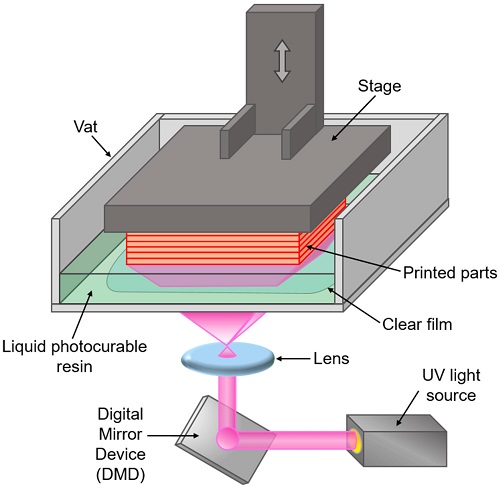
The technology isn't as new as you might think. Chuck Hull invented stereolithography (SLA) back in 1984 and patented it—the first practical 3D printing method. But those early machines cost $300,000 and printed slowly with limited materials.
Key milestones that shaped today's services:
- 1984: SLA invented—first time light could cure resin into solid shapes
- 1990s: FDM (fused deposition modeling) and SLS (selective laser sintering) emerge, adding plastic and nylon options
- 2000s: Metal printing becomes commercially viable—game changer for aerospace and medical
- 2010s: Bioprinting appears—printing living tissues for research
- 2020s: AI integration begins optimizing designs and predicting failures before printing starts
I joined this industry in the late 2000s, when metal printing was still experimental. Watching it mature into a reliable production technology has been remarkable.
What Are the Real Benefits You'll Get?
How Fast Can You Actually Prototype?
Rapid prototyping remains the killer application for 3D printing services. Here's a comparison from a recent client project:
Traditional prototyping timeline:
- Design sent to machine shop: Day 1
- Shop quotes 3 weeks and $4,800: Day 3
- Parts arrive, test reveals flaw: Day 24
- Redesign, requote, wait again: Day 45
With our 3D printing service:
- Client emails CAD file: Monday 9 AM
- We optimize and print overnight: Monday-Tuesday
- Parts shipped: Wednesday
- Client tests, requests tweak: Thursday
- Revised parts delivered: Friday
Total elapsed time: 5 days versus 45. That's not just faster—it's transformative for product development. You can fail fast, learn quickly, and iterate until it's right.
Is It Really Cheaper Than Traditional Manufacturing?
Let's talk dollars and sense. The cost-effectiveness of 3D printing depends entirely on volume, but the numbers often surprise people.
Scenario: A custom bracket for a specialized machine
| Method | Tooling Cost | Per-Part Cost | Total for 10 Units | Total for 1,000 Units |
|---|---|---|---|---|
| CNC Machining | $500 (fixturing) | $85 | $1,350 | $85,500 |
| Injection Molding | $12,000 | $4 | $12,040 | $16,000 |
| 3D Printing Service | $0 | $45 | $450 | $45,000 |
Key takeaway: For low volumes (under 200 pieces), 3D printing saves serious money. No tooling investment means you're not betting thousands on an unproven design.
But there's another angle: material waste. Traditional machining of that bracket from solid aluminum might waste 80% of the material as chips. 3D printing uses exactly what's needed—sometimes 90% less raw material. In aerospace, where titanium costs $50 per pound, that's enormous.
Can You Really Make Anything?
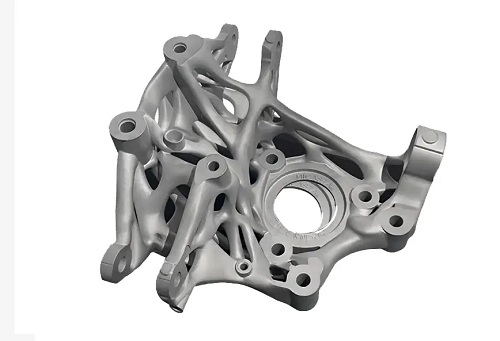
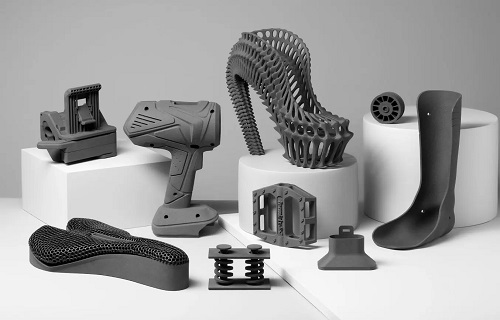
Almost. The design freedom is extraordinary. Traditional methods have rules: you need draft angles for molds, tool access for machining, constant wall thickness for casting. 3D printing laughs at most of these.
What becomes possible:
- Internal cooling channels that curve and branch like blood vessels
- Lattice structures that are 70% air but still strong
- Organic shapes that mimic bone structure for implants
- Consolidated assemblies—50 parts become one printed piece
A client in robotics came to us with a gearbox housing that required 12 machined parts and 28 fasteners. We redesigned it as a single 3D-printed component. Assembly time dropped from 4 hours to 15 minutes. Weight dropped 40%. Strength increased. That's the complexity advantage in action.
What Materials Can You Actually Print With?
Material versatility has exploded. Here's what's available through professional services today:
| Material Category | Examples | Typical Applications |
|---|---|---|
| Standard Plastics | PLA, ABS, PETG | Prototypes, housings, consumer goods |
| Engineering Plastics | Nylon, Polycarbonate, ULTEM | Functional parts, automotive underhood |
| Flexibles | TPU, TPE | Seals, gaskets, footwear |
| Metals | Stainless steel, Titanium, Aluminum, Inconel | Aerospace, medical implants, tooling |
| Ceramics | Alumina, Zirconia | Dental crowns, electrical insulators |
| Composites | Carbon fiber-filled nylon | Lightweight structural parts |
| Wax | Investment casting wax | Jewelry, dental restorations |
The key insight: material choice drives part performance. Want heat resistance? ULTEM handles 200°C. Need biocompatibility? Certain nylons and titanium alloys are certified for implants. Our job is matching your requirements to the right material.
Where Are These Services Actually Used?
How Is Aerospace Using 3D Printing?
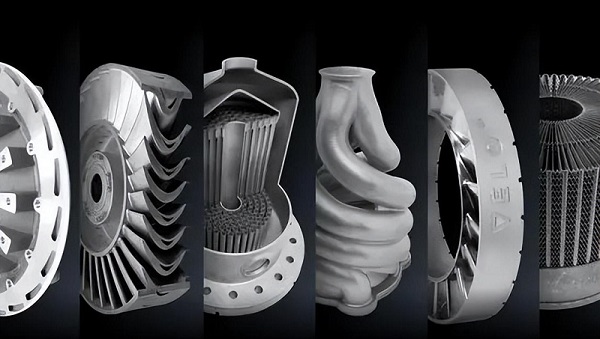
Aerospace applications represent the cutting edge. Companies like GE Aviation now produce fuel nozzles for the LEAP jet engine using 3D printing. Previously, these nozzles required 20 separate parts brazed together. Now they're printed as one piece, are 25% lighter, and last five times longer.
We've worked with smaller aerospace suppliers on similar challenges: brackets with optimized shapes that reduce weight while maintaining strength. In an industry where every gram costs fuel, 3D printing delivers measurable ROI.
What About the Automotive Industry?
Automotive applications span everything from prototype to production. Ford prints intake manifolds for testing in days instead of months. Ferrari uses 3D printed parts for custom components in limited-run supercars.
A recent client needed replacement parts for a classic car restoration. Original tooling was long gone. We scanned an existing part, optimized the design, and printed 20 pieces in nylon. Cost: $800. Time: one week. Traditional tooling would have been $15,000 and three months.
How Is 3D Printing Saving Lives in Medical?
Medical applications show the human side of this technology. Three areas stand out:
Custom implants: A patient with a unique bone defect needs a replacement that matches their anatomy exactly. We scan, design, and print in titanium. The implant fits perfectly the first time—no adjustments during surgery.
Surgical guides: Before complex procedures, surgeons can practice on 3D-printed models of the actual patient's anatomy. One hospital reported 30% shorter surgeries after adopting this approach.
Prosthetics: A child needs a new prosthetic as they grow—every six months traditionally. With 3D printing, we create affordable, adjustable designs that can be replaced quickly as the child develops.
What's Happening in Consumer Products?
Consumer goods are embracing personalization at scale. Adidas prints midsoles tailored to individual foot shape and running style. Jewelers create custom engagement rings from customer sketches. Eyewear companies print frames that fit exactly.
A startup came to us wanting to offer custom phone cases with embedded names and patterns. Traditional injection molding would require thousands of units to be economical. We helped them set up a print-on-demand model: cases are made only after orders come in. Zero inventory, zero waste, happy customers.
What Does Success Look Like? Real Cases
GE Aviation's Fuel Nozzle
This is the poster child for industrial 3D printing. The LEAP engine fuel nozzle:
- Was previously 20 parts welded together
- Is now one printed part
- Weighs 25% less
- Lasts 5x longer
- Cools more effectively due to internal channels impossible to machine
Result: Better performance, lower fuel burn, reduced maintenance.
Local Motors and the First Printed Car
Local Motors shocked the automotive world by printing an entire car body—the Strati—in just 44 hours. While not production-ready for mass markets, it proved that large-scale additive manufacturing is possible. The implications for low-volume, specialized vehicles are enormous.
Oxford Performance Materials' Spinal Implants
Oxford Performance Materials received FDA clearance for 3D-printed polyetherketoneketone (PEKK) spinal implants. These devices:
- Match bone's mechanical properties better than titanium
- Promote bone growth through porous structures
- Reduce complications in spinal fusion surgeries
We've partnered with medical device companies navigating similar regulatory pathways. The key is process validation—proving every printed part meets the same strict standards.
Adidas Futurecraft 4D
Adidas partnered with Carbon to create the Futurecraft 4D shoe with digitally printed midsoles. Using Carbon's CLIP technology, they can produce midsoles with lattice structures tuned for specific cushioning properties. Each shoe can be customized to the runner's foot—mass personalization at scale.
Where Is This Technology Headed?
What New Materials Are Coming?
Advanced materials will expand possibilities. Look for:
- High-temperature polymers replacing metals in some applications
- Continuous carbon fiber for true structural composites
- Multi-material printing combining rigid and flexible in one part
- Sustainable materials from recycled or bio-based sources
How Will AI Change 3D Printing?
Artificial intelligence is already optimizing designs in ways humans can't. AI algorithms can:
- Generate lattice structures that maximize strength while minimizing weight
- Predict warping before printing and adjust parameters automatically
- Inspect parts during printing and correct errors in real time
We're experimenting with AI tools that reduce design time from weeks to hours. The engineer's role shifts from manual modeling to guiding intelligent systems.
What About Printing on Demand?
On-demand manufacturing will disrupt supply chains. Instead of warehousing spare parts for decades, companies will store digital files and print when needed. No inventory costs. No obsolescence. No waiting for overseas shipments.
A defense contractor recently asked us to digitize their legacy parts catalog. Over 5,000 unique components now exist as print-ready files. If a tank needs a bracket in the field, they can print it locally instead of waiting six weeks for a replacement.
Can We Really Print Organs?
Bioprinting remains experimental but promising. Researchers have printed:
- Skin grafts for burn victims
- Cartilage for joint repair
- Miniature livers for drug testing
Functional organs for transplant are likely a decade away, but the progress is real. When it happens, it will transform medicine.
So, Should You Use 3D Printing Design Services?
After walking through the benefits, applications, and future trends, here's the practical takeaway: 3D printing design services excel when you need speed, complexity, or customization. They're not always the answer—high-volume production still belongs to injection molding and stamping. But for prototyping, low-volume production, custom parts, and designs impossible to make otherwise, they're unbeatable.
The smart approach? Use services for what they do best. Let us handle the printing while you focus on your core business. No equipment to buy, no expertise to develop, no headaches. Just better parts, faster.
Frequently Asked Questions
How much do 3D printing design services typically cost?
It varies widely based on material, size, and complexity. Simple plastic prototypes might cost $50-200. Complex metal parts can run $500-5,000. We provide free quotes based on your specific model and requirements.
What file formats do you accept?
We work with all standard CAD formats: STEP, IGES, STL, SolidWorks, Fusion 360, and more. If you have a design, we can print it. If you don't have a design, we can create one from your sketches or ideas.
How long does printing take?
Typical turnaround is 3-5 business days from file approval to shipping. Rush services can deliver in 24-48 hours for an additional fee. Complex or large parts may take longer—we'll always provide an estimated timeline upfront.
Can you print in colors?
Yes. Many polymer printers support multiple colors in a single print. For metal parts, we offer various finishing options including plating and painting to achieve the desired appearance.
Do you offer design help?
Absolutely. Our engineers can optimize your existing design for 3D printing or create a new design from scratch. We regularly help clients improve parts for better printability, strength, or cost efficiency.
What quality guarantees do you provide?
Every part undergoes dimensional inspection before shipping. For critical applications, we can provide material certifications, first article reports, and full traceability. If a part doesn't meet specifications, we remake it at no charge.
Contact Yigu Technology for Custom Manufacturing
Ready to turn your idea into reality? At Yigu technology, we've been helping businesses, inventors, and engineers navigate the world of additive manufacturing for over a decade. Whether you need a single prototype, a small production run, or ongoing manufacturing support, we're here to help.
Let's talk about your project. [Contact us today] for a free consultation and quote. No pressure, no jargon—just honest, practical advice from engineers who've been in your shoes.