Introduction
Manufacturing relies on processes that balance precision, flexibility, and cost. Milling stands as one of the most fundamental methods for shaping raw materials into finished components. From the tiny parts inside your smartphone to massive industrial machinery components, milling touches nearly every product we use. This process uses a rotating multi-tooth cutter to remove material, creating shapes that range from simple flat surfaces to highly complex three-dimensional contours. In this guide, we will explore the key advantages of milling—precision, versatility, cost-effectiveness, and how it compares to other manufacturing processes—so you can determine whether it fits your production needs.
How Precise Is Milling?
CNC Milling Capabilities
The precision of modern milling comes from computer numerical control (CNC) technology. CNC milling machines use advanced control systems to guide the cutter with exceptional accuracy. Typical tolerances reach ±0.001 inches (±0.0254 mm) , and high-end machines can achieve even tighter.
Aerospace example:
Turbine blades for aircraft engines require complex airfoil shapes and extremely tight tolerances. A deviation as small as 0.002 inches can reduce engine efficiency by several percentage points, affecting fuel burn and safety. CNC milling machines consistently produce these blades with the required accuracy, ensuring each blade matches the design specifications.
Meeting Industry Standards
Different industries impose strict requirements on machined parts. Milling processes, especially on CNC equipment, reliably meet these standards.
| Industry | Typical Tolerance Requirement | Milling Capability |
|---|---|---|
| Aerospace | ±0.001–0.005 inches | Consistently achieved |
| Medical | ±0.0005–0.002 inches | Achievable with precision machines |
| Automotive | ±0.002–0.010 inches | Routine |
| General industrial | ±0.005–0.020 inches | Standard |
According to industry data, over 95% of precision-machined aerospace components produced through milling meet or exceed required tolerance specifications. This consistency reduces scrap rates and ensures reliable assembly.
What Materials Can Milling Handle?
Metals: From Steel to Aluminum
Milling processes a broad spectrum of metals, each with specific characteristics.
Steel: Common in machinery parts and automotive components. Mild steel mills efficiently with high-speed steel (HSS) cutters. Stainless steel, being tougher, requires carbide-tipped tools to withstand higher cutting forces and heat.
Aluminum: Popular in aerospace and automotive for its low density and good corrosion resistance. Aluminum can be milled at high speeds—often 2–3 times faster than steel—which significantly boosts productivity. Large aircraft wing components, for example, are milled from aluminum sheets to precise dimensions with smooth surface finishes.
Plastics and Composites
Plastics: Acrylic and polycarbonate mill cleanly when parameters are controlled properly. The low melting point of acrylic requires careful spindle speed management to prevent material distortion. Polycarbonate, valued for impact resistance, machines well for applications like safety goggles and electronic enclosures.
Composites: Carbon fiber reinforced polymers (CFRP) are increasingly used in high-performance applications. Milling these materials requires diamond-coated tools to maintain cutting edge life. Parameters must be carefully set to avoid delamination—where layers separate—and fiber pull-out, which compromises part strength.
How Does Milling Create Complex Shapes?
Multi-Axis Capabilities
Milling machines range from three-axis to five-axis configurations. Each additional axis increases the complexity of shapes that can be produced in a single setup.
- 3-axis milling: Handles flat surfaces, pockets, and simple contours
- 4-axis milling: Adds rotary movement for parts requiring indexing or continuous rotation
- 5-axis milling: Allows simultaneous movement in five directions, enabling complex undercuts, angled features, and contoured surfaces
Mold and Die Applications
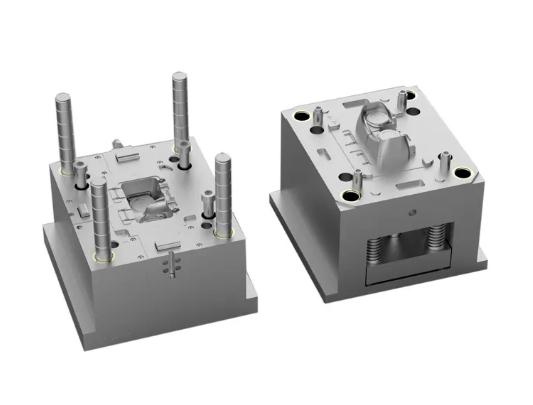
The mold-making industry relies heavily on milling. Plastic injection molds often contain intricate cavities and cores that must be machined to exact dimensions.
Case example:
A manufacturer producing molds for smartphone cases faced long lead times using EDM (electrical discharge machining) for complex features. Switching to 5-axis milling reduced mold production time from 120 hours to 45 hours per mold. The milling process also improved surface finish, reducing hand-polishing time by 60%.
How Customizable Is Milling?
Tailoring Parts to Specific Needs
Milling enables high levels of customization without the need for specialized tooling. This makes it ideal for applications where each part differs.
Medical implants:
Dental implants must fit each patient’s unique anatomy. A digital scan of the patient’s mouth guides the milling machine to create a titanium implant that matches precisely. The same process applies to custom knee and hip implants, where milling achieves the required biocompatible surface finish and dimensional accuracy.
Prototyping:
Design changes require only software updates, not new molds or fixtures. Engineers can iterate quickly, testing multiple design variations in a single day. This accelerates product development cycles significantly.
Is Milling Cost-Effective?
Small to Medium Batch Economics
Milling offers distinct cost advantages for small to medium production volumes. The key factor is low setup time.
Setup time comparison:
- CNC milling: 30 minutes to 1 hour for tool changes, workpiece clamping, and programming
- Injection molding: Several hours to a full day for mold changes and setup
For a workshop producing custom mechanical parts in batches of 50–500 units, milling often delivers the lowest cost per part. No expensive molds are required, and changeovers between different parts happen quickly.
Production Efficiency
CNC milling machines are built for continuous operation. A well-maintained machine can run 24 hours a day, 5–6 days per week. This capability, combined with high-speed machining techniques, significantly increases output.
The table below shows efficiency gains from high-speed milling:
| Machine Type | Spindle Speed (RPM) | Feed Rate (mm/min) | Machining Time (min/part) |
|---|---|---|---|
| Traditional mill | 3,000 | 200 | 60 |
| High-speed mill | 15,000 | 1,000 | 15 |
For a production run of 500 parts, this difference translates to 375 hours saved—over 15 days of continuous machining time.
How Does Milling Compare to Other Processes?
Milling vs. Turning
| Aspect | Milling | Turning |
|---|---|---|
| Machining capability | Complex 3D shapes, slots, contours, multiple surfaces in one setup | Cylindrical or conical shapes; rotational parts like shafts |
| Typical precision | ±0.001 inches achievable | ±0.0005 inches for diameters; lower for complex features |
| Efficiency | Better for complex parts | Better for simple rotational parts |
| Tooling | Multi-tooth cutters (end mills, face mills, ball-nose) | Single-point cutting tools |
When to choose milling: Parts with non-cylindrical features, pockets, or multiple machined surfaces.
When to choose turning: Simple shafts, bushings, or parts where concentricity is critical.
Milling vs. Casting
| Aspect | Milling | Casting |
|---|---|---|
| Complex part production | Excellent for internal and external precision features | Good for external shapes; often requires secondary machining for precision features |
| Cost for small batches | Low—no mold costs | High—mold investment required |
| Cost for large batches | Higher per unit due to machining time | Lower per unit after mold investment |
A manufacturer producing engine blocks might cast the basic shape to save material cost, then mill critical surfaces like cylinder bores and mounting faces to achieve required tolerances. This hybrid approach balances cost and precision.
Milling vs. 3D Printing
| Aspect | Milling | 3D Printing |
|---|---|---|
| Precision | ±0.001 inches (or better) | ±0.008–0.020 inches for desktop; better for industrial systems |
| Material selection | Wide range—metals, plastics, composites | Growing but still limited; some alloys difficult to print |
| Surface finish | Smooth as-machined | Often requires post-processing |
| Speed for metal parts | Faster for medium to large volumes | Slower; better for complex geometries with low volume |
Practical consideration: For metal parts requiring tight tolerances and good surface finish, milling remains the preferred choice. 3D printing excels at highly complex geometries where material waste is a primary concern.
A Real-World Case: Automotive Component Production
A Tier 1 automotive supplier needed to produce aluminum suspension components with complex curved geometries. Initial production used casting followed by finish machining. Scrap rates ran at 8% due to casting defects, and lead times stretched to six weeks.
The company transitioned to machining from solid billet using 5-axis CNC mills. Results after 12 months:
- Scrap rate dropped to 2%
- Lead time reduced to 10 days
- Design changes implemented in hours instead of weeks
- Material cost increased, but total cost per part decreased by 18% due to reduced scrap and eliminated casting tooling amortization
The flexibility of milling also allowed the supplier to respond quickly when the automaker requested mid-production design changes—a capability not possible with the casting approach.
Conclusion
Milling offers a compelling combination of precision, versatility, and cost-effectiveness that makes it indispensable in modern manufacturing. Its ability to achieve tight tolerances—often ±0.001 inches or better—meets the demanding requirements of aerospace, medical, and automotive industries. The process handles a wide range of materials, from common steels and aluminum to advanced composites, and creates complex geometries that other methods struggle to produce. For small to medium batch sizes, milling delivers cost advantages through low setup times and continuous operation capabilities. When compared to turning, casting, or 3D printing, milling holds distinct advantages in precision, material flexibility, and surface finish—making it the go-to choice for components where these factors matter most.
FAQs
What is the difference between 3-axis and 5-axis milling?
3-axis milling moves the cutter in X, Y, and Z directions, suitable for flat surfaces and simple pockets. 5-axis milling adds two rotary axes, allowing the cutter to approach the workpiece from multiple angles. This enables complex undercuts, angled features, and contoured surfaces to be machined in a single setup.
Can milling achieve the same surface finish as grinding?
Milling can achieve surface finishes down to Ra 0.4–0.8 µm with proper tool selection and parameters. While grinding can achieve finer finishes (Ra 0.1–0.2 µm), milling often eliminates the need for separate grinding operations on many parts.
Is milling suitable for high-volume production?
Yes, especially when combined with automation. High-speed machining centers with automated pallet changers and robotic loading can run unattended for multiple shifts, producing thousands of parts per week with consistent quality.
What is the most common cause of milling errors?
Tool deflection is a frequent source of dimensional errors. Long, slender tools deflect under cutting forces, producing tapered or undersized features. Using shorter tools, reducing radial engagement, or employing high-feed milling strategies minimizes this issue.
How do I choose the right milling cutter for my material?
Consider three factors: material hardness, required surface finish, and feature size. Carbide cutters suit hard materials and high-speed operations. High-speed steel works for softer materials and lower budgets. For composites, diamond-coated tools provide the best wear resistance.
Contact Yigu Technology for Custom Manufacturing
At Yigu Technology, milling forms the backbone of our precision manufacturing services. We operate a range of 3-axis, 4-axis, and 5-axis CNC milling centers to handle everything from simple brackets to complex aerospace components. Our engineering team selects optimal toolpaths, cutting parameters, and workholding strategies for each project—ensuring tight tolerances, excellent surface finishes, and competitive cycle times. Whether you need prototypes, low-volume custom parts, or medium-volume production runs, we combine technical expertise with rigorous quality control to deliver consistent results. Contact us to discuss your milling project requirements.