Introduction
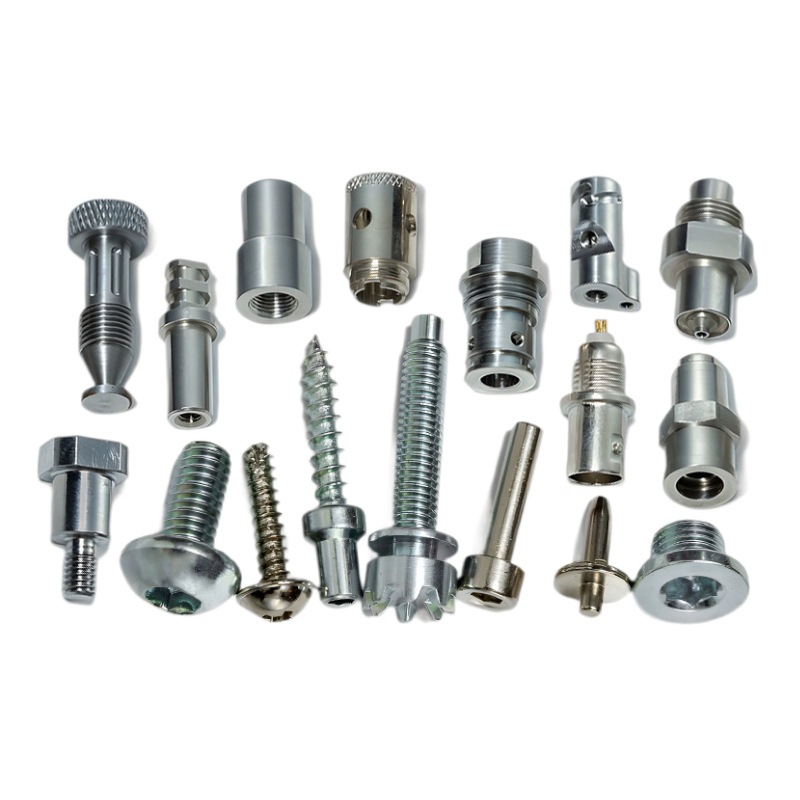
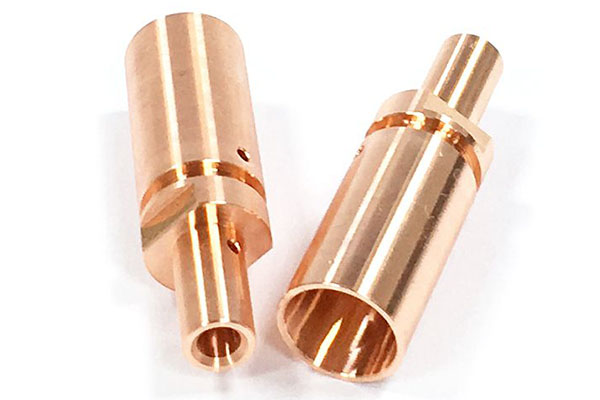
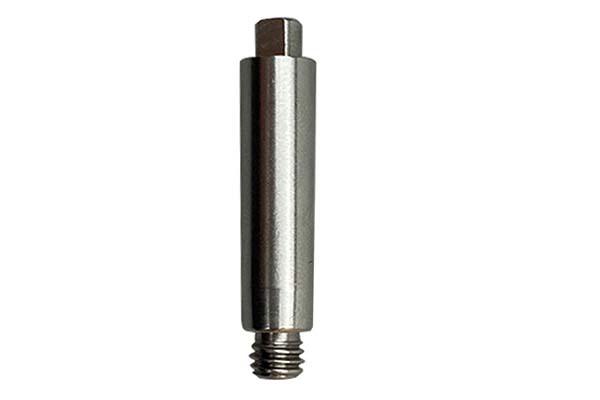
You are looking at a cylindrical shaft. It could be part of a jet engine, a spinal implant, or an automotive transmission. How was it made? Chances are, it came from a lathe—one of the oldest and most fundamental machine tools in manufacturing. Despite its ancient origins, lathe machining remains indispensable in modern industry.
The principle is simple: rotate the workpiece while a cutting tool shapes it. The applications are anything but. From massive turbine shafts to microscopic medical components, lathe machining produces parts that touch nearly every aspect of modern life. This guide explores what lathe machining is, how it works, and where it is used. By the end, you will understand why this centuries-old process remains at the heart of precision manufacturing.
What Is Lathe Machining?
Lathe machining is a subtractive manufacturing process where a rotating workpiece is shaped by a stationary cutting tool. The lathe holds and spins the workpiece while the tool removes material to achieve the desired dimensions and surface finish.
Why Lathe Machining Matters
The process is valued for:
- High precision: Tolerances as tight as ±0.005 mm are routine
- Geometric versatility: Cylindrical, tapered, contoured, and threaded shapes
- Material flexibility: Metals, plastics, and composites
- Efficiency: Suitable for single prototypes and high-volume production
In industries where precision is non-negotiable—aerospace, automotive, medical—lathe machining is often the go-to process.
What Are the Key Components of a Lathe?
Understanding the machine helps you appreciate the process.
Workpiece
The workpiece is the material being machined. It is mounted on the lathe and rotated. Common materials include:
- Metals: Steel, aluminum, brass, titanium, stainless steel
- Plastics: Acrylic, nylon, PEEK, polycarbonate
- Composites: Carbon fiber, fiberglass
Chuck
The chuck holds the workpiece securely. It mounts on the spindle and can be adjusted for different sizes and shapes. Types include:
- Three-jaw chuck: Self-centering, good for round workpieces
- Four-jaw chuck: Independent jaws, holds irregular shapes
- Collet chuck: High precision, ideal for small diameters
Cutting Tool
The cutting tool removes material. It is mounted on the tool post and made from materials like:
- High-Speed Steel (HSS): Good for general use, lower cost
- Carbide: Higher hardness, longer life, higher speeds
- CBN or Ceramic: For hard materials and high-speed finishing
Spindle
The spindle rotates the workpiece. Driven by a motor, it achieves speeds from hundreds to thousands of RPM. Precision and stability are critical for quality results.
Tool Post and Carriage
The tool post holds the cutting tool. The carriage moves it along the workpiece:
- Longitudinal feed: Moves tool parallel to workpiece axis
- Cross feed: Moves tool perpendicular to workpiece axis
What Operations Can a Lathe Perform?
Lathes are versatile. Beyond simple turning, they perform multiple operations in a single setup.
Turning
Turning is the primary operation. The cutting tool moves along the rotating workpiece to reduce diameter and create cylindrical shapes.
Applications: Shafts, pins, bushings, rollers
Key parameters:
- Cutting speed
- Feed rate
- Depth of cut
Facing
Facing creates a flat surface on the end of the workpiece. The tool feeds perpendicular to the axis, removing material to achieve a smooth, square end.
Applications: Preparing workpieces for further operations, creating finished surfaces
Drilling
Drilling creates holes. The drill bit feeds into the rotating workpiece, removing material to form blind or through holes.
Applications: Bolt holes, fluid passages, assembly features
Tapping
Tapping creates internal threads in a drilled hole. A tap—a threaded cutting tool—rotates into the hole to cut threads.
Applications: Threaded holes for screws, bolts, fittings
Threading
Threading creates external threads on the workpiece surface. A threading tool or die cuts threads along the rotating workpiece.
Applications: Bolts, screws, threaded shafts, fittings
Grooving and Parting
Grooving cuts narrow channels into the workpiece. Parting (cut-off) separates finished parts from the raw material.
Applications: Grooves for retaining rings, O-rings; cutting finished parts
| Operation | Description | Common Applications |
|---|---|---|
| Turning | Reduces diameter | Shafts, pins, bushings |
| Facing | Creates flat ends | Workpiece preparation, finished surfaces |
| Drilling | Creates holes | Bolt holes, fluid passages |
| Tapping | Internal threads | Threaded holes |
| Threading | External threads | Bolts, screws, threaded shafts |
| Grooving | Narrow channels | Retaining rings, O-rings |
| Parting | Separates finished parts | Cut-off operations |
Where Is Lathe Machining Used?
Lathe machining serves industries that demand precision, durability, and reliability.
Aerospace Industry
Aerospace components must withstand extreme conditions while meeting strict safety standards. Lathe machining produces:
- Engine parts: Turbine shafts, compressor disks, engine mounts
- Structural components: Landing gear parts, structural fittings
- Avionics housings: Enclosures for sensitive electronic systems
Precision requirement: Tolerances often ±0.005 mm or tighter. Surface finishes below Ra 0.8 μm are common for rotating components.
Example: Turbine shafts for jet engines require concentricity within microns. A misaligned shaft causes vibration that can damage the entire engine. Lathe machining achieves the necessary precision.
Automotive Industry
Automotive manufacturing relies on lathe machining for high-volume, high-precision components:
- Engine parts: Crankshafts, camshafts, connecting rods
- Transmission components: Gears, shafts, housings
- Suspension parts: Strut rods, ball joints, steering components
Volume requirement: High-volume production runs with consistent quality. Modern CNC lathes with automated loading produce thousands of parts per day.
Example: A crankshaft requires precise bearing journals and balanced geometry. Lathe turning combined with grinding achieves the necessary roundness and surface finish.
Medical Industry
Medical devices demand biocompatible materials, exceptional surface finishes, and absolute reliability:
- Surgical instruments: Scalpels, forceps, drills, reamers
- Implants: Orthopedic screws, spinal rods, dental components
- Diagnostic equipment: Components for MRI machines, CT scanners, surgical robots
Precision requirement: Tolerances down to ±0.002 mm for implant threads. Surface finishes below Ra 0.4 μm to promote osseointegration.
Example: Orthopedic screws require precise thread pitch for secure bone fixation. Lathe micromachining achieves thread accuracy that casting cannot match, improving implant success rates.
Consumer Electronics
Lathe machining produces components for smartphones, laptops, and wearable devices:
- Housings and frames
- Connectors and pins
- Camera components
Challenge: Miniaturization demands micro-scale turning with tool diameters under 1 mm.
Industrial Machinery
From pumps to conveyors, lathe machining creates:
- Gears and sprockets
- Hydraulic components
- Pump shafts and housings
Marine and Offshore
Corrosion-resistant components for harsh environments:
- Propeller shafts
- Engine components
- Valve bodies and fittings
| Industry | Typical Components | Key Requirements |
|---|---|---|
| Aerospace | Turbine shafts, engine mounts | Extreme precision, high-strength materials |
| Automotive | Crankshafts, transmission parts | High-volume consistency, durability |
| Medical | Implants, surgical instruments | Biocompatibility, surface finish |
| Electronics | Connectors, housings | Miniaturization, precision |
| Industrial | Hydraulic components, gears | Reliability, wear resistance |
| Marine | Propeller shafts, valves | Corrosion resistance |
How Does Lathe Machining Contribute to Efficiency?
Lathe machining delivers efficiency through precision, automation, and versatility.
Reduced Secondary Operations
A well-executed turning operation often eliminates the need for secondary processes. Parts come off the lathe with:
- Correct dimensions
- Required surface finish
- Completed features (threads, grooves)
Automation Capability
Modern CNC lathes integrate with:
- Robotic loaders: Unattended operation
- Automated tool changers: Multiple tools in one setup
- In-process inspection: Real-time quality control
A single operator can manage multiple machines, significantly reducing labor costs per part.
Material Efficiency
Precision turning minimizes material waste. Compared to:
- Casting: 20–30% typical waste
- Traditional machining: 10–15% waste
- CNC turning: 5–10% waste
For expensive materials like titanium or Inconel, this difference is substantial.
Cycle Time Optimization
Modern CNC lathes achieve:
- High spindle speeds (up to 10,000 RPM)
- Rapid feed rates
- Reduced non-cutting time (tool changes, part handling)
A complex shaft that took 20 minutes on a manual lathe might take 3 minutes on a CNC turning center.
What Is the Future of Lathe Machining?
Lathe machining continues to evolve with technology.
Smart Manufacturing Integration
CNC lathes increasingly connect to Industry 4.0 systems:
- Real-time monitoring of machine health
- Predictive maintenance alerts
- Production tracking and reporting
Hybrid Machining
Combining turning with other processes in one machine:
- Mill-turn centers: Turning and milling in one setup
- Additive-subtractive machines: 3D printing plus finishing
- Laser-assisted turning: Heating material ahead of the cutting tool for hard-to-machine alloys
Advanced Materials
New tool materials and coatings enable machining of:
- Ceramic matrix composites (CMCs)
- Additively manufactured near-net shapes
- Ultra-hard alloys
Sustainability
Energy-efficient machines, minimal waste strategies, and recycling of chips reduce environmental impact.
Conclusion
Lathe machining is a manufacturing process that has stood the test of time. From simple manual lathes to today's sophisticated CNC turning centers, the core principle remains: rotate the workpiece, shape it with a cutting tool. But the capabilities have expanded dramatically.
Modern lathe machining achieves tolerances of ±0.005 mm, surface finishes below Ra 0.4 μm, and cycle times measured in seconds. It produces components for aircraft engines, orthopedic implants, automotive transmissions, and consumer electronics. It works with materials from soft plastics to superalloys.
The process delivers efficiency through automation, material savings, and reduced secondary operations. And it continues to evolve—integrating with smart manufacturing systems, combining with additive processes, and pushing toward ever-greater precision.
For industries that demand precision, reliability, and efficiency, lathe machining is not just an option. It is a necessity.
FAQs
What are the primary advantages of lathe machining?
Lathe machining offers high precision (tolerances to ±0.005 mm), versatility in shapes and materials, and efficiency for both prototyping and high-volume production. It can perform multiple operations—turning, facing, drilling, threading—in a single setup, reducing handling time and improving accuracy.
Which industries commonly use lathe machining?
Lathe machining is widely used in aerospace (turbine shafts, engine parts), automotive (crankshafts, transmission components), medical (implants, surgical instruments), consumer electronics, industrial machinery, and marine industries. Any sector requiring precision cylindrical components relies on lathe machining.
What materials can be machined on a lathe?
Lathes work with metals (steel, aluminum, brass, titanium, stainless steel, superalloys), plastics (acrylic, nylon, PEEK, polycarbonate), and composites (carbon fiber, fiberglass). Material compatibility depends on the lathe's power, speed range, and tooling.
How does lathe machining contribute to manufacturing efficiency?
Modern CNC lathes automate material handling, tool changes, and in-process inspection. A single operator can manage multiple machines. Precision turning reduces material waste (5–10% vs. 20–30% for casting) and often eliminates secondary finishing operations, cutting overall production time and cost.
What is the difference between turning and milling?
Turning rotates the workpiece while the cutting tool remains stationary—ideal for cylindrical parts. Milling rotates the cutting tool while the workpiece remains stationary—ideal for prismatic parts with flat surfaces and complex 3D shapes. Many modern machines combine both capabilities.
Contact Yigu Technology for Custom Manufacturing
At Yigu Technology, we specialize in precision lathe machining for industries that demand the best. With 15 years of experience, advanced CNC turning centers, and ISO 9001 certification, we deliver components that meet your exact specifications.
Our team understands the nuances of different materials—from aluminum to titanium, from medical-grade plastics to superalloys. We optimize every operation to achieve the tolerances, surface finishes, and production efficiency your project requires. Contact us today to discuss your custom manufacturing needs and discover how our lathe machining expertise can bring your designs to life.