Introduction
Imagine a jet engine turbine blade spinning at 50,000 revolutions per minute. A deviation of 0.01 mm in its shape could cause vibrations that lead to catastrophic failure. Imagine a spinal implant that must fit perfectly against a patient's vertebrae. An error of just a few micrometers could mean chronic pain and a second surgery.
These components exist because of precision machining—a manufacturing discipline that achieves micron-level accuracy in the parts it produces. Unlike conventional machining, which may accept tolerances of ±0.1 mm or more, precision machining routinely holds ±0.005 mm or tighter.
This guide explains what precision machining is, how it works, and—most importantly—how it ensures that every part meets the exacting standards required for critical applications.
What Is Precision Machining?
Definition and Core Principles
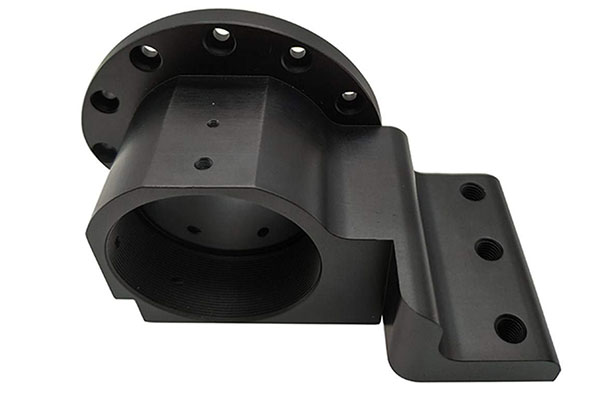
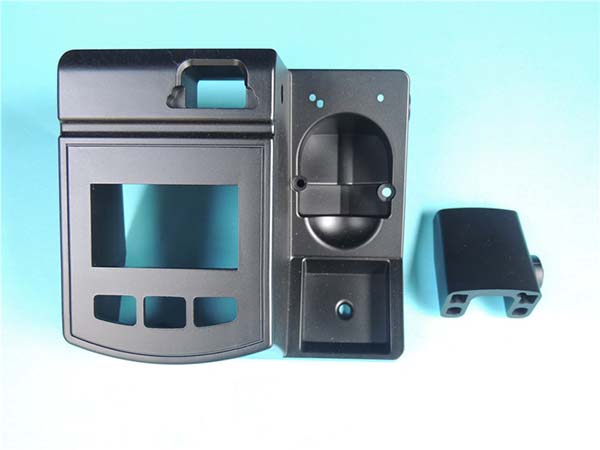
Precision machining is a manufacturing process that removes material from a workpiece to create parts with extremely tight tolerances and high dimensional accuracy. The goal is to produce components that match design specifications exactly, with minimal variation between parts.
Key characteristics of precision machining:
- Tolerances: Typically ±0.005 mm or tighter
- Surface finish: Often Ra 0.8 μm or smoother
- Repeatability: Identical results across thousands of parts
- Complexity: Ability to create intricate 3D geometries
How It Differs from Conventional Machining
| Aspect | Conventional Machining | Precision Machining |
|---|---|---|
| Typical tolerance | ±0.1 mm to ±0.5 mm | ±0.005 mm to ±0.01 mm |
| Surface finish | Ra 3.2–6.3 μm | Ra 0.4–1.6 μm |
| Measurement | Calipers, basic gauges | CMM, laser scanners, profilometers |
| Process control | Operator dependent | CNC with in-process feedback |
| Applications | General fabrication | Aerospace, medical, critical components |
The difference is not just in the numbers. It is in the reliability of the final product. A conventionally machined part might function adequately in a consumer product. A precision-machined part must function perfectly in an environment where failure has serious consequences.
What Machine Tools Enable Precision?
CNC Lathes and Turning Centers
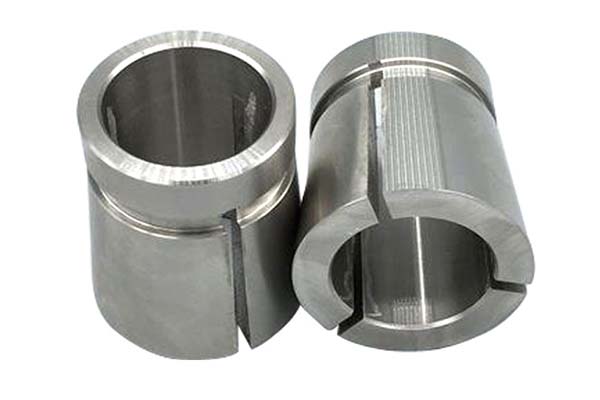
CNC lathes are designed for cylindrical parts. The workpiece rotates while a cutting tool removes material to create shafts, bushings, threaded components, and other round features.
Modern turning centers offer:
- Live tooling for milling, drilling, and tapping without removing the workpiece
- Sub-spindles for complete machining in one setup
- Thermal compensation to maintain accuracy as temperatures change
- In-process probing to verify dimensions during machining
A spinal implant manufacturer uses CNC turning to produce vertebral spacers with ±0.005 mm accuracy. The live tooling creates locking features and textured surfaces in the same operation.
CNC Milling Machines
Milling machines use rotating cutting tools to remove material from stationary workpieces. They create flat surfaces, contours, slots, pockets, and complex 3D shapes.
Precision milling capabilities:
- 3-axis machines for general work
- 5-axis machines for complex geometries in one setup
- High-speed spindles (up to 30,000 RPM) for fine finishes
- Tool changers with 40+ tools for complex operations
An aerospace component that requires 5 setups on a 3-axis machine can be completed in 1 setup on a 5-axis machine. Each eliminated setup removes a source of positioning error.
Grinding Machines
Grinding achieves surface finishes and dimensional accuracy that cutting tools cannot match. Abrasive wheels remove small amounts of material to refine surfaces and hold tight tolerances.
Types of precision grinding:
- Surface grinding for flat, parallel surfaces
- Cylindrical grinding for round parts
- Centerless grinding for high-volume round parts
- Jig grinding for precision holes and contours
Hydraulic valve manufacturers use grinding to achieve Ra 0.2 μm finishes on sealing surfaces. A milled finish would allow fluid leakage; a ground finish creates a perfect seal.
Specialized Precision Equipment
EDM (Electrical Discharge Machining) uses controlled electrical sparks to erode material. It excels at:
- Machining hardened materials (up to 65 HRC)
- Creating sharp internal corners
- Producing features that cutting tools cannot reach
Laser cutting uses focused light beams to cut and engrave with ±0.05 mm accuracy. It is ideal for thin materials and intricate patterns.
Water jet cutting uses high-pressure water with abrasives to cut materials without heat-affected zones—critical for heat-sensitive alloys.
How Is Precision Measured and Verified?
Dimensional Accuracy and Tolerances
Precision machining demands measurement tools capable of detecting errors smaller than the tolerances being held.
| Tool | Typical Accuracy | Best For |
|---|---|---|
| Micrometer | ±0.001 mm | External diameters, thickness |
| Digital caliper | ±0.01 mm | General measurements |
| Height gauge | ±0.002 mm | Vertical dimensions, layouts |
| CMM (Coordinate Measuring Machine) | ±0.0005 mm | Complex 3D geometries, multiple features |
| Laser tracker | ±0.005 mm | Large parts, assemblies |
Coordinate Measuring Machines (CMMs) are the gold standard for precision inspection. A bridge CMM with scanning capability can measure hundreds of features in minutes, producing detailed reports showing how each dimension compares to specifications.
Surface Finish and Roughness
Surface finish affects friction, sealing, fatigue life, and appearance. Precision machining controls surface roughness through tool selection, cutting parameters, and finishing operations.
Common surface finish measurements:
- Ra (Average Roughness): The arithmetic average of surface peaks and valleys
- Rz (Average Maximum Height): The average of the highest peaks and deepest valleys
- Rmax: The maximum peak-to-valley height
| Application | Target Ra |
|---|---|
| General machining | 1.6–3.2 μm |
| Decorative | ≤1.6 μm |
| Sealing surfaces | ≤0.8 μm |
| Bearings, hydraulic components | ≤0.2 μm |
Profilometers measure surface roughness by tracing a stylus across the surface. Modern non-contact systems use lasers or white light interferometry for delicate surfaces.
Non-Destructive Testing (NDT)
NDT methods detect internal and surface defects without damaging parts. These techniques are essential for safety-critical components.
| Method | Detects | Application |
|---|---|---|
| Ultrasonic testing | Internal voids, inclusions | Thick sections, forgings |
| Radiographic testing (X-ray) | Internal porosity, cracks | Castings, complex geometries |
| Magnetic particle inspection | Surface cracks in ferrous materials | Steel components |
| Fluorescent penetrant inspection | Surface cracks in non-ferrous materials | Aluminum, titanium, stainless steel |
| Eddy current testing | Surface and near-surface defects | Conductive materials |
A titanium aerospace component might undergo ultrasonic testing to verify internal integrity, followed by fluorescent penetrant inspection to confirm no surface cracks remain after machining.
What Techniques Ensure High-Quality Parts?
Material Selection and Preparation
Quality starts before cutting begins. The right material must be selected for the application, and it must be properly prepared.
Material selection factors:
- Mechanical properties (strength, hardness, ductility)
- Machinability (how easily it cuts)
- Heat treatment requirements
- Corrosion resistance
- Cost and availability
Material preparation may include:
- Heat treatment to achieve desired hardness before or after machining
- Stress relieving to remove internal stresses that cause warping
- Surface conditioning to remove scale or oxide layers
A medical implant manufacturer selects titanium alloy for its biocompatibility and strength. Before machining, the material is stress-relieved to prevent distortion during the precision cutting process.
Process Optimization and Control
The machining process itself must be optimized for precision. This involves:
Cutting tool selection:
- Material (carbide, ceramic, diamond)
- Coating (TiAlN, AlTiN, TiCN)
- Geometry (rake angle, clearance, edge prep)
Cutting parameters:
- Speed (surface meters per minute)
- Feed rate (mm per revolution or per tooth)
- Depth of cut
- Coolant type and delivery
Machine calibration:
- Regular verification of positioning accuracy
- Thermal compensation to adjust for temperature changes
- Tool setting to establish accurate reference points
In-process control:
- Probing to measure critical features during machining
- Adaptive control to adjust parameters based on real-time feedback
- Tool life monitoring to prevent wear-related errors
An automotive parts manufacturer uses in-process probing to measure bearing surfaces during machining. When a dimension approaches the tolerance limit, the control system adjusts the tool offset to bring it back to nominal—maintaining consistency across thousands of parts.
Quality Assurance and Certification
Quality assurance systems ensure that precision machining processes are documented, controlled, and continuously improved.
Common certifications:
- ISO 9001: Quality management foundation
- AS9100: Aerospace-specific requirements
- ISO 13485: Medical device quality management
- IATF 16949: Automotive quality management
Quality control elements:
- First article inspection (FAI) : Complete verification of the first part in a production run
- In-process inspection : Regular checks during production
- Final inspection : Verification before shipment
- Statistical process control (SPC) : Monitoring process data to detect trends
- Traceability : Documentation linking each part to raw material certificates and inspection records
A defense contractor requires AS9100 certification from its precision machining suppliers. The standard ensures that quality systems are audited, processes are controlled, and documentation is complete—providing confidence in the components supplied.
What Role Does Precision Machining Play in Critical Industries?
Aerospace: Safety at Extreme Conditions
Aerospace components operate at the limits of material capability. Turbine blades, structural fittings, and engine components must withstand extreme temperatures, pressures, and cyclic loads.
Precision machining ensures:
- Turbine blade profiles within ±0.005 mm for optimal airflow
- Structural fittings that mate perfectly with mating components
- Consistent quality across thousands of parts in an engine
A commercial jet engine contains over 10,000 precision-machined components. Each must meet specifications; a single failure can ground an aircraft.
Medical: Precision That Saves Lives
Medical implants and surgical instruments require biocompatible materials and exact dimensions. A spinal implant must fit perfectly; a surgical instrument must function flawlessly.
Precision machining enables:
- Orthopedic implants with ±0.01 mm tolerances for proper fit
- Surgical instruments with smooth surfaces (Ra ≤ 0.8 μm) to prevent tissue damage
- Custom patient-specific implants from CT scan data
A study of hip replacements found that precision-machined components with surface finishes below 0.8 μm had 40% lower wear rates than standard-finished components over 10 years.
Automotive: Performance and Reliability
Modern vehicles contain hundreds of precision-machined components: engine parts, transmission gears, braking components, and fuel system parts.
Precision machining delivers:
- Cylinder bores with ±0.005 mm tolerances for optimal piston sealing
- Transmission gears with precise tooth profiles for quiet operation
- Fuel injector components with micron-level accuracy for efficiency
A fuel injector manufacturer reports that moving from conventional to precision machining improved engine efficiency by 3% while reducing emissions.
Yigu Technology's Perspective
At Yigu Technology, precision machining is not just a capability—it is our standard. We invest in equipment that holds the tolerances our clients demand: 5-axis CNC machining centers, precision lathes, and CMM inspection systems.
Our processes are optimized for repeatability. We select cutting tools and parameters based on material characteristics. We use in-process probing to verify dimensions during machining. We inspect every critical feature before parts ship.
We serve industries where quality matters: aerospace, medical, automotive, and industrial equipment. Our certifications—ISO 9001 and ISO 13485 —demonstrate our commitment to quality systems.
When you need components that must perform flawlessly, precision machining delivers. We provide that precision, consistently.
Conclusion
Precision machining is the manufacturing discipline that enables the modern world. It produces components with micron-level accuracy, consistent quality, and reliable performance—qualities that are not optional in aerospace, medical, automotive, and defense applications.
The tools of precision machining—CNC lathes, milling machines, grinders, EDM, and laser systems—are capable of creating complex geometries with tight tolerances. The measurement techniques—CMM inspection, surface profilometry, and non-destructive testing—verify that every part meets specifications. The quality systems—ISO 9001, AS9100, ISO 13485 —ensure that processes are controlled and documented.
For manufacturers and engineers, understanding precision machining is essential to specifying components that will perform reliably. The choice of a precision machining partner affects product quality, production timelines, and ultimately, customer satisfaction.
Precision machining is not about making parts smaller. It is about making parts right—every time.
FAQ
What industries rely heavily on precision machining?
Aerospace, medical, automotive, defense, and electronics industries rely heavily on precision machining. These sectors require components with tight tolerances, complex geometries, and consistent quality because failure is not an option. Aerospace components must withstand extreme conditions; medical implants must fit perfectly; automotive parts must perform reliably over thousands of hours.
What are the common types of machine tools used in precision machining?
Common machine tools include CNC lathes (for cylindrical parts), CNC milling machines (for flat and complex 3D shapes), grinding machines (for fine finishes and tight tolerances), EDM (Electrical Discharge Machining) (for hard materials and complex internal features), and laser cutting machines (for thin materials and intricate patterns). Each tool is selected based on the material, geometry, and precision requirements of the part.
How does precision machining ensure high-quality parts?
Precision machining ensures high quality through a combination of advanced equipment, optimized processes, and rigorous inspection. CNC machines with thermal compensation maintain accuracy across production runs. Cutting parameters are optimized for each material to balance efficiency with tool life. In-process probing verifies dimensions during machining. Final inspection using CMMs, profilometers, and NDT methods confirms that every part meets specifications before shipment.
What tolerances can precision machining achieve?
Precision machining routinely achieves tolerances of ±0.005 mm to ±0.01 mm for most operations. With specialized equipment and processes, tolerances as tight as ±0.001 mm are possible for critical features. For comparison, a human hair is approximately 0.07 mm in diameter—precision machining works at a fraction of that scale.
What certifications should I look for in a precision machining supplier?
The required certification depends on your industry. ISO 9001 is the baseline quality management standard. For aerospace, look for AS9100. For medical devices, require ISO 13485. For automotive, IATF 16949 demonstrates quality commitment. These certifications indicate that the supplier maintains documented quality systems, undergoes regular audits, and meets industry-specific requirements.
Contact Yigu Technology for Custom Manufacturing
Need precision-machined components for critical applications? Yigu Technology delivers quality you can trust. Our capabilities include multi-axis CNC machining, precision turning, and comprehensive inspection with CMM verification.
We serve aerospace, medical, automotive, and industrial markets—with certifications including ISO 9001 and ISO 13485. From prototypes to production runs, we maintain the precision your applications demand.
Contact Yigu Technology today to discuss your project or request a quote. Let our precision machining expertise work for you.