Introduction
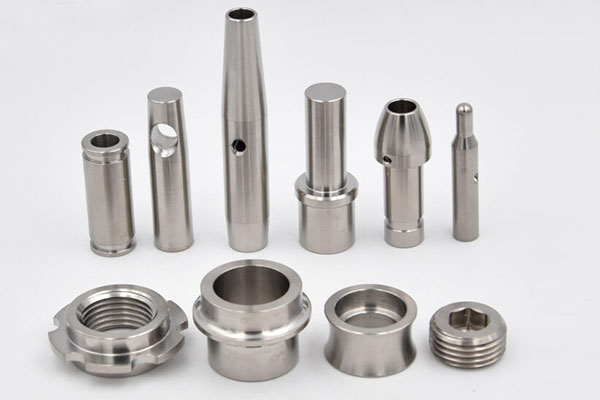
When you think of rapid prototyping, 3D printing often comes to mind. But there is another approach—one that has been around longer and offers distinct advantages for certain applications. Subtractive rapid prototyping, commonly known as CNC machining, starts with a solid block of material and removes what is not needed. The result is a precise, functional part that often mirrors the final production component in material and properties. This method is essential for industries where precision, material strength, and surface finish matter most. At Yigu Technology, we use subtractive rapid prototyping daily to create high-quality plastic and metal parts. This article explains what it is, how it works, and when to choose it over additive methods.
What Is Subtractive Rapid Prototyping?
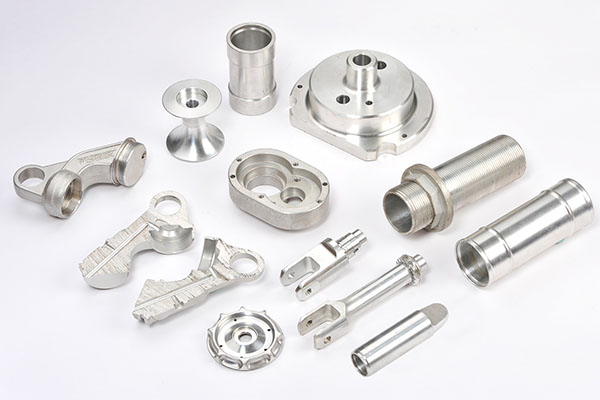
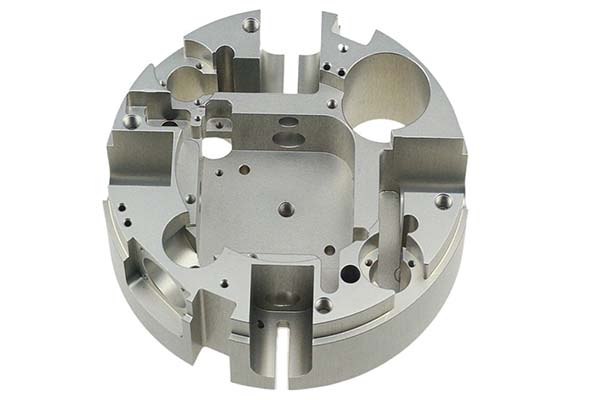
Subtractive rapid prototyping is a manufacturing process that creates parts by removing material from a solid block using computer-controlled cutting tools.
The process starts with a CAD model. That model is converted into machine instructions (G-code) that guide a CNC machine. The machine then uses rotating cutters, drills, or other tools to carve away excess material, revealing the final shape.
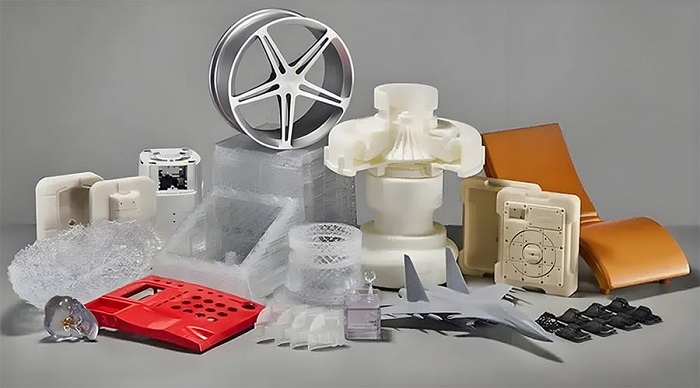
Unlike additive manufacturing, which builds parts layer by layer, subtractive prototyping begins with a block larger than the final part and removes material to achieve the desired geometry.
How Does It Compare to Additive Manufacturing?
Understanding the differences helps you choose the right approach for your project.
| Factor | Subtractive (CNC Machining) | Additive (3D Printing) |
|---|---|---|
| Process | Removes material from solid block | Builds layer by layer |
| Precision | Very high (±0.025 mm or better) | Moderate to high (±0.05–0.5 mm) |
| Materials | Metals, engineering plastics, wood, composites | Limited by printer type (plastics, some metals, resins) |
| Surface finish | Excellent (can be polished to mirror) | Varies; may require post-processing |
| Complexity | Limited by tool access | Very high; internal geometries possible |
| Setup time | Longer (fixturing, tool selection) | Shorter (direct from CAD) |
| Per-part cost (low volume) | Higher | Lower |
| Per-part cost (high volume) | Lower | Higher |
An aerospace company needed a prototype turbine blade in the exact metal (Inconel) used for production. Additive could produce the shape but with different material properties. Subtractive machined the blade from a solid Inconel billet, matching the final part exactly. The extra cost was justified by accurate test results.
How Does the Process Work?
Step 1: CAD Design
The process begins with a 3D CAD model. The designer must consider tool access—features that cannot be reached by a cutting tool may be impossible to machine. This is a key difference from additive design, where complexity has fewer constraints.
Step 2: CAM Programming
The CAD model is imported into CAM (Computer-Aided Manufacturing) software. The software generates toolpaths—the precise movements the cutting tool will follow. It also selects tools, speeds, and feed rates.
A skilled programmer can optimize toolpaths to reduce cycle time and improve surface finish. For complex parts, programming can take hours or days.
Step 3: Machine Setup
The workpiece (a block of material) is secured to the machine bed. Fixtures, vises, or custom work-holding devices hold it in place. The cutting tools are loaded into the machine's tool changer.
Step 4: Machining
The CNC machine executes the program. It may use multiple tools for different operations:
- Roughing tools remove bulk material quickly
- Finishing tools achieve final dimensions and surface finish
- Drills create holes
- Taps cut threads
- Reamers smooth and size existing holes
Step 5: Inspection and Finishing
The machined part is inspected for dimensional accuracy. Additional finishing—deburring, polishing, anodizing, or coating—may be applied.
What Are the Key Material Removal Methods?
Subtractive rapid prototyping encompasses several machining techniques.
| Method | Description | Best For |
|---|---|---|
| Milling | Rotating cutter removes material | Flat surfaces, pockets, complex 3D shapes |
| Turning | Workpiece rotates; stationary cutter removes material | Cylindrical parts, shafts, threads |
| Drilling | Rotating drill bit creates holes | Holes of various sizes and depths |
| Grinding | Abrasive wheel removes small amounts | Fine finishes, tight tolerances |
| EDM (Electrical Discharge Machining) | Electrical sparks erode material | Hard materials, intricate cavities |
A medical device manufacturer needed a prototype surgical tool with a complex internal cavity. They used EDM to machine the cavity because the material was too hard for conventional milling.
What Cutting Tools Are Used?
Tool selection depends on the material and geometry.
| Tool Type | Purpose |
|---|---|
| End mills | General milling; flat or ball-nose for contours |
| Face mills | Large flat surfaces |
| Twist drills | Making holes |
| Reamers | Enlarging and smoothing holes |
| Taps | Cutting internal threads |
| Chamfer mills | Creating angled edges |
A single part may require 10–20 different tools. The CNC machine automatically switches between them during the program.
Where Is Subtractive Rapid Prototyping Used?
Aerospace
Aerospace components demand high precision and material integrity. Subtractive prototyping produces:
- Engine components from Inconel and titanium
- Structural brackets from aluminum
- Complex housings for avionics
A leading aerospace manufacturer used CNC machining to prototype a critical engine mount. The machined part matched production specifications exactly, allowing real-world testing without compromising safety.
Automotive
The automotive industry uses subtractive prototyping for:
- Engine components requiring tight tolerances
- Transmission parts tested under load
- Tooling and fixtures for assembly lines
A performance automotive company machined prototype connecting rods from forged steel. Testing with these prototypes validated the design before committing to production tooling.
Medical and Dental
Subtractive prototyping creates high-precision medical devices:
- Orthopedic implants from titanium
- Surgical instruments requiring sharp edges and precise geometry
- Dental crowns and bridges from ceramic or metal
A dental lab used CNC machining to produce custom abutments. The precision ensured perfect fit with the patient's existing implant.
Industrial Equipment
Heavy machinery and industrial equipment benefit from subtractive prototyping:
- Hydraulic components requiring leak-proof surfaces
- Gearbox housings with precise bearing fits
- Custom tooling for manufacturing lines
An industrial equipment manufacturer machined a prototype pump housing from aluminum. Testing revealed a design flaw in the fluid channels, which was corrected before production.
What Are the Advantages?
High Precision
CNC machining achieves tolerances as tight as ±0.025 mm (±0.001 inches) —far tighter than most additive processes. This matters for parts that assemble with others, where even small errors cause fit problems.
Material Versatility
Subtractive prototyping works with virtually any material that can be cut:
| Material Category | Examples |
|---|---|
| Metals | Aluminum, steel, stainless, titanium, Inconel, brass, copper |
| Plastics | ABS, polycarbonate, PEEK, nylon, acrylic, Delrin |
| Composites | Carbon fiber composites, fiberglass |
| Wood | Hardwoods, softwoods, MDF |
Excellent Surface Finish
Machined surfaces can achieve mirror finishes with Ra values below 0.4 μm. This is critical for:
- Sealing surfaces
- Bearing surfaces
- Aesthetic components
Production-Equivalent Properties
Parts made via subtractive prototyping use the same material as production parts. Test results are directly applicable—unlike some additive prototypes that use different materials.
What Are the Limitations?
Geometry Constraints
CNC machining requires tool access. Features that cannot be reached by a cutting tool—such as internal undercuts or deep cavities with small openings—may be impossible or very expensive to machine.
Setup Time and Cost
Each new part requires:
- Programming (hours to days)
- Fixturing (custom work-holding)
- Tool selection
For simple parts, setup time may exceed machining time. For complex parts, programming is a significant cost.
Material Waste
Subtractive processes remove material. A complex part may start as a 5 kg block and end as a 1 kg part—80% waste. While scrap metal can be recycled, material costs are higher than for additive methods.
Lead Time
While machining itself is fast, setup and programming extend lead times. A complex part may take 5–10 days from CAD file to finished prototype—longer than 3D printing but often faster than traditional tooling.
When Should You Choose Subtractive Prototyping?
| Choose Subtractive When | Choose Additive When |
|---|---|
| Material matters (must match production) | Complexity matters (internal features, lattices) |
| Precision is critical (tight tolerances) | Speed is critical (same-day parts) |
| Surface finish must be excellent | Cost is critical (low budget for small parts) |
| Part will be machined in production | Geometry cannot be machined |
| Low to medium volumes (10–1,000 units) | Very low volumes (1–10 units) |
Many projects use both. A consumer electronics company used SLA for early form studies (fast, cheap), then CNC machining for functional prototypes (production material, precision), and finally injection molding for mass production.
Yigu Technology's Perspective
As a custom manufacturer of plastic and metal parts, Yigu Technology uses subtractive rapid prototyping extensively. We see its value daily.
What we have learned:
- Match the method to the stage: Use additive for early concepts. Use subtractive when you need production-grade materials and precision.
- Design for machining: Work with your manufacturing partner early. Features that are easy to print may be impossible to machine.
- Plan for tooling: While subtractive prototyping does not require production molds, it does require fixturing and programming. Factor this into timelines.
- Surface finish matters: A machined prototype with a polished surface can serve as a marketing sample, not just a test part.
We encourage clients to think of subtractive rapid prototyping not as an alternative to additive, but as a complementary tool. The right approach depends on what you need to learn at each stage.
Conclusion
Subtractive rapid prototyping—CNC machining—remains essential for producing high-precision, production-grade parts quickly. It offers unmatched material versatility, tight tolerances, and excellent surface finish. While additive manufacturing excels at complexity and speed for early concepts, subtractive methods shine when you need parts that behave like final production components.
Understanding the strengths and limitations of both approaches allows you to choose the right tool for each stage of development. For many projects, the optimal path uses additive for early iteration and subtractive for final validation—combining the speed of one with the precision of the other.
Frequently Asked Questions
What are the main differences between subtractive and additive manufacturing?
Subtractive (CNC machining) removes material from a solid block to create a part. Additive (3D printing) builds parts layer by layer. Subtractive offers higher precision, better surface finish, and a wider range of materials. Additive offers greater geometric complexity and lower cost for very low volumes.
What materials can be used in subtractive rapid prototyping?
A wide range: metals (aluminum, steel, titanium, Inconel, brass, copper), plastics (ABS, polycarbonate, PEEK, nylon, acrylic, Delrin), composites (carbon fiber), and wood. Material selection depends on the application requirements for strength, temperature resistance, biocompatibility, and other properties.
How accurate is subtractive rapid prototyping?
CNC machining can achieve tolerances as tight as ±0.025 mm (±0.001 inches) —far tighter than most additive processes. For critical dimensions, this precision ensures parts fit together correctly and perform as designed.
Is subtractive rapid prototyping faster than 3D printing?
It depends. For simple parts, CNC machining can be very fast—a simple bracket might take 30 minutes to machine. For complex parts, 3D printing may be faster because it requires no programming or setup. However, subtractive prototyping typically has longer lead times for the first part due to programming and fixturing, but faster per-part times for subsequent parts.
When should I choose subtractive over additive prototyping?
Choose subtractive when material properties must match production, precision is critical, surface finish matters, or the part will be machined in production. Choose additive when geometric complexity is high, speed is critical for early iterations, or cost for very low volumes is a primary concern. Many projects use both at different stages.
Contact Yigu Technology for Custom Manufacturing
At Yigu Technology, we specialize in subtractive rapid prototyping and custom manufacturing. Our capabilities include 3-axis, 4-axis, and 5-axis CNC machining for metals and plastics. We serve aerospace, medical, automotive, and industrial clients who need high-precision parts with production-grade materials.
If you have a project that requires precision machining—whether for prototyping or production—contact our engineering team. Let us help you turn your designs into reality with accuracy and reliability.