Introduction
In manufacturing, small details often decide big outcomes. A part that is off by a hair’s width can turn a reliable product into a costly failure. This is why precision parts machining matters more than ever. From aircraft engines to surgical tools, the quality of each component directly affects performance, safety, and your company’s reputation.
This guide explores the real-world benefits of precision machining. You will learn how it improves product quality, reduces long-term costs, enables complex designs, and helps businesses stay competitive. Whether you run a small workshop or manage production for a global brand, understanding these advantages will help you make smarter sourcing and manufacturing decisions.
What Is Precision Parts Machining?
More Than Just Cutting Metal
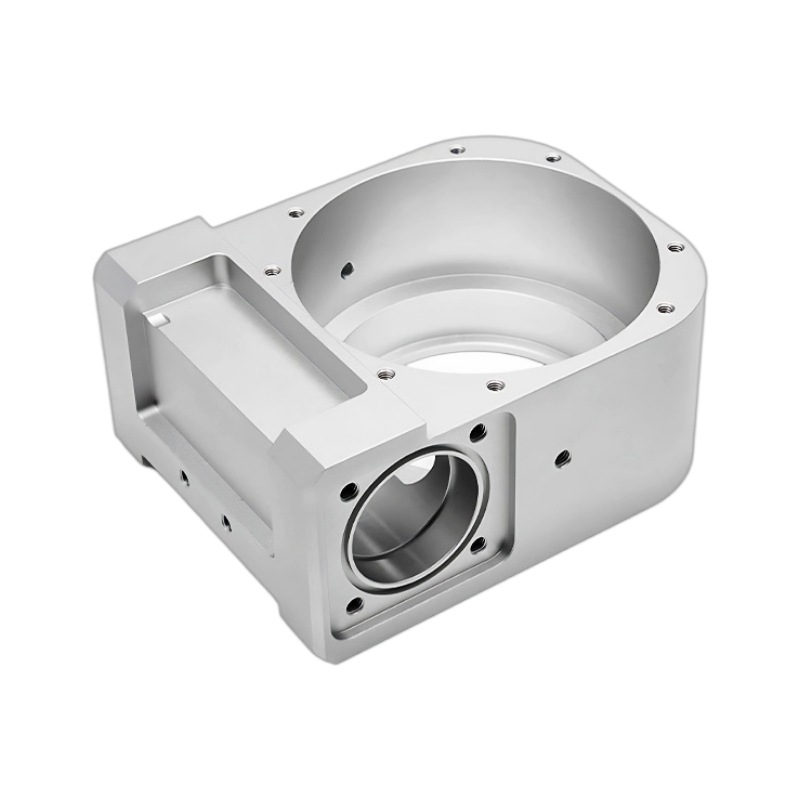
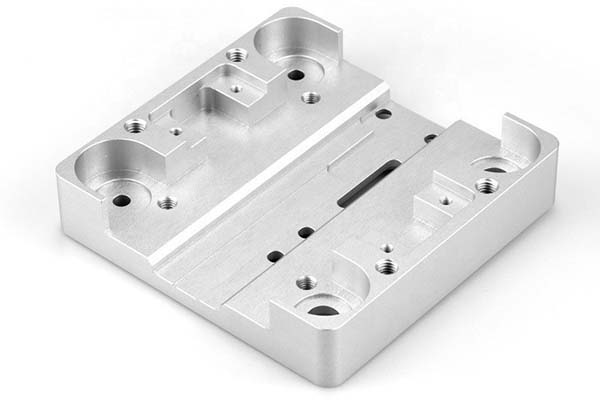
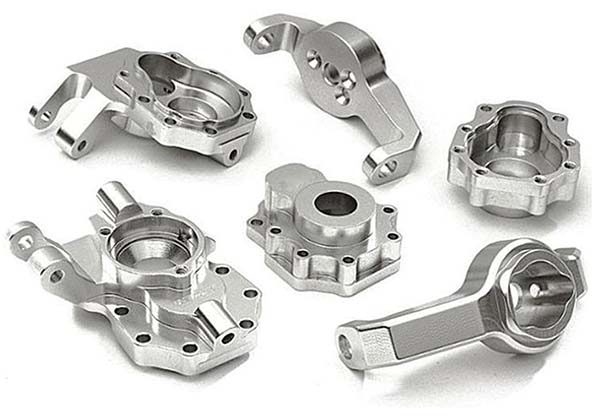
Precision parts machining is a manufacturing process that creates components with extremely tight tolerances. Tolerances often fall within ±0.001 inches or less. This level of accuracy requires advanced equipment, skilled operators, and strict quality control.
Common processes include:
- CNC milling: Rotating tools remove material to create complex shapes
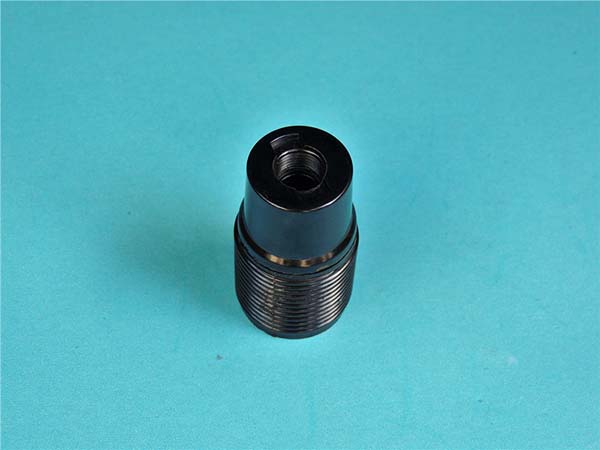
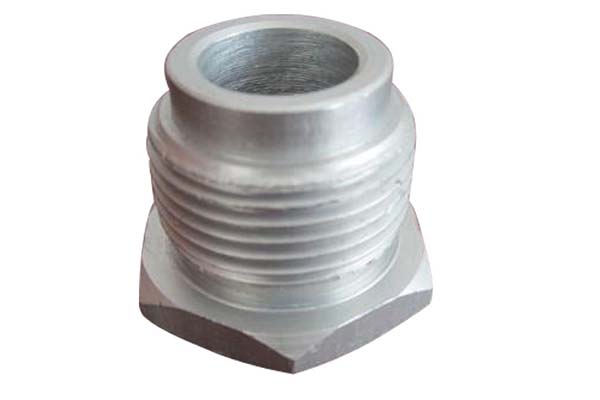
- CNC turning: The workpiece rotates while a cutting tool shapes it
- Grinding: Abrasive wheels achieve fine surface finishes
- Electrical discharge machining (EDM): Uses electrical sparks to cut hard materials
Unlike conventional machining, precision methods rely on computer-controlled systems. These systems repeat the same movements with microscopic consistency. The result is parts that match design specifications exactly, every time.
How Does Precision Machining Improve Product Quality?
Meeting Tight Tolerances Consistently
Quality starts with accuracy. In precision machining, achieving tolerances of ±0.001 inches or tighter is routine. For critical industries, this consistency is non-negotiable.
Consider aerospace engine components. A deviation of just 0.002 inches in a turbine blade can alter airflow. This reduces fuel efficiency by an estimated 5–8%. In an industry where fuel accounts for 30% of operating costs, such losses are unacceptable.
Medical devices demand similar accuracy. Surgical robot components must move with precision measured in microns. One poorly machined joint can compromise an entire procedure.
Key fact: Components machined to tighter tolerances experience 40% fewer field failures compared to parts made with conventional methods, according to a 2023 industry reliability study.
Reducing Defects and Rework
Defects cost time, money, and credibility. Traditional machining often produces defect rates of 10–15% for complex parts. Each defective part means wasted material, wasted labor, and delayed shipments.
Precision machining flips this equation. With advanced CNC systems and real-time monitoring, defect rates typically fall below 5%. For many shops, rates under 2% are achievable.
Case study: An electronics manufacturer switched to precision machining for circuit board housings. Their defect rate dropped from 8% to 2%. Annual savings from reduced scrap and rework exceeded $180,000. Production lead times shortened by 12 days, allowing faster product launches.
Lower defect rates also mean less stress on your quality control team. Instead of inspecting for problems, they can focus on continuous improvement.
Is Precision Machining Cost-Effective in the Long Run?
Lower Maintenance and Replacement Costs
Precision-machined parts fit together correctly from the start. This reduces friction, wear, and premature failure.
Real-world example: A food processing plant replaced conventional bearings with precision-machined versions in their conveyor systems. The precision bearings lasted three times longer. Maintenance intervals extended from monthly to quarterly. Annual maintenance costs dropped by 35%.
In automotive applications, a manufacturer tracked engine components over five years. Engines built with precision-machined parts required 40% fewer maintenance interventions. Less downtime meant higher production output and lower warranty claims.
Optimizing Material Usage
Material waste is often an invisible cost. Traditional machining can waste 20–30% of raw material due to imprecise cuts, excessive stock allowances, and trial-and-error setups.
Precision machining uses advanced CAM software to optimize tool paths. Every cut is calculated to minimize waste. For expensive materials like titanium, Inconel, or high-grade stainless steel, this adds up quickly.
Key data point: In aerospace manufacturing, precision machining has reduced material waste by up to 30%. For a single aircraft program, this can translate to millions in material cost savings.
Better material utilization also supports sustainability goals. Less scrap means lower environmental impact—a growing consideration for customers and regulators alike.
What Role Does Precision Machining Play in Performance?
Enhancing Product Performance
When parts fit perfectly, systems run better. This principle applies across industries.
Automotive: Precision-machined pistons, crankshafts, and cylinder heads reduce internal friction. A study by an automotive research institute found that engines using precision components showed a 10–15% increase in power output. Fuel efficiency improved by a similar margin. For a fleet operator, these gains directly impact operating costs.
Medical: In MRI machines, precision-machined magnetic coils must maintain uniform fields. Tolerances here are measured in microns. Any deviation can distort images, potentially leading to misdiagnosis. Precision machining ensures these critical components perform as designed.
Industrial equipment: Hydraulic systems rely on spools and valves with clearances as tight as 0.005 mm. Precision machining allows these parts to move smoothly without leakage. The result is more responsive equipment and longer service life.
Enabling Complex and Advanced Designs
Modern products demand complexity. Miniaturization, integrated features, and optimized geometries are now standard expectations.
Five-axis CNC machining makes these designs possible. Unlike traditional three-axis machines, five-axis systems can approach a part from multiple angles in a single setup. This allows for:
- Undercuts and complex contours
- Internal channels for cooling or fluid flow
- Thin walls and lightweight structures
- Consolidated assemblies (replacing multiple parts with one)
Example: A drone manufacturer needed lightweight motor housings with integrated cooling channels. Traditional machining would require multiple setups and assembly steps. Using five-axis precision machining, they produced the housing in one operation. Weight decreased by 18%. Assembly time dropped by 40%. Cooling performance improved by 25%.
How Does Precision Machining Support Business Growth?
Faster Time-to-Market
Precision machining reduces production delays. When parts are made right the first time, there are no cycles of rework and re-inspection. Prototypes move to production faster. Production ramps up without quality surprises.
Key benefit: Shorter lead times allow you to respond quickly to customer demands. In fast-moving markets, being weeks ahead of competitors can capture significant market share.
Protecting Brand Reputation
Quality failures damage trust. A single recall or field failure can undo years of brand building. Precision machining reduces this risk.
When your products consistently perform as promised, customers return. They also refer others. In B2B manufacturing, reputation for reliability is often the deciding factor in winning contracts.
Enabling Innovation
Precision machining gives engineers freedom. They can design without worrying whether parts can be made accurately. This encourages innovation rather than forcing compromises.
Companies that invest in precision machining capabilities often find themselves capable of taking on more complex, higher-margin work. The barrier to entry for sophisticated projects lowers significantly.
What Should You Look for in a Precision Machining Partner?
Key Capabilities to Evaluate
Not all machine shops offer the same level of precision. When selecting a partner, consider:
| Capability | What to Look For |
|---|---|
| Equipment | Modern CNC machines (5-axis, live tooling, grinding) |
| Tolerance range | Capability to hold ±0.0005 inches or better |
| Material expertise | Experience with your specific alloys or plastics |
| Quality systems | ISO 9001, AS9100 (aerospace), IATF 16949 (automotive) |
| Inspection tools | CMM, optical comparators, surface finish testers |
| Process control | SPC data, traceability, documented procedures |
Questions to Ask Potential Suppliers
- What is your typical defect rate for parts in our material?
- Do you provide first-article inspection reports?
- How do you handle process changes or deviations?
- Can you scale from prototyping to high-volume production?
- What is your average lead time for repeat orders?
Yigu Technology’s Perspective
At Yigu Technology, we see precision parts machining as the foundation of product excellence. Our experience spans automotive, medical, electronics, and industrial equipment sectors. Each project reinforces the same truth: accuracy drives performance.
We operate a modern fleet of CNC machining centers, including 5-axis mills and live-tooling lathes. Our quality system meets ISO 9001 and IATF 16949 standards. Every part undergoes inspection using coordinate measuring machines (CMMs) to verify critical dimensions.
One recent project illustrates our approach. A medical device client needed surgical instrument components with tolerances of ±0.0008 inches and surface finishes below Ra 0.4 μm. Using precision turning and milling, we delivered 5,000 units with a defect rate under 1%. The client reduced their inspection burden and accelerated their product launch by six weeks.
We believe in partnership, not just order fulfillment. Our engineers work with clients early in the design phase to optimize manufacturability. This collaborative approach reduces costs and shortens development cycles.
Whether you need complex prototypes or production volumes in the thousands, we provide the precision, reliability, and communication that successful projects demand.
Conclusion
Precision parts machining delivers benefits that extend far beyond the shop floor. It enables higher product quality, reduces long-term costs, improves performance, and supports innovation. For businesses competing in demanding markets, it is not an expense—it is an investment in reliability and reputation.
Lower defect rates mean less waste and faster production. Tighter tolerances mean better-fitting assemblies and longer product life. Advanced capabilities mean you can pursue complex designs that set you apart from competitors.
Choosing the right precision machining partner matters. Look for proven capability, rigorous quality systems, and a willingness to collaborate. When you find that partner, you gain more than a supplier—you gain a strategic advantage.
FAQ
What materials can be used for precision parts machining?
Common materials include stainless steel, aluminum, titanium, brass, copper, and engineering plastics like PEEK and acetal. Stainless steel offers corrosion resistance and strength for medical and food applications. Aluminum provides a high strength-to-weight ratio for aerospace and automotive parts. Copper is used for electrical and thermal conductivity. PEEK is chosen when lightweight, chemical resistance, and electrical insulation are required. The choice depends on your application’s mechanical, thermal, and environmental demands.
How do you ensure the precision of machined parts?
Precision is ensured through a combination of factors: using high-accuracy CNC equipment with positioning errors in the micron range; optimizing cutting parameters like speed, feed rate, and depth of cut; employing skilled machinists who understand material behavior; and performing rigorous inspections with tools like coordinate measuring machines (CMMs). Regular machine calibration and statistical process control (SPC) also help maintain consistency across production runs.
Is precision parts machining cost-effective for small-scale production?
Yes, it can be highly cost-effective. While setup costs may be higher than conventional methods, precision machining reduces scrap rates and eliminates rework. For small batches, getting parts right the first time is especially valuable because it avoids costly delays and material waste. Additionally, the improved performance of precision-machined parts can lead to better product acceptance and higher margins, offsetting initial costs. Many precision shops now offer competitive pricing for prototypes and low-volume runs.
What industries benefit most from precision parts machining?
Aerospace, automotive, medical devices, electronics, robotics, and industrial automation all rely heavily on precision machining. Any industry where component accuracy directly affects safety, performance, or reliability will benefit. Even consumer products increasingly use precision-machined components to achieve smaller sizes, better durability, and higher performance.
How do I choose the right precision machining partner?
Look for proven experience with your material type and industry requirements. Verify their quality certifications (ISO 9001, AS9100, etc.) and ask about typical tolerances, defect rates, and inspection methods. A good partner will also offer design for manufacturability (DFM) feedback and communicate clearly about lead times and costs. Visiting their facility or requesting a sample run can provide additional confidence.
Contact Yigu Technology for Custom Manufacturing
Ready to bring your precision components to life? Yigu Technology combines advanced CNC machining capabilities with a commitment to quality and customer partnership. We specialize in custom metal and plastic parts for demanding applications.
- Machining capabilities: 3-axis, 4-axis, and 5-axis CNC milling; CNC turning; surface grinding; EDM
- Quality certifications: ISO 9001, IATF 16949
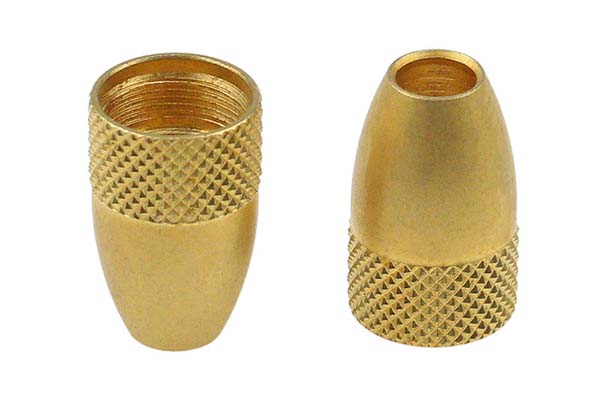
- Materials: Stainless steels, aluminum alloys, titanium, brass, copper, engineering plastics
- Volumes: Prototyping to high-volume production
Contact our engineering team today to discuss your project. We will provide a detailed quote, DFM feedback, and a timeline that fits your schedule. Let us show you how precision machining can elevate your products and your business.